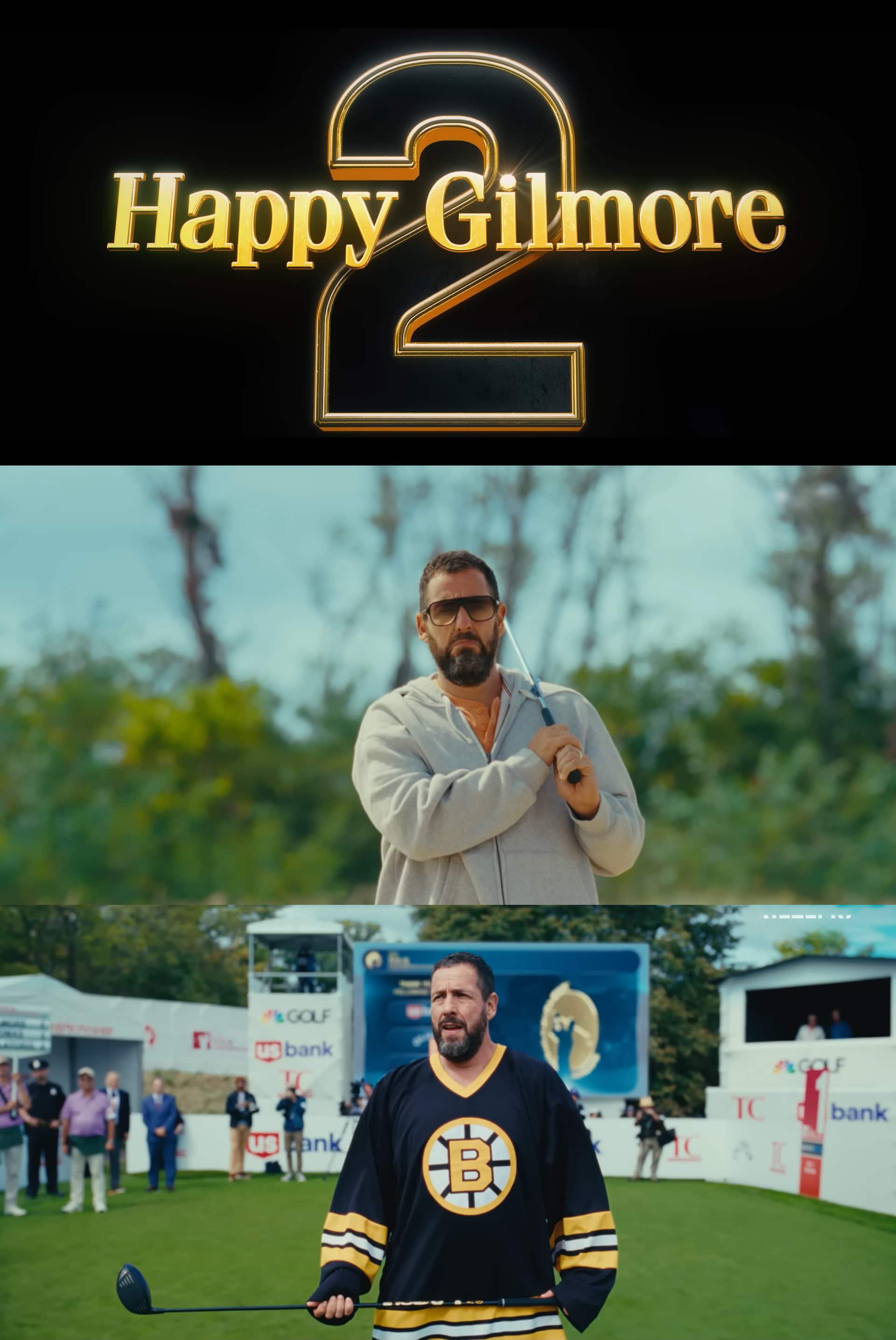
The cast of Happy Gilmore 2 features the long-awaited return of Adam Sandler as the titular hockey-player-turned-golfer, alongside original stars Christopher McDonald and Julie Bowen. While online rumors suggest the sequel could break the "comedy curse" at the Academy Awards, the reality is that the film prioritizes fan service and nostalgic humor over traditional Oscar-bait drama, despite Sandler’s increased standing with the Academy in recent years.
The announcement and subsequent release of Happy Gilmore 2 on Netflix marked a significant milestone in Adam Sandler’s prolific career. For decades, fans clamored for a follow-up to the 1996 cult classic that defined a generation of slapstick sports comedies. By 2026, the film has transitioned from a whispered rumor into a centerpiece of modern streaming cinema. To understand the gravity of this production, one must look closely at the ensemble cast that bridges the gap between 90s nostalgia and contemporary star power, while navigating the complex "Oscar rumors" that seem to follow Sandler’s every move since his critically acclaimed turn in Uncut Gems.
The Returning Legends: Anchoring the Sequel
The primary appeal of Happy Gilmore 2 lies in its ability to reunite the core trio that made the original a staple of the sports-comedy genre. Sandler’s return to the role of Happy Gilmore is not merely a commercial move; it represents a homecoming to the character that solidified his persona as the lovable, short-tempered underdog. In the 2026 landscape, Sandler plays an older, perhaps slightly wiser, but no less volatile version of Happy, navigating the modern world of professional golf which has changed significantly since his victory at the Tour Championship.
Christopher McDonald returns as Shooter McGavin, a character widely regarded as one of the greatest comedic antagonists in film history. McDonald’s commitment to the role has never wavered over the last three decades, frequently appearing in character at real-world golf events. In the sequel, the rivalry between Happy and Shooter is revitalized, reflecting a "senior tour" dynamic that adds a layer of geriatric physical comedy to their established chemistry. The reality of their on-screen relationship remains the driving force of the narrative, providing the necessary friction to propel the plot forward.
Julie Bowen also reprises her role as Virginia Venit. Since the original film, Bowen’s career skyrocketed with her Emmy-winning performance on Modern Family, and her return provides a grounded emotional center to the sequel. Her character’s evolution from a public relations director to a potentially more permanent fixture in Happy’s life offers the "heart" that Sandler movies often utilize to balance out the more absurd comedic set pieces.
New Faces in the Fray: Expanding the Universe
To ensure the sequel appeals to a broader, modern audience, the production team integrated several high-profile new cast members. These additions are not just cameos; they are strategic choices designed to blend the worlds of independent cinema, professional sports, and global music.
Benny Safdie and the Indie Connection
One of the most intriguing additions is Benny Safdie. Having co-directed Sandler in Uncut Gems, Safdie’s involvement in Happy Gilmore 2—both in a creative capacity and as an actor—lent immediate credibility to the project. Safdie’s presence is often cited as the spark for the "Oscar rumors." Critics and fans alike wondered if Safdie would bring a level of grit or technical sophistication to the sequel that might catch the Academy’s eye. While his role is comedic, his pedigree suggests a level of production quality that exceeds the typical "direct-to-streaming" comedy.
Global Stars and Sports Cameos
The inclusion of Bad Bunny and Travis Kelce highlights the film's "event" status. Bad Bunny, a global recording artist who has successfully transitioned into acting with roles in Bullet Train and Narcos: Mexico, brings a massive international following. His character serves as a contemporary foil to Happy, representing the new, flashy era of golf.
Travis Kelce’s appearance continues the tradition of professional athletes cameos started by Bob Barker and Lee Trevino in the first film. Kelce, a cultural phenomenon in his own right by 2026, adds a layer of sports-world authenticity. These casting choices ensure that Happy Gilmore 2 is not just a trip down memory lane but a relevant piece of modern pop culture.
Oscar Rumors vs. Reality: Analyzing the Buzz
The "Oscar rumors" surrounding Happy Gilmore 2 are a fascinating case study in how public perception of an actor can shift. When the first Happy Gilmore was released in 1996, the idea of it being mentioned in the same breath as an Academy Award was laughable. However, the 2026 context is different.
The "Sandler Snub" Narrative
The genesis of these rumors can be traced back to 2019, when Sandler was famously "snubbed" for an Oscar nomination for his role as Howard Ratner in Uncut Gems. Since then, there has been a lingering sentiment among both fans and industry insiders that the Academy "owes" Sandler a significant nod. Every time Sandler works with high-caliber talent—like the Safdie brothers or Noah Baumbach—the Oscar conversation reignites.
With Happy Gilmore 2, the rumors were fueled by reports of the film’s high production values and the involvement of prestigious crew members. Some speculated that Netflix might push for a "Best Actor" nomination as a career-achievement acknowledgment, similar to how the Academy sometimes rewards veteran actors for lighter fare after years of being overlooked.
The Harsh Reality of the Academy Awards
Despite the online fervor, the reality is that the Academy of Motion Picture Arts and Sciences remains historically biased against broad comedies. Happy Gilmore 2 is, at its core, a film featuring projectile vomiting, physical altercations with celebrities, and golf-ball-related injuries. While the performances are polished and the direction by Kyle Newacheck is crisp, the film lacks the "prestige" elements—such as social commentary or dramatic transformation—that typically characterize Oscar contenders.
The "reality" is that Happy Gilmore 2 was never intended to be an Oscar winner. It was designed to be a "feel-good" hit for Netflix, aimed at breaking viewership records rather than winning gold statues. The Oscar buzz served more as a marketing tool and a testament to Sandler's improved reputation than as a reflection of the film's actual awards trajectory.
Production Depth: Bringing the Vision to Life
The technical execution of the sequel involved a significant step up from the 1996 original. Filmed primarily in New Jersey during late 2024 and early 2025, the production utilized modern cinematography techniques to make the golf sequences more immersive and dynamic.
Direction and Writing
Kyle Newacheck, known for his work on Murder Mystery and Workaholics, took the director's chair. His style emphasizes fast-paced comedic timing and high-energy visuals, which fits the Happy Gilmore brand perfectly. The screenplay, co-written by Sandler and his long-time collaborator Tim Herlihy, ensures that the voice of the characters remains consistent with the original while acknowledging the passage of time.
Honoring the Past: The Chubbs Peterson Legacy
One of the most significant challenges for the production was how to handle the absence of Carl Weathers, who played Happy's mentor, Chubbs Peterson, and passed away in early 2024. The film addresses this with a blend of reverence and humor, using archival footage and a dedicated subplot that honors the character’s legacy. This emotional depth is perhaps the closest the film gets to "award-worthy" storytelling, providing a poignant touch that resonated deeply with long-term fans.
Comparative Analysis of the Happy Gilmore Universe
To better understand the scale of the sequel, it is helpful to compare the components of the original 1996 film with the 2026 sequel.
| Feature | Happy Gilmore (1996) | Happy Gilmore 2 (2026) |
|---|---|---|
| Lead Actor | Adam Sandler (Age 29) | Adam Sandler (Age 59) |
| Primary Antagonist | Shooter McGavin (Peak Pro) | Shooter McGavin (Legend/Senior) |
| Love Interest | Virginia Venit (PR Director) | Virginia Venit (Established Partner) |
| Cameo Highlight | Bob Barker (Price is Right) | Travis Kelce (NFL Legend) |
| Primary Platform | Theatrical Release | Netflix Global Streaming |
| Production Budget | ~$12 Million | Estimated $80M - $100M |
| Award Status | MTV Movie Award Winner | High Viewership/Social Media Buzz |
The Cultural Impact of the 2026 Release
The release of Happy Gilmore 2 occurred at a time when "legacy sequels" were the dominant trend in Hollywood. Films like Top Gun: Maverick and Twisters proved that audiences were hungry for high-quality follow-ups to beloved classics. Sandler and Netflix capitalized on this by ensuring the film felt like an event.
The "reality" of the film’s success isn't measured in Oscars, but in its cultural saturation. Within 24 hours of its release, "Shooter McGavin" was trending globally on social media platforms. The film's use of modern golf culture—including references to social media influencers and the shifting landscape of professional tours—allowed it to bridge the generational gap. Older fans enjoyed the return of the "Happy Slam," while younger viewers were drawn in by the presence of Bad Bunny and the high-speed comedic editing.
Technical Specifications and Directorial Style
Kyle Newacheck’s direction brought a "modern gloss" to the franchise. Unlike the 1996 film, which had the somewhat flat, bright look of a mid-90s comedy, the sequel employs more sophisticated lighting and sound design. The "golf ball POV" shots are more frequent and technically advanced, using CGI to enhance the physics of Happy’s legendary long drives.
The sound design also plays a crucial role. The "thwack" of the club and the roar of the crowd were recorded at actual professional tournaments to provide an authentic auditory backdrop. This attention to detail is often what leads to "technical Oscar rumors" (e.g., Best Sound), even if the film as a whole is a comedy. While a nomination didn't materialize, the effort put into the technical side of the film elevated it above the standard comedy sequel.
Frequently Asked Questions
Is Bob Barker in Happy Gilmore 2?
No, Bob Barker passed away in 2023 at the age of 99. The sequel honors his iconic role from the first film through a clever meta-reference and a new celebrity fight sequence that pays homage to the original "Price is Right" brawl. The filmmakers chose to celebrate his legacy rather than trying to replicate it with a different host.
Did Happy Gilmore 2 actually win any Oscars?
As of 2026, Happy Gilmore 2 has not won any Academy Awards. While there was significant social media speculation and "Oscar rumors" regarding Adam Sandler’s performance, the film did not fit the Academy's traditional criteria for nominations. However, it did perform exceptionally well at the People’s Choice Awards and various comedy-centric award shows.
Who is the main villain in the sequel?
Christopher McDonald reprises his role as Shooter McGavin, who remains the primary antagonist. However, the film introduces a secondary corporate antagonist played by Benny Safdie, representing the "new money" interests in professional golf. The dynamic between the two villains adds a fresh layer to the conflict.
Where was Happy Gilmore 2 filmed?
The majority of the film was shot on location in New Jersey. Various golf courses across the state were used to stand in for fictional tournament locations. The production chose New Jersey due to its diverse landscapes and the state’s tax incentives for film production, which have become quite lucrative by 2026.
Why was there so much Oscar buzz for a comedy sequel?
The buzz was largely a reaction to Adam Sandler’s recent career trajectory. Following his success in Uncut Gems and Hustle, the industry has begun to view him as a serious actor who chooses to do comedies. The involvement of Benny Safdie further fueled the idea that this wouldn't be a "typical" Sandler comedy, leading many to hope for Academy recognition.
Final Recommendations for Viewers
To get the most out of Happy Gilmore 2, viewers should revisit the 1996 original to catch the numerous callbacks and "Easter eggs" scattered throughout the sequel. While the Oscar rumors were largely a product of fan enthusiasm and Sandler's high industry standing, the reality of the film is a well-crafted, high-budget tribute to a comedy icon.
For those interested in the technical side of filmmaking, pay close attention to the cinematography during the golf sequences, as it represents a significant leap forward for the genre. Ultimately, Happy Gilmore 2 should be enjoyed as a celebration of a storied career and a masterclass in how to execute a legacy sequel with heart, humor, and just enough "Happy" rage to satisfy the fans.