Finding the best sportbike tires for the street requires balancing aggressive dry grip, dependable wet-weather performance, and acceptable tread life for real-world riding conditions. Unlike track-day compounds that demand thermal cycling to reach optimal operating temperatures, street-oriented hypersport and sport-touring tires must heat up quickly on cool morning commutes, resist squaring off during straight-line highway travel, and channel water effectively through sudden downpours while still offering the lean angles necessary for spirited weekend canyon carving.
Understanding Street Sportbike Tire Categories
Navigating the tire market begins with understanding how manufacturers segment their products for street riders. Modern motorcycle tires are engineered for specific operating windows, and choosing the right category depends heavily on your local climate, riding frequency, and personal throttle hand.
Street sportbike tires generally fall into three primary categories: hypersport (ultra-sticky street tires), high-performance sport tires, and sport-touring tires. Hypersport tires prioritize maximum dry grip and feedback, often featuring softer rubber compounds on the shoulders for cornering confidence. However, they sacrifice longevity and may wear out rapidly if subjected to heavy commuting or extended highway miles.
High-performance sport tires offer a middle ground, blending dual-compound technology—harder rubber in the center for mileage and softer rubber on the edges for cornering—with more extensive tread patterns. They heat up rapidly and handle wet roads far better than dedicated track rubber.
Sport-touring tires, meanwhile, are engineered for high mileage, all-weather confidence, and stability under heavy loads. While modern sport-touring options offer surprising levels of edge grip, they lack the ultimate initial bite and feedback of a dedicated hypersport tire when pushing the limits on a dry twisty road.
Key Factors to Evaluate Before Buying
Before committing to a specific set of sportbike tires, riders must evaluate several technical and environmental factors to ensure the product matches their riding reality.
- Operating Temperature and Warm-Up Time: Street tires must reach their optimal operating window quickly. Track-focused rubber can be dangerously slick when cold; street compounds use high-silica mixtures to generate grip at lower temperatures.
- Tread Pattern and Void Ratio: The amount of rubber-to-groove ratio dictates wet-weather performance. Deep sipes and grooves are essential for channeling water away from the contact patch to prevent hydroplaning.
- Carcass Construction: Stiff carcasses offer sharp, precise turn-in behavior favored by aggressive riders, while more flexible sidewalls absorb road imperfections, enhancing comfort on rough pavement.
- Compound Technology: Multi-compound tires use different rubber formulations across the tread width to maximize straight-line mileage without sacrificing cornering traction.
Comparative Overview of Leading Street Sportbike Tires
Comparing top-tier street options highlights how different designs cater to specific rider priorities, from aggressive canyon carving to all-weather commuting.
| Tire Model | Category | Compound Type | Primary Strengths | Ideal Use Case |
|---|---|---|---|---|
| Michelin Power 6 | Hypersport / Street | Multi-Compound (2CT+) | Exceptional wet grip, rapid warm-up, precise handling | Aggressive street riding and sporty daily commuting |
| Pirelli Diablo Rosso IV | Hypersport / Street | Multi-Compound (Dual front, Cap&Base rear) | Race-derived profile, high-speed stability, exceptional dry edge grip | Weekend canyon carving and high-performance street bikes |
| Bridgestone Battlax Hypersport S23 | Hypersport / Street | 3LC (Front) / 5LC (Rear) | Edge grip, wet confidence, improved shoulder compound over S22 | All-weather aggressive street riding and occasional track days |
| Dunlop Sportmax Q5S | Street-Legal Track / Hypersport | Progressive Compound | Track-day capability, stiff carcass, immense dry traction | High-horsepower sportbikes and dry-weather performance |
| Metzeler Sportec M9 RR | Superport / Street | Dual Compound (Full Silica) | Cold-weather performance, excellent water evacuation, durability | Year-round street riding in varied weather conditions |
Analyzing Top Street Sportbike Tire Contenders
Michelin Power 6
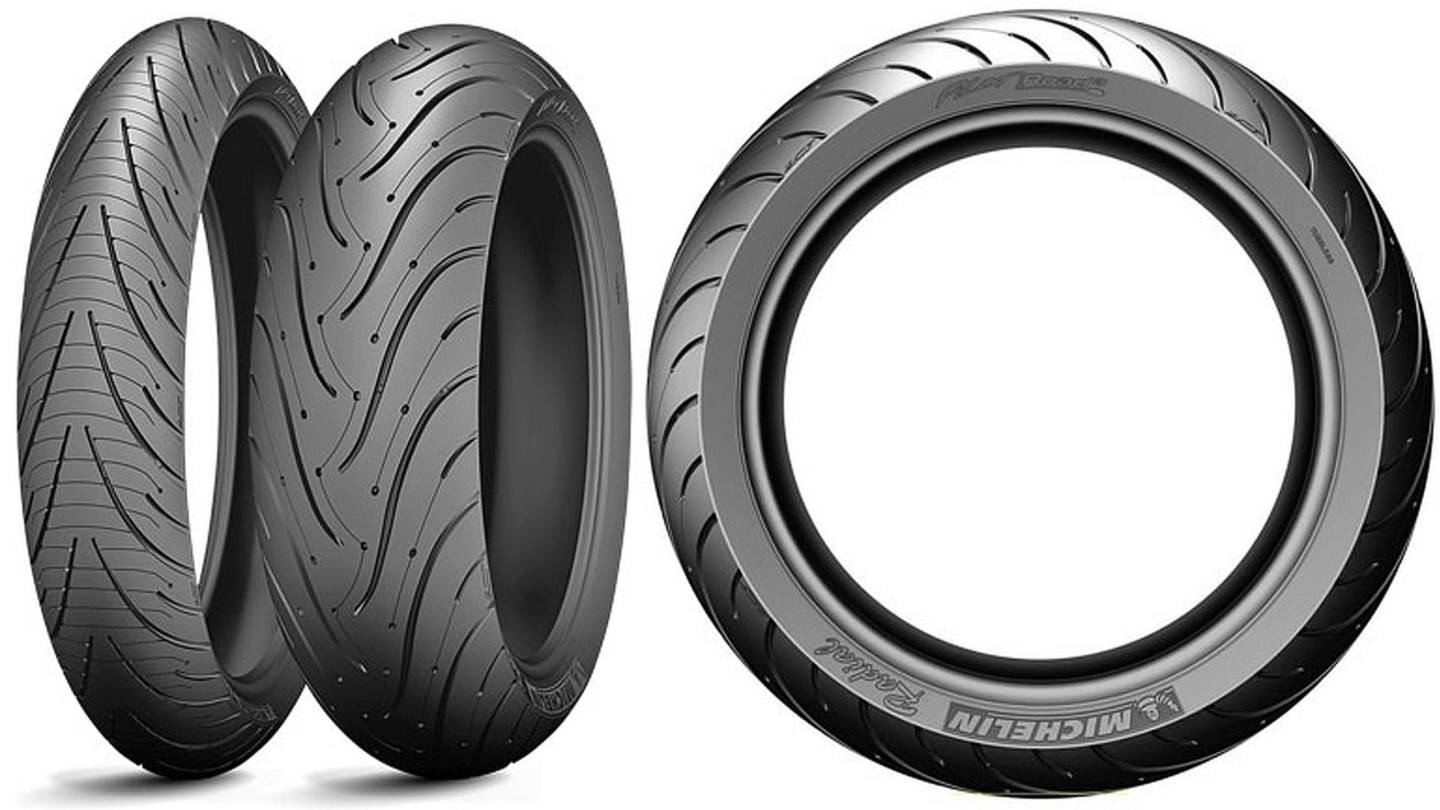
The Michelin Power 6 is designed for riders who demand racetrack-inspired handling combined with everyday street practicality. Utilizing Michelin's 2CT+ technology on the rear—where a stiffer base compound runs underneath a softer shoulder rubber—it provides stability under hard acceleration exiting corners without sacrificing lean-angle grip. Its high-silica compound ensures that wet-weather performance remains a standout feature, making it a reliable choice for riders who encounter unexpected rain.
Pirelli Diablo Rosso IV
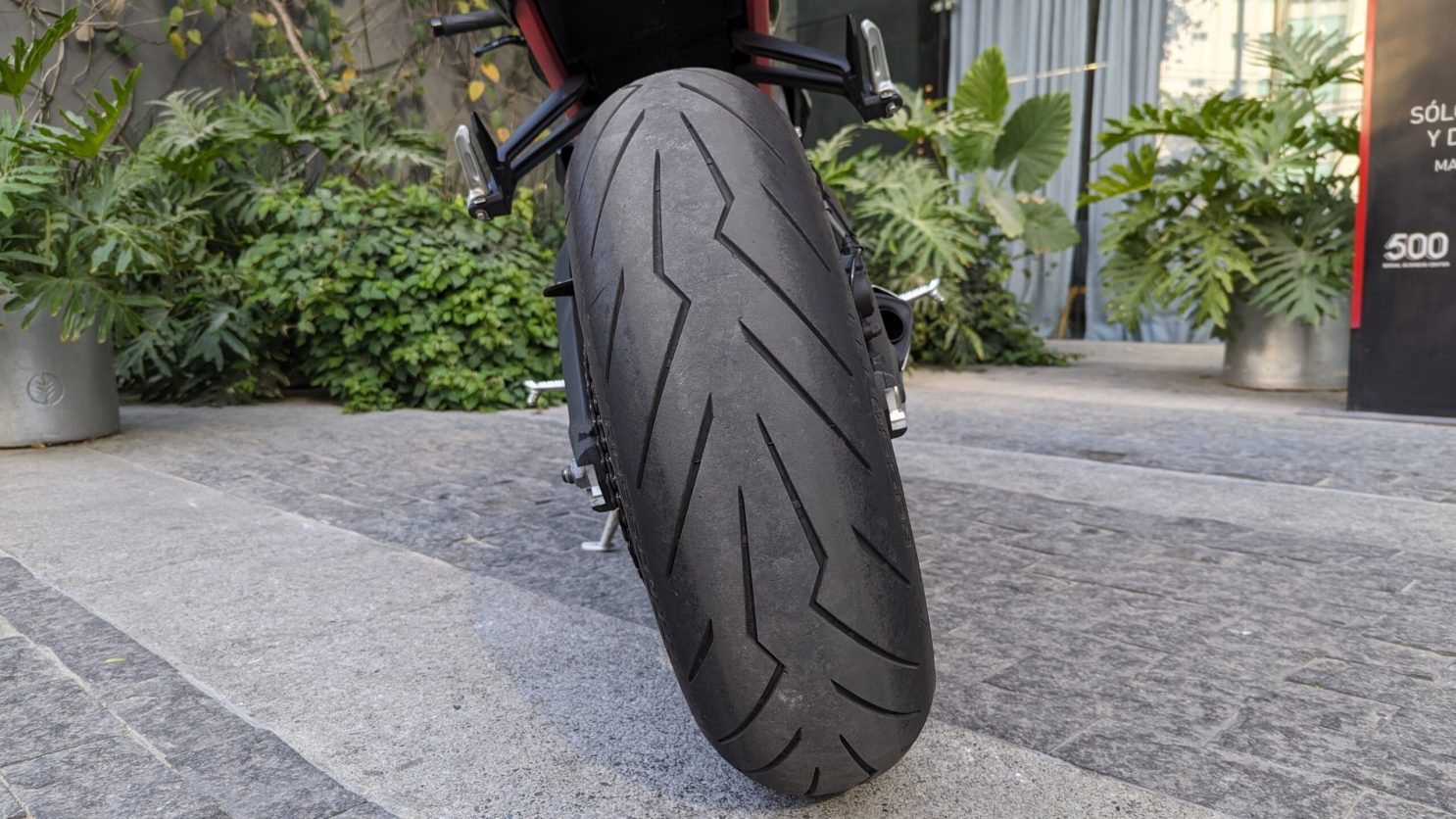
Pirelli’s Diablo Rosso IV inherits profile geometry directly from the manufacturer’s World Superbike racing development program. It features a stiffer carcass that resists deformation under heavy braking and cornering loads. The front tire utilizes a multi-compound layout divided into three zones, while the rear uses a cap-and-base construction. This results in phenomenal feedback through the handlebars, giving the rider explicit communication about front-end traction limits on twisty roads.
Bridgestone Battlax Hypersport S23
Building upon the popular S22, the Bridgestone Battlax Hypersport S23 introduces an updated rubber compound on the edge of the tread to increase contact patch area at extreme lean angles. Bridgestone utilizes internal structure optimizations to balance rigidity and compliance. This tire excels in dry-weather grip while maintaining respectable mileage for a hypersport-tier product, appealing to riders who want maximum performance without changing tires every season.
Dunlop Sportmax Q5S
For riders who push their sportbikes hard in dry conditions and occasionally visit track days, the Dunlop Sportmax Q5S bridges the gap between pure street rubber and DOT-approved race tires. Its stiff casing provides immediate turn-in response and communicates chassis adjustments clearly. However, its aggressive compounds require more care in freezing temperatures or heavy standing water compared to touring-oriented alternatives.
Metzeler Sportec M9 RR
The Metzeler Sportec M9 RR focuses heavily on real-world riding conditions, including dirty asphalt, potholes, and changing weather. Utilizing 100% silica compounds across both front and rear tires, it warms up remarkably fast and maintains its performance envelope as the tire wears down. The tread pattern is engineered to evacuate water quickly, making it one of the most confidence-inspiring tires for wet commutes.
Maintenance, Pressure, and Safety Considerations
Choosing the best tire is only half the battle; proper maintenance dictates how safely and effectively that tire performs over its lifespan.
Tire pressure must be checked weekly using a calibrated gauge when the tires are cold. Incorrect pressures distort the contact patch, leading to uneven wear, sluggish handling, or reduced grip. While track riders frequently drop pressures significantly, street riders should adhere closely to the motorcycle manufacturer's recommended cold pressure baselines, adjusting slightly only for passenger loads or sustained highway touring.
Inspect tread depth regularly using built-in wear indicators (TWI). Riding on worn tires drastically increases stopping distances, particularly in wet conditions where the tread grooves can no longer displace water. Furthermore, be mindful of the "break-in" period: new tires are slick due to mold-release agents used during manufacturing. Limit extreme lean angles and heavy throttle inputs for the first 50 to 100 miles until the shiny surface layer wears away.
Frequently Asked Questions
How many miles should I expect from a set of street sportbike tires?
Mileage varies significantly based on compound choice, riding style, bike weight, and throttle application. High-end hypersport tires like the Pirelli Diablo Rosso IV or Michelin Power 6 typically yield between 3,000 and 6,000 miles on the rear tire, while front tires often last twice as long. Sport-touring alternatives can double that lifespan, whereas pure track-day tires may wear out in under 2,000 miles.
Can I use hypersport tires for daily commuting?
Yes, modern hypersport tires feature high-silica compounds that warm up quickly, making them suitable for commuting. However, if your daily commute consists primarily of straight-line highway miles, you will flatten the center tread prematurely while wasting the expensive soft rubber on the shoulders. Riders who commute heavily are better served by high-performance sport or sport-touring tires.
Should I lower my tire pressure for canyon riding?
For street riding, dropping tire pressures below recommended specifications to gain grip is generally discouraged. Street tires rely on their designed carcass stiffness and internal operating temperatures. Excessive pressure drops can cause the tire to overheat, flex unpredictably, and wear abnormally. Stick to manufacturer-recommended cold pressures for optimal safety and predictability.
How do I know when my sportbike tires need replacement?
Tires must be replaced when the tread depth reaches the legal limit of 1/32 of an inch (or 1.6mm), indicated by the raised rubber bars (wear indicators) molded into the main tread grooves. Additionally, tires should be replaced if they exhibit dry rot, cracking, punctures in the sidewall, or if they are more than five to six years old, even if ample tread remains.
Is it safe to mix tire brands or models front and rear?
Mixing brands and models front and rear is strongly discouraged. Motorcycle tires are engineered as a matched pair, with front and rear carcass stiffness, profiles, and tread patterns designed to work in harmony. Mismatched tires can cause unpredictable handling, unsettled chassis behavior, and compromised grip when leaning into corners.
Final Recommendation
To select the ideal street sportbike tire, assess your most common riding environment. If your weekends are dedicated to aggressive canyon runs and dry twisties, opt for a premier hypersport option like the Pirelli Diablo Rosso IV or Michelin Power 6 for maximum edge grip and razor-sharp feedback. If your riding involves a mix of commuting, unpredictable weather, and spirited weekend fun, choose the Metzeler Sportec M9 RR for its exceptional cold-weather grip and wet-weather performance. Always install tires as a matched set, verify cold pressures weekly, and replace them before the tread wears down to the wear bars.