To calculate the tax on a $1,500 capital gain for the 2025 tax year, you must first determine your holding period and total taxable income. Long-term gains (assets held over one year) are taxed at 0%, 15%, or 20% depending on your income bracket. Short-term gains are taxed as ordinary income at rates ranging from 10% to 37%.
The calculation of capital gains tax is a fundamental aspect of financial planning, particularly as we navigate the 2026 tax filing season for the 2025 calendar year. While a $1,500 gain might seem modest, the specific rate applied to that amount can vary significantly based on your filing status, other sources of income, and the nature of the asset sold. Understanding the 2025 tax code ensures you accurately report your liabilities and take advantage of available exemptions.
Defining Capital Gains: The Foundation of the Calculation
Before utilizing a calculator or performing manual math, it is essential to distinguish between the types of capital gains. A capital gain occurs when you sell a capital asset—such as stocks, bonds, real estate, or even a vehicle—for more than its "basis," which is generally the purchase price plus any adjustments.
Short-Term vs. Long-Term Gains
The IRS maintains a strict distinction based on the duration of ownership. This distinction is the single most important factor in determining the tax rate applied to your $1,500 gain.
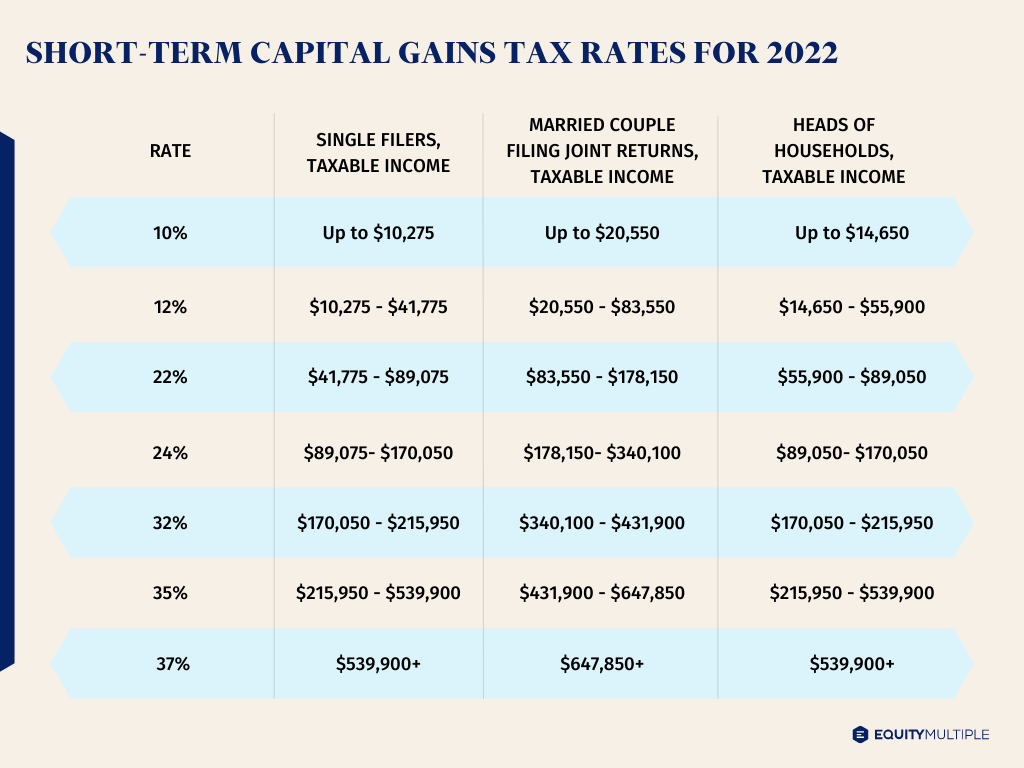
- Short-Term Capital Gains: If you held the asset for one year or less before selling it for a $1,500 profit, it is classified as a short-term gain. These are taxed at the same rate as your ordinary income (wages, interest, etc.). For the 2025 tax year, these federal brackets remain progressive, ranging from 10% to 37%.
- Long-Term Capital Gains: If you held the asset for more than one year, you qualify for preferential long-term capital gains tax rates. These rates (0%, 15%, or 20%) are typically much lower than ordinary income rates, providing a significant incentive for long-term investing.
Calculating the Cost Basis
The "1,500" figure in your calculation represents the net gain, but arriving at that number requires an accurate assessment of the cost basis. The basis is not just the price you paid; it includes commissions, fees, and, in the case of real estate, certain closing costs or improvements. If you sold an asset for $10,000 that you originally bought for $8,500 (including fees), your capital gain is exactly $1,500.
2025 Long-Term Capital Gains Tax Brackets
For the 2025 tax year, the IRS adjusted the income thresholds for capital gains brackets to account for inflation. These are the thresholds that determine whether your $1,500 long-term gain is taxed at 0%, 15%, or 20%. It is important to note that these thresholds apply to your taxable income, which is your total income minus either the standard deduction or itemized deductions.
| Filing Status | 0% Tax Rate (Taxable Income) | 15% Tax Rate (Taxable Income) | 20% Tax Rate (Taxable Income) |
|---|---|---|---|
| Single | Up to $47,025 | $47,026 – $518,900 | Over $518,900 |
| Married Filing Jointly | Up to $94,050 | $94,051 – $583,750 | Over $583,750 |
| Head of Household | Up to $63,000 | $63,001 – $551,350 | Over $551,350 |
| Married Filing Separately | Up to $47,025 | $47,026 – $291,850 | Over $291,850 |
Source: IRS Revenue Procedure 2024-40
Interpreting the 0% Bracket
Many taxpayers are surprised to find that their $1,500 gain might be taxed at 0%. If you are a single filer in 2025 and your total taxable income (including the $1,500 gain) remains below $47,025, you owe $0 in federal tax on that gain. This is a powerful tool for retirees or low-to-mid-income earners to realize gains without increasing their tax burden.
How the $1,500 Gain Interacts with Ordinary Income
The calculation of capital gains tax is not done in a vacuum. The $1,500 gain is "stacked" on top of your other income to determine which bracket it falls into.
Imagine you are a single filer with $46,000 in taxable income from your job. You then realize a $1,500 long-term capital gain.
- The first $1,025 of that gain stays within the 0% bracket (bringing you to the $47,025 limit).
- The remaining $475 of the gain spills over into the 15% bracket.
- Your total tax on the $1,500 gain would be $71.25 ($475 x 0.15).
This "cliff" effect means that a portion of a single gain can be taxed at two different rates. When using a manual or digital calculator for 2025 rates, ensuring you input your total "Ordinary Taxable Income" correctly is vital for an accurate output.
Short-Term Gain Calculations for 2025
If that $1,500 gain is short-term, the preferential rates do not apply. Instead, you use the standard 2025 income tax brackets. For the 2025 tax year, the standard deduction rose to $15,000 for single filers and $30,000 for married couples filing jointly.
If you earn $60,000 a year and have no other deductions besides the standard $15,000, your taxable income is $45,000. A $1,500 short-term gain would be added to this, making your taxable income $46,500. For 2025, the 12% bracket for single filers ends at $48,475. Therefore, the entire $1,500 would be taxed at 12%, resulting in a $180 tax bill.
Additional Taxes and Considerations
A simple calculator often misses two critical components that can change the effective tax rate on a $1,500 gain: the Net Investment Income Tax (NIIT) and state-level taxes.
Net Investment Income Tax (NIIT)
The NIIT is an additional 3.8% tax that applies to individuals with high incomes. This tax is triggered if your Modified Adjusted Gross Income (MAGI) exceeds certain thresholds:
- $200,000 for Single or Head of Household.
- $250,000 for Married Filing Jointly.
If you fall into these high-income categories, your $1,500 gain (if it is part of your investment income) could be subject to an additional $57 in tax ($1,500 x 0.038), regardless of whether it is a long-term or short-term gain.
State and Local Taxes
Most calculators focus on federal rates, but states often tax capital gains as ordinary income. For example, if you live in a state with a flat 5% income tax, your $1,500 gain will incur an additional $75 in state taxes. Conversely, states like Florida, Texas, and Washington (with specific exceptions) do not tax individual capital gains at the state level. You must verify the specific rules of your jurisdiction for the 2025 tax year.
Special Asset Classes and Different Rates
While most stocks and bonds follow the 0/15/20 rules, certain assets held in 2025 are taxed differently. If your $1,500 gain came from one of the following, the "standard" calculator might provide an incorrect result:
- Collectibles: Gains on items like art, antiques, stamps, or coins are taxed at a maximum rate of 28% if held long-term.
- Section 1250 Property: This applies to unrecaptured depreciation on real estate. This portion of the gain is taxed at a maximum rate of 25%.
- Qualified Small Business Stock (Section 1202): If you meet specific requirements, you might be able to exclude a significant portion (sometimes 100%) of the gain from tax.
Strategies to Offset the $1,500 Taxable Gain
If your calculation shows a high tax liability for your $1,500 gain, you can use several methods to reduce or eliminate that debt before the 2025 filing deadline.
Tax-Loss Harvesting
The IRS allows you to offset capital gains with capital losses. If you have another investment that lost value, you can sell it to "realize" that loss. If you had a $1,500 gain on Stock A but a $1,500 loss on Stock B, your net capital gain for 2025 is $0. You can even use up to $3,000 of excess losses to offset your ordinary income.
Charitable Contributions
Donating appreciated assets directly to a 501(c)(3) organization is a highly effective strategy. If you donate the asset that has the $1,500 gain, you typically do not have to pay capital gains tax on the appreciation, and you may be able to claim a deduction for the full fair market value of the asset.
Wash Sale Rule Caution
As you look back at your 2025 transactions from our current 2026 vantage point, remember the wash sale rule. If you sold a security at a loss to offset your $1,500 gain but bought "substantially identical" stock within 30 days before or after the sale, the loss is disallowed for tax purposes. This is a common error that calculators cannot always detect unless you provide a full transaction history.
Documentation and Reporting for 2025 Gains
To finalize the tax on your $1,500 gain, you must use specific IRS forms. Accuracy here is paramount to avoid audits or penalties.
- 1099-B: Your brokerage will send you this form. It lists your proceeds and, usually, your cost basis. Ensure the "Date Acquired" and "Date Sold" accurately reflect a long-term holding period if applicable.
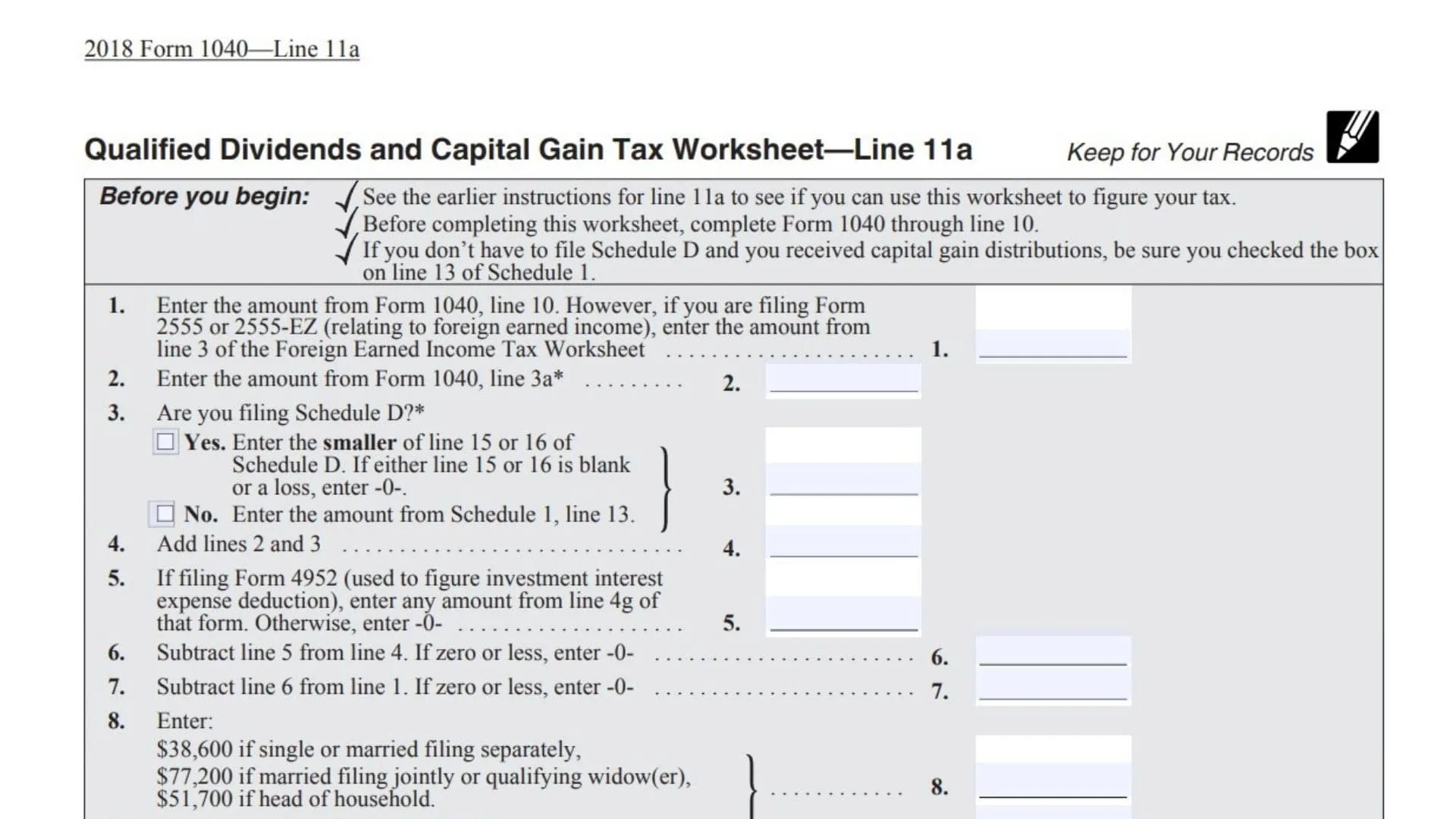
- Form 8949: This is where you list the details of every capital asset sale. You will categorize sales into short-term and long-term.
- Schedule D: The totals from Form 8949 are transferred here to calculate the final tax owed.
Frequently Asked Questions
Does the $1,500 gain affect my eligibility for the Earned Income Tax Credit (EITC)?
Yes, it can. For the 2025 tax year, your "investment income" must be $11,000 or less to qualify for the EITC. A $1,500 gain counts toward this limit. If your total investment income (including dividends, interest, and gains) exceeds the threshold, you cannot claim the credit, even if your earned income is low.
What if I inherited the asset that produced the $1,500 gain?
Inherited assets typically receive a "step-up in basis" to the fair market value on the date of the original owner's death. If the asset was worth $10,000 when you inherited it and you sold it for $11,500, your gain is $1,500. Inherited assets are automatically treated as long-term capital gains, regardless of how long you or the decedent held them.
Is the $1,500 gain taxed if it occurred inside a 401(k) or IRA?
No. Capital gains generated within tax-advantaged accounts like a 401(k) or a traditional/Roth IRA are not subject to capital gains tax. You only pay taxes when you take distributions from a traditional account (at ordinary income rates), or not at all in the case of a qualified Roth distribution.
How do I handle a $1,500 gain from cryptocurrency?
The IRS treats cryptocurrency as property. Therefore, the same 0/15/20% long-term or ordinary short-term rates apply. You must be able to prove your cost basis with exchange records or wallet transactions to justify the $1,500 figure.
Can I use the standard deduction to wipe out my $1,500 gain?
The standard deduction reduces your overall taxable income. If your total income (including the $1,500 gain) is less than your standard deduction, you will have $0 taxable income and thus owe $0 in tax. For example, if you are single and earned only $12,000 in 2025 plus the $1,500 gain, your total income of $13,500 is less than the $15,000 standard deduction, resulting in no tax liability.
Final Recommendation
When calculating the tax on a $1,500 capital gain for 2025, always start by verifying the holding period to see if you qualify for the lower long-term rates. Use the 2025 inflation-adjusted brackets to see where your total taxable income falls. If you find yourself in the 15% or 20% bracket, look for realized losses in your portfolio to offset the gain. Finally, ensure you account for state taxes, as they can add an unexpected 3% to 13% to your total bill depending on your location.