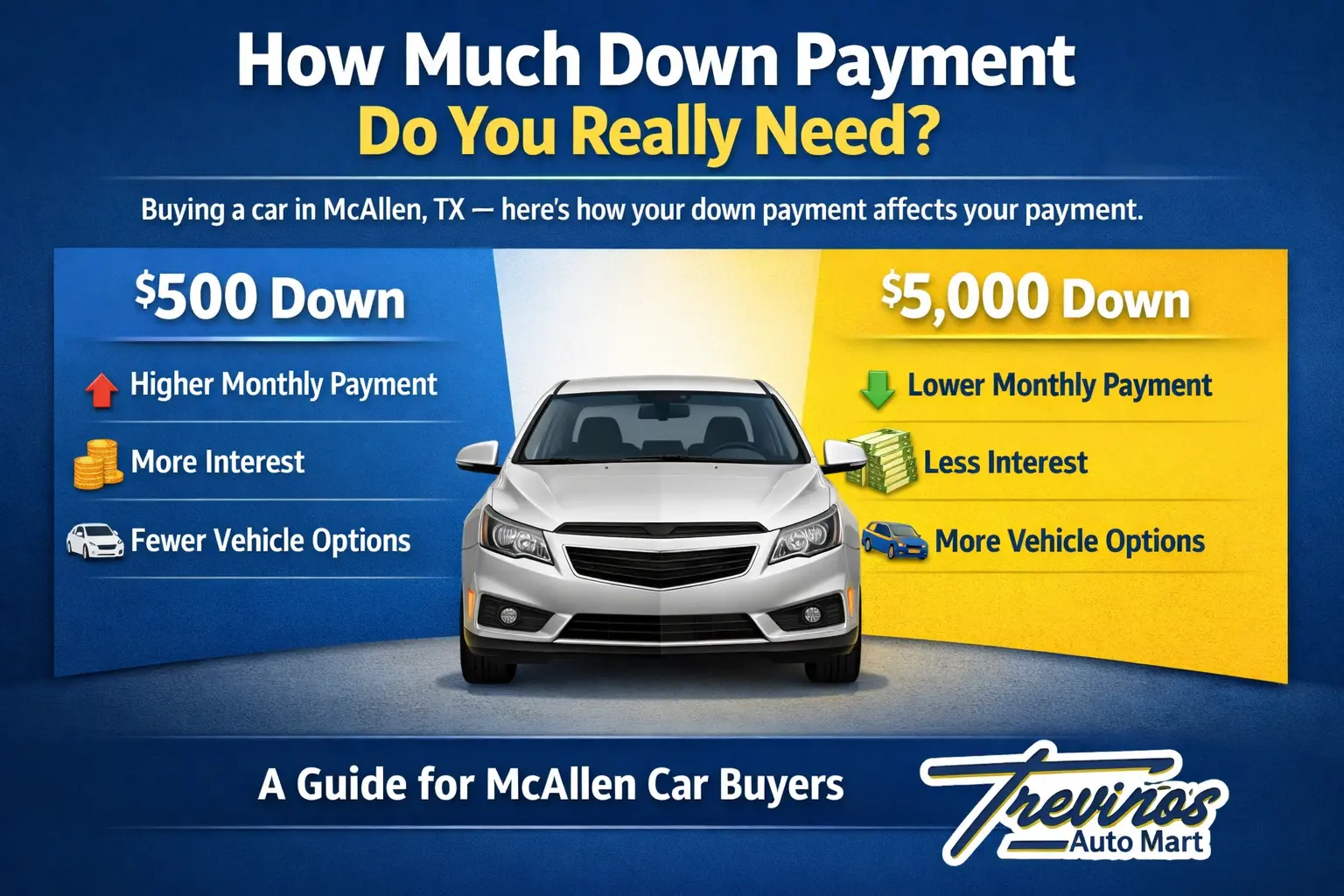
A good down payment on a car is generally considered to be 20% of the purchase price for a new vehicle and at least 10% for a used vehicle. This amount helps you avoid negative equity, lowers your monthly installments, reduces the total interest paid over the life of the loan, and improves your chances of financing approval.
Navigating the automotive market in 2026 requires a strategic approach to financing. As vehicle prices have stabilized following the volatility of the early 2020s, the fundamental principles of auto lending remain consistent. The amount of money you provide upfront—your down payment—is the single most influential factor in determining the long-term cost of your vehicle. Whether you are eyeing a high-tech electric vehicle (EV) or a reliable internal combustion engine (ICE) model, understanding the mechanics of a down payment is essential for financial health.
The Standard Benchmarks: Why 20% for New and 10% for Used?
The "20% rule" for new cars is not an arbitrary figure created by lenders; it is a calculated safeguard against depreciation. Most new vehicles lose approximately 15% to 20% of their value within the first year of ownership. By putting 20% down, you effectively cover that initial drop in value out of pocket. This ensures that you do not owe more on the loan than the car is actually worth—a situation known as being "underwater" or having negative equity.
For used vehicles, the benchmark drops to 10% because the steepest curve of depreciation has already occurred. Used cars hold their value more linearly compared to new models. However, because used car interest rates are historically higher than new car rates, a larger down payment on a used vehicle can be even more beneficial in terms of total interest savings.
The Role of Loan-to-Value (LTV) Ratio
Lenders use a metric called the Loan-to-Value (LTV) ratio to assess risk. If a car costs $40,000 and you put $8,000 down (20%), your loan amount is $32,000, resulting in an LTV of 80%. Lenders prefer lower LTV ratios because the vehicle serves as collateral. If the LTV is 100% or higher (which happens with $0 down payments when taxes and fees are rolled into the loan), the lender faces significant risk if they have to repossess and sell the vehicle. Consequently, a higher down payment often unlocks lower interest rates (APR).
The Financial Benefits of a Substantial Down Payment
Putting more money down upfront is a form of immediate investment in your future cash flow. While it may be tempting to keep your cash in a savings account, the interest rate on an auto loan is almost always higher than the yield on a standard savings account, making the down payment a "guaranteed return" in the form of avoided interest.
1. Lower Monthly Payments
The most immediate benefit is the reduction of your monthly financial obligation. For every $1,000 you put down, your monthly payment typically drops by about $15 to $20, depending on the loan term and interest rate. This increases your monthly "disposable" income, providing a buffer for other expenses like insurance, maintenance, and fuel or charging costs.
2. Significant Interest Savings
Auto loans in 2026 often utilize simple interest calculations. This means interest is calculated based on the remaining principal balance. A larger down payment reduces the principal from day one. Over a 60-month or 72-month term, the difference between a 5% down payment and a 20% down payment can result in thousands of dollars saved in interest.
3. Avoiding "Gap" Insurance Needs
If you finance a car with little to no money down, your insurance company will likely only pay the "fair market value" of the car if it is totaled in an accident. If you owe $35,000 but the car is only worth $28,000, you are responsible for the $7,000 "gap." To prevent this, many buyers are forced to purchase GAP insurance. A 20% down payment usually creates enough of a value cushion that GAP insurance becomes unnecessary, saving you even more money.
Down Payment Comparison: The Math in Action
To visualize the impact, consider a new car priced at $45,000 with a 5-year (60-month) loan at a 6% interest rate.
| Down Payment Percentage | Down Payment Amount | Loan Amount | Monthly Payment | Total Interest Paid |
|---|---|---|---|---|
| 0% (Zero Down) | $0 | $45,000 | $870 | $7,195 |
| 10% | $4,500 | $40,500 | $783 | $6,475 |
| 20% | $9,000 | $36,000 | $696 | $5,756 |
| 30% | $13,500 | $31,500 | $609 | $5,036 |
Note: Calculations are estimates and do not include taxes, registration fees, or dealer documentation fees which vary by jurisdiction.
When a Smaller Down Payment Might Make Sense
Despite the advantages of the 20% rule, there are specific scenarios in 2026 where a smaller down payment is strategically viable.
- Manufacturer Incentives: If a manufacturer is offering 0% or ultra-low 1.9% financing to move specific inventory, the "opportunity cost" of a large down payment increases. If your money can earn 4% or 5% in a high-yield savings account, it may be mathematically superior to take the low-interest loan and keep your cash liquid.
- Emergency Fund Protection: You should never deplete your emergency savings to reach a 20% down payment. If putting $10,000 down leaves you with no cash for a medical emergency or home repair, it is better to put $5,000 down and accept a slightly higher monthly payment.
- Rapid Appreciation/High Resale Values: In rare market conditions where certain models (often specialized EVs or limited-run trucks) hold their value exceptionally well, the risk of negative equity is lower, though this is difficult to predict with certainty.
Using Trade-ins and Incentives as "Cash"
A down payment does not have to consist entirely of physical cash. In 2026, many consumers use a combination of three sources to meet their down payment goals:
- Cash Savings: Money transferred from your bank account.
- Trade-In Equity: If your current vehicle is worth $15,000 and you owe $10,000 on it, you have $5,000 in "equity" that acts exactly like a cash down payment.
- Rebates and Incentives: Manufacturers often offer "customer cash" or "loyalty rebates." These can often be applied directly to the down payment.
Pro-Tip: In many U.S. states, the value of your trade-in is deducted from the purchase price before sales tax is calculated. For example, if you buy a $40,000 car and trade in a vehicle for $10,000, you only pay sales tax on $30,000. This provides a "hidden" bonus to your down payment that pure cash cannot offer.
Credit Scores and Down Payment Requirements
Your credit profile significantly influences how much a lender will require you to put down.
- Super-Prime (780+): Buyers with excellent credit may be approved for $0 down with the lowest available rates. For these buyers, the down payment is a choice rather than a requirement.
- Prime (660-779): Most lenders will look for at least 10% down to offer their best standard rates.
- Subprime (Below 600): If you have a lower credit score, a down payment is often mandatory. Lenders may require 15% to 25% down to offset the risk of default. In these cases, a large down payment is the most effective tool to secure a loan that would otherwise be denied.
The Federal Trade Commission (FTC) provides extensive resources on how credit scores impact auto financing and warns against "buy here, pay here" lots that may not require down payments but charge exorbitant interest rates.
Strategies for Saving Your Down Payment
If you are planning a purchase later in 2026, starting a dedicated "Car Fund" is the best approach.
- Automated Transfers: Set up a monthly transfer to a separate account. If you aim to save $6,000 over 12 months, that is $500 per month—coincidentally, this also "trains" your budget for the future car payment.
- Tax Refunds and Bonuses: Allocate one-time windfalls directly to the car fund to leapfrog your progress.
- Monitor Trade-in Value: Use tools like Kelley Blue Book or Edmunds to track the value of your current vehicle monthly. This helps you understand exactly how much "trade-in down payment" you have at any given time.
Frequently Asked Questions
Is $0 down a bad idea?
Generally, yes. While it keeps cash in your pocket today, it almost guarantees you will be "underwater" on the loan for the first two to three years. If you need to sell the car or if it is totaled during this time, you will have to pay the lender the difference out of pocket. Furthermore, $0 down usually results in the highest possible interest rate.
Can I use a credit card for my down payment?
Some dealers allow you to put a portion of the down payment (often up to $2,000 or $5,000) on a credit card. However, this is only advisable if you can pay off the credit card balance immediately. Carrying a down payment on a credit card at 20%+ interest while paying off a car loan at 6% interest is a recipe for financial distress.
Does the down payment include taxes and fees?
Usually, no. When a dealer asks for a down payment, they are usually talking about the "cap cost reduction" (the amount that reduces the price of the car). Taxes, title, and registration fees (TTL) can add 8% to 10% to the total cost. If you put 10% down but roll the taxes into the loan, you are effectively back at a $0 down position relative to the car's value.
Should I put more than 20% down if I can afford it?
If you have the cash and it isn't earmarked for higher-interest debt (like credit cards) or essential investments, putting 30% or 40% down is an excellent move. It further reduces your interest and can even allow you to shorten the loan term from 60 months to 36 months, which usually carries a significantly lower interest rate.
How does a down payment affect my car insurance?
While a down payment doesn't directly change your premium, it changes the type of coverage you need. As mentioned, a 20% down payment likely eliminates the need for GAP insurance. Additionally, if you own a significant portion of the car's value, you have more flexibility in choosing deductibles, though lenders will still require "Full Coverage" (comprehensive and collision) as long as a lien exists on the title.
Practical Recommendation
For most buyers in 2026, the ideal strategy is the 20/4/10 Rule: Put at least 20% down, finance the car for no more than 4 years (48 months), and ensure that your total vehicle expenses (loan, insurance, fuel/maintenance) do not exceed 10% of your gross monthly income.
If 20% feels out of reach, do not settle for $0 down. Even a 5% or 10% down payment significantly changes the amortization schedule of your loan in your favor. Prioritize getting out of the "negative equity" zone as quickly as possible to ensure your vehicle remains an asset rather than a growing liability.
Financial Disclaimer: This article provides general financial information and does not constitute professional financial or legal advice. Interest rates, lending requirements, and tax laws vary by region and individual credit profile. Consult with a certified financial advisor or tax professional before making significant financial commitments.