Effective business connectivity forms the foundational infrastructure modern enterprises rely on to maintain daily operations, secure sensitive data, and deliver reliable digital experiences to customers. Choosing the right network architecture requires a comprehensive understanding of transmission mediums, bandwidth requirements, redundancy protocols, and service-level agreements to ensure uninterrupted productivity across local and distributed environments.
Understanding Business Connectivity Fundamentals
Business connectivity refers to the dedicated telecommunication networks and transmission paths that link an organization’s physical offices, remote workers, data centers, and cloud resources. Unlike residential internet connections, which prioritize asymmetrical download speeds for streaming and casual browsing, enterprise connectivity demands symmetrical bandwidth, low latency, high availability, and robust security features.
At its core, a business network must accommodate intense multi-user traffic, high-volume transactional data, unified communications (voice and video), and continuous data backups. When evaluating connectivity solutions, organizations must look beyond raw megabits per second (Mbps) or gigabits per second (Gbps) to examine metrics like packet loss, jitter, and network resilience. A failure in connectivity directly halts revenue-generating activities, disrupts supply chains, and damages customer trust, making infrastructure selection a high-stakes executive decision.
Furthermore, modern connectivity extends beyond a single physical wire coming into a building. It encompasses wide area networks (WANs), software-defined networking, local area network (LAN) switching, and wireless access points. Understanding how these layers interact prevents operational bottlenecks and allows IT departments to scale network capacity alongside organizational growth.
Core Types of Business Internet Connections
Organizations can choose from several distinct transmission technologies, each offering unique performance characteristics, geographic availability, and cost profiles. Selecting the appropriate medium depends entirely on the operational scale of the business, its reliance on cloud-hosted applications, and its tolerance for downtime.
Fiber-Optic Internet (FTTP/FTTB)
Fiber-optic connections transmit data as pulses of light through glass strands, offering the highest performance standard available. Fiber-to-the-Premises (FTTP) or Fiber-to-the-Building (FTTB) delivers truly symmetrical speeds—meaning upload speeds match download speeds identically. This capability is critical for businesses that frequently upload large files, host internal servers, or run heavy cloud-based enterprise resource planning (ERP) systems. Fiber is immune to electromagnetic interference and signal degradation over long distances, making it exceptionally reliable.
Coaxial Cable (Hybrid Fiber-Coaxial - HFC)
Cable internet utilizes existing coaxial infrastructure originally built for cable television. While modern DOCSIS 3.1 and DOCSIS 4.0 standards allow cable providers to offer high download speeds, these networks are traditionally asymmetrical, providing lower upload bandwidth. Cable is widely available and cost-effective for small-to-medium businesses (SMBs), though shared neighborhood nodes can lead to bandwidth contention during peak usage hours.
Fixed Wireless Access (FWA)
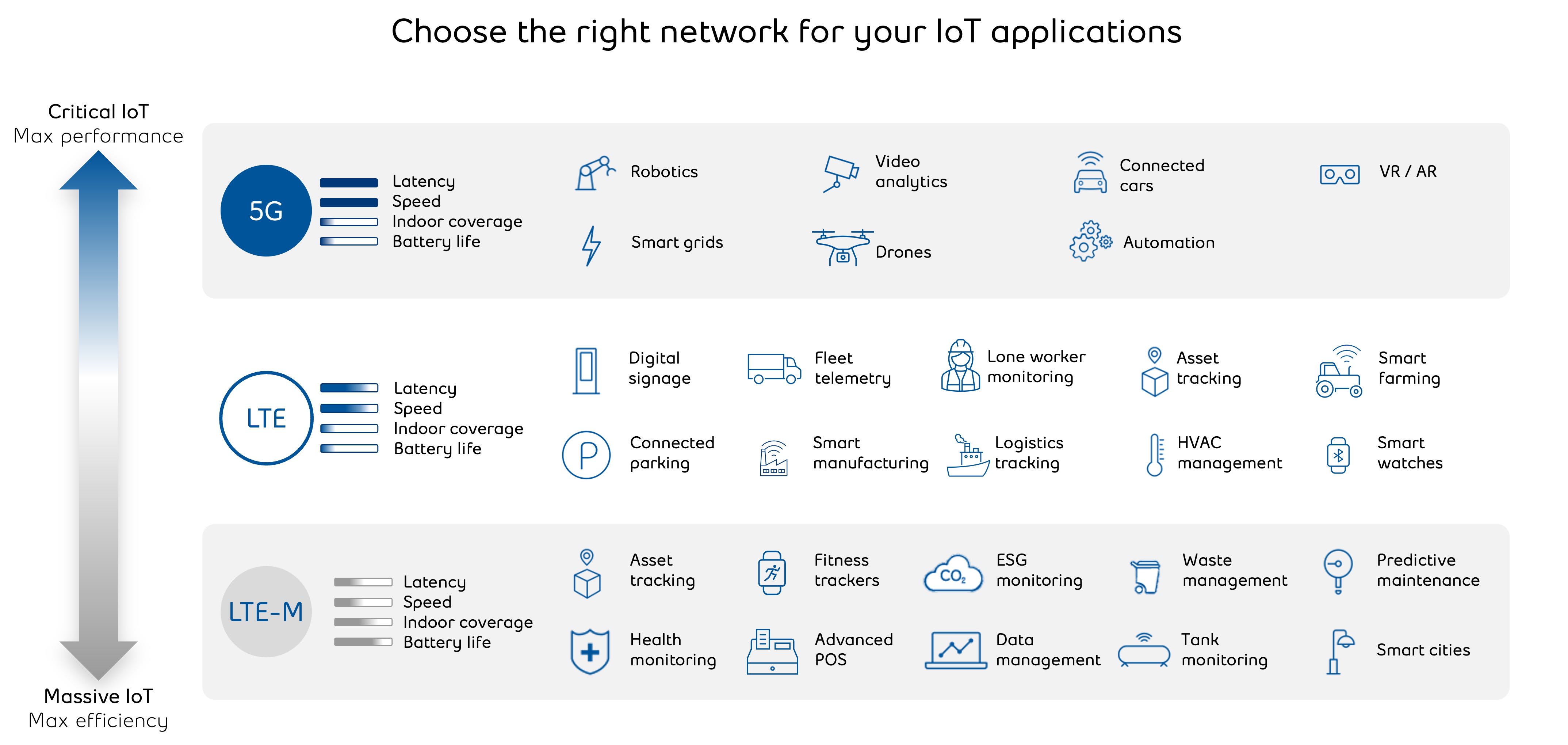
Fixed wireless uses high-frequency radio signals transmitted between a terrestrial base station and a receiver mounted on a business property. It serves as an excellent alternative in rural areas where laying physical cable is cost-prohibitive, or as a rapid-deployment solution for temporary sites and construction trailers. Modern 5G-based fixed wireless provides high speeds and low latency, rivaling traditional wired lines in many urban and suburban markets.
Satellite Internet
Traditional satellite internet relies on geostationary earth orbit (GEO) satellites operating thousands of miles above the planet, resulting in significant signal latency. However, Low Earth Orbit (LEO) satellite constellations have transformed enterprise satellite connectivity, offering lower latency and higher bandwidth suitable for remote operations, maritime vessels, and backup redundancy in extreme environments.
Key Performance Metrics: Beyond Speed Tests
Evaluating a business connectivity provider requires looking past advertised maximum speeds. Service reliability and network quality are governed by several technical parameters that directly influence daily user experience.
| Metric | Definition | Ideal Business Target |
|---|---|---|
| Symmetry | Equal measure of download and upload data rates. | 1:1 ratio (e.g., 500 Mbps down / 500 Mbps up) |
| Latency | The time it takes for data packets to travel from source to destination. | Under 20 ms for local traffic; under 50 ms for regional cloud apps |
| Jitter | The variability in packet arrival times over a network connection. | Under 5 ms to prevent voice and video distortion |
| Packet Loss | The percentage of data packets that fail to reach their destination. | 0% (tolerable up to 0.1% for non-critical tasks) |
| Uptime SLA | Contractual guarantee of operational network availability. | 99.99% ("four nines") or 99.999% ("five nines") |
Understanding these metrics prevents organizations from buying high-bandwidth connections that suffer from high jitter or packet loss, which renders real-time applications like VoIP and video conferencing unusable regardless of raw speed capacity.
Evaluating Dedicated Internet Access (DIA) vs. Broadband
A critical architectural decision for growing enterprises is choosing between Dedicated Internet Access (DIA) and standard business broadband.
- Business Network
- Dedicated Internet Access (DIA) — Unshared, Symmetrical, Guaranteed SLA
- Standard Business Broadband — Shared Node, Asymmetrical, Best-Effort
Dedicated Internet Access (DIA)
DIA delivers a private, unshared connection exclusively between the service provider's backbone and the customer's premises. The bandwidth is not shared with neighboring businesses or residential users. DIA circuits come with strict Service-Level Agreements (SLAs) that guarantee uptime, repair times, and performance metrics, backed by financial penalties for the provider if standards are breached. DIA is essential for enterprises hosting customer-facing applications, managing large VoIP deployments, or handling sensitive financial transactions.
Business Broadband
Business broadband utilizes shared infrastructure (such as fiber-to-the-cabinet or cable networks). While significantly more affordable, it operates on a "best-effort" delivery model. If neighboring businesses consume high volumes of data, throughput speeds on a broadband connection can degrade. SLAs for broadband are generally less robust, often offering longer Mean Time to Repair (MTTR) windows during outages.
Designing Redundancy and Failover Architectures
No single internet connection is completely immune to accidental fiber cuts, hardware failures, or regional power outages. Enterprise business continuity planning requires establishing resilient backup topologies to prevent costly downtime.
Active-Passive (Failover) Configurations
In an active-passive setup, the primary connection (typically a high-speed fiber or DIA circuit) handles all active network traffic. A secondary connection (such as a cable, fixed wireless, or 5G backup link) remains idle. A specialized hardware router monitors the primary link continuously; if it detects a failure, traffic automatically reroutes to the secondary connection within seconds, maintaining operational continuity.
Active-Active (Load Balancing) Configurations
An active-active architecture utilizes two or more connections simultaneously. Network traffic is dynamically distributed across all available links based on predefined routing policies or application types. For example, video conferencing traffic might be routed over the low-latency fiber line, while large backup routines utilize the secondary connection. This maximizes return on investment for secondary infrastructure by keeping it utilized during normal operations while still providing automatic failover if one link drops.
Implementing Software-Defined WAN (SD-WAN)
As enterprises increasingly migrate workloads to multi-cloud environments (such as AWS, Microsoft Azure, and Google Cloud), traditional hub-and-spoke wide area network architectures often introduce latency and routing inefficiencies. Software-Defined WAN (SD-WAN) virtualizes network architecture, decoupling network hardware from its control mechanism.
SD-WAN intelligently manages traffic across multiple transport services—multiprotocol label switching (MPLS), broadband, fiber, and 5G—by dynamically steering packets based on real-time application requirements and link performance. If packet loss spikes on one circuit, SD-WAN instantly shifts mission-critical VoIP or SaaS traffic to a healthier path without dropping active user sessions. This technology reduces reliance on expensive legacy MPLS circuits while enhancing overall network visibility and security enforcement through centralized cloud management consoles.
Step-by-Step Guide to Procuring Business Connectivity
Procuring and deploying new enterprise connectivity requires a methodical approach to ensure technical alignment and budget control.
- Conduct a Bandwidth Audit: Analyze current peak network usage, employee headcount, device density, and planned software migrations (such as moving local storage to cloud environments) to calculate minimum required throughput.
- Map Geographic Availability: Inventory which carriers have fiber or cable plant footprints directly servicing your specific building or campus. On-net buildings (already wired by the provider) feature significantly lower installation costs and faster provisioning times than off-net buildings requiring "last-mile" construction.
- Draft Request for Proposals (RFPs): Outline required symmetry, SLA terms, support response times, and budget parameters. Distribute the RFP to multiple facilities, competitive local exchange carriers (CLECs), and cable operators.
- Negotiate Service-Level Agreements (SLAs): Ensure the contract clearly defines financial remedies for downtime, guarantees rapid hardware replacement, and specifies maintenance window notification periods.
- Coordinate Physical Installation: Partner with internal IT teams or managed service providers (MSPs) to prepare premise equipment, firewalls, and rack space prior to the carrier's technician dispatch.
- Perform End-to-End Testing: Conduct rigorous latency, throughput, and failover testing before cutting production traffic over to the new circuit.
Cost Considerations and Pricing Models
Business connectivity pricing varies widely based on geography, technology type, and contract terms. Understanding pricing components helps prevent unexpected capital expenditures.
- Non-Recurring Costs (NRC): Upfront installation fees, construction costs for extending fiber to a building, and activation charges. Providers occasionally waive these fees in exchange for longer contract commitments.
- Recurring Monthly Costs (MRC): The fixed monthly fee for the circuit bandwidth. DIA circuits carry higher MRCs due to dedicated capacity and guaranteed SLAs, whereas broadband and fixed wireless offer lower monthly operational expenditures (OPEX).
- Equipment Leasing: Costs associated with carrier-provided managed routers, demarcation extension devices, or uninterruptible power supply (UPS) units.
Longer contract terms—typically ranging from 36 to 60 months—frequently secure lower monthly rates, though organizations must weigh the risk of technological obsolescence or corporate relocation against potential savings.
Frequently Asked Questions
What is the difference between consumer internet and business internet?
Business internet includes symmetrical speeds, dedicated account management, strict Service-Level Agreements (SLAs) with guaranteed uptime, priority fault repair, and static IP addresses necessary for hosting servers or virtual private networks (VPNs). Consumer internet uses asymmetrical speeds, shared bandwidth pools, and best-effort support models.
Why do businesses need static IP addresses?
A static IP address remains constant, unlike dynamic IP addresses assigned to residential routers. Businesses require static IPs to host internal servers, operate secure remote access VPNs for employees, manage firewalls remotely, and configure reliable domain name system (DNS) records.
How much bandwidth does my business actually need?
Bandwidth requirements depend on employee count and application intensity. As a general baseline, organizations with heavy cloud usage and video conferencing require at least 10 to 25 Mbps of symmetrical bandwidth per knowledge worker. Organizations handling massive graphic files, video production, or software development require significantly higher allocations.
What is a Service-Level Agreement (SLA)?
An SLA is a legally binding contract between a telecommunications provider and a business customer that defines the minimum performance standards expected, including uptime percentages, maximum packet loss thresholds, and guaranteed maximum timeframes for restoring service during an outage.
How does SD-WAN improve business connectivity?
SD-WAN abstracts underlying network hardware, allowing businesses to bond multiple connections (fiber, cable, 5G) together. It automatically steers application traffic over the best performing link in real-time, reducing costs by replacing expensive private circuits with secure broadband and cellular pathways.
Summary and Next Actions
Selecting and deploying the right business connectivity infrastructure is a vital operational milestone that dictates organizational agility, security posture, and employee productivity. Begin by auditing current network utilization and identifying performance bottlenecks. Next, map available carrier footprints at your location and compare dedicated fiber against resilient hybrid alternatives. Finally, engage reputable providers to negotiate robust SLAs that safeguard your enterprise against costly downtime.