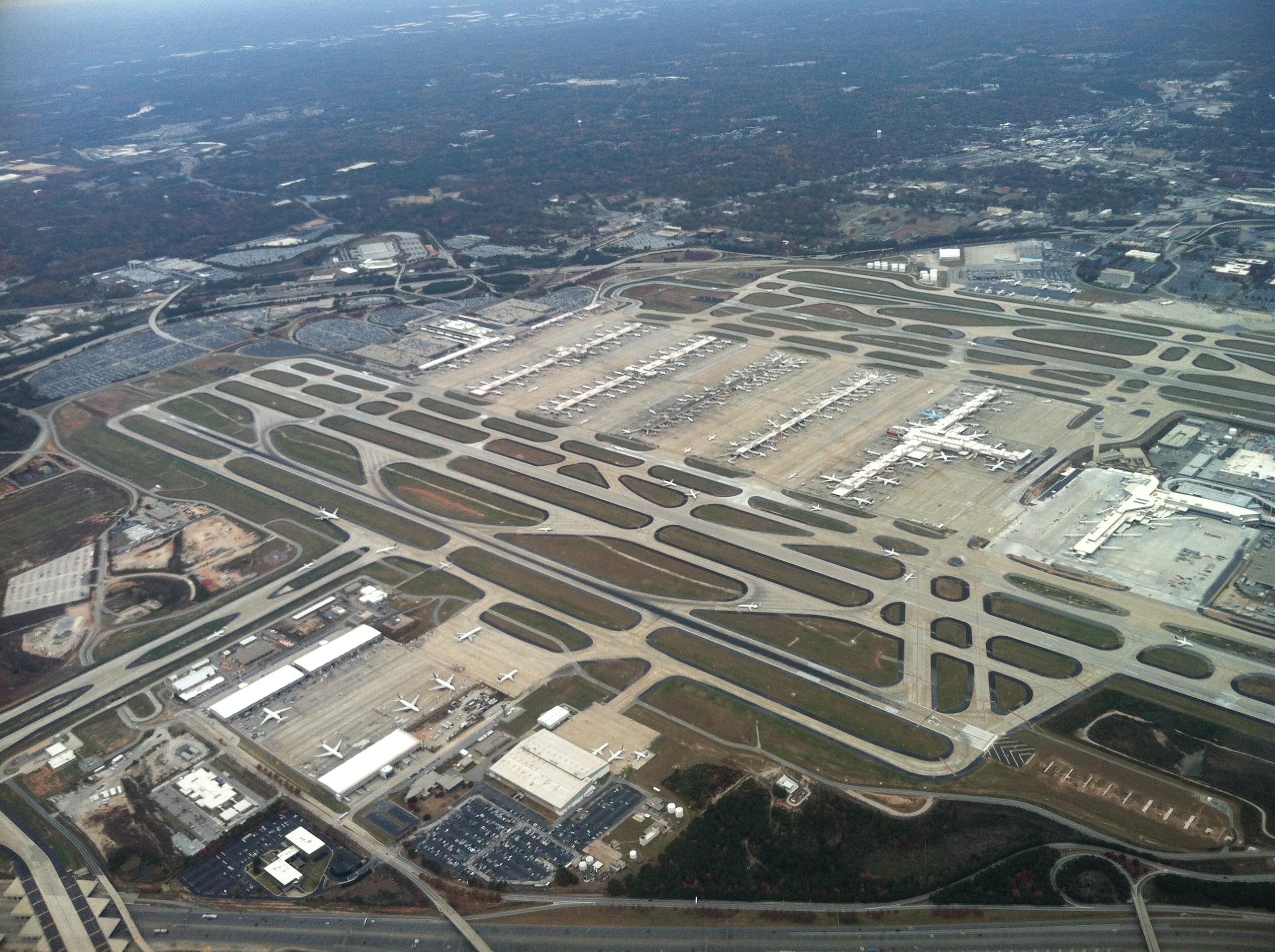
Hartsfield-Jackson Atlanta International Airport (ATL) manages domestic operations through a centralized Domestic Terminal partitioned into North and South wings, serving as the primary gateway for over 100 million annual passengers. Domestic travelers navigate seven parallel concourses (T, A, B, C, D, E, and F) linked by the underground Plane Train automated people mover. Delta Air Lines dominates the South Terminal, while all other domestic carriers, including Southwest, American, and United, operate from the North Terminal.
Hartsfield-Jackson remains the world's most efficient airport, a title it has defended through sophisticated logistical planning and continuous infrastructure investment. For travelers in 2026, understanding the domestic layout is essential for managing tight connections and navigating one of the most complex aviation environments on the planet. The domestic side of the airport is not merely a building but a high-capacity machine designed to move thousands of people per hour between the curbside and the runway.
The Domestic Terminal Architecture: North vs. South
The Domestic Terminal is located on the western side of the airport complex. Although it appears as one massive structure, it is functionally divided into two distinct sides separated by a massive central Atrium. This design is primarily intended to streamline baggage claim and check-in processes based on airline affiliation.
Domestic Terminal South
The South Terminal is almost exclusively dedicated to Delta Air Lines. As Atlanta is Delta’s primary global hub, the South Terminal handles the highest volume of check-in traffic. In 2026, the South Terminal features advanced biometric drop-off points where passengers who have opted into digital ID programs can check bags and verify their identity without presenting a physical government ID, provided they have a pre-verified TSA PreCheck profile.
Domestic Terminal North
The North Terminal serves all other domestic carriers. This includes major "legacy" carriers like American Airlines and United Airlines, as well as low-cost and ultra-low-cost carriers such as Southwest Airlines, Frontier, and Spirit. The division ensures that the sheer volume of Delta passengers does not overwhelm the processing capacity for other airlines. Each side has its own dedicated baggage claim carousels, numbered 1-10 for North and 1-10 for South, located on the lower level.
The Central Atrium
The Atrium serves as the neutral "heart" of the domestic operations. It provides a massive seating area, a high concentration of retail and dining options, and access to the airport's interfaith chapel and conference rooms. For passengers arriving via the MARTA (Metropolitan Atlanta Rapid Transit Authority) train system, the Atrium is the first point of entry into the airport.
The Concourse System: From T to F
While check-in happens at the Domestic Terminal, the actual flight operations occur on seven linear concourses. These concourses sit parallel to each other, perpendicular to the runways. This layout allows planes to taxi efficiently between the terminal buildings without creating the "dead ends" often found in older, circular airport designs.
- Concourse T: Attached directly to the Domestic Terminal. This is the only concourse where you can walk directly to your gate after clearing security without taking a train. It is heavily utilized by United, American, and Delta.
- Concourse A: Primarily a Delta Air Lines stronghold. It is known for its high-density seating and extensive dining options.
- Concourse B: Another major Delta hub. Concourse B is often cited as one of the busiest individual airport piers in the world due to the high frequency of narrow-body domestic flights.
- Concourse C: Shared between Delta and Southwest Airlines. Southwest operations are concentrated at the eastern end of the concourse.
- Concourse D: The narrowest of the concourses. In 2026, Concourse D continues to see the benefits of the "D-Widening" project, which significantly increased the square footage of the gate areas and walkways to improve passenger flow.
- Concourse E and F: While these are primarily the International Terminal concourses, they are fully integrated into domestic operations. Delta frequently utilizes Concourse E for domestic wide-body flights. Domestic passengers can travel to these concourses via the Plane Train without needing to clear additional security.
The Plane Train and Internal Logistics
The defining feature of ATL’s domestic efficiency is the Plane Train. This automated people mover operates in a tunnel beneath the concourses.
Operational Frequency and Capacity
In 2026, the Plane Train operates on a 108-second headway during peak periods. The system is designed to move over 10,000 passengers per hour. For a domestic passenger, the transit time from the Domestic Terminal (Security) to Concourse F (the furthest point) is approximately 15 minutes, including wait times.
The Walking Tunnel
For those who prefer to walk or have long layovers, a subterranean walkway runs parallel to the Plane Train. The segment between Concourse A and B is particularly notable for its "Rainforest" art installation, featuring immersive lighting and soundscapes. Walking between concourses is often faster than waiting for the train if you are only moving one concourse over (e.g., from B to C).
Security Checkpoints and Digital Integration
Domestic security at ATL is partitioned into three main zones: the Main Checkpoint, the North Checkpoint, and the Lower Level Checkpoint.
TSA PreCheck and CLEAR
Atlanta was an early adopter of the TSA PreCheck expansion. In 2026, the South Side of the domestic terminal features dedicated "Digital ID" lanes. These lanes use facial recognition technology to match passengers with their flight manifests and security credentials, often eliminating the need to scan a boarding pass.
CLEAR pods are available at both North and South entrances. Because ATL is a high-volume hub, travelers are strongly advised to check the live security wait times via the official Hartsfield-Jackson website or the ATL Airport app before arrival.
Requirements for Domestic Travel
Under federal law, domestic passengers must present a REAL ID-compliant form of identification. By 2026, this requirement is strictly enforced at all TSA checkpoints. Passengers without a REAL ID or a valid passport will be denied entry to the sterile area of the terminal.
Airline Distribution Table
| Airline | Terminal Side | Primary Concourses | Check-in Location |
|---|---|---|---|
| Delta Air Lines | South | T, A, B, C, D, E, F | Doors S1 - S6 |
| Southwest Airlines | North | C | Doors N1 - N2 |
| American Airlines | North | T | Doors N3 - N4 |
| United Airlines | North | T | Doors N3 - N4 |
| Spirit Airlines | North | D | Doors N5 - N6 |
| Frontier Airlines | North | D | Doors N5 - N6 |
| Alaska Airlines | North | D | Doors N1 - N2 |
| JetBlue | North | D | Doors N1 - N2 |
Ground Transportation and Parking Logistics
Accessing the domestic terminal involves navigating one of the largest parking and transit infrastructures in the United States.
MARTA (Rail)
The MARTA airport station is located inside the domestic terminal, positioned directly between the North and South check-in areas. The Red and Gold lines provide direct service to Downtown, Midtown, and Buckhead. This is widely considered the most efficient way to reach the airport during Atlanta's notorious rush hours.
The SkyTrain
Not to be confused with the Plane Train, the ATL SkyTrain is an elevated mover located outside the security perimeter. It connects the Domestic Terminal to three key locations:
- The Gateway Center: Home to the Georgia International Convention Center and several airport hotels.
- The Rental Car Center (RCC): All rental car operations are centralized here. Domestic passengers must take the SkyTrain to reach their rental vehicles; there are no rental car counters inside the main terminal.
- West Parking: Provides additional long-term parking capacity.
Parking Modernization
Parking at the domestic terminal is divided into North and South Hourly, Daily, and Economy lots. However, due to the ATLNext modernization program, certain lots may experience periodic closures for structural upgrades. In 2026, the "ATL West" deck and the "ATL Select" park-and-ride lots are the primary alternatives when terminal-adjacent decks reach capacity. Advanced reservations for parking are highly recommended and can be managed through the airport's digital portal.
ATLNext: The 2026 Operational Landscape
The "ATLNext" program is a multi-billion dollar, 20-year modernization blueprint. By 2026, several key domestic projects have reached completion or significant milestones:
- Concourse D Widening: This project addressed the most significant bottleneck in domestic operations. By increasing the width of the concourse from 60 feet to 99 feet, the airport has improved the "level of service" (LOS), allowing for larger gate hold rooms and more diverse concessions.
- The Canopy Project: The massive illuminated canopies over the North and South curbsides now protect passengers from the elements while providing a visual landmark. These canopies also house sophisticated sensor arrays that monitor traffic flow to optimize police and valet staffing.
- Terminal Refresh: The interior of the domestic terminal has been updated with high-efficiency HVAC systems and touchless restroom technologies, reflecting post-pandemic public health standards.
Managing Connections and Layovers
Because Atlanta is a "mega-hub," a significant portion of domestic operations involves connecting passengers who never leave the secure zone.
Minimum Connection Times (MCT)
For a domestic-to-domestic connection, the standard MCT at ATL is 35 to 45 minutes. However, given the physical size of the airport, a 60-minute window is safer. If you are arriving on Concourse T and departing from Concourse F, the transit time alone can consume 20 minutes of your gap.
Baggage Recheck
If you are connecting from an international flight to a domestic flight, you must clear Customs at Concourse F or E, retrieve your checked luggage, and then drop it at the "Baggage Recheck" counters immediately after exiting the Customs hall. You will then re-clear TSA security to enter the domestic concourse system.
Practical Expert Guidance for 2026 Travelers
Navigating ATL domestic operations successfully requires a proactive approach. Here are the most critical "insider" tips for the current year:
- The "T" Secret: If the main security lines are backed up, check the wait times for the North or Lower Level checkpoints. They are often less crowded than the Main checkpoint.
- Gate Changes: ATL is famous for last-minute gate changes. Because all concourses are connected airside, a change from Concourse A to Concourse C is manageable if you use the Plane Train immediately.
- Digital Tools: Download the FlyDelta app or your respective carrier's app. Delta’s integration with ATL’s infrastructure is particularly deep, providing turn-by-turn navigation to your specific gate.
- Food and Beverage: Use mobile ordering for airport concessions. Many restaurants in Concourses B and C allow you to order via an app, which is essential given the high volume of travelers during peak periods (6:00 AM – 9:00 AM and 4:00 PM – 7:00 PM).
Frequently Asked Questions
Which terminal should I use if I am flying Southwest?
Southwest Airlines operates out of the Domestic Terminal North. You should tell your driver or look for road signs for "Terminal North." Your check-in and baggage claim will be on the North side, though your flight will likely depart from Concourse C.
Can I walk between the Domestic and International terminals?
Inside the secure area (airside), yes. You can take the Plane Train or walk the underground tunnel all the way to Concourse F. However, outside the secure area (landside), there is no walking path. You must take the free terminal-to-terminal shuttle bus, which loops around the airport perimeter, or use the MARTA/SkyTrain combination if applicable.
How early should I arrive for a domestic flight at ATL in 2026?
The standard recommendation remains two hours before your scheduled departure. While biometric screening and the "D-Widening" project have improved flow, the sheer volume of passengers can lead to unpredictable delays at check-in counters and security. If you are traveling during a holiday period, three hours is safer.
Is there a place to sleep or rest during a long domestic layover?
ATL offers "Minute Suites" in Concourse B and T. these are private, soundproof cabins equipped with a daybed, desk, and high-speed internet. They can be booked by the hour. Additionally, there are numerous airline lounges (Delta Sky Clubs, American Admirals Club, United Club) located throughout the concourses.
Where is the ride-share pickup for Uber and Lyft?
Ride-share pickup zones are located at the Economy North and Economy South lots, a short walk from the baggage claim areas. Follow the signs for "Ground Transportation" and then "App-Based Rides." Note that these zones are subject to change based on ongoing construction, so always verify the location in your ride-share app upon arrival.
What happens if I miss the last Plane Train?
The Plane Train runs 24/7, but maintenance may occasionally close a portion of the track late at night. In these rare instances, the airport provides shuttle buses that run on the ramp (tarmac) between concourses, or passengers can use the walking tunnel.
Final Recommendation
For the most seamless experience at Hartsfield-Jackson in 2026, enroll in a biometric identity program such as Delta Digital ID or CLEAR. These services significantly mitigate the impact of the airport's high passenger volume. Always monitor the TSA's official status page for real-time updates on checkpoint closures or new screening protocols that may affect domestic travel.