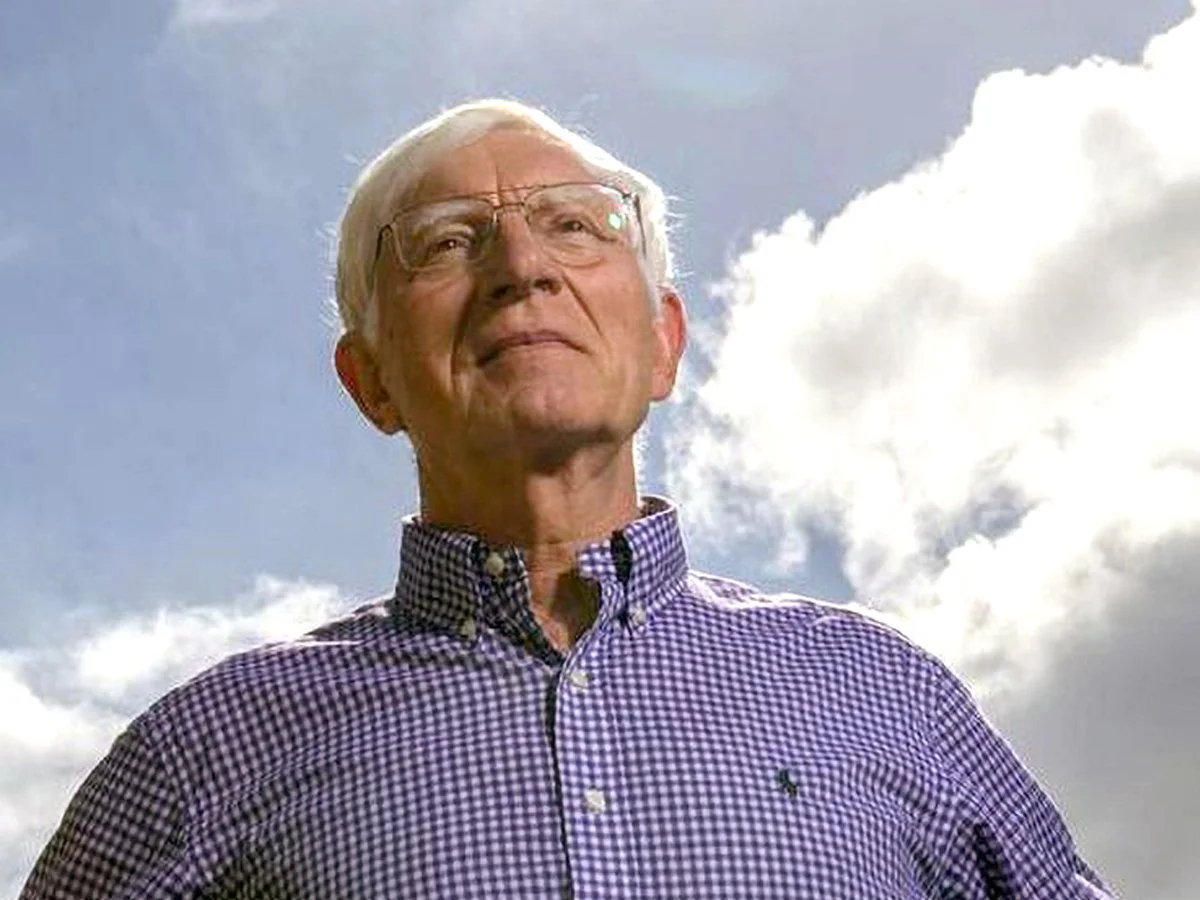
Armand Neukermans is a distinguished Belgian-American physicist and inventor whose net worth is primarily tied to the $3.25 billion acquisition of his company, Xros, by Nortel Networks in 2000. In 2026, while his exact personal valuation remains private, his financial legacy is defined by massive early-2000s tech exits, extensive patent portfolios, and significant philanthropic investments in global climate restoration technologies.
The Financial Genesis: The Xros Acquisition
To understand the net worth of Armand Neukermans, one must look back at the peak of the optical networking boom. In March 2000, at the height of the fiber-optic frenzy, Nortel Networks announced it would acquire Xros, a Sunnyvale-based startup founded by Neukermans, for $3.25 billion in stock. This remains one of the most significant benchmarks in Silicon Valley history for a company that was, at the time, relatively young.
Xros specialized in Micro-Electro-Mechanical Systems (MEMS) technology. Specifically, they developed an optical switch that used tiny mirrors to direct light beams within fiber-optic cables. Unlike previous technologies that required converting light to electricity and back again, the Xros switch kept the signal in optical form. This was a "holy grail" for telecommunications efficiency.
The "net worth question" regarding Neukermans often stems from this $3.25 billion figure. However, it is essential to distinguish between the acquisition price of a company and the personal take-home wealth of its founder. As the primary founder and leader, Neukermans held a substantial equity stake, but venture capital partners and early employees also shared in the valuation. Furthermore, because the deal was executed in Nortel stock, the subsequent volatility of the telecommunications sector in the early 2000s significantly influenced the liquid wealth realized by the stakeholders.
Professional Background and Intellectual Property
Long before the Xros windfall, Armand Neukermans had established himself as a titan in the world of applied physics. His financial stability was built on a foundation of high-level engineering roles at some of the world’s most prestigious technology firms.
The Hewlett-Packard Years
Neukermans spent a significant portion of his early career at Hewlett-Packard (HP). During his tenure, he was instrumental in developing various technologies related to imaging and thermal ink-jet printing. The patents generated during this era provided not just a salary, but the professional "social capital" necessary to secure venture funding for his later solo projects.
Tencor Instruments
Following his time at HP, Neukermans served as the Vice President of Research and Development at Tencor Instruments. Tencor, which later merged with KLA to become KLA-Tencor, was a leader in the semiconductor equipment industry. His work there involved sophisticated metrology and wafer inspection systems—technologies that are critical to the manufacturing of microchips. The expertise gained here in handling microscopic structures (MEMS) was directly responsible for the technical breakthrough that led to Xros.
The Patent Portfolio
A significant portion of Neukermans' long-term value is derived from his intellectual property. With over 75 U.S. patents to his name, his contributions span multiple disciplines:
- Optical Switching: Mirrored arrays for high-speed data.
- Imaging Technology: Advances in xerography and laser printing.
- Metrology: Systems for measuring thin films and semiconductor surfaces.
- Atmospheric Science: Devices for aerosol delivery in climate engineering.
In the technology sector, a patent portfolio of this magnitude often results in ongoing licensing revenue or provides the leverage needed for high-value consulting and advisory roles, which Neukermans has held throughout the 2010s and 2020s.
Calculating Wealth in the 2020s: From Profit to Purpose
By 2026, the focus of "the net worth question" regarding Armand Neukermans has shifted from personal accumulation to philanthropic deployment. In the latter stages of his career, Neukermans has pivoted toward what he calls "Global Climate Restoration."
Marine Cloud Brightening (MCB)
Neukermans is a leading figure in the research of Marine Cloud Brightening. This is a geoengineering technique designed to reflect sunlight back into space by spraying salt-water aerosols into low-lying clouds. He founded a research group composed of retired Silicon Valley engineers and scientists—many of whom work pro bono or are funded through private grants.
His financial involvement in these projects is twofold. First, he has used his personal wealth to seed-fund the engineering trials. Second, he has used his influence to direct capital from the Silicon Valley Community Foundation and other high-net-worth donors toward climate intervention. This suggests that his current net worth is managed through sophisticated estate planning and charitable lead trusts designed to sustain research long-term.
The Silicon Valley Context
In the 2026 financial landscape, founders of Neukermans’ generation are rarely defined by a single liquid bank balance. Instead, their wealth is distributed across:
- Private Equity: Investments in the next generation of MEMS and biotech startups.
- Real Estate: Holdings in the high-value Palo Alto and Portola Valley corridors.
- Endowments: Funding for academic chairs and research labs at institutions like Stanford University and the University of Louvain (his alma mater).
| Phase of Career | Primary Organization | Financial/Impact Driver | Estimated Valuation Context |
|---|---|---|---|
| Early Career | Hewlett-Packard | Salary & Patent Incentives | High Professional Tier |
| Mid-Career | Tencor Instruments | Executive Equity & R&D | Multi-million Dollar Stake |
| Founder Era | Xros | $3.25 Billion Acquisition | Peak Capital Event |
| Current (2026) | Climate Restoration | Philanthropy & Consulting | Private Wealth Management |
The Impact of the Nortel Collapse on Net Worth
One cannot discuss Neukermans' wealth without addressing the historical context of Nortel. Shortly after the Xros acquisition, the dot-com bubble burst, and Nortel Networks eventually faced one of the most spectacular bankruptcies in corporate history.
For many Xros employees and founders, the "net worth" on paper at the time of the merger was not always what was realized in cash. Most merger agreements include "lock-up periods," during which the sellers cannot sell their new shares. If the share price drops during the lock-up, the realized wealth is a fraction of the original deal value.
However, Neukermans has consistently displayed a pragmatic approach to finance. Unlike many "paper billionaires" who lost everything, his diverse background in stable industries (like HP and Tencor) and his continued involvement in high-level consulting suggest a well-protected financial base. Even a fraction of a $3.2 billion deal remains an astronomical sum when managed correctly over two and a half decades.
Technical Depth: Why Neukermans’ Work is Valued
The reason Neukermans commands such high valuation in the market is the "moat" of his technical expertise. In 2026, we see the echoes of his work in modern data centers.
The MEMS switches he pioneered are the ancestors of the massive optical fabrics used by companies like Google and Meta to manage AI-driven data traffic. Neukermans didn't just build a "feature"; he built a fundamental component of the modern internet. This type of "foundational wealth" is more resilient than wealth built on consumer apps or social media trends because it is based on hardware physics and irreplaceable intellectual property.
Common Misconceptions About Tech Founder Wealth
When the public searches for "Armand Neukermans net worth," they often encounter exaggerated or outdated figures. It is important to clarify several points:
- The "Billionaire" Label: While Xros sold for billions, Neukermans was not the sole owner. Venture capitalists like Barksdale Group and others held significant shares.
- Liquidity vs. Net Worth: A person's net worth includes houses, art, and patents that aren't "cash in the bank." Neukermans has invested heavily in laboratory equipment and experimental setups for his climate work.
- Philanthropic Depletion: It is common for veteran Silicon Valley innovators to spend down their wealth in their later years. Neukermans has been vocal about the urgency of the climate crisis, suggesting that a significant portion of his assets is being diverted to "Silver Lining" and other environmental initiatives.
FAQ: Armand Neukermans and Financial Standing
Did Armand Neukermans become a billionaire after the Xros sale?
On paper, the acquisition was valued at $3.25 billion. Depending on his percentage of ownership and the timing of his stock sales before Nortel's decline, his personal wealth would have been in the hundreds of millions, placing him among the wealthiest individuals in the technology sector, even if he did not maintain "billionaire" status following the market correction.
What are Armand Neukermans' main sources of income in 2026?
His primary financial inflows currently come from a combination of investment returns from his diversified portfolio, potential royalties from his 75+ patents, and his role as a senior advisor for high-tech ventures and environmental engineering projects.
Is he still involved in the companies he founded?
Neukermans generally moves on to new scientific challenges once a company is acquired. After Xros was integrated into Nortel, he focused on independent research and eventually his "Marine Cloud Brightening" project, rather than remaining in corporate management.
How much has he spent on climate change research?
While the exact dollar amount is not public, Neukermans has dedicated over 15 years to the MCB project. This includes funding for a team of expert engineers and the development of specialized nozzles and delivery systems. His contribution is often cited as a mix of direct funding and "intellectual philanthropy."
Why is his net worth relevant to climate science?
The "net worth question" is relevant because it demonstrates the "Silicon Valley Model" of climate intervention. Unlike government-funded research, Neukermans’ wealth allows for high-risk, high-reward experimentation that can bypass the slow cycles of federal grants, accelerating potential solutions for global warming.
What was the impact of his work at HP on his wealth?
His work at HP was the engine of his early financial stability. It allowed him to build the reputation and technical "proof of concept" needed to launch Xros. The patents he earned at HP established him as a reliable innovator, making him a magnet for venture capital later in life.
Practical Recommendation for Researchers
If you are investigating the financial or professional profile of Armand Neukermans for the purpose of investment, biography, or scientific partnership, focus on his patent citations and philanthropic trail rather than speculative celebrity net worth websites. In 2026, his value is best measured by the "technological ripple effect" of his inventions.
To gain deeper insights, review the archives of the Silicon Valley Inventor of the Year awards (which he won in 2001) or the peer-reviewed publications of the Marine Cloud Brightening Project. For those interested in the financial mechanics of his career, studying the SEC filings of the Nortel/Xros merger provides the most accurate historical data on the valuation of his largest professional exit.