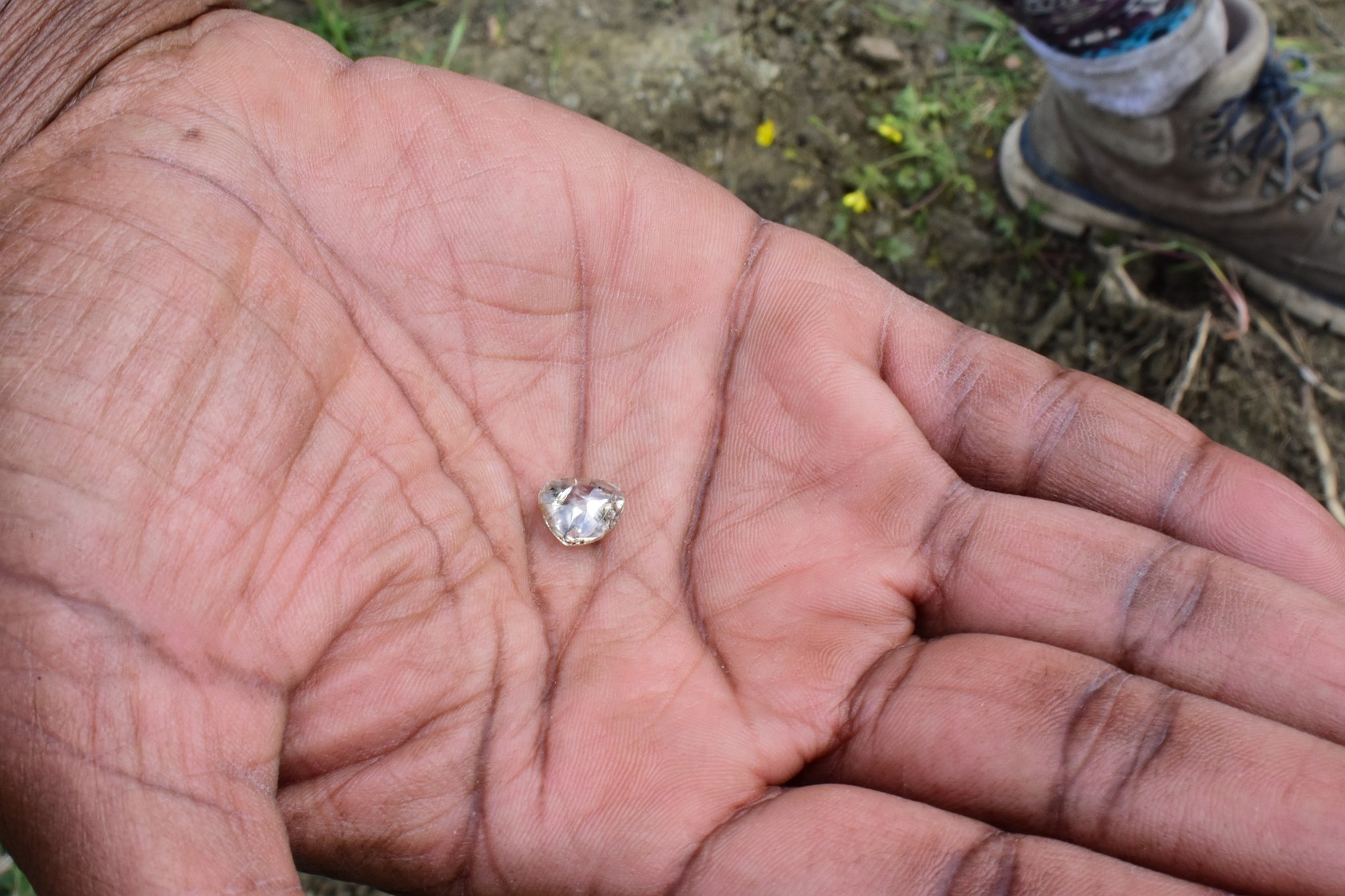
Arkansas Crater of Diamonds finds include a diverse array of gemstones, most notably white, brown, and yellow diamonds, as well as amethyst, jasper, and garnet. Visitors to the Murfreesboro site can keep any minerals they discover within the 37.5-acre volcanic field, which remains the only diamond-producing site globally open to the public.
The Unique Geology of the Arkansas Diamond Field
The presence of diamonds in Arkansas is a geological anomaly caused by a rare volcanic event. Approximately 95 million years ago, an 80-mile-deep volcanic vent known as a lamproite pipe erupted, bringing diamonds from the Earth's mantle to the surface. This specific type of eruption is characterized by high-pressure gases that propel magma upward at incredible speeds, preserving the diamond crystals that would otherwise be destroyed by slower cooling processes.
The search area at Crater of Diamonds State Park is actually the eroded surface of this ancient volcano. Over millions of years, the upper portion of the volcano weathered away, leaving behind a soil rich in magnesium and iron, known as "green ground." Unlike many commercial diamond mines that require deep excavation into hard rock (kimberlite or lamproite), the Arkansas site is frequently plowed by park staff. This mechanical turnover mimics natural erosion, bringing "new" stones to the surface for visitors to find.
The soil itself is a mixture of volcanic breccia and tuff. Because diamonds are significantly heavier and harder than the surrounding dirt and common rocks like quartz, they tend to settle in specific areas. Understanding this geological sorting is the first step toward a successful find. Diamonds have a specific gravity of approximately 3.52, whereas most common rocks in the field have a specific gravity of around 2.5 to 2.7. This density difference is the scientific foundation for the sifting methods used by professional and amateur hunters alike.
Identifying Authentic Arkansas Diamond Finds
For a novice, identifying a diamond in the rough is more difficult than it sounds. Most Arkansas Crater of Diamonds finds do not look like the faceted, sparkling gems seen in jewelry stores. Instead, they appear as smooth, rounded pebbles with a distinct, oily or metallic sheen known as adamantine luster.
Primary Diamond Colors
Diamonds at the park typically fall into three color categories:
- White Diamonds: These are the most frequent finds. They range from translucent to clear. While many are small, they often possess high clarity.
- Brown Diamonds: Often referred to as "cognac" or "chocolate" diamonds, these stones get their color from structural defects or impurities within the crystal lattice.
- Yellow Diamonds: These are highly prized for their "canary" hue. The color is caused by the presence of nitrogen atoms replacing carbon atoms in the crystal structure.
Distinguishing Diamonds from "Leaverites"
Visitors often find "leaverites"—rocks that look interesting but should be "left right there." The most common look-alikes at the park are quartz crystals and calcite. To distinguish a diamond, look for the following characteristics:
- Luster: Diamonds have a greasy or metallic shine that doesn't wash off. Quartz has a glassier, vitreous luster.
- Symmetry: Many Arkansas diamonds are found as dodecahedral (12-sided) or rounded crystals. They rarely have sharp, jagged edges unless they have been fractured.
- Cleanliness: Dirt typically does not stick to the surface of a diamond due to its hydrophobic (water-repelling) properties. If you find a stone that looks perfectly clean while everything else is muddy, it warrants closer inspection.
Other Mineral Finds at Crater of Diamonds
While diamonds are the primary draw, the volcanic soil is a treasure trove of other semi-precious stones. In many cases, these "byproduct" finds are larger and more visually striking than the diamonds themselves.
- Amethyst: A purple variety of quartz that occurs in veins within the volcanic rock. Large, high-quality amethyst points are frequently found after heavy rains.
- Agate and Jasper: These are forms of chalcedony. Jasper at the park is often deep red or yellow, while agate can show beautiful banding.
- Garnet: Usually found as small, dark red "sand" or pebbles, these are often indicators that you are digging in a high-density area where diamonds might also settle.
- Barite and Calcite: These minerals often form in the cracks of the volcanic pipe and can be found as white or clear crystalline masses.
Proven Methods for Finding Diamonds in 2026
As of 2026, the techniques for uncovering Arkansas Crater of Diamonds finds have been refined by decades of "regulars" who frequent the park. There are three primary methods used by visitors, each suited to different weather conditions and physical abilities.
Surface Searching
This is the simplest method and is most effective immediately after a heavy rain. As the water washes away the fine topsoil, the heavier, slick-surfaced diamonds are left exposed on top of the ground.
- Pro Tip: Walk with the sun at your back. Diamonds reflect light in a way that other rocks do not; look for a tiny "flash" or "sparkle" as you scan the rows of the field.
Dry Sifting
During the hot, dry Arkansas summers, wet sifting can be grueling. Dry sifting involves using a series of screens to filter out large rocks and fine dust, leaving a concentrated layer of medium-sized gravel to inspect.
- Equipment: A set of screens (typically 1/4 inch and 1/16 inch mesh) is used to isolate the "sweet spot" size where most diamonds are found.
Wet Sifting (The Saruca Method)
This is the most advanced and productive method. It involves washing dirt in a series of screens submerged in water tubs provided by the park.
- Classification: Use a coarse screen to remove large rocks.
- The Wash: Place the remaining gravel in a fine-mesh screen (saruca) and use a rhythmic circular and up-and-down motion in the water.
- Centering: The vibration and water displacement cause the heaviest materials—including diamonds—to settle at the very bottom and center of the screen.
- The Flip: The screen is quickly flipped onto a flat surface. If a diamond is present, it will typically be sitting right on top, in the center of the pile.
Historical and Notable Arkansas Diamond Finds
Since the first diamonds were discovered by John Huddleston in 1906, over 75,000 diamonds have been found at the site. The park maintains a public record of significant finds, which provides inspiration for modern-day prospectors.
| Name of Find | Year Found | Weight (Carats) | Color | Significance |
|---|---|---|---|---|
| Uncle Sam | 1924 | 40.23 | White | The largest diamond ever found in North America. |
| Star of Arkansas | 1956 | 15.33 | White | Found when the site was a private tourist attraction. |
| Amarillo Starlight | 1975 | 16.37 | White | The largest find since the site became a State Park. |
| Strawn-Wagner | 1990 | 3.03 | White | Graded "Perfect" (0/0/0) by the American Gem Society. |
| Esperanza Diamond | 2015 | 8.52 | White | Carved into a 4.6-carat internal flawless teardrop. |
| Kinard Find | 2020 | 9.07 | Brown | Initially mistaken for glass by the finder. |
The Strawn-Wagner Diamond remains one of the most famous Arkansas Crater of Diamonds finds because of its quality. After being cut and polished to 1.09 carats, it received a perfect grade from the Gemological Institute of America (GIA)—a rarity for any diamond, let alone one found by a tourist. It is currently on display at the park's visitor center.
Planning Your 2026 Visit: Costs and Requirements
The Crater of Diamonds State Park is a "finds keepers" facility, meaning the park does not take a percentage of your find’s value. However, there are operational rules and fees to keep in mind for a 2026 visit.
- Admission: As of 2026, adult admission is approximately $15 per day. Children’s tickets are discounted. It is highly recommended to purchase tickets online in advance, as the park often reaches capacity during peak spring and autumn months.
- Diamond Discovery Center: This is where you bring your potential finds. Park staff provide free identification and weighing services. They will certify your diamond and provide a small glass vial for safekeeping.
- Tool Rentals: You do not need to bring your own equipment. The park rents shovels, buckets, and sifting screens for a nominal daily fee plus a refundable deposit.
- Infrastructure: The park provides "Wash Pavilions" with large water troughs for wet sifting. These areas are shaded and offer a communal atmosphere where "regulars" often share advice with newcomers.
Common Mistakes to Avoid
- Over-digging: Many beginners believe they need to dig a deep hole to find diamonds. In reality, diamonds are distributed throughout the top layers due to frequent plowing. Deep holes often just lead to exhaustion.
- Ignoring Small Stones: Most finds are roughly the size of a matchstick head (about 0.20 to 0.50 carats). If you are only looking for "rocks," you will miss the diamonds.
- Washing Too Fast: In wet sifting, speed is less important than technique. If you shake the screen too violently, you may inadvertently eject a diamond from the mesh.
- Misidentifying Surface Luster: Do not discard a stone just because it is covered in mud. Use the provided wash stations to clean every "suspect" stone before making a decision.
Frequently Asked Questions
How many diamonds are found at the park each day?
On average, one to two diamonds are found daily by park visitors. This frequency can increase significantly after heavy rainfall or after the park staff performs the seasonal plowing of the 37.5-acre field. Since 1906, more than 75,000 diamonds have been registered at this location.
Can I bring my own motorized equipment?
No. To maintain a fair and environmentally friendly searching environment, the park prohibits the use of motorized or battery-powered equipment. All searching must be done with manual tools such as shovels, hand-held screens, and buckets.
What happens if I find a very valuable diamond?
The park's "finds keepers" policy means the diamond is 100% yours. The park staff will weigh and certify the find, but they do not provide appraisals. For a high-value stone, you should contact a private gemologist or an organization like the Gemological Institute of America (GIA) for a formal grading and valuation.
Is the park open year-round?
Yes, the Crater of Diamonds State Park is open throughout the year, except for major holidays like Christmas. However, the best times to visit are during the spring and fall when temperatures are mild. The summer months in Arkansas can be extremely hot, making physical labor in the unshaded field difficult.
Are all Arkansas Crater of Diamonds finds actually diamonds?
No. While the park is famous for diamonds, visitors also find significant amounts of quartz, amethyst, jasper, agate, garnet, and barite. The Diamond Discovery Center staff will help you distinguish between these minerals if you are unsure of your find.
Expert Recommendation for Success
If you are serious about securing one of the notable Arkansas Crater of Diamonds finds, patience and persistence are your most valuable tools. The most successful hunters are those who spend multiple days at the park, moving between different sections of the field to find where the "heavy" minerals have concentrated.
Before you head out into the field, spend 15 minutes in the park’s visitor center looking at the "rough" diamond displays. Familiarizing your eyes with the unique adamantine luster and rounded shapes of uncut diamonds will significantly increase your chances of spotting a gem in the dirt. For more information on park regulations and current field conditions, visit the official Arkansas State Parks website.