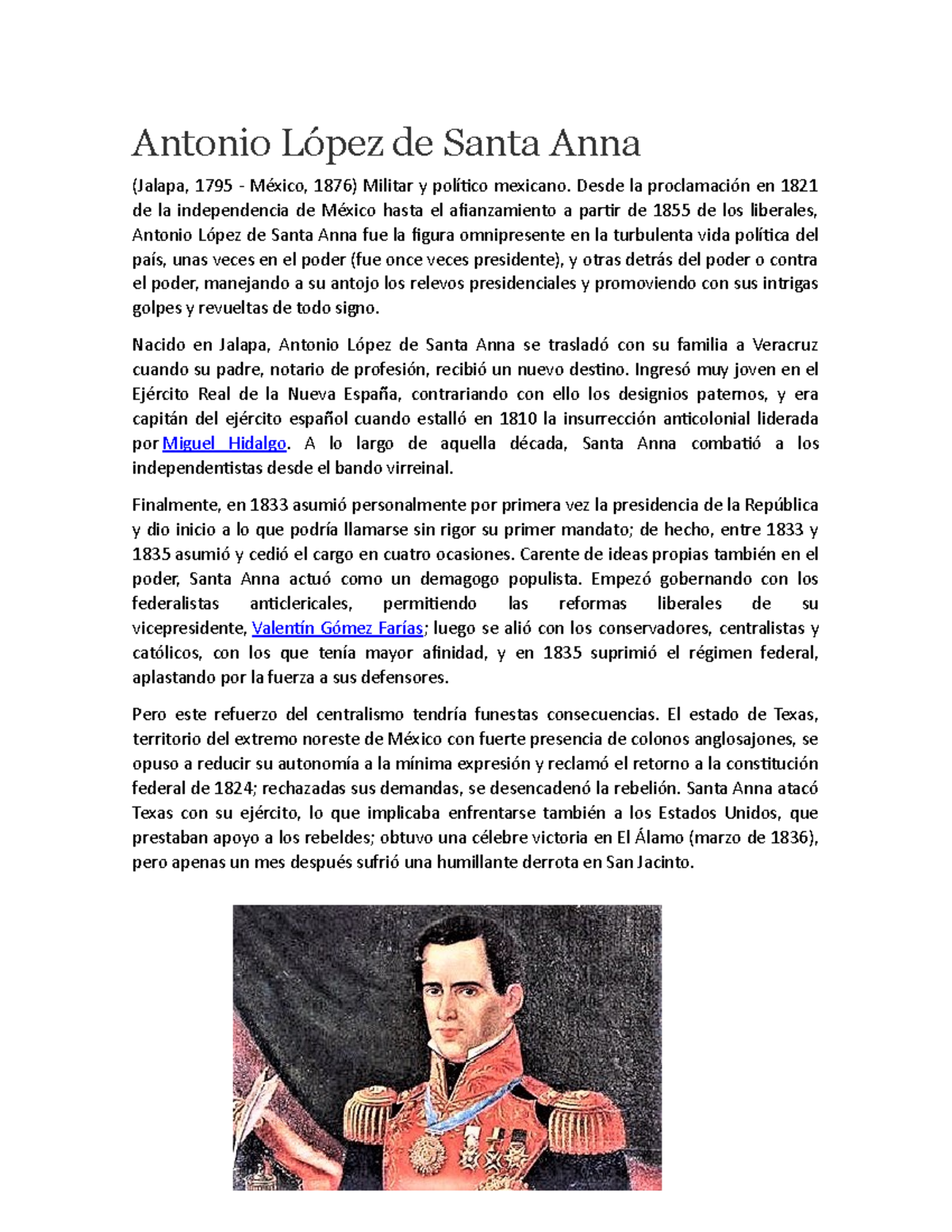
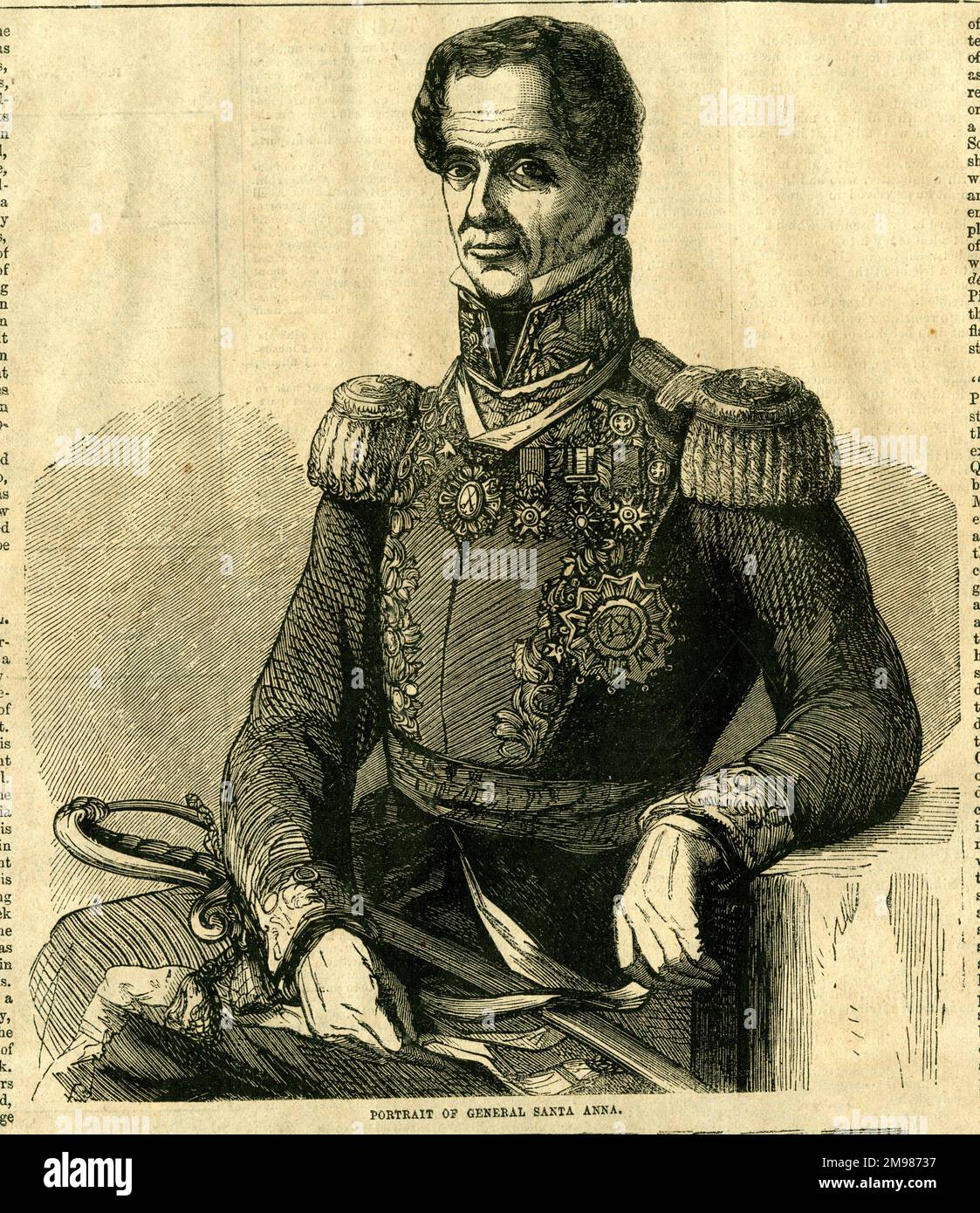
Antonio López de Santa Anna remains one of the most enigmatic, divisive, and influential figures in 19th-century Mexican history. As a perennial political actor who occupied the presidency of Mexico eleven non-consecutive times between 1833 and 1855, his career serves as a critical lens through which to examine the volatility of the early Mexican Republic, the loss of vast northern territories, and the ongoing struggle to define a national identity following independence from Spain.
The political career of Antonio López de Santa Anna is defined by his profound ability to adapt to shifting ideological landscapes, oscillating between radical liberalism and staunch conservatism. His actions directly shaped the outcomes of the Texas Revolution and the Mexican-American War, events that permanently altered the geopolitical map of North America. To understand Santa Anna is to understand the fractures of a young nation—its military caudillismo, its regional power struggles, and the profound trauma of foreign intervention.
The Early Rise of a Caudillo
Born in 1794 in Xalapa, Veracruz, Santa Anna began his military career in the Spanish colonial army before aligning with the movement for Mexican independence. His early reputation was forged on the battlefield, where he demonstrated a flair for military theatre and a keen instinct for political survival. This period, known as the era of caudillismo, was characterized by strongman politics where regional military leaders held more actual power than the central government in Mexico City.
Santa Anna’s ascent was not driven by a singular political ideology but by his capacity to position himself as the "Savior of the Nation." When political instability gripped the country, he was frequently called upon—or maneuvered himself—to restore order. His first presidency in 1833 marked the beginning of a cycle of exile and return that would define the next two decades. He functioned as a political chameleon, often allowing vice presidents or legislative allies to carry out unpopular policies while he distanced himself from the resulting fallout, only to re-emerge when the regime appeared on the brink of collapse.
Key Military Conflicts and Territorial Loss
The central tension in the legacy of Santa Anna involves his role in the catastrophic territorial losses experienced by Mexico. His military decisions during the Texas Revolution (1835–1836) and the Mexican-American War (1846–1848) have been the subject of intense historical scrutiny and national resentment.
The Texas Revolution and the Battle of San Jacinto
In 1836, Santa Anna led an army into the department of Tejas to suppress the rebellion of Anglo-American settlers. While his forces achieved a symbolic and brutal victory at the Battle of the Alamo, his subsequent defeat at the Battle of San Jacinto—where he was captured by the forces of Sam Houston—led to the signing of the Treaties of Velasco. These treaties, signed under duress, were never ratified by the Mexican government, but they effectively signaled the end of Mexican administrative control over the region.
The Mexican-American War
A decade later, following a period of exile, Santa Anna returned to power during the conflict with the United States. His command strategy, characterized by overextension and a focus on grand maneuvers rather than sustainable logistics, proved insufficient against the disciplined forces of the United States. The subsequent Treaty of Guadalupe Hidalgo resulted in the loss of nearly half of Mexico’s territory, including present-day California, Nevada, Utah, and parts of Arizona, New Mexico, Colorado, and Wyoming.
Political Methodology and Governance
To analyze Santa Anna’s governance, one must look past his frequent military titles and examine the mechanisms of his control. His power base was built upon a fragile coalition of the military, the Catholic Church, and the landed aristocracy. He maintained authority by playing competing factions against each other, ensuring that no single group became powerful enough to challenge his supremacy without his permission.
The Myth of Centralism
Santa Anna’s support for the Siete Leyes (Seven Laws) in 1836, which transitioned Mexico from a federalist republic to a centralized state, was a calculated move to concentrate power in the executive office. By eliminating the autonomy of the states, he sought to quell regional uprisings, yet this move ultimately alienated local leaders and provided the justifications for subsequent rebellions in the northern provinces.
Economic Instability and Debt
His administrations were plagued by chronic fiscal instability. Relying on foreign loans and internal taxation, the state often struggled to pay the military—the very group upon which his power rested. This forced him into increasingly desperate financial measures, including the sale of national assets and the imposition of heavy head taxes, which alienated the broader population and weakened the legitimacy of his rule.
Comparison of Presidential Tenures
Santa Anna’s eleven presidencies reflect different approaches to governance, ranging from his initial liberal-leaning reformist stance to his later, more overtly dictatorial style. The following table highlights the nature of these periods:
| Era | Primary Political Alignment | Major Focus | Outcome |
|---|---|---|---|
| Early 1833-1834 | Liberal/Reformist | Secularization and Education | Early experimentation with civil reforms. |
| 1835-1836 | Centralist | Reasserting central authority | Conflict in Texas and loss of the territory. |
| 1841-1844 | Conservative/Authoritarian | Restoring order | High taxation; eventual exile. |
| 1846-1847 | Nationalist/Military | Defense against the U.S. | Defeat in the Mexican-American War. |
| 1853-1855 | Absolute Dictatorship | Institutional stability | Gadsden Purchase; final downfall. |
Historical Interpretations and Legacy
Modern historical assessments of Santa Anna have moved away from simple characterizations of him as a "villain" to a more nuanced view of him as a product of a systemic failure. The Mexican state in the early 19th century lacked the institutions necessary to sustain a stable republic. In this power vacuum, figures like Santa Anna became inevitable, not merely as agents of ambition, but as symptoms of a deeply fragmented society.
His final years were spent in various stages of exile and return to Mexico, though he never regained his former influence. He eventually settled back in Mexico City, where he died in 1876, largely forgotten by the public who had once hailed him as the "Napoleon of the West." His legacy persists, however, in the persistent national debate regarding the responsibility of leaders in the face of foreign intervention and the fragility of democratic processes in the shadow of military influence.
Frequently Asked Questions
Why did Antonio López de Santa Anna have so many non-consecutive terms?
Santa Anna occupied the presidency multiple times because he was a master of political opportunism. When a government failed, he would step in as a "savior," then resign or flee to his estate at Manga de Clavo when the political climate became too hostile, allowing others to take the blame for unpopular decisions.
How much territory did Mexico lose during Santa Anna's leadership?
Under the various treaties and conflicts during his periods of influence, Mexico lost control over the entirety of the Texas territory and, following the Mexican-American War (which occurred during his later presidencies), relinquished over 500,000 square miles of territory to the United States.
Was Santa Anna considered a dictator?
During his final presidency (1853–1855), Santa Anna explicitly styled himself as a dictator, styling his title as "His Serene Highness" and seeking to centralize all authority within his own office. During his earlier tenures, his rule was less absolute but remained authoritarian in practice.
What was the Gadsden Purchase?
The Gadsden Purchase (1854) was a treaty finalized during Santa Anna’s last term, wherein Mexico sold a portion of land in present-day southern Arizona and New Mexico to the United States for $10 million. It was intended to pay off debts and resolve lingering border disputes, but it further damaged his reputation among the Mexican elite.
How is Santa Anna remembered in contemporary Mexican culture?
He is generally regarded as a symbol of the "lost" era of Mexico. In classrooms and historical discourse, he serves as a cautionary figure regarding the dangers of unchecked military power, the folly of populist governance, and the catastrophic impact of failing to build lasting political institutions.
Final Recommendations for Further Study
To gain a deeper understanding of this era, researchers should consult the primary archival records maintained by the Archivo General de la Nación in Mexico City. For those interested in the military logistics of the 19th century, records from the war with the United States provide significant evidence regarding the structural weaknesses of the Mexican army during that period.
Avoid relying on polemical literature from the mid-19th century; instead, prioritize modern historiographical works that emphasize the socioeconomic conditions of the 1830s–1850s to better contextualize the "caudillo" phenomenon. Understanding the interplay between the Catholic Church and the state during this era is also essential for explaining the resistance to Santa Anna’s liberal reforms.