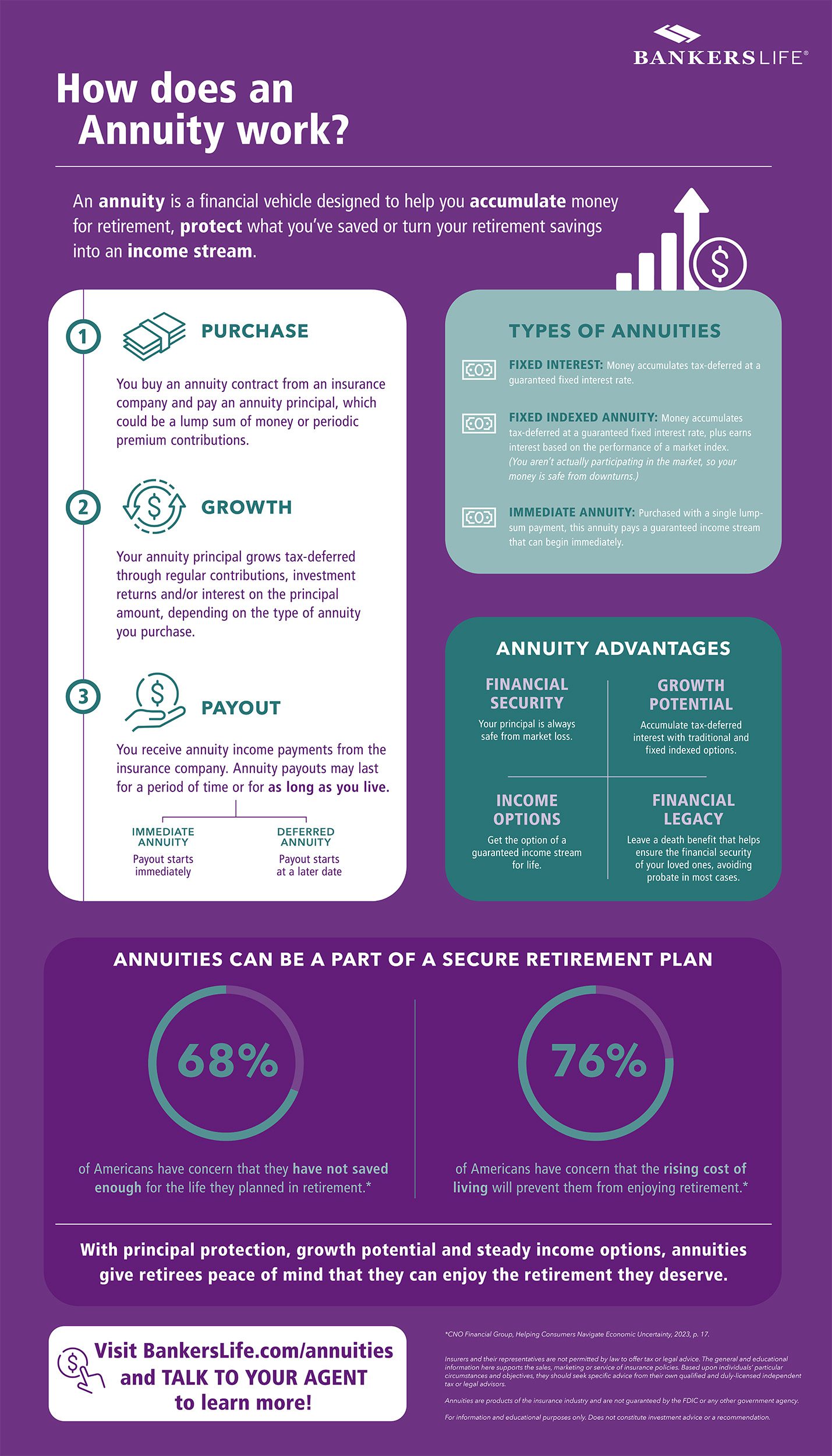
The annuity value of life insurance refers to the potential of a permanent life insurance policy’s cash value to be converted into a guaranteed stream of income. By utilizing a Section 1035 exchange or exercising annuitization options within a policy, policyholders can transform accumulated death benefit equity into a structured retirement payout.
Understanding the Intersection of Life Insurance and Annuities
In the financial landscape of 2026, the distinction between life insurance and annuities has become increasingly blurred as consumers seek "hybrid" solutions for retirement. While life insurance is primarily designed to provide a death benefit to beneficiaries, permanent policies—such as Whole Life, Universal Life (UL), and Indexed Universal Life (IUL)—feature a cash value component. This cash value represents the "annuity value" of the policy: the liquid portion of the contract that can be repurposed to fund a lifetime of income.
The concept of annuity value within a life insurance framework is rooted in the accumulation of capital over time. As premiums are paid, a portion is directed toward the cost of insurance (COI) and administrative fees, while the remainder grows on a tax-deferred basis. By 2026, many policyholders who purchased these products decades ago are reaching the "distribution phase" of their financial lives, leading to a surge in interest regarding how to pivot from protection to income.
To leverage this value, one must understand that a life insurance policy is not inherently an annuity, but it contains the raw materials—specifically, the net surrender value—required to create one. This transition is a critical strategic move for retirees who find themselves "over-insured" regarding death benefits but "under-funded" regarding liquid monthly cash flow.
The Mechanics of Cash Value Accumulation
Before a policy can offer significant annuity value, it must undergo a period of sustained growth. The speed and scale of this growth depend heavily on the type of life insurance contract held.
Whole Life Insurance
Whole life policies provide a fixed premium and a guaranteed rate of return on the cash value. In 2026, many participating whole life policies from mutual insurers continue to pay out dividends, which can be directed back into the policy to purchase "paid-up additions." These additions accelerate the growth of the cash value, thereby increasing the ultimate amount available for annuitization.
Universal Life (UL) and Indexed Universal Life (IUL)
Universal life products offer more flexibility in premium payments and death benefits. IULs, specifically, link their cash value growth to a market index, such as the S&P 500. While these policies have "caps" and "floors" to protect against market losses, the cumulative growth over twenty or thirty years can result in a substantial cash pile. The annuity value here is more volatile during the accumulation phase but can be locked in once the policyholder decides to transition to an income-generating structure.
Variable Life Insurance
Variable policies allow the policyholder to invest the cash value in sub-accounts, which function similarly to mutual funds. These offer the highest potential for growth but carry the most risk. In 2026, with the market fluctuations observed over the last few years, many variable policyholders are looking to "de-risk" by converting their high-growth cash values into the safety of a guaranteed annuity.
Methods for Converting Life Insurance into Income
Transforming a life insurance policy's cash value into an annuity is not a one-size-fits-all process. There are several primary pathways to achieving this, each with distinct tax and structural implications.
1. Section 1035 Exchanges
Internal Revenue Code (IRC) Section 1035 allows for the tax-free exchange of an existing life insurance contract for a new annuity contract. This is perhaps the most powerful tool for maximizing annuity value. Under 2026 tax guidelines, as long as the owner and the insured remain the same, the "cost basis" of the life insurance policy transfers to the annuity. This allows the policyholder to avoid paying immediate income tax on any gains realized within the life insurance policy at the time of the swap.
2. Contractual Annuitization Options
Most permanent life insurance contracts contain a clause that allows the owner to "annuitize" the cash value directly with the current carrier. By exercising this option, the death benefit is usually surrendered, and the insurer begins making regular payments based on the policyholder's life expectancy. While convenient, this often results in lower payout rates than if the policyholder shopped the open market via a 1035 exchange.
3. Life Income Riders
Some modern life insurance policies come equipped with "living benefit" riders or income riders. These allow the policyholder to draw a guaranteed percentage of the cash value or a "protected income base" every year, even if the actual cash value drops to zero. This simulates the behavior of an annuity without requiring the policyholder to formally surrender the life insurance contract.
Evaluating the "Value" in Annuity Value
When determining if the annuity value of a life insurance policy is worth pursuing, several technical factors must be calculated. The most critical is the Net Surrender Value, which is the total cash value minus any outstanding policy loans and surrender charges.
In 2026, surrender charges on older policies (issued in the early 2010s) have likely expired, making the full cash value available. However, for policies issued more recently, these charges can be a significant deterrent. Furthermore, if a policyholder has taken out loans against the policy, the loan balance must be settled or deducted from the cash value before it can be converted into an annuity. This can trigger a "tax trap" if the loan amount exceeds the policy's cost basis, leading to a taxable event known as "boot" during a 1035 exchange.
Payout Rates and Interest Rate Environment
The actual monthly income generated by the annuity value is dictated by the interest rate environment of 2026. After years of shifting rates, the current environment has made Single Premium Immediate Annuities (SPIAs) more attractive than they were a decade ago. A policyholder with $500,000 in cash value will receive a significantly higher monthly check in a 5% interest rate environment than in a 2% environment.
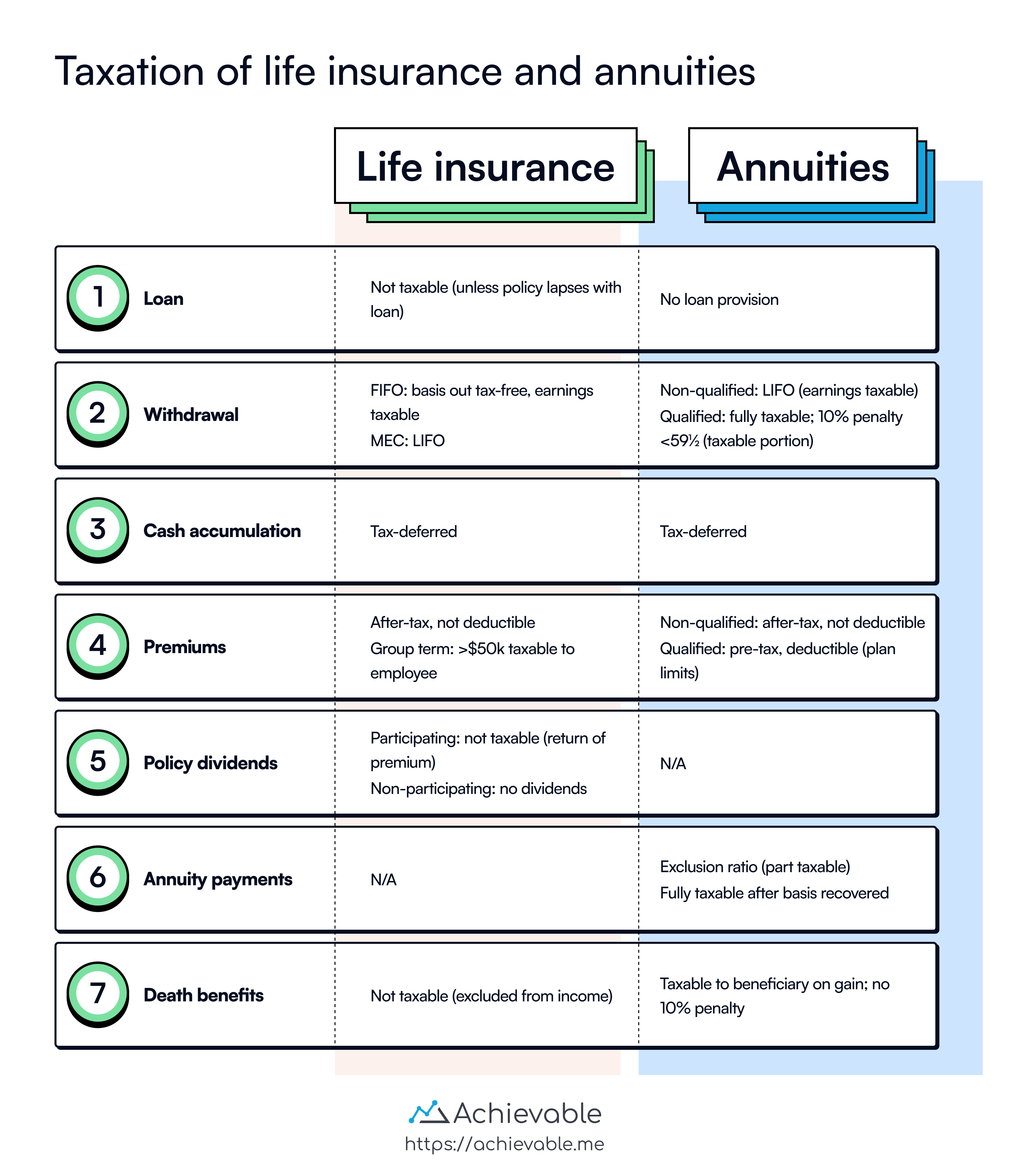
Comparison: Life Insurance Cash Value vs. Immediate Annuity
To help decide whether to maintain a policy or convert it, consider the following comparison of features as they stand in 2026:
| Feature | Life Insurance Cash Value | Converted Immediate Annuity (SPIA) |
|---|---|---|
| Primary Goal | Death benefit protection | Guaranteed lifetime income |
| Tax Treatment | Tax-deferred growth; tax-free death benefit | Pro-rata taxation on payments (Exclusion Ratio) |
| Liquidity | High (via loans or partial surrenders) | Low to Zero (irrevocable once started) |
| Cost of Insurance | Fees deducted monthly to maintain death benefit | No cost of insurance fees |
| Beneficiary Impact | High (receives full death benefit) | Low (unless "Period Certain" is selected) |
| Market Risk | Varies by policy type (IUL, Variable, etc.) | None (guaranteed by the insurance company) |
Tax Implications and IRS Compliance
The tax treatment of "annuity value" is governed by IRS Publication 575 and Section 72 of the Internal Revenue Code. When a life insurance policy is converted to an annuity, the "Exclusion Ratio" becomes the most important calculation. This ratio determines what portion of each annuity payment is a non-taxable return of the original principal (cost basis) and what portion is taxable interest.
It is vital to note that while the exchange itself is tax-free under Section 1035, the subsequent payments from the annuity are not. Furthermore, if the life insurance policy is classified as a Modified Endowment Contract (MEC), the tax rules for distributions are less favorable, often following "Last-In, First-Out" (LIFO) treatment, meaning gains are taxed before the principal is returned.
Common Mistakes When Accessing Annuity Value
Navigating the transition from life insurance to an annuity in 2026 requires precision. Mistakes can lead to permanent loss of capital or unforeseen tax liabilities.
- Surrendering Before Exchanging: One of the most frequent errors is surrendering the life insurance policy for cash with the intent of buying an annuity later. This "indirect" route triggers immediate taxation on all gains. A formal 1035 exchange must be a direct company-to-company transfer.
- Ignoring the Death Benefit Need: Many individuals rush to convert their policy for income without considering if their family still needs the death benefit. Once a policy is annuitized, the original death benefit is typically gone. In 2026, with estate tax exemptions potentially shifting, maintaining a portion of life insurance might be more strategic than a full conversion.
- Overlooking "Joint and Survivor" Options: When converting to an annuity, failing to select a joint-life option can leave a spouse without income if the primary annuitant passes away shortly after the transition.
- Failing to Compare Carriers: Your current life insurance carrier may not offer the best annuity rates. In 2026, the marketplace for SPIAs and Deferred Income Annuities (DIAs) is highly competitive. Utilizing a 1035 exchange to move the value to a different carrier is often the smarter financial move.
Steps to Maximize the Annuity Value of Your Policy
If you are considering leveraging your life insurance for its annuity value in 2026, follow this structured approach:
- Request an "In-Force Illustration": Ask your current insurer for a document showing the current net surrender value and the projected growth over the next five to ten years.
- Conduct a Needs Analysis: Determine exactly how much monthly income you need. If the cash value in your policy can cover 20% of your retirement gap, it may be worth the conversion.
- Evaluate Health Status: Life insurance is based on mortality, while annuities are based on longevity. If you are in excellent health and expect to live well into your 90s, the "annuity value" is higher because you will likely collect payments for a longer duration.
- Consult a Tax Professional: Ensure that there are no hidden "boot" issues or loan complications that could trigger a tax bill during the 1035 exchange.
- Shop the Open Market: Compare the internal annuitization rates of your current policy against the SPIA rates of top-rated carriers using tools provided by the National Association of Insurance Commissioners (NAIC).
Frequently Asked Questions
Can I convert only a portion of my life insurance cash value into an annuity?
Yes, this is known as a partial 1035 exchange. Under current 2026 regulations, you can move a specific dollar amount from your life insurance cash value into an annuity while keeping the original life insurance policy active (with a reduced death benefit). This allows for a "best of both worlds" strategy where you gain some income but retain some protection.
What happens to the "annuity value" if I have an outstanding loan?
An outstanding loan is treated as "received cash" during a conversion. If you perform a 1035 exchange, the loan must either be paid off with outside funds or it will be deducted from the transfer. If the loan amount is greater than your cost basis, the difference is considered taxable income in the year of the exchange.
Is the annuity value the same as the cash surrender value?
Generally, yes. The annuity value is essentially the net surrender value of the policy. This is the amount of money the insurance company would pay you if you cancelled the policy today, minus any fees. This sum is what is used to "purchase" the future income stream of an annuity.
How does inflation in 2026 affect my policy's annuity value?
Inflation erodes the purchasing power of fixed payments. If you convert your life insurance to a fixed annuity, the monthly check you receive in 2026 will buy less in 2036. To combat this, many 2026 annuity products offer Cost-of-Living Adjustment (COLA) riders, though these riders will reduce the initial monthly payout amount.
Can I convert a Term Life insurance policy into an annuity?
Standard term life insurance has no cash value and therefore no "annuity value." However, if your term policy has a "conversion rider," you may be able to convert it into a permanent policy first. Once the new permanent policy builds cash value over several years, that value could eventually be used for an annuity.
Practical Recommendation
For policyholders in 2026, the decision to tap into the annuity value of a life insurance policy should be driven by a shift in priorities from "legacy building" to "lifestyle maintenance." If your children are financially independent and your estate is liquid, your life insurance cash value is a dormant asset that can be revitalized.
The most effective next step is to perform a "comparative income analysis." Compare the potential income from a 1035 exchange into a modern Indexed Annuity (which offers some inflation protection) against the "internal" annuitization options of your current policy. Always prioritize carriers with an A.M. Best rating of A or higher to ensure the long-term solvency of your guaranteed income.