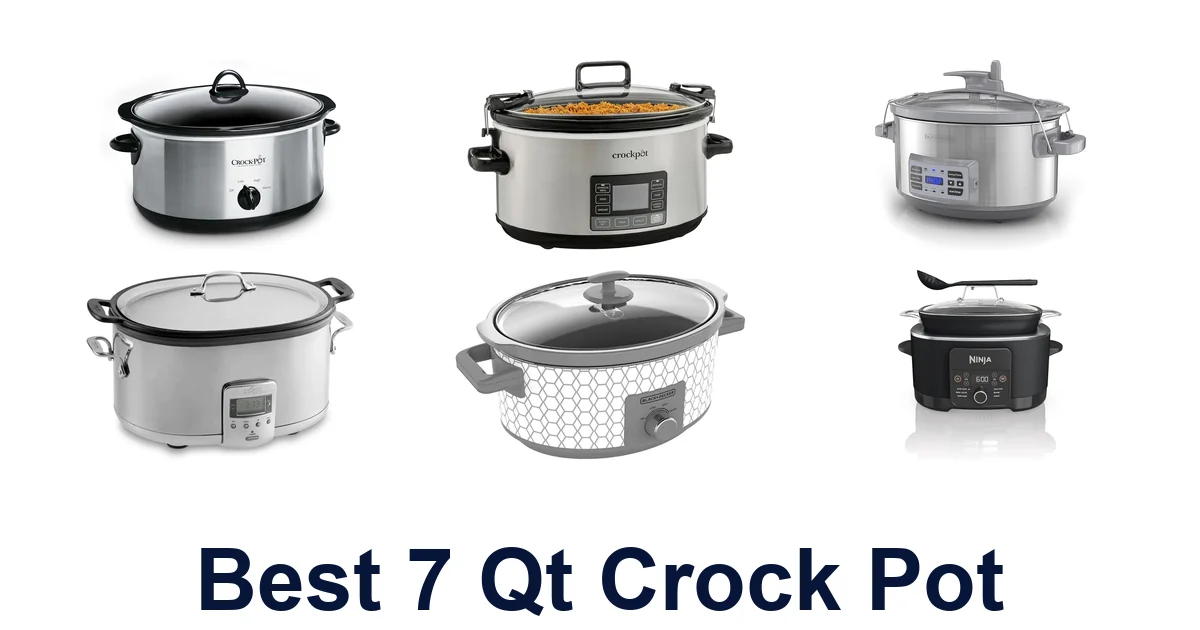
America’s Test Kitchen (ATK) consistently rates the Hamilton Beach 6-Quart Set & Forget Programmable Slow Cooker as the best traditional slow cooker due to its superior temperature control, built-in temperature probe, and tight-sealing locking lid. For multi-cookers that slow cook, ATK highlights models like the Instant Aura Pro 6-Quart Multi-Use Slow Cooker for precise heating without boiling food prematurely.
Why America's Test Kitchen Slow Cooker Testing Matters
America’s Test Kitchen is widely recognized for its rigorous, objective product evaluations. Unlike standard commercial reviewers that rely on quick unboxing impressions, ATK subjects appliances to months of repetitive, real-world cooking trials. When testing slow cookers and crock pots, ATK evaluates how evenly units heat, whether they maintain true low temperatures, how intuitive their controls are, and how reliably they turn tough cuts of meat into tender, flavorful dishes.
One of the primary findings from ATK's research over the years is that many modern slow cookers run significantly hotter than older vintage models. In response to food safety guidelines established in the late 1990s and 2000s, manufacturers elevated base temperatures across all settings. As a result, many contemporary slow cookers reach a rapid simmer—or even an active boil—on the "Low" setting, which defeats the gentle, low-and-slow cooking process required to dissolve collagen in beef chuck or pork shoulder without drying out the muscle fibers.
ATK’s testing methodology specifically measures thermal profiles over 8-to-10-hour cooking periods using calibrated data loggers. The test kitchen monitors thermal distribution across the base and side walls, checks for localized hot spots, evaluates steam retention, and measures how effectively lid gaskets prevent liquid loss.
Top America's Test Kitchen Approved Slow Cookers
1. The Overall Best Traditional Slow Cooker: Hamilton Beach 6-Quart Set & Forget Programmable Slow Cooker (Model 33969 / 33967)
The Hamilton Beach Set & Forget 6-Quart Programmable Slow Cooker has repeatedly secured ATK’s top recommendation for traditional stoneware slow cookers. It balances performance, practical features, and affordability.
Integrated Temperature Probe with Auto-Warm
Clip-Tight Sealed Gasket Lid (Travel-Friendly)
Gentle, Consistent Low & High Temperature Control
Heavy-Duty Heavy Ceramic Stoneware Insert
Temperature Probe Integration: The standout feature praised by ATK is the built-in temperature probe. You insert the probe through a port in the lid directly into a roast or whole chicken, set the target internal temperature (e.g., 190°F for pork shoulder or 165°F for poultry), and the machine automatically switches to "Warm" mode once that exact temperature is reached.
Gentle Heat Delivery: Unlike competing budget units that boil food violently within three hours on "Low," the Hamilton Beach ramps up temperature gradually, preserving moisture in braises and stews.
Secure Gasket Lid: The lid features a full silicone gasket and heavy-duty side latches. This prevents steam from escaping during cooking and eliminates spills when transporting dishes to potlucks or family gatherings.
Stoneware Insert: The thick ceramic crock retains heat exceptionally well, ensuring consistent cooking even if room temperatures fluctuate.
2. The Best Multi-Cooker for Slow Cooking: Instant Aura Pro 6-Quart Multi-Use Programmable Slow Cooker
For cooks who prefer a multi-functional appliance that excels at slow cooking without pressure cooking, ATK awarded top honors to the Instant Aura Pro 6-Quart Multi-Use Slow Cooker.
- Precision Heating Elements: Unlike traditional pressure-cooker multi-cookers that feature a small heating element confined strictly to the bottom center, the Aura Pro utilizes a wrapped heating element structure that distributes heat evenly across the bottom and lower sides of the pot.
- In-Pot Searing: The lightweight, nonstick-coated aluminum insert allows users to sear meats directly inside the unit before switching to the slow cook setting. This eliminates the extra pan usually required for browning beef chuck or searing pork chops on the stovetop.
- Precise Temperature Control: The digital thermostat allows users to set specific cooking temperatures in 5-degree increments, preventing the extreme temperature spikes common in basic slow cookers.
3. The Best High-End / Sear-Capable Option: Cuisinart 3-in-1 Cook Central 6-Quart Multi-Cooker (MSC-600)
The Cuisinart 3-in-1 Cook Central has earned high marks from ATK for users seeking a premium, heavy-duty alternative to traditional stoneware crock pots.
- Three Dedicated Modes: Features distinct modes for Browning/Searing (up to 400°F), Slow Cooking (Low, High, Warm), and Steaming.
- Cast-Aluminum Nonstick Pot: The removable cast-aluminum pot conducts heat rapidly and evenly, eliminating hot spots that can scorch delicate sauces.
- Easy Handling: The insert is significantly lighter than heavy stoneware crocks, making it easier to wash, lift, and pour.
4. The Best Simple Budget Pick: Crock-Pot 6-Quart Programmable Cook & Carry Slow Cooker
For budget-conscious cooks who want a classic, no-nonsense Crock-Pot brand machine, the Crock-Pot 6-Quart Programmable Cook & Carry remains a solid choice validated by ATK testing.
- Digital Timer: Offers digital countdown timing options ranging from 30 minutes up to 20 hours.
- Automatic Warm Setting: Automatically shifts to Keep Warm mode after the designated cooking time elapses.
- Travel-Ready Design: Equipped with a locking lid gasket system designed to prevent leaks during transit.
Comprehensive Comparison of ATK Top-Rated Slow Cookers
The following table summarizes the specifications, core design features, and testing performance of the primary models recommended by America's Test Kitchen:
| Model | Insert Type | Capacity | Temperature Probe | Sear Function | Lid Mechanism | ATK Testing Status |
|---|---|---|---|---|---|---|
| Hamilton Beach Set & Forget 33969 | Ceramic Stoneware | 6 Quarts | Yes (Integrated Probe) | No (Stovetop insert dependent) | Gasket + Metal Latches | Winner (Best Overall Traditional) |
| Instant Aura Pro Multi-Cooker | Nonstick Aluminum | 6 Quarts | No (Digital Temp Control) | Yes (In-Pot Searing up to 425°F) | Tempered Glass with Handle | Winner (Best Multi-Cooker Slow Cooker) |
| Cuisinart Cook Central MSC-600 | Nonstick Cast Aluminum | 6 Quarts | No | Yes (In-Pot Searing up to 400°F) | Glass Lid with Stainless Rim | Recommended (Best High-End/Sear-in-Pot) |
| Crock-Pot 6-Qt Programmable Cook & Carry | Ceramic Stoneware | 6 Quarts | No | No | Gasket + Locking Clamps | Recommended (Best Budget Standard) |
| All-Clad Deluxe Slow Cooker | Cast Aluminum (Nonstick) | 7 Quarts | No | Yes (Stovetop-Safe Insert) | Stainless/Glass Lid | Recommended (Splurge Pick) |
Key Testing Criteria: How ATK Evaluates Slow Cookers
Understanding how America's Test Kitchen tests appliances helps clarify why certain popular models fail while others earn top ratings.
- Heat Ramp-Up Profile: Gentle, steady temp increase without rapid boiling
- Heat Distribution: Side-wrapped coils vs. localized bottom hot spots
- Thermal Insulation: Heavy ceramic stoneware vs. thin metallic walls
- Vapor & Moisture Retention: Precise lid seals to prevent sauce reduction
- Program Flexibility: Target temp probes, auto-warm, and customizable time
1. Temperature Control and Heating Logic
The single biggest flaw identified by ATK in lower-rated slow cookers is excessive heat. In poor models, the "Low" setting reaches 212°F (100°C) within 2 to 3 hours, causing liquids to boil rapidly. This boils meat instead of braising it, resulting in tough, stringy proteins and curds in dairy-based sauces. High-performing models regulate heat so that "Low" stays around 185°F to 195°F for the majority of the cooking cycle, allowing connective tissue (collagen) to convert into gelatin smoothly.
2. Heating Element Placement
Traditional slow cookers utilize electrical heating coils wrapped around the lower sides of the metal housing, enclosing the ceramic pot inside. This creates surround-sound thermal distribution.
Conversely, many 7-in-1 multi-cookers (such as standard pressure cookers) place their heating element only at the bottom plate. ATK notes that when using a pressure cooker on its "Slow Cook" setting, heat only enters from the bottom center, leading to uneven cooking, scorched bottoms, and uncooked food at the top surface unless stirred frequently.
3. Insert Materials and Thermal Mass
- Ceramic Stoneware: Retains thermal energy for extended periods. It provides smooth, dampening regulation against temperature fluctuations. However, ceramic is heavy, prone to cracking under thermal shock, and cannot be used directly over a gas or electric burner for browning.
- Cast Aluminum / Nonstick: Heats quickly and allows in-pot or direct stovetop browning. Aluminum inserts are much lighter and easier to wash, but cheaper versions can warp or lose their nonstick coatings over time.
4. Lid Construction, Gaskets, and Latches
A loose glass lid allows steam to evaporate continuously over an 8-hour period. This can reduce cooking liquids by 20% to 30%, resulting in dry meat and overly salty sauces. Top-rated models feature tight-fitting glass lids with silicone gaskets that retain moisture, keeping the environment humid throughout extended cook cycles.
Traditional Slow Cooker vs. Multi-Cooker / Instant Pot for Slow Cooking
A common question among home cooks is whether an Instant Pot or multi-cooker can fully replace a dedicated slow cooker. America's Test Kitchen has evaluated this extensively, concluding that standard 7-in-1 pressure cookers generally perform poorly as slow cookers, whereas specialized multi-cookers excel.
| Traditional Slow Cooker | Standard Pressure Multi-Cooker |
|---|---|
| Wrap-around side heating coils | Bottom-only heating element |
| Thick ceramic thermal mass | Thin stainless steel pot wall |
| Gentle 185°F - 195°F low cook | Concentrated center heat spot |
| Ideal for tender braises & stews | Can cause scorching on slow cook |
The Heating Distribution Problem
Standard pressure cookers (like the classic Instant Pot Duo) feature a heating element concentrated in a small circle at the base of the outer housing. When pressure cooking, this is not an issue because trapped steam creates high-pressure ambient heat throughout the chamber. However, when slow cooking under normal atmospheric pressure, bottom-only heat causes food at the base to scorch while food near the top remains undercooked.
Dedicated slow cookers—and specialized slow-cook multi-cookers like the Instant Aura Pro—use wrap-around heating elements embedded in the side walls. This design surrounds the food with even heat from all angles.
Lid and Steam Venting Mechanics
Pressure cooker lids are thick, insulated, and designed to trap high-pressure steam. When set to slow cook mode with a pressure lid (even vented), the micro-environment can accumulate trapped heat differently than a traditional vented glass lid, altering cooking times unpredictably.
For best results, if using a multi-cooker for slow cooking, ATK recommends using an optional glass slow-cooking lid or selecting a unit specifically engineered with side-heating elements like the Instant Aura Pro.
Common Slow Cooking Mistakes Highlighted by ATK
To get the best results from any top-rated slow cooker, ATK highlights several common operational mistakes that home cooks should avoid:
- Lifting the Lid Frequently: Every time you lift the lid of a slow cooker during operation, accumulated heat and steam escape. This drops the interior temperature drastically and can add 15 to 30 minutes to the total required cook time per lift.
- Overcrowding or Underfilling the Pot: Slow cookers perform optimally when filled between half full and two-thirds full. Filling under half can cause food to dry out or burn, while filling to the brim prevents heat from circulating evenly, leaving foods undercooked.
- Skipping the Browning/Searing Step: While it is tempting to throw raw meat directly into the pot with broth, searing meat on the stovetop (or using a sear-in-pot multi-cooker) initiates the Maillard reaction. This chemical reaction creates complex, savory compounds that cannot develop at slow-cooker temperatures alone.
- Adding Dairy Too Early: Milk, sour cream, heavy cream, and yogurt break down and curdle when exposed to low heat over long durations. ATK advises stirring dairy, soft herbs, and fresh lemon juice into the pot during the final 15 to 30 minutes of cooking.
- Using Too Much Cooking Liquid: Liquids do not evaporate in a sealed slow cooker at the same rate they do in an open Dutch oven on the stove. When adapting standard oven or stovetop recipes for a slow cooker, reduce the total added liquid (broth, wine, water) by roughly one-third to one-half.
Care, Maintenance, and Thermal Shock Prevention
Proper care ensures that your crock pot or slow cooker insert lasts for years without cracking, scratching, or degrading.
Avoid Thermal Shock: Never pour ice-cold liquid into a hot ceramic crock.
Cool Before Washing: Allow stoneware to reach room temp before soaking.
Care for Nonstick: Use silicone or wooden utensils on coated metal pots.
Clean Gaskets Daily: Remove silicone lid gaskets to wash accumulated grease.
Preventing Thermal Shock in Ceramic Crockery: Ceramic stoneware is susceptible to cracking from sudden temperature shifts. Never pour refrigerated broth directly into a piping hot crock, and never submerge a hot stoneware liner in cold sink water immediately after cooking. Allow the liner to cool to room temperature before cleaning.
Removing Scorched Food Safely: For stubborn, baked-on food in stoneware inserts, fill the crock with warm water, add 2 tablespoons of baking soda and a drop of dish soap, and set the unit on "Low" for 1 to 2 hours. The gentle heat and alkaline solution will loosen baked-on residue without abrasive scrubbing.
Nonstick Coating Protection: If using an aluminum nonstick insert (such as in the Instant Aura Pro or Cuisinart Cook Central), use only wooden, silicone, or heat-resistant plastic utensils. Metal spoons and tongs can scratch nonstick surfaces, impairing performance and durability.
Gasket Hygiene: Removable rubber or silicone lid gaskets trap food particles and odors over time. Remove the gasket after every 2 to 3 uses, wash it thoroughly with warm soapy water (or place it on the top rack of the dishwasher), and ensure it is completely dry before reassembling.
Frequently Asked Questions
What is America's Test Kitchen's top-rated traditional slow cooker?
America's Test Kitchen's top-rated traditional slow cooker is the Hamilton Beach 6-Quart Set & Forget Programmable Slow Cooker (Model 33969 / 33967). It earns top marks for its steady temperature ramp-up, clip-tight locking gasket lid, and integrated temperature probe that automatically switches the machine to Keep Warm mode once meat reaches the set temperature.
Does an Instant Pot work as well as a Crock-Pot for slow cooking?
Standard Instant Pot pressure cookers generally do not slow cook as effectively as dedicated traditional Crock-Pots. Pressure cookers feature heating elements located solely at the bottom plate, creating hot spots and uneven heat distribution when used without pressure. However, specialized multi-cookers like the Instant Aura Pro (which is designed for slow cooking without pressure) feature side-wrapped heating elements and excel at slow cooking.
Why do modern slow cookers cook hotter than older models?
Manufacturers increased the baseline operational temperatures of modern slow cookers in response to updated food safety guidelines. Older models cooked at lower temperatures (around 170°F to 180°F on low), but modern units ramp up faster to ensure food safely passes through the food-safety "danger zone" (40°F to 140°F) quickly. Higher-quality models balance safety with low, gentle simmering rates to prevent boiling.
Can you put a ceramic slow cooker insert on the stovetop to sear meat?
No. Standard ceramic stoneware inserts should never be placed directly on gas, electric, or induction stovetops, as direct localized flame or coil heat will cause the stoneware to shatter. To sear meat directly in the pan, choose a multi-cooker with a metal/aluminum insert (like the Cuisinart Cook Central) or a slow cooker with a stovetop-safe metal insert (like select All-Clad models).
Is a 6-quart slow cooker the best size for most households?
Yes, America's Test Kitchen recommends 6 quarts as the ideal size for most families and home cooks. A 6-quart capacity accommodates large cuts of meat like 5-pound beef chuck roasts, whole chickens, and large batches of chili or pork shoulder, while still functioning effectively when half-filled for smaller family meals.
Final Recommendation: Choosing the Right Model
Selecting the best slow cooker tested by America's Test Kitchen comes down to your cooking style, kitchen space, and preferred preparation methods:
- Choose the Hamilton Beach Set & Forget 6-Quart if you want the absolute best overall traditional slow cooker. It excels at low-and-slow cooking, includes a precise food-temperature probe, prevents travel spills with its locked gasket lid, and is priced reasonably.
- Choose the Instant Aura Pro 6-Quart if you want a versatile multi-cooker designed specifically for slow cooking that allows you to brown meats directly inside the pot without using a separate stovetop skillet.
- Choose the Cuisinart Cook Central (MSC-600) if you prefer a lightweight, nonstick cast-aluminum insert with dedicated searing, slow cooking, and steaming modes for easy handling and cleanup.
Next Step: Check your household size and cooking habits. If you frequently make large roasts or transport food to gatherings, prioritize a 6-quart model with a gasket-locking lid and integrated temperature probe to achieve tender results every time.