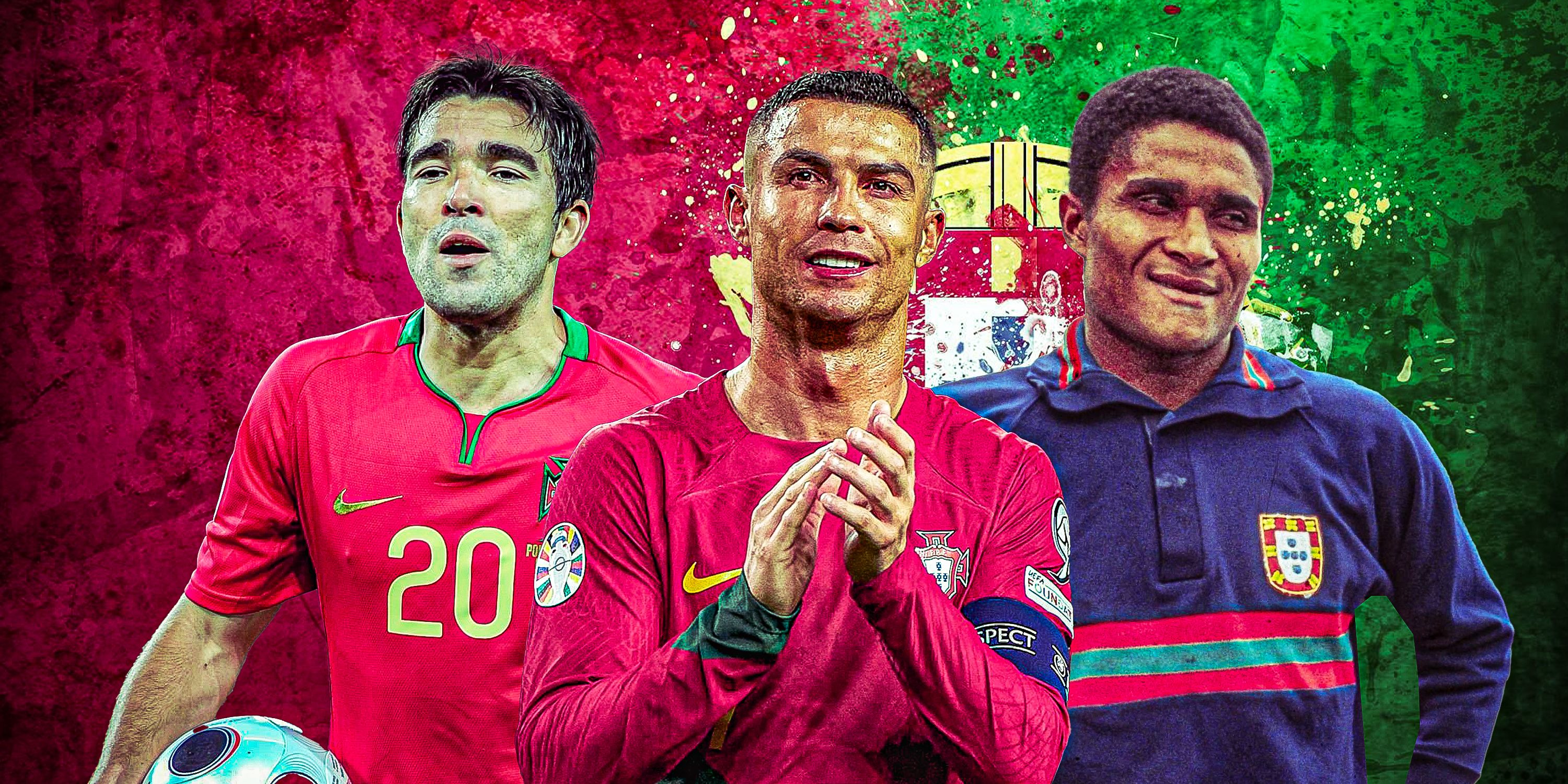
Cristiano Ronaldo is widely considered one of the greatest footballers in history, having won five Ballon d'Or awards and five UEFA Champions League titles. Known for his extraordinary athleticism and goal-scoring prowess, his career has spanned elite clubs including Manchester United, Real Madrid, and Juventus, culminating in a record-breaking international career with Portugal.
Cristiano Ronaldo dos Santos Aveiro, known globally as CR7, has redefined the parameters of longevity and professional excellence in modern football. As we look at his standing in 2026, his journey from the small island of Madeira to becoming the highest-scoring male player in the history of the sport remains a blueprint for aspiring athletes. While the name "Ronaldo" was first made famous on the global stage by the Brazilian phenomenon Ronaldo Nazário, Cristiano has built a legacy that stands as a testament to the power of disciplined training and mental fortitude.
The Early Years and the Sporting CP Breakthrough
Cristiano Ronaldo’s footballing journey began in the youth ranks of Andorinha and Nacional in Madeira. His talent was so evident that by the age of 12, he moved to the Portuguese mainland to join the prestigious Sporting CP academy.
At Sporting, Ronaldo became the first player in the club's history to play for the under-16, under-17, under-18, B-team, and the first team all within a single season. His breakthrough moment occurred during a pre-season friendly in 2003 against Manchester United. Ronaldo’s performance was so electrifying that the United players reportedly urged manager Sir Alex Ferguson to sign him immediately. Within days, a £12.24 million transfer was completed, making him the most expensive teenager in English football history at the time.
The Transformation at Manchester United (2003–2009)
Under the mentorship of Sir Alex Ferguson, Ronaldo transformed from a flashy, inconsistent winger into a clinical attacking force. Inheriting the iconic number 7 shirt—previously worn by legends like George Best, Eric Cantona, and David Beckham—Ronaldo initially struggled with the physicality of the Premier League.
However, between 2006 and 2009, he reached a level of performance rarely seen in England. The 2007–2008 season remains one of the most significant in his career. He scored 31 goals in the Premier League and helped United secure the UEFA Champions League title in Moscow. By the end of 2008, Ronaldo had secured his first Ballon d'Or, establishing himself as the best player in the world. His time at Old Trafford concluded with three consecutive Premier League titles, proving his ability to dominate one of the world's most competitive leagues.
The Real Madrid Era: Peak Performance and Rivalry (2009–2018)
In the summer of 2009, Real Madrid signed Ronaldo for a then-world-record fee of £80 million (approximately €94 million). This move initiated a decade of unprecedented individual and collective success. It was at the Santiago Bernabéu that Ronaldo’s rivalry with Lionel Messi became the focal point of global football, as the two players pushed each other to shatter nearly every existing record.
Ronaldo’s statistical output at Real Madrid was staggering:
- He became the club's all-time leading scorer, surpassing Raúl.
- He maintained a scoring rate of more than one goal per game, finishing his Madrid career with 450 goals in 438 appearances.
- He played a pivotal role in the "La Décima" (the tenth European title) in 2014 and the subsequent "Three-peat" of Champions League titles under Zinedine Zidane between 2016 and 2018.
During this period, Ronaldo evolved his game from a traditional winger who took on defenders to a powerhouse forward who specialized in aerial duels, one-touch finishes, and elite positioning. This adaptability allowed him to maintain world-class standards even as he entered his 30s.
Italian Challenges and the Return to Manchester (2018–2022)
In 2018, seeking a new challenge, Ronaldo moved to Juventus for a fee exceeding €100 million. Despite being 33 at the time, he continued to dominate, winning two Serie A titles and becoming the fastest player in Juventus history to reach 100 goals. His arrival in Italy was aimed at helping the "Old Lady" win the Champions League, and while that specific goal remained elusive, his individual impact on the Italian game was significant.
In August 2021, Ronaldo made a sensational return to Manchester United. While the team struggled with consistency and managerial changes, Ronaldo still managed to finish the 2021-22 season as the club's top scorer. However, the second stint ended in late 2022 following a mutual agreement to terminate his contract, setting the stage for his move to the burgeoning football landscape of the Middle East.
The Saudi Pro League and Global Expansion (2023–Present)
Ronaldo’s move to Al-Nassr in early 2023 was a watershed moment for Asian football. His arrival acted as a catalyst, drawing several high-profile European stars to the Saudi Pro League. By 2026, Ronaldo’s presence has fundamentally changed the commercial and competitive landscape of the region.
Even in his late 30s and early 40s, Ronaldo has maintained a rigorous fitness regime that allows him to compete at a professional level. His stint in Saudi Arabia has been characterized by high goal-scoring volumes and a leadership role that has elevated the profile of the AFC Champions League.
International Career: Leading Portugal to Glory
Ronaldo's impact on the Portugal national team is perhaps his most enduring legacy. He debuted in 2003 and has since become the all-time leading goal scorer in international men's football, surpassing the long-standing record held by Iran's Ali Daei.
Key milestones in his international career include:
- Euro 2016: Despite being injured early in the final against France, Ronaldo’s leadership from the touchline was credited with helping Portugal secure its first major international trophy.
- 2019 UEFA Nations League: Ronaldo led Portugal to victory in the inaugural tournament, further cementing his status as a national icon.
- Five World Cups: Ronaldo is one of the few players to have scored in five different FIFA World Cup tournaments.
Career Statistics and Achievements
The following table outlines Ronaldo's performance metrics across his primary professional club stints.
| Club | Period | Appearances (Approx) | Goals (Approx) | Major Trophies Won |
|---|---|---|---|---|
| Sporting CP | 2002–2003 | 31 | 5 | Portuguese Super Cup |
| Manchester United | 2003–2009, 2021-2022 | 346 | 145 | 3 Premier League, 1 Champions League |
| Real Madrid | 2009–2018 | 438 | 450 | 2 La Liga, 4 Champions League |
| Juventus | 2018–2021 | 134 | 101 | 2 Serie A, 1 Coppa Italia |
| Al-Nassr | 2023–Present | 100+ | 90+ | Arab Club Champions Cup |
| Portugal (Int'l) | 2003–Present | 200+ | 130+ | Euro 2016, Nations League |
Technical Evolution and Training Philosophy
Ronaldo's longevity is not a matter of luck but the result of a scientific approach to sports performance. He is famous for his low body fat percentage and high muscle mass, which he maintains through a strict diet and a recovery-focused lifestyle.
- Physicality: In his prime, Ronaldo was clocked at speeds of over 33 km/h. His vertical leap has been measured at 78 cm (30.7 inches), higher than the average NBA player, allowing him to dominate in the air.
- Skill Set: Early in his career, he was known for "step-overs" and flair. As he matured, he focused on efficiency, becoming the world's premier "poacher" who could score with either foot or his head.
- Mental Toughness: Ronaldo is often cited by teammates for his "first in, last out" mentality at the training ground. This psychological drive to be the best has allowed him to perform under immense pressure for over two decades.
The CR7 Brand and Off-Field Influence
Beyond the pitch, Cristiano Ronaldo is a global brand. He was the first athlete to reach 500 million followers across social media platforms. His business interests, under the CR7 label, include hotels (Pestana CR7), clothing lines, fragrances, and fitness centers.
His philanthropic efforts are also significant. He has served as an ambassador for organizations like Save the Children, UNICEF, and World Vision. Ronaldo’s financial influence is so vast that he has consistently ranked among the highest-paid athletes in the world, according to Forbes, often alternating the top spot with Lionel Messi and LeBron James.
FAQs About Ronaldo in Football
How many goals has Cristiano Ronaldo scored in total?
As of 2026, Cristiano Ronaldo has scored over 900 official career goals for club and country. He holds the record for the most official goals in the history of men's professional football, though exact tallies can vary slightly depending on whether certain youth or regional matches are counted by specific statistical bodies like the IFFHS or FIFA.
Has Ronaldo ever won the FIFA World Cup?
No, the FIFA World Cup is the one major trophy that has eluded Cristiano Ronaldo. His best finish with the Portugal national team was fourth place in the 2006 World Cup. While he has won the European Championship and the Nations League, the World Cup remains the only significant gap in his trophy cabinet.
What is the "Ronaldo vs. Messi" debate?
The "Ronaldo vs. Messi" debate is a long-standing discussion among fans and pundits about which player is the "Greatest of All Time" (GOAT). Ronaldo is typically favored for his athleticism, versatility across multiple leagues, and Champions League dominance. Messi is often praised for his natural playmaking ability, dribbling, and vision. Both players have dominated the Ballon d'Or for over a decade, sharing 13 awards between them.
Why is Ronaldo called "CR7"?
"CR7" is a combination of his initials (Cristiano Ronaldo) and his preferred shirt number (7). He first wore the number 7 at Manchester United, and it has since become his personal brand identity, used for his commercial ventures and social media handles.
At what age is Cristiano Ronaldo expected to retire?
While there has been constant speculation regarding his retirement, Ronaldo has often stated his desire to play into his 40s. By 2026, he has continued to participate in high-level football, showing that his physical conditioning allows him to bypass the traditional retirement age for outfield players.
Conclusion and Next Steps
Cristiano Ronaldo's career is a masterclass in professional evolution. From a skillful teenager at Sporting to a global icon, he has consistently adapted his game to remain at the pinnacle of football. For those looking to understand his impact, the best next action is to study his Real Madrid tenure (2009–2018), which represents the highest statistical peak of any individual player in the modern era. Whether you are a fan of his playing style or a critic of his personality, his influence on the training standards and commercial reach of football is undeniable.