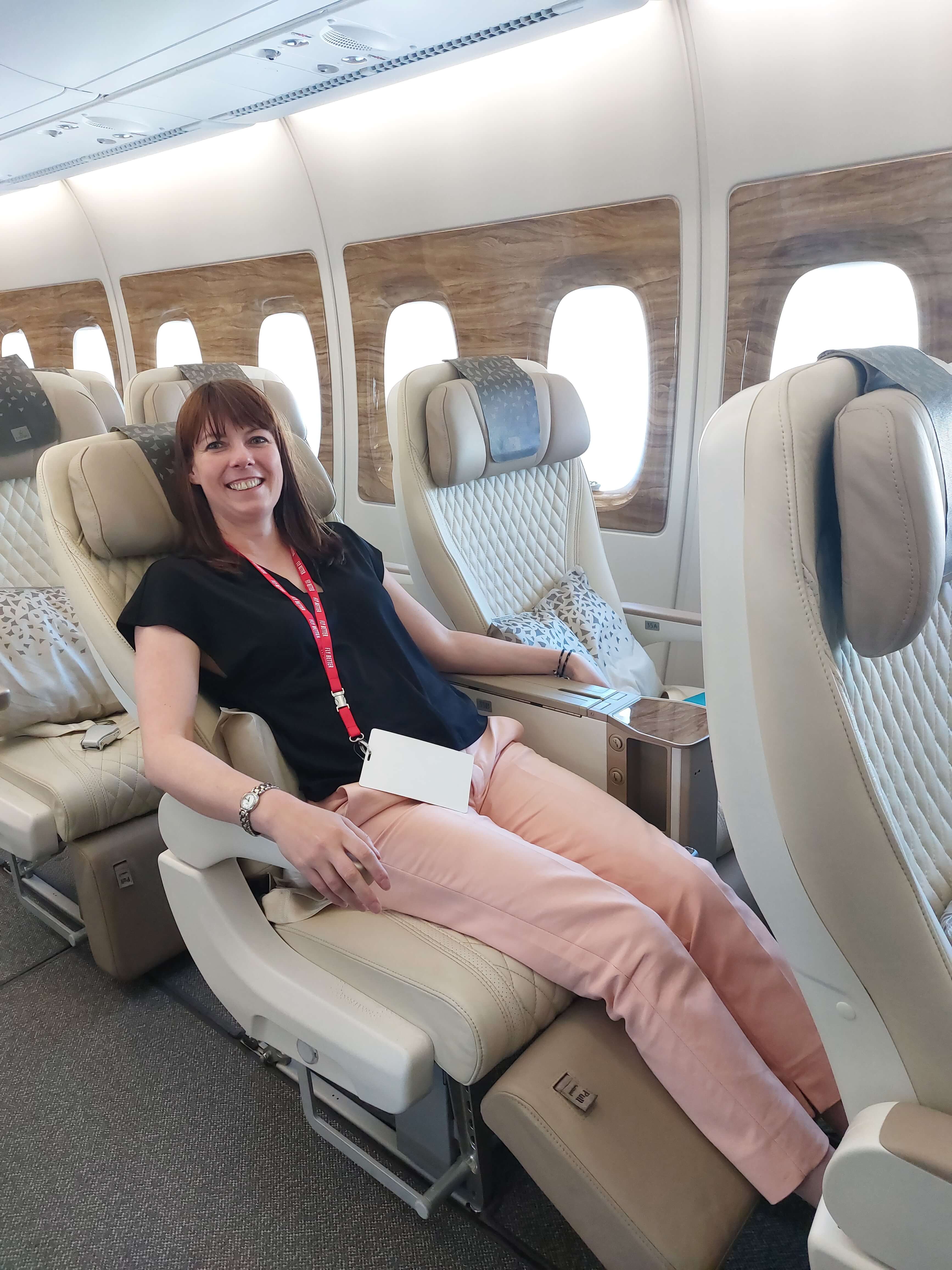
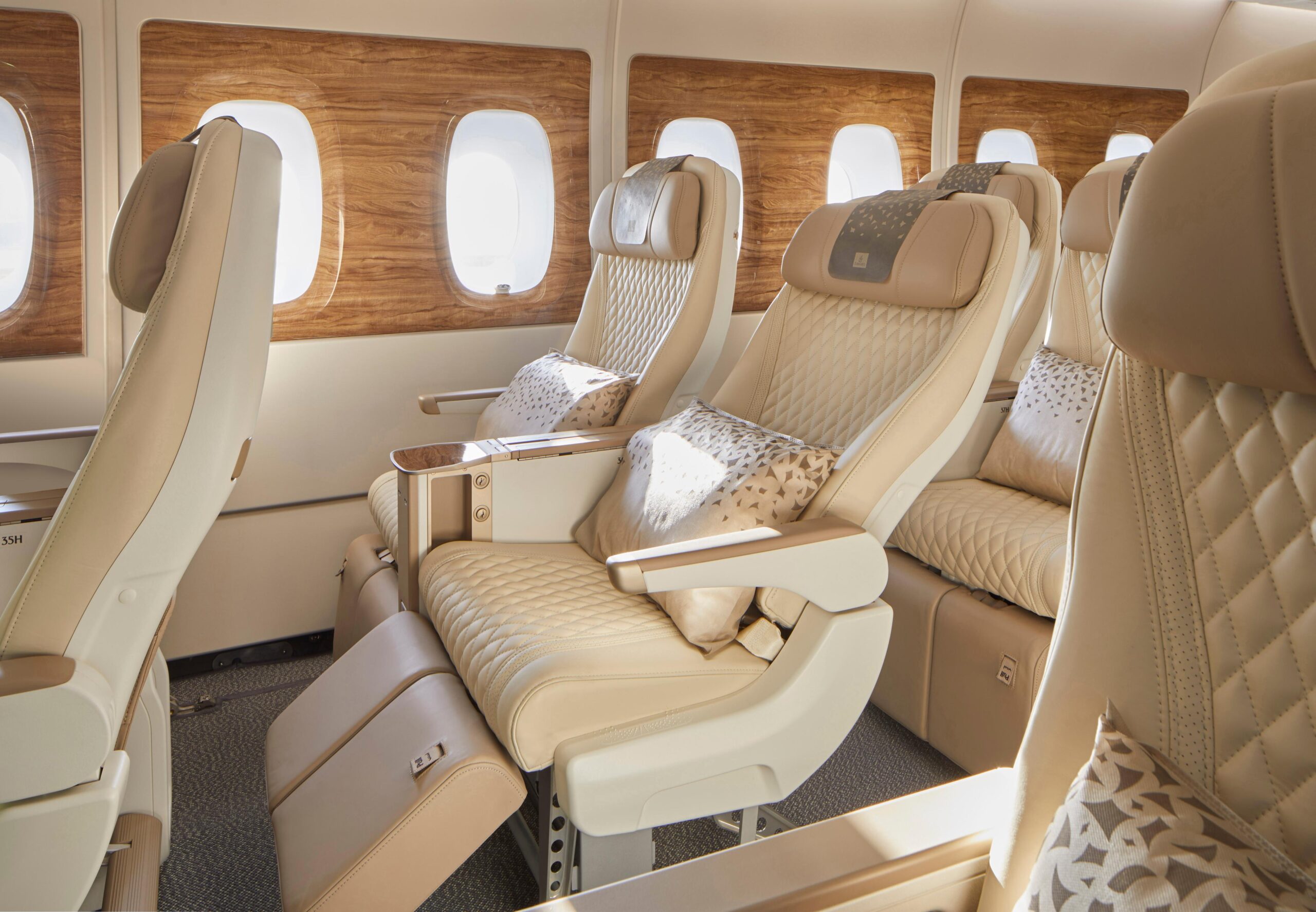
In 2026, the Airbus A380-800 remains a cornerstone of long-haul luxury, with Premium Economy serving as the critical "middle ground" for travelers seeking enhanced comfort without the Business Class price tag. Leading operators like Emirates, Singapore Airlines, and Qantas offer these seats with a focus on increased legroom (38–40 inches), dedicated cabin service, and prioritized ground handling.
The Airbus A380-800, once predicted to face an early retirement, has seen a remarkable resurgence. As of 2026, many of the world’s leading airlines have not only maintained their A380 fleets but have invested billions in cabin retrofits. Central to these upgrades is the Premium Economy (PE) cabin. This section has transitioned from a niche offering to a standard requirement for high-yield long-haul routes.
For the passenger, the A380 provides a unique advantage for Premium Economy: its massive fuselage width. While narrower aircraft often feel cramped in a 2-4-2 configuration, the A380’s main deck and upper deck allow for wider seats and deeper aisles, significantly reducing the "squeezed" feeling often associated with mid-tier cabins.
The Evolution of Premium Economy on the A380
The trajectory of Premium Economy on the A380 has been one of gradual adoption followed by an aggressive rollout. Initially, many operators viewed the A380 as a three-class aircraft (First, Business, and Economy). However, changing traveler demographics and the rise of the "premium leisure" segment forced a shift.
By 2026, the Premium Economy cabin is no longer just "Economy with more legroom." It is a distinct product class with specialized seating hardware, enhanced catering, and dedicated cabin crew. Airlines have realized that there is a significant market of travelers—ranging from small business owners to retirees—who are willing to pay 1.5 to 2.5 times the standard Economy fare for a guaranteed increase in personal space and a more civilized airport experience.
Technical Advantages of the A380 Airframe
The A380’s architecture provides two distinct locations for Premium Economy: the front of the main deck or the rear of the upper deck. Each has its technical benefits:
- Main Deck: Offers a wider cross-section, allowing for slightly wider armrests and more substantial storage bins.
- Upper Deck: Provides a quieter environment due to its distance from the engines and often features side-wall storage bins for window-seat passengers, a cherished feature for long-haul storage.
Leading Airlines and Their A380 Premium Economy Products
As of 2026, several major carriers dominate the A380 Premium Economy landscape. Each has a slightly different take on the seat design and service flow.
Emirates: The New Gold Standard
Emirates was late to the Premium Economy game but has since set the industry benchmark. Their A380 PE cabin is typically located at the front of the main deck.
- Seat Specs: A 19.5-inch width and up to a 40-inch pitch.
- Design: The seats are upholstered in cream-colored anti-stain leather with stitching details similar to their Business Class product.
- Unique Features: The 6-way adjustable headrests and calf rests provide a level of ergonomic support rarely seen in this class.
Singapore Airlines: Precision and Consistency
Singapore Airlines (SIA) was one of the first to commit to PE on the A380. Their seats are usually arranged in a 2-4-2 configuration at the front of the main deck.
- Seat Specs: 19.5 inches wide with a 38-inch pitch.
- Design: Developed by Zim Flugsitz and manufactured in Germany, these seats focus on functional luxury.
- Service: The "Book the Cook" service allows Premium Economy passengers to pre-order main courses from a diverse menu, bridging the gap to Business Class dining.
Qantas: The Upper Deck Experience
Qantas has utilized the A380’s upper deck for its Premium Economy cabin, creating a more "private jet" feel.
- Seat Specs: The Qantas PE seat, designed by David Caon, features a unique "cradle" recline. When the seat reclines, the base moves with the back to better support the body's natural curvature.
- Privacy: Because the cabin is on the upper deck, it is isolated from the much larger Economy sections, leading to lower noise levels and faster service.
Lufthansa and British Airways
Lufthansa has successfully integrated its A380s back into its Munich hub, featuring a 2-3-2 or 2-4-2 layout that emphasizes German engineering and robust seat materials. British Airways continues to offer "World Traveller Plus," which focuses heavily on the ground experience, including additional baggage allowances and priority boarding.
Technical Seat Specifications and In-Flight Amenities
When evaluating an A380 Premium Economy seat, four metrics define the experience: pitch, width, recline, and "living space."
| Airline | Seat Pitch (Inches) | Seat Width (Inches) | Recline (Inches) | Cabin Location |
|---|---|---|---|---|
| Emirates | 40 | 19.5 | 8 | Main Deck (Front) |
| Singapore Airlines | 38 | 19.5 | 8 | Main Deck (Front) |
| Qantas | 38 | 20.5 | 9 | Upper Deck (Rear) |
| Lufthansa | 38 | 19 | 7 | Main Deck |
| British Airways | 38 | 18.5 | 7 | Upper Deck |
The "Living Space" Concept
In 2026, the focus has shifted toward "living space"—the area a passenger can claim as their own. On the A380, Premium Economy seats often feature:
- Dedicated Personal Reading Lights: Integrated into the headrest or seat shell.
- AC and USB-C Power: Essential for modern travelers, usually located at every seat rather than shared between passengers.
- Enhanced IFE (In-Flight Entertainment): Larger screens (typically 13.3 inches or higher) with high-definition resolution and noise-canceling headphone jacks.
The In-Flight Service and Soft Product
The hardware is only half the story. The "soft product" refers to the service, food, and amenities that accompany the seat. On an A380, the scale of the aircraft allows for better-equipped galleys, which translates to higher quality catering for Premium Economy.
- Dining: Most carriers have moved away from "Economy food on better plates." In 2026, A380 PE menus often feature a choice of three main courses, served on chinaware with linen napkins.
- Amenities: Amenity kits in PE have become more substantial. Travelers can expect sustainable dental kits, eye masks, and often premium skincare samples (e.g., L'Occitane or Rituals).
- Baggage and Ground Services: Standard for 2026 is a two-bag allowance (23kg each) and priority check-in/boarding. This is often the primary reason business travelers choose PE over Economy.
Booking Strategies, Costs, and Upgrades
Securing a Premium Economy seat on the A380 requires a strategic approach, as these cabins are smaller (typically 24 to 56 seats) and sell out faster than Economy or Business.
Pricing Trends in 2026
The cost of Premium Economy is generally positioned at a 85% to 120% premium over a standard Economy ticket. For example, if a London to Sydney Economy ticket is $1,200, the Premium Economy equivalent on a Qantas A380 is likely between $2,200 and $2,600.
Using Points and Miles
The A380 is a favorite for mileage redemptions. In 2026, the most "efficient" use of miles is often upgrading from Economy to Premium Economy.
- Waitlist Strategy: Airlines like Singapore Airlines allow passengers to "Waitlist" for a PE seat using KrisFlyer miles. Given the high capacity of the A380, these waitlists often clear 48–72 hours before departure.
- Last-Minute Upgrades: Emirates often offers "cash-only" upgrades at the check-in counter or via their app 24 hours before the flight. These can be significantly cheaper than booking the fare outright.
Common Challenges and Troubleshooting
Despite the luxury of the A380, there are specific issues passengers should look out for when booking Premium Economy.
Seat Selection Pitfalls
- Bulkhead Seats: While they offer unlimited knee room, they often have smaller footrests (if any) and the IFE screens are tucked into the armrests, which can be cumbersome.
- Proximity to Galleys: In the A380's Premium Economy, the proximity to the galley can be a double-edged sword. While you get served first, the light and noise pollution during "rest phases" can be significant.
- The "Middle Seat" Risk: Even in a 2-4-2 configuration, the "4" section contains two middle seats. On a 14-hour flight, being stuck in the middle of a Premium Economy row can negate the benefits of the extra pitch. Always aim for the "2" sections (A/B or J/K).
Connectivity Issues
While most A380s in 2026 are equipped with high-speed satellite Wi-Fi (such as Starlink or Inmarsat’s GX Aviation), the sheer number of passengers (up to 500+) can lead to bandwidth throttling. Premium Economy passengers occasionally receive a small complimentary Wi-Fi credit, but it is rarely enough for streaming.
Comparison: A380 vs. Boeing 787 and A350 Premium Economy
Many travelers wonder if the A380 PE is superior to that of the newer Boeing 787 Dreamliner or Airbus A350.
- Noise Levels: The A380 is significantly quieter. The insulation on the double-deck aircraft is superior to the carbon-fiber skins of the 787.
- Humidity and Pressure: This is where the 787 and A350 win. They are pressurized to a lower cabin altitude with higher humidity, leading to less jet lag. However, the sheer physical space of the A380 PE cabin usually makes it the preferred choice for those who value "elbow room" above all else.
FAQs about Airbus A380-800 Premium Economy
Is the Premium Economy seat on the A380 a "lie-flat" seat?
No, Premium Economy seats on the A380 are "recliner" seats. They offer a deep recline (up to 8 or 9 inches) and a legrest, but they do not turn into a flat bed. For a lie-flat experience, you must book Business Class or First Class.
Which airline has the best A380 Premium Economy in 2026?
Emirates is widely considered the leader in 2026 due to the recent multi-billion dollar retrofit of their fleet, featuring leather seats and a 40-inch pitch. Singapore Airlines remains a close second for its superior food and "Book the Cook" service.
Can I access the onboard lounge if I am in Premium Economy?
Generally, no. On airlines like Emirates and Qatar Airways, the famous onboard lounge/bar is reserved for Business and First Class passengers. Premium Economy is a distinct cabin from the upper-tier luxury suites and does not include lounge access unless you have high-tier frequent flyer status.
Is it worth the extra cost for a 10+ hour flight?
Most aviation experts and frequent travelers agree that for flights exceeding 10 hours, Premium Economy is the most cost-effective way to arrive "functional." The ability to recline significantly without bothering the person behind you, combined with the legrest, allows for much better sleep than a standard Economy seat.
Do A380 Premium Economy seats have individual power outlets?
Yes, in 2026, almost all A380 Premium Economy configurations provide at least one universal AC power outlet and one or two USB-C ports per passenger. These are usually located in the center console or below the seat cushion.
Final Recommendation: How to Choose Your Seat
When booking your Airbus A380-800 Premium Economy seat in 2026, prioritize the upper deck if available (Qantas or British Airways), as these cabins are smaller and offer a more exclusive atmosphere. If you are flying Emirates or Singapore Airlines, aim for a window seat in the "2" section of the 2-4-2 layout to ensure you have only one neighbor and direct access to the side of the aircraft.
Always check the specific aircraft registration on sites like SeatGuru or AeroLOPA before your flight, as some airlines still operate a small number of non-retrofitted A380s that may lack the latest Premium Economy hardware. For the best value, look for "Premium Economy Sale" fares which typically occur 4–6 months before departure.