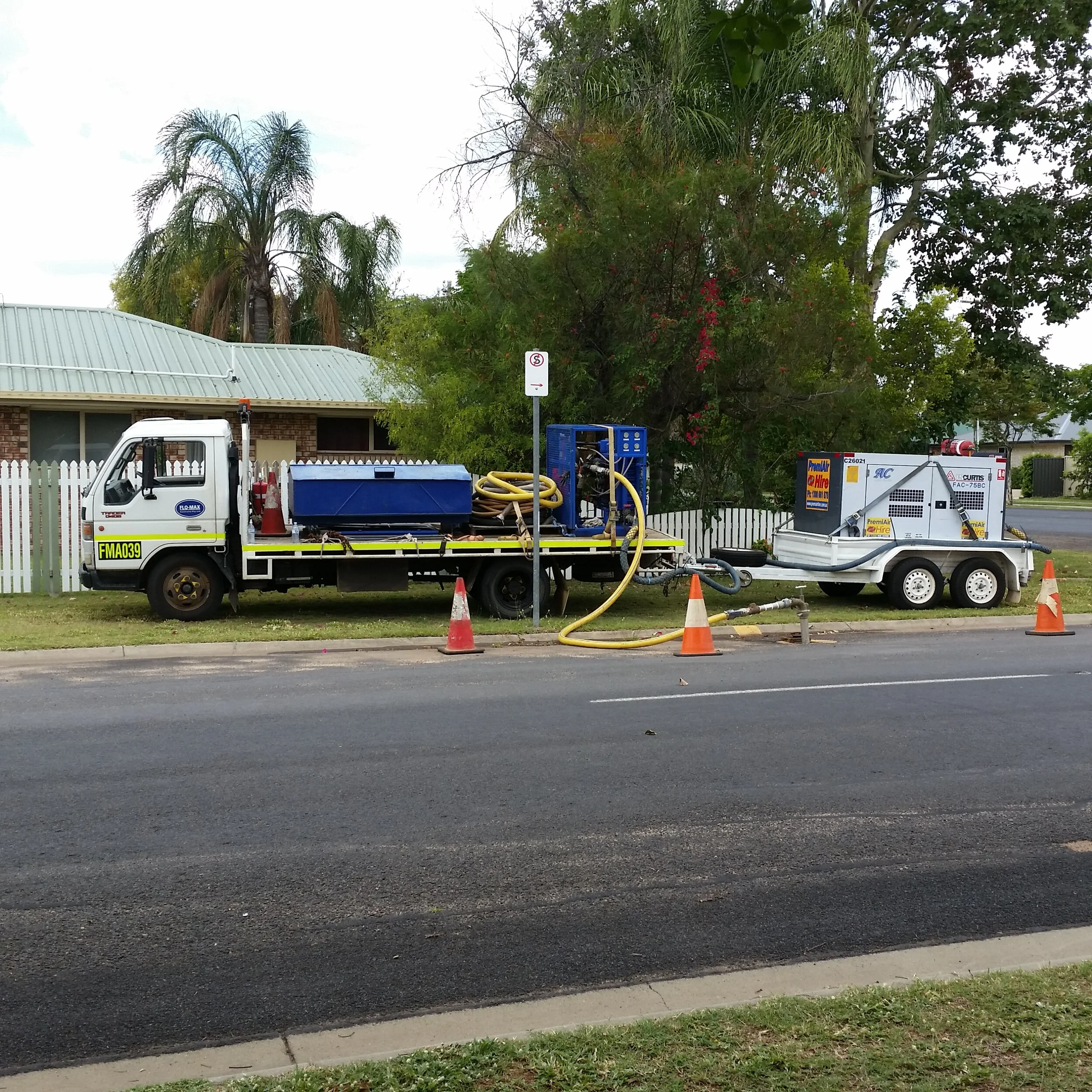
Air scouring in water distribution systems is a specialized physical cleaning technique that injects compressed air into water mains to scour biofilms, mineral scales, and accumulated sediments from pipe walls, restoring hydraulic capacity and improving water quality.
Maintaining the structural integrity, hydraulic efficiency, and microbiological safety of potable water distribution networks is a continuous challenge for municipal and industrial utilities. Over time, internal pipe surfaces accumulate various deposits, including biological films (biofilms), manganese and iron precipitates, calcium carbonate scale, and inert sediments. These accumulations increase head loss, restrict flow capacity, harbor opportunistic pathogens, and cause aesthetic issues such as discolored water and consumer complaints.
Traditional pipeline flushing methods, such as unidirectional flushing (UDF) using water alone, often fail to generate the boundary-layer shear stresses necessary to detach stubborn, cohesive deposits. Air scouring—frequently referred to as air-water scouring or air slugging—has emerged as an advanced, highly effective pipeline cleaning technique. By simultaneously introducing pressurized air and water into a section of the distribution system, operators can generate highly turbulent, two-phase flow regimes that efficiently scour pipe walls without damaging the infrastructure.
The Fundamentals of Air Scouring
Air scouring is governed by fluid mechanics and multiphase flow principles. Unlike standard water flushing, which relies solely on single-phase high-velocity water to drag loose sediments, air scouring introduces discrete slugs or continuous streams of compressed air into a water-filled, isolated pipe segment.
The Mechanics of Two-Phase Flow
When compressed air is injected into a water main at a controlled pressure and volume, it disrupts the laminar or transitional flow of the water, forcing it into a turbulent, two-phase state. Depending on the volumetric ratio of air to water and the injection velocity, the flow regime typically transitions between:
- Plug or Slug Flow: Large pockets of air move along the upper crown of the pipe, pushing slugs of water ahead of them and creating a dynamic wiping action.
- Wavy or Frothy Flow: High-velocity air shears the water surface, generating surface waves and intense localized turbulence that scours the pipe invert and sidewalls.
- Annular Flow: A high-speed core of air drives a thin film of water along the pipe perimeter at exceptional shear velocities.
These turbulent disruptions generate high shear stresses at the pipe-water interface. This mechanical energy breaks the adhesive bonds holding biofilms and mineral scales to the pipe wall, suspending the dislodged particulate matter in the water phase for subsequent evacuation through a designated discharge point.
Purpose and Objectives
The primary objective of air scouring is the complete rehabilitation of the internal cross-sectional area of water mains. Specifically, utilities deploy this method to:
- Eliminate Water Discoloration: Remove loose iron and manganese deposits that periodically slough off during high-demand events or pressure transients, causing "red" or "black" water incidents.
- Restore Hydraulic Capacity: Lower the Hazen-Williams roughness coefficient ($C$-factor), thereby reducing pumping energy costs and increasing discharge capacity.
- Enhance Disinfection Efficacy: Strip away protective biofilms that shield pathogens from chlorine, chloramines, or other residual disinfectants.
- Extend Infrastructure Lifespan: Delay or eliminate the need for costly structural pipe replacement by maintaining clean, functional metallic, concrete, or plastic mains.
Engineering Prerequisites and Pre-Cleaning Planning
Executing an air scouring campaign requires meticulous engineering design, hydraulic modeling, and operational coordination. Introducing compressed air into a pressurized potable water network introduces operational risks—such as extreme pressure surges, air-lock formation, and potential cross-contamination—that must be mitigated through rigorous planning.
Network Isolation and Sectioning
A successful air scouring operation begins with the precise isolation of the target pipe segment. System maps, geographic information systems (GIS), and hydraulic models are used to identify suitable cleaning zones, typically ranging from 200 to 500 meters in length depending on pipe diameter, elevation changes, and valve availability.
- Boundary Valves: All isolation valves bounding the section must be fully functional and watertight to prevent dirty scour water from migrating into active distribution zones.
- Cross-Connections: Service connections along the main should ideally be shut off at the curb stop or meter pit to prevent dislodged debris from entering customer plumbing systems.
- Critical Facilities: Hospitals, schools, and major industrial users along the route must be notified well in advance, and temporary water supplies or bypass arrangements must be installed if service continuity is required.
Equipment Specifications
Air scouring requires specialized support vehicles and apparatuses deployed by trained technicians. The primary equipment spread includes:
- Oil-Free Air Compressors: Compressors must deliver oil-free, food-grade air to prevent hydrocarbon contamination of the potable water network. Air delivery rates must be adjustable to match specific pipe diameters.
- Injection Manifolds: Specialized fittings, check valves, and pressure regulators that connect the air compressor and flush water source safely to a tapping point or hydrant.
- Backflow Prevention Assemblies: Reduced-pressure principle backflow preventers (RPBZs) must be installed between the municipal supply and the cleaning apparatus to eliminate any risk of cross-contamination.
- Discharge and Containment Setup: Dechlorination units, settling tanks, or sediment bags are required to capture suspended solids and neutralize chlorine residuals before discharging scour water to storm sewers, sanitary sewers, or water bodies under environmental permits.
Step-by-Step Operational Procedure
Air scouring must follow a strict, standardized sequence of operations to ensure safety, efficiency, and environmental compliance. The procedure is typically executed by a multi-person crew consisting of a site supervisor, equipment operators, and valve operators.
- Preparation & Isolation
- Equipment Connection & Backflow Setup
- Controlled Air-Water Injection
- Monitoring & Turbidity Tracking
- Flushing & Bacteriological Testing
- Restoration to Service
1. Preparation and Isolation
The operational crew verifies that all boundary valves for the target segment are closed. Blow-off hydrants, scour tees, or temporary discharge ports at the downstream end of the segment are opened and routed to the containment or dechlorination setup.
2. Equipment Connection
The oil-free air compressor and the flushing water supply line are connected to an upstream hydrant or tapping sleeve via the injection manifold. Backflow prevention devices are pressure-tested and locked into place.
3. Air-Water Injection
Water is admitted into the pipe at a controlled, low velocity to prime the main and wet the accumulated deposits. Compressed air is then injected into the stream at a predetermined pressure—typically slightly above the ambient static pressure of the main, balanced to prevent uncontrolled pressure surges. The air-to-water ratio is continuously adjusted based on real-time observations of the discharge stream.
4. Active Scouring and Monitoring
The two-phase mixture travels down the pipe segment, shearing deposits from the walls. Crew members monitor the downstream discharge point, observing the color, turbidity, and solid load of the effluent. Initially, the discharge runs extremely dark and thick with suspended iron, manganese, and biofilm fragments. Scouring continues until the discharge effluent runs visibly clear.
5. Post-Scour Flushing and Disinfection
Once the effluent clears, the air compressor is shut down, and the main is subjected to a high-velocity single-phase water flush to purge any remaining suspended debris from dead ends, service connections, and valves. Depending on local regulatory standards and the nature of the main, breakpoint chlorination or slug disinfection may be applied to sanitize the pipe interior.
6. Bacteriological Verification and Re-opening
Before returning the main to service, water samples are collected and tested for coliform bacteria, heterotrophic plate count (HPC), and residual disinfectant levels. Once sample results confirm microbiological safety and regulatory compliance, the boundary valves are reopened, and normal service is restored to customers.
Comparative Analysis: Air Scouring vs. Alternative Cleaning Methods
Utilities have access to several pipe cleaning technologies, each with distinct operational advantages and limitations. Selecting the appropriate method depends on pipe material, structural condition, budget, and the nature of the deposits.
| Cleaning Method | Primary Mechanism | Ideal Pipe Materials | Best Used For | Relative Cost & Complexity |
|---|---|---|---|---|
| Air Scouring | Two-phase air-water turbulent shear | Ductile iron, cast iron, steel, PVC, asbestos cement | Biofilms, loose iron/manganese, heavy sediments | Moderate cost; requires specialized equipment and experienced crew |
| Unidirectional Flushing (UDF) | High-velocity single-phase water drag | All materials | Loose sediments, routine preventative maintenance | Low cost; utilizes existing hydrants and standard utility crew |
| PIGging (Mechanical) | Foam or polyurethane scraper pushed by water | Steel, ductile iron, CIPP lined mains | Heavy scale, tuberculation, long straight runs | High cost; requires launch/receive pits and precise sizing |
| Ice Pigging | Slurry of ice crystals pumped through the main | Cast iron, ductile iron, PVC, PE | Viscous sludges, complex network geometries, delicate mains | Moderate-to-High cost; highly efficient water recovery |
Key Trade-Offs
While traditional unidirectional flushing is economical and utilizes standard utility assets, it is frequently insufficient for older cast-iron mains heavily encrusted with hard mineral scale and tenacious biofilms. Pigging provides aggressive mechanical scraping but requires significant capital expenditure, excavation to install launch and receive chambers, and poses risks of the mechanical pig becoming lodged in unmapped fittings or valves.
Air scouring bridges this gap by offering a high-energy cleaning action capable of removing both biological films and mineral deposits without requiring intrusive excavation pits, making it highly adaptable for complex urban distribution grids.
Operational Challenges, Risks, and Mitigation Strategies
Despite its widespread effectiveness, air scouring introduces specific operational risks that must be managed by qualified utility personnel.
1. Pressure Surges and Water Hammer
The introduction of compressible air into a rigid, water-filled pipe network creates potential for severe pressure transients (water hammer). If air pockets collapse rapidly or valves are operated too quickly, pressure spikes can exceed the pressure rating of the pipe, resulting in main breaks, thrust block failures, or service connection blow-outs.
- Mitigation: Use slow-closing valves, install pressure relief valves on the injection manifold, and maintain continuous air bleed-off at the downstream discharge point.
2. Air Lock and Customer Meter Damage
Trapped air pockets can become locked in high points of the distribution system or enter service lines, potentially damaging customer water meters, air-release valves, or internal plumbing fixtures.
- Mitigation: Complete rigorous isolation of service connections prior to scouring, install air release assemblies at high points along the profile, and perform systematic air-bleeding sequences before restoring customer service.
3. Environmental Compliance and Discharge Regulations
Scour water contains high concentrations of heavy metals (iron, manganese), suspended solids, and chemical disinfectants that can cause severe ecological damage if discharged directly into storm sewers or natural waterways without treatment.
- Mitigation: Comply with local environmental protection agency (EPA) or state environmental department guidelines by utilizing mobile dechlorination diffusers, sediment settling basins, or routing effluent directly to sanitary sewer collection systems under approved industrial discharge permits.
Frequently Asked Questions
What types of pipes are suitable for air scouring?
Air scouring is safe and effective for a wide range of pipe materials commonly found in water distribution networks, including ductile iron, cast iron, steel, polyvinyl chloride (PVC), high-density polyethylene (HDPE), and asbestos-cement pipe. However, structurally compromised, severely corroded, or heavily deteriorated mains must be assessed via acoustic or CCTV inspection prior to cleaning to prevent structural failure under scouring shear forces.
How long does an air scouring operation take for a typical residential block?
A standard residential pipe segment ranging from 300 to 500 meters typically takes between two to four hours to scour from initial isolation to final flushing. However, the total project timeframe must account for setup, valve operation, dechlorination time, and bacteriological sample incubation, often spanning a full working day per segment.
Will air scouring disrupt customer water service?
Yes, water service to properties connected directly to the isolated main segment will be temporarily interrupted during the active scouring and flushing window. Utilities generally issue advance door-hanger notices or digital alerts 24 to 48 hours prior to the operation, advising residents to store water or plan for temporary outages lasting a few hours.
Does air scouring remove hard calcium carbonate scale?
Air scouring is highly effective at stripping away soft biological films, loose sediments, and friable iron or manganese tuberculation. However, hard, crystalline calcium carbonate scale or heavily bonded structural encrustations may require more aggressive mechanical methods, such as abrasive pigging or chemical descaling, to achieve complete removal.
What environmental precautions are necessary during discharge?
Discharging untreated scour water into storm sewers or watercourses is illegal in most jurisdictions due to high turbidity and residual chlorine toxicity. Operators must use sediment accumulation bags, mobile settling tanks, and chemical reducing agents (such as sodium bisulfite) to neutralize chlorine residuals before releasing the water in accordance with local environmental permits.
Conclusion and Next Actions
Air scouring remains a premier preventative and corrective maintenance technique for modern water distribution systems, offering an optimal balance of cleaning aggression, operational flexibility, and cost-effectiveness. By harnessing the physical properties of turbulent two-phase air-water flow, utilities can successfully rehabilitate aging infrastructure, eliminate chronic water quality complaints, and optimize hydraulic performance.
Water utility managers, distribution engineers, and operations supervisors should evaluate their network asset management plans to identify aging mains suffering from recurring discoloration or declining $C$-factors. The immediate next action involves reviewing historical break records and customer complaint logs, mapping out pilot-scale air scouring zones, and partnering with certified specialist contractors or procuring dedicated air-water injection apparatuses to initiate a trial cleaning program.