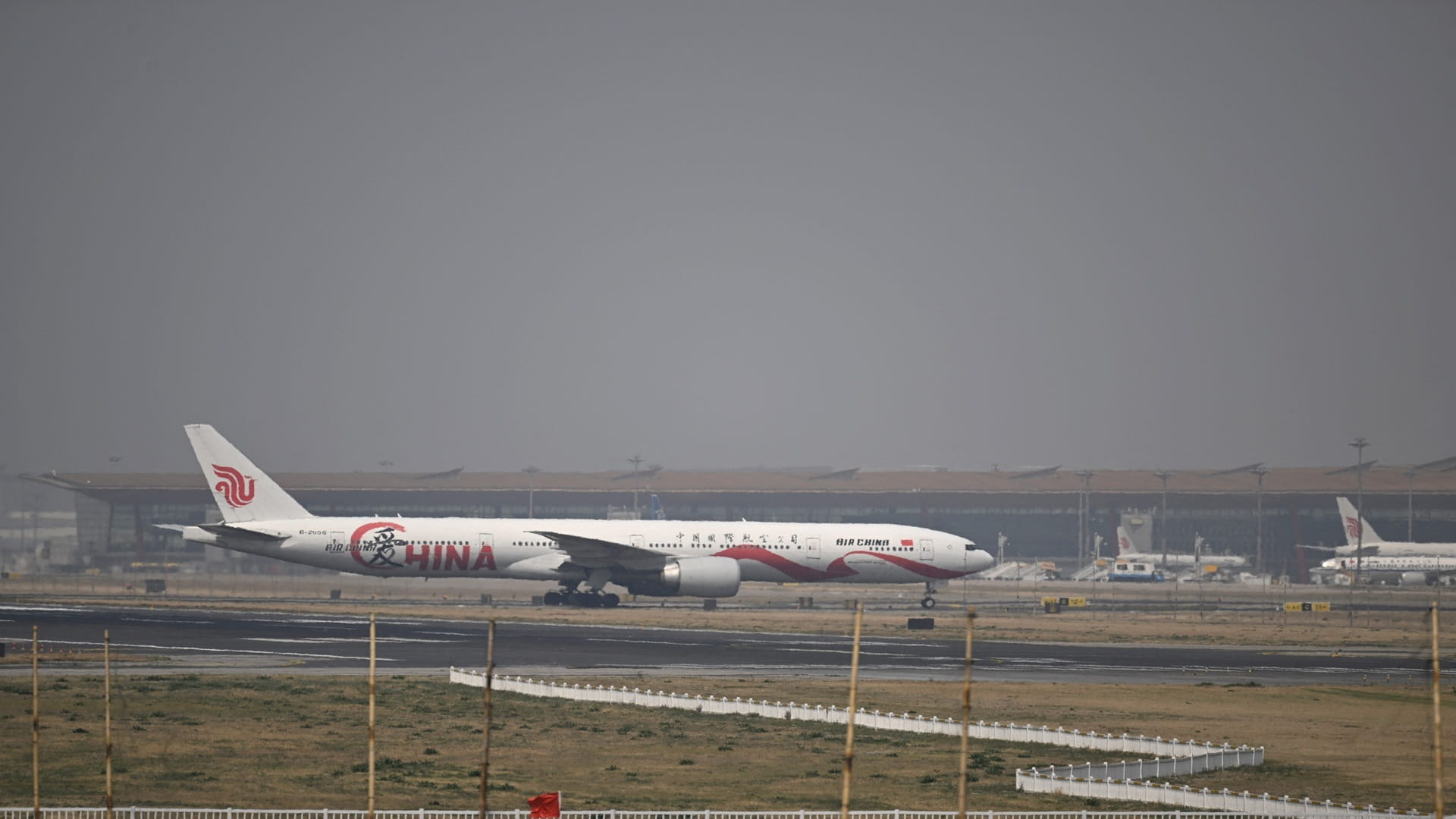
Air China operates direct flights from New York’s John F. Kennedy International Airport (JFK) to Beijing Capital International Airport (PEK) using Boeing 777-300ER aircraft. This trans-polar route typically takes approximately 15 to 16 hours, offering multiple cabin classes, including First, Business, and Economy. Passengers should prepare for stringent visa requirements, Terminal 1 departures at JFK, and comprehensive health and safety protocols at the Beijing hub.
Understanding the New York to Beijing Route
The flight path between New York (JFK) and Beijing (PEK) is one of the most critical links in the Star Alliance network, connecting the financial capital of the United States with the political and cultural heart of China. For 2026, Air China continues to utilize the CA982 flight number for the eastbound departure from JFK, while the return leg is designated as CA981.
The journey is a "long-haul" operation in every sense, covering roughly 6,830 miles (10,991 kilometers). Due to the Earth’s curvature and the positioning of these cities, the aircraft often follows a trans-polar route. This path takes the flight over eastern Canada, the Arctic Circle, and Siberia before descending into northern China. This routing is not only the most direct but also offers unique views for passengers on daytime flights, though much of the JFK-PEK leg is flown in darkness or twilight depending on the season.
Operating this route requires significant logistical coordination. Air China utilizes the Boeing 777-300ER, a twin-engine wide-body aircraft known for its reliability on ultra-long-haul sectors. In 2026, despite the introduction of newer airframes like the Airbus A350-900 in other parts of their fleet, the 777 remains the workhorse for the New York corridor due to its high cargo capacity and proven three-class configuration.
Aircraft Specifications: The Boeing 777-300ER Experience
The Boeing 777-300ER (Extended Range) used by Air China is specifically outfitted to handle the rigors of a 15-hour flight. Understanding the technical layout of this aircraft helps passengers make informed decisions regarding seat selection and comfort.
Engine and Performance
The aircraft is powered by two General Electric GE90-115B engines, which are among the most powerful jet engines in the world. This power is necessary to lift a fully loaded aircraft, including hundreds of passengers and significant belly cargo, off the runway at JFK. For the technically minded, the aircraft features a raked wingtip design that improves fuel efficiency—a crucial factor for a flight of this duration.
Cabin Pressurization and Humidity
One of the challenges of ultra-long-haul travel is the dry cabin air. While the 777-300ER does not have the advanced composite fuselage of the 787 Dreamliner (which allows for higher humidity), Air China maintains the cabin altitude at approximately 6,000 to 8,000 feet. Passengers are advised to stay hydrated throughout the flight to combat the effects of the low-humidity environment typical of traditional aluminum-body aircraft.
In-Flight Connectivity
By 2026, Air China has expanded its in-flight Wi-Fi offerings. Most JFK-PEK flights now feature satellite-based internet. However, travelers should be aware that the internet service is subject to Chinese regulatory oversight. Access to certain Western websites and social media platforms may be restricted unless a VPN is utilized, though the stability of VPNs on in-flight Wi-Fi can be inconsistent.
Cabin Classes and Onboard Amenities
Air China’s service philosophy on the JFK to Beijing route is designed to showcase Chinese hospitality while meeting international standards. The aircraft is divided into three primary sections: Forbidden Pavilion First Class, Capital Pavilion Business Class, and Economy Class.
Forbidden Pavilion First Class
This is the pinnacle of Air China’s service. The cabin usually features eight suites in a 1-2-1 configuration. Each suite offers a fully flat bed, high partitions for privacy, and a large personal entertainment screen. Passengers are provided with premium pajamas, slippers, and high-end amenity kits. The dining experience is a highlight, featuring multi-course meals that include traditional Chinese delicacies such as bird's nest soup or slow-braised abalone, alongside international options.
Capital Pavilion Business Class
The Business Class cabin is the preferred choice for corporate travelers. The seats are arranged in a 2-2-2 or 1-2-1 configuration (depending on the specific aircraft sub-variant), allowing for lie-flat comfort. While the 2-2-2 layout is older, Air China has retrofitted many of its 777-300ERs to ensure all passengers have direct aisle access by 2026. The service includes a wide selection of Chinese teas, which are served with traditional ceremony.
Economy Class
In Economy, the seating is typically in a 3-3-3 arrangement. This is preferable to the 10-abreast (3-4-3) seating found on some other airlines' 777s, as it provides a few extra inches of shoulder room. Each seat is equipped with a personal seatback screen offering "Phoenix Onboard" entertainment, which includes a mix of Hollywood releases and Chinese cinema. USB charging ports are standard at every seat in the 2026 fleet.
Departure from JFK: Terminal 1 Logistics
Passengers flying Air China from New York will depart from Terminal 1. This terminal serves several international carriers and is currently undergoing significant redevelopment as part of the "New Terminal One" project.
- Check-in Procedures: Air China’s check-in counters typically open four hours before departure. Given the high volume of luggage on this route, travelers should arrive early. The airline strictly enforces baggage weight limits: usually two pieces at 23kg (50lbs) each for Economy, and two pieces at 32kg (70lbs) each for Business and First.
- Lounge Access: First and Business Class passengers, as well as Star Alliance Gold members, have access to the Lufthansa Lounge or the Air France Lounge in Terminal 1, as Air China utilizes partner facilities at JFK. These lounges provide showers, hot meals, and a quiet space away from the terminal's main gates.
- Security and Boarding: TSA PreCheck is available at Terminal 1, but "Clear" is not always consistently operational across all lanes. Boarding for the 15-hour flight usually begins 45 to 60 minutes before the scheduled pushback.
Arrival at Beijing Capital International Airport (PEK)
Air China flights from New York land at Terminal 3 at Beijing Capital (PEK). Known as "The Dragon Terminal," T3 is one of the largest airport buildings in the world.
Immigration and Customs
Upon arrival, passengers must pass through immigration. For 2026, the process is heavily digitized. Foreigners are required to provide fingerprints at automated kiosks before approaching the immigration officer.
- Visa Requirements: Most US citizens require a pre-approved visa (such as an L-visa for tourism or M-visa for business).
- 144-Hour Transit: Travelers with a confirmed ticket to a third country (e.g., JFK-PEK-BKK) may be eligible for the 144-hour visa-free transit. This allows you to enter Beijing and surrounding provinces without a visa for up to six days.
Health Declarations
While the global health situation has stabilized by 2026, China maintains a digital health declaration system. Passengers may need to fill out a "Customs Pocket Declaration" via a WeChat mini-program or a web portal before landing. This generates a QR code that is scanned at the quarantine checkpoint.
Transportation to Central Beijing
The Capital Airport Express train is the most efficient way to reach the city center. It connects Terminal 3 to the Sanyuanqiao and Dongzhimen subway stations in approximately 20–30 minutes. Alternatively, taxis and ride-hailing services (like Didi) are available, but be prepared for significant traffic on the Airport Expressway during morning rush hours.
Comparison of Cabin Classes on Air China CA982
| Feature | First Class (Forbidden Pavilion) | Business Class (Capital Pavilion) | Economy Class |
|---|---|---|---|
| Seat Type | Individual Suite / Lie-Flat | Lie-Flat Bed | Standard Recline |
| Configuration | 1-2-1 | 2-2-2 or 1-2-1 | 3-3-3 |
| Baggage Allowance | 2-3 pieces (32kg each) | 2 pieces (32kg each) | 2 pieces (23kg each) |
| Dining | On-demand fine dining | Multi-course scheduled meals | Two hot meal services |
| Wi-Fi Access | Complimentary | Complimentary (Limited) | Paid / Restricted |
| Lounge Access | First Class Lounge | Business Class Lounge | None (unless Star Gold) |
Booking Strategies and Seasonal Considerations
Fares for the JFK to Beijing route vary significantly based on the season. To secure the best rates in 2026, travelers should book at least three to four months in advance.
- Peak Seasons: Prices spike during the Chinese New Year (usually January or February) and the "Golden Week" in early October. Late June through August is also expensive due to student travel and summer vacations.
- Low Seasons: November and late February to March often see the lowest fares. If your schedule is flexible, flying on a Tuesday or Wednesday can reduce costs.
- PhoenixMiles: Air China's frequent flyer program, PhoenixMiles, is part of the Star Alliance. You can earn and redeem miles from United Airlines, Lufthansa, or Air Canada on this route. Given the distance, a round-trip ticket from New York to Beijing can earn enough miles for a significant domestic upgrade or a short-haul award flight.
Vital Preparation Checklist for Travelers
To ensure a smooth transition from the United States to China, several technical and administrative steps must be completed:
- Passport Validity: Ensure your passport is valid for at least six months beyond your planned date of departure from China.
- Power Adapters: China uses a mix of Type A, C, and I outlets. While the aircraft has universal outlets, you will need an adapter for your stay in Beijing. The standard voltage is 220V.
- Currency and Payments: Beijing is a nearly cashless society. Before leaving JFK, download and set up Alipay or WeChat Pay. By 2026, these apps are fully compatible with international credit cards (Visa/Mastercard), which is essential for everything from buying street food to paying for taxis.
- Navigation: Google Maps is not reliable in China. Download Baidu Maps or Amap (Gaode). For English-language users, the Apple Maps app works reasonably well in Beijing as it uses data from AutoNavi.
FAQ: Navigating the JFK-Beijing Route
What is the flight duration from JFK to Beijing? The non-stop flight typically lasts between 15 hours and 30 minutes and 16 hours. The duration can be affected by the strength of the jet stream and the specific Arctic path cleared by air traffic control. Return flights (PEK-JFK) are often slightly shorter due to prevailing tailwinds.
Does Air China provide vegetarian or special meals on this route? Yes, Air China offers a variety of special meals, including Vegetarian Hindu (AVML), Vegan (VGML), Kosher (KSML), and Low-Fat (LFML). These must be requested at least 24 hours before departure through the Air China website or mobile app. For the JFK departure, the catering is usually managed by a local New York-based provider following Air China's specifications.
Which terminal does Air China use at JFK in 2026? Air China continues to use Terminal 1 at JFK. However, because Terminal 1 is undergoing massive reconstruction into the "New Terminal One," passengers should check their flight status 24 hours in advance for any gate or check-in counter changes within the terminal complex.
Can I use my Star Alliance Gold status for upgrades? While Star Alliance Gold status (from airlines like United or ANA) provides perks such as priority boarding, extra baggage, and lounge access, it does not qualify you for complimentary upgrades to Business Class. Upgrades are usually handled via miles or at the check-in counter for a fee.
Is there a layover on the Air China flight from JFK to Beijing? The primary service (CA982) is a direct, non-stop flight. However, some codeshare flights or lower-priced itineraries may involve a layover in cities like Seoul (ICN) or Tokyo (HND) through partner airlines. Always verify the "number of stops" during the booking process.
What should I do if my luggage is lost upon arrival in Beijing? If your luggage does not appear on the carousel at PEK Terminal 3, go immediately to the "Baggage Inquiry" desk located in the arrivals hall before passing through customs. You will need your baggage claim tag and passport. Air China generally has a robust tracking system, and lost bags are typically delivered to your hotel or residence within 24 to 48 hours.
Final Recommendation for Travelers
For travelers planning to fly Air China from JFK to Beijing in 2026, the key to a successful journey lies in early preparation regarding digital services. Beyond the flight booking, ensure your "digital wallet" (Alipay or WeChat Pay) is authenticated before you leave New York, as this will dictate your ease of movement once you land. On the aircraft, prioritize a seat in the 3-3-3 Economy section or the 1-2-1 Business section to maximize personal space during the 15-hour transit. Finally, always verify the latest entry protocols on the official website of the Embassy of the People's Republic of China, as visa and health policies can shift with little notice.