An affidavit of survivorship is a legal document used to confirm the death of a policyholder or primary beneficiary, allowing the surviving party to claim AIG (now Corebridge Financial) life insurance proceeds. This sworn statement bypasses probate by establishing the survivor’s legal right to the benefits, typically under "right of survivorship" or "contingent beneficiary" clauses.
Settling the affairs of a deceased loved one involves navigating a complex web of legal and financial requirements. When dealing with life insurance policies originally issued by AIG—which, as of 2026, primarily operates its life and retirement segments under the Corebridge Financial brand—one of the most critical tools at your disposal is the affidavit of survivorship. This document serves as a bridge between the death of an insured individual and the distribution of funds to the rightful survivor.
Understanding the Entity: AIG and Corebridge Financial in 2026
Before initiating any paperwork, it is essential to understand the current corporate landscape of your policy provider. While the primary keyword remains "AIG," the company completed the rebranding and separation of its life and retirement business into Corebridge Financial several years ago. By 2026, most policyholders interact with Corebridge portals, though legacy documents and policy contracts may still bear the American International Group (AIG) or American General Life Insurance Company names.
When you prepare an affidavit of survivorship for an AIG policy, you are legally addressing the underwriting entity. In most cases, this is American General Life Insurance Company (AGL) or The United States Life Insurance Company in the City of New York (US Life). Both are subsidiaries now managed under the Corebridge Financial umbrella. Ensuring your affidavit correctly identifies the specific underwriting company is vital for avoiding administrative delays.
What is an Affidavit of Survivorship?
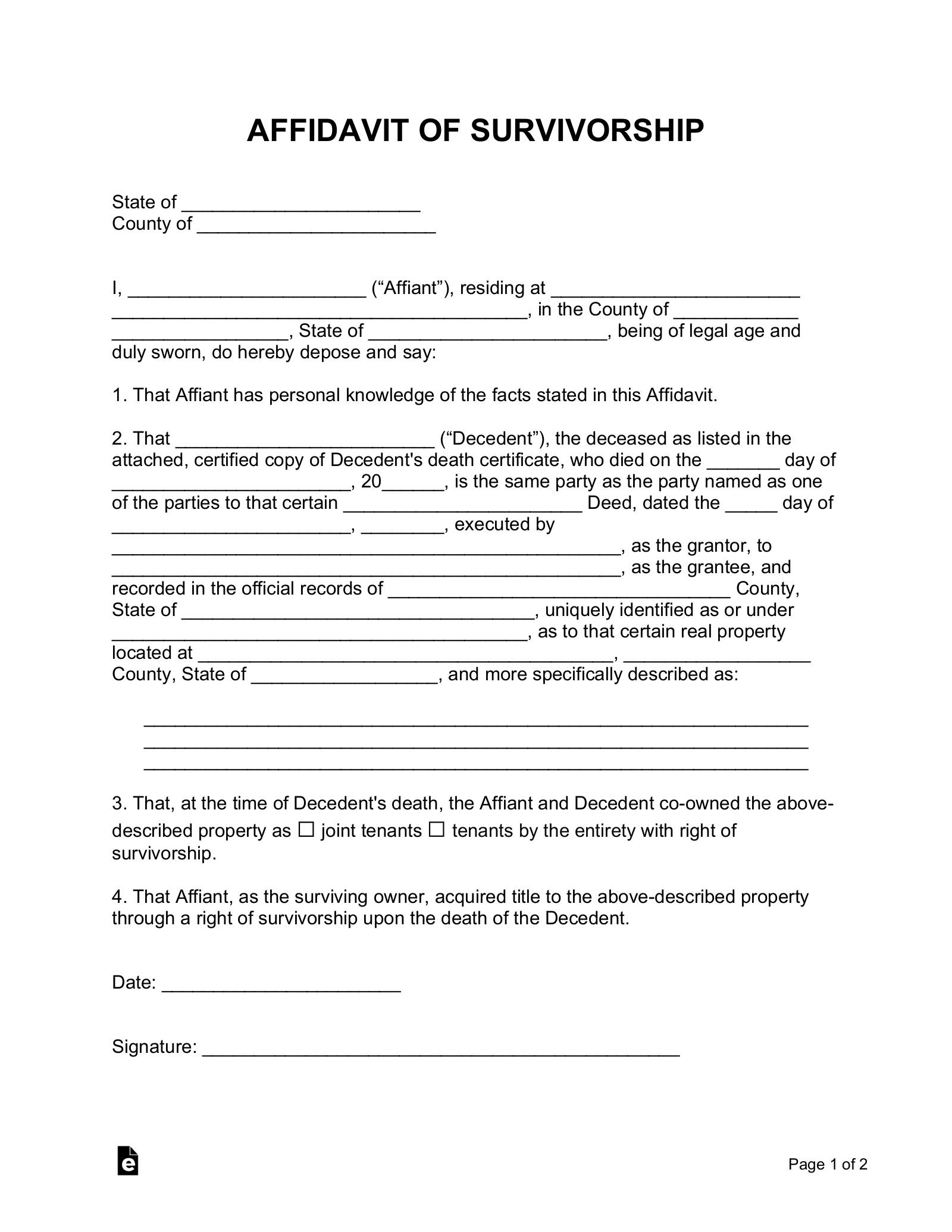
An affidavit of survivorship is a written, sworn statement used to prove that one person in a joint relationship (or a designated primary beneficiary) has died, leaving the survivor as the sole entitled party to an asset. In the context of life insurance, this document is most frequently used in two specific scenarios:
- Joint Ownership: If a life insurance policy was owned by two people as "Joint Tenants with Right of Survivorship" (JTWROS), the affidavit allows the surviving owner to assume full control and eventually claim the death benefit without the policy entering the deceased owner's estate.
- Predeceased Beneficiaries: If the primary beneficiary listed on the AIG policy died before the insured person, the contingent (secondary) beneficiary may need to provide an affidavit of survivorship (along with a death certificate) to prove that the primary beneficiary is no longer eligible to receive the funds.
The "affidavit" part of the name signifies that the document is signed under oath and typically must be notarized. This gives the insurance company a level of legal indemnity; they are relying on your sworn testimony to pay out thousands, or even millions, of dollars.
When Does AIG/Corebridge Require This Document?
Not every life insurance claim requires an affidavit of survivorship. A standard claim often only requires a "Statement of Beneficiary" form and a certified death certificate. However, AIG/Corebridge may request a formal affidavit in the following complex situations:
1. Proof of Continuous Marriage
In community property states or for specific legacy AIG policies, a surviving spouse may need to file an "Affidavit of Continuous Marriage." This document confirms that the survivor was married to the deceased from the time the policy was issued until the date of death. This is often required to satisfy state laws regarding spousal rights to insurance proceeds.
2. Bypassing Probate for Small Estates
If the beneficiary of a policy is the "Estate of the Insured" rather than a named individual, the funds normally must go through the probate court. However, many states allow for a "Small Estate Affidavit" or an "Affidavit of Survivorship for Small Estates." If the total value of the estate is below a certain threshold (which varies by state, e.g., $50,000 to $150,000), AIG may accept this affidavit to pay the funds directly to the legal heirs, saving months of legal proceedings.
3. Resolving Title or Ownership Ambiguity
If the policy underwent several changes in ownership or if the original owner died without updating the beneficiary designations, the legal "survivor" might be unclear. The affidavit serves as the formal declaration of who the legal survivor is under the terms of the contract or state law.
Essential Components of the Affidavit
To be legally binding and acceptable to AIG’s legal department, the affidavit must contain specific technical details. While Corebridge Financial provides many of its own forms, you or your attorney may need to draft a custom affidavit if your situation is unique.
- The Affiant’s Information: The "affiant" is the person making the statement (you). Your full legal name, address, and relationship to the deceased must be clearly stated.
- The Decedent’s Information: Full legal name of the deceased, date of death, and social security number.
- Policy Identification: The AIG or Corebridge policy number(s) must be explicitly listed to ensure the document is filed against the correct account.
- The Statement of Fact: A clear declaration that the affiant is the survivor entitled to the proceeds. This section often references the "Right of Survivorship" clause in the policy.
- Legal Description of Property: In life insurance, this refers to the death benefit proceeds of the specific policy mentioned.
- The Notary Jurat: This is the section where a Notary Public witnesses your signature. Without a proper notary seal and signature, the document is generally void for insurance purposes.
Step-by-Step Guide to Filing the Affidavit with AIG/Corebridge
Navigating the claims process in 2026 has become increasingly digitized, but the legal weight of the affidavit remains unchanged. Follow these steps to ensure a smooth submission.
Step 1: Notify the Claims Department
Contact Corebridge Financial (formerly AIG) to report the death. You can do this via their official claims portal or by calling their beneficiary services line. You will need the policy number and the deceased’s social security number ready.
Step 2: Request the Specific Form
While you can draft your own affidavit, AIG/Corebridge usually prefers their internal version, often titled "Affidavit of Entitlement" or "Beneficiary Statement." Using their proprietary form ensures that all their internal compliance requirements are met, which can speed up the "Good Order" (NIGO) review process.
Step 3: Gather Supporting Documentation
An affidavit is rarely accepted in isolation. You will almost always need to provide:
- A Certified Copy of the Death Certificate (the one with the raised seal).
- A copy of the original policy (if available).
- A valid government-issued ID for the survivor.
Step 4: Execute the Document Before a Notary
Do not sign the affidavit until you are in the presence of a Notary Public. In 2026, many states allow for Remote Online Notarization (RON). Corebridge generally accepts RON-certified documents, provided the digital seal meets state standards where the policy was issued.
Step 5: Submission and Verification
Submit the documents through the Corebridge secure upload portal. If you are mailing physical copies, it is highly recommended to use certified mail with a return receipt. Once submitted, the "Contestability Period" review may occur if the policy is less than two years old, but for most established AIG policies, the verification of the affidavit takes 5 to 10 business days.
Document Comparison: Which One Do You Need?
It is common to confuse the affidavit of survivorship with other legal forms. The following table clarifies the differences to help you determine which document AIG/Corebridge is actually requesting.
| Document Type | Purpose | When to Use for AIG Claims |
|---|---|---|
| Affidavit of Survivorship | Confirms a survivor's right to an asset after a co-owner or primary beneficiary dies. | Use when a policy is jointly owned or a primary beneficiary predeceased the insured. |
| Small Estate Affidavit | Allows heirs to claim assets without full probate for estates under a specific value. | Use when the policy names the "Estate" as beneficiary and the total estate value is low. |
| Letters Testamentary | Court-issued document appointing an Executor of an estate. | Required if the estate is large and must go through formal probate. |
| Claim Form (Statement of Beneficiary) | The standard form to request payment of the death benefit. | Required for almost every claim, regardless of other affidavits. |
| Affidavit of Domicile | Confirms the deceased's legal residence at the time of death. | Used to determine which state's tax and probate laws apply to the payout. |
Common Pitfalls and How to Avoid Them
Filing an affidavit for a life insurance claim is a high-stakes task. Errors can result in "Not in Good Order" (NIGO) status, which delays payments by weeks or months.
Inconsistent Names
If the name on the AIG policy is "John D. Smith" but the death certificate says "John David Smith" and your affidavit says "J. David Smith," the insurance company’s legal department will likely flag the discrepancy. If names have changed due to marriage or legal action, you must include a "One and the Same" affidavit or marriage certificate to bridge the gap.
Improper Notarization
The most common reason for rejection is a faulty notary seal. Ensure the notary’s commission is active and that they have used the correct "jurat" language (the statement that the person was "sworn to" or "affirmed"). A simple "acknowledgment" (confirming only the identity of the signer) is sometimes insufficient for affidavits; the document must be signed under penalty of perjury.
Failure to Address Contingent Beneficiaries
If you are filing as a contingent beneficiary because the primary beneficiary is deceased, the affidavit must explicitly state that the primary beneficiary is deceased and provide their date of death. Failure to "clear" the primary beneficiary in the legal narrative will halt the claim.
Legal and Tax Considerations
While the affidavit of survivorship helps you access funds, it does not change the taxability of those funds.
- Income Tax: Generally, life insurance death benefits are not subject to federal income tax. However, any interest earned on the benefit from the date of death until the date of payment is taxable.
- Estate Tax: If the deceased had a very large estate (exceeding the 2026 federal thresholds), the value of the life insurance policy might be included in the taxable estate, even if paid via an affidavit to a survivor.
- Jurisdictional Limits: Laws regarding affidavits vary significantly between states like California (which has robust small estate laws) and states like New York. Always ensure your affidavit complies with the laws of the state where the policy was issued or where the deceased resided.
Disclaimer: This guide is for informational purposes and does not constitute legal or financial advice. For specific legal issues regarding an estate or policy, consult with a qualified attorney.
Frequently Asked Questions
Can I use an affidavit of survivorship if there is a will?
Yes. An affidavit of survivorship is often used for assets that pass "outside of probate." Because a life insurance policy is a contract with named beneficiaries, it typically bypasses the will. The affidavit confirms the contractual right to the survivor, regardless of what the will says, unless the estate itself is the named beneficiary.
How long does AIG/Corebridge take to process an affidavit?
In 2026, once a document is marked as "In Good Order," Corebridge typically processes the claim within 7 to 14 business days. However, if the affidavit is being used to resolve an ownership dispute or a missing beneficiary issue, the legal review may extend to 30 days or more.
Does the affidavit need to be filed with the court?
Generally, no. For life insurance purposes, the affidavit is a private legal document submitted directly to the insurance company. However, if you are also using a survivorship affidavit to transfer real estate or other titled assets, those may need to be recorded with the county clerk or registrar of deeds.
What if the primary beneficiary and the insured died at the same time?
This is known as a "simultaneous death" scenario. Most AIG policies have a "Common Disaster" clause (often 30, 60, or 90 days). If the primary beneficiary dies within this window, the law treats them as having predeceased the insured. In this case, the contingent beneficiary would file the affidavit of survivorship to claim the proceeds.
Can a digital signature be used on a survivorship affidavit?
Standard digital signatures (like a basic typed name) are usually not accepted for affidavits. However, Remote Online Notarization (RON), which uses a secure digital platform where a notary verifies your identity via video, is widely accepted by major insurers like Corebridge in 2026.
Recommended Next Actions
If you are prepared to move forward with your claim:
- Download the Policyholder Report: Log into the Corebridge Financial portal to see the exact beneficiary designations currently on file.
- Order Certified Death Certificates: Request at least 5-10 copies from the vital records office, as you will likely need them for various financial institutions beyond AIG.
- Consult a Professional: If the policy amount is significant (over $250,000) or if there are family disputes regarding the "survivor" status, have an estate attorney review your affidavit before submission to ensure your rights are fully protected.