Advanced foundation repair in Waco, Texas, requires specialized engineering techniques to combat the region's highly reactive expansive clay soils, frequent seasonal moisture fluctuations, and unique geological conditions that place extreme stress on residential and commercial structures.
The soil composition in Central Texas—particularly the expansive clay found throughout McLennan County—creates a demanding environment for structural integrity. During prolonged dry spells, clay soils shrink significantly, causing the earth beneath a foundation to drop. Conversely, during heavy rainfall events, the same soil absorbs moisture rapidly and swells, exerting upward pressure on concrete slabs and pier-and-beam systems. This cyclical movement leads to severe structural distress, manifested through diagonal drywall cracks, sticking doors and windows, uneven flooring, and visible exterior brick fracturing.
Standard patching or cosmetic repairs offer only temporary relief. Addressing these deep-seated structural vulnerabilities necessitates advanced foundation repair methodologies, including steel piers, helical anchors, root barrier installations, and comprehensive drainage management systems designed to stabilize the underlying strata and restore structural equilibrium.
Understanding Waco’s Geotechnical Challenges
Waco sits on a complex geological transition zone characterized by highly plastic clays, often referred to as blackland prairie soil. Understanding this substrate is the mandatory first step in determining the appropriate engineering intervention for any compromised structure.
The Mechanics of Expansive Clay Soils
Expansive clay contains minerals such as smectite that expand exponentially when exposed to water and contract when dry. When moisture distribution beneath a foundation is uniform, the soil supports the structure evenly. However, environmental factors rarely allow for uniform moisture distribution.
Common causes of localized soil shrinkage and swelling in Waco include:
- Mature Trees and Vegetation: Large trees pull hundreds of gallons of moisture out of the clay soil during hot Texas summers, creating localized dry zones and profound soil subsidence near exterior walls.
- Plumbing Leaks: Sub-slab water leaks introduce continuous moisture, causing localized soil expansion (heaving) that pushes the center of a slab upward while exterior edges remain stationary.
- Surface Drainage Deficiencies: Poor lot grading allows rainwater to pool directly against foundation perimeters, saturating the top layers of clay and altering load-bearing capacities.
Soil Testing and Geotechnical Engineering
For advanced foundation stabilization, visual inspections alone are frequently insufficient. Structural engineers and advanced repair contractors often rely on geotechnical testing to determine soil parameters before engineering a remediation plan.
Geotechnical investigations typically involve:
- Atterberg Limits Testing: Measuring liquid limits and plastic limits to quantify how much moisture the soil can absorb before changing consistency.
- Potential Volume Change (PVC) Testing: Assessing the vertical expansion pressure the soil can exert on a structural foundation under varying moisture loads.
- Piezometer and Moisture Meter Readings: Evaluating subsurface water tables and moisture gradients across different depths beneath the structure.
Advanced Foundation Repair Technologies and Methods
When standard methods like concrete pressed pilings reach their structural limitations, engineers turn to advanced intervention strategies capable of reaching stable load-bearing strata deep beneath the expansive clay layer.
Steel Pier Systems
Drilled or driven steel piers represent the gold standard for heavy structural stabilization in commercial and residential buildings across Central Texas. Unlike shallow concrete pilings, steel piers are driven mechanically into competent bedrock or deep, load-bearing strata—often reaching depths of 20 to 50 feet or more below the surface.
| Feature / Characteristic | Steel Pier System |
|---|---|
| Maximum Depth | 20 to 50+ feet (reaches load-bearing bedrock) |
| Load Capacity | High (typically exceeds 50,000 lbs per pier) |
| Soil Sensitivity | Low (bypasses active clay layers entirely) |
| Best Suited For | Heavy structures, severe settlement, commercial sites |
| Longevity | Permanent (often backed by transferable warranties) |
The installation process for high-capacity steel piers involves:
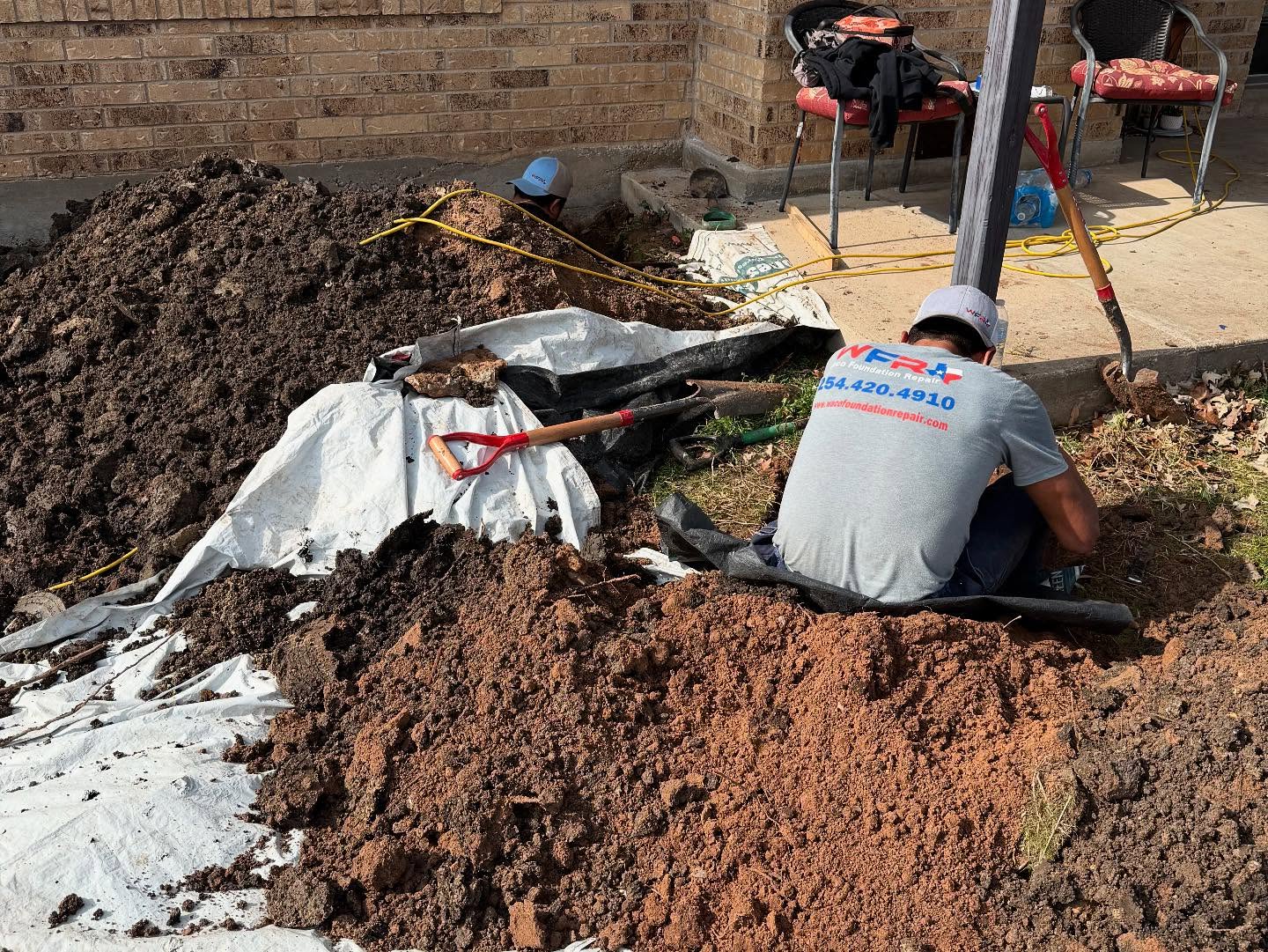
- Excavation: Digging strategic access holes around the perimeter and interior (if necessary) of the foundation to expose the grade beam.
- Bracket Placement: Positioning heavy-duty structural steel brackets directly beneath the grade beam.
- Driving: Utilizing hydraulic rams to drive high-strength steel columns into the ground until refusal is met at stable bedrock.
- Lifting and Transferring Load: Utilizing synchronized hydraulic jacks to lift the structure back to its maximum practical elevation, transferring the building's weight safely onto the newly installed steel columns.
Helical Piers and Anchors
Helical piers resemble large screws and are widely utilized in both new construction and remedial stabilization. These shafts feature one or more steel helix plates welded to the lead section, allowing them to be screwed into the ground with specialized hydraulic torque motors.
- Versatility: Helical piers are exceptionally effective in tension applications, making them ideal for stabilizing leaning retaining walls, bowing basement or stem walls, and lightweight structures where driving steel columns is impractical.
- Immediate Loading: Once installed to the required torque depth, helical piers can immediately support structural loads without waiting for curing agents or concrete setting times.
Polyurethane Foam Injection (Polyjacking)
For concrete slabs experiencing settlement without severe structural fracturing, polyurethane foam injection offers an advanced alternative to traditional mudjacking or full slab replacement.
- High-Density Expansion: A dual-component polyurethane polymer is injected through small, penny-sized holes drilled directly into the sunken concrete slab.
- Moisture Impermeability: The expanding foam cures rapidly, filling voids beneath the slab, compacting the sub-base, and lifting the concrete while sealing out future moisture infiltration. Because the polyurethane material is inert and waterproof, it will not wash away or degrade in Waco's wet clay environments.
Comprehensive Drainage and Moisture Management
No foundation repair project in Waco is complete without addressing the root environmental causes of structural movement. Implementing advanced drainage solutions protects structural investments from recurring damage.
Surface Drainage Corrections
Surface water must be directed rapidly away from the foundation perimeter. Contractors utilize precision grading, commercial-grade channel drains, and extended downspout discharge systems to prevent pooling.
- Grading Standards: The ground immediately adjacent to the foundation should slope away at a minimum fall of six inches within the first ten feet.
- Catch Basins: Strategically placed collection boxes gather surface runoff from low spots in the yard and route it safely to the street or a designated easement via solid PVC piping.
Subsurface Drainage Systems
When groundwater travels laterally through upper soil layers toward a foundation, surface grading alone is insufficient.
- French Drains: Installed by excavating a trench below the grade beam level, lining it with geotextile filter fabric, laying perforated pipe, and backfilling with washed gravel. These systems intercept subsurface water before it can saturate the clay beneath the foundation.
- Root Barriers: Installed vertically into trenches dug around the perimeter of a home (typically 3 to 5 feet deep), high-density polyethylene (HDPE) root barriers prevent tree roots from drawing excessive moisture out of the clay directly beneath the foundation, thereby stabilizing soil volume fluctuations.
Evaluating Contractors and Engineering Oversight
Selecting the right professional is critical when undertaking complex structural repairs. Homeowners and commercial property managers in Waco should verify specific credentials and operational practices before signing service agreements.
The Role of Independent Structural Engineers
Reputable advanced foundation repair companies operate in conjunction with independent, licensed Texas Professional Engineers (P.E.).
- Pre-Repair Engineering Reports: An independent engineer evaluates the structure, measures elevation differentials using high-precision level equipment, maps crack patterns, and drafts a formal engineering plan detailing pier placements and lift parameters.
- Post-Repair Certification: Upon completion of the repairs, the engineer returns to perform a final elevation survey and issues a completion certificate verifying that the work adhered to structural engineering standards.
Licensing, Insurance, and Warranties
Ensure the chosen contractor maintains comprehensive coverage and robust warranty provisions:
- General Liability Insurance: Protects your property against accidental damage during heavy excavation and lifting procedures.
- Workers' Compensation: Shields the property owner from liability in the event of worker injuries on-site.
- Transferable Lifetime Warranties: Look for warranties that cover the workmanship and materials for the life of the structure and can be transferred to subsequent buyers if the property is sold.
Frequently Asked Questions
How do I know if my Waco home needs advanced foundation repair rather than cosmetic patching?
Cosmetic drywall cracks typically reappear after patching, and structural issues involve functional impairments such as doors and windows that jam, gaps forming around window frames, sloping floors, and exterior brick steps or separation cracks greater than one-eighth of an inch. A professional elevation survey conducted by a structural engineer will confirm whether the foundation has experienced structural deflection requiring pier stabilization.
How long does an advanced foundation repair project typically take?
Most residential foundation repair projects utilizing steel or helical piers take between two to five days to complete, depending on the number of piers required and whether interior access is necessary. Larger commercial properties or complex underpinning projects involving extensive drainage remediation may require one to two weeks.
Will foundation repair damage my landscaping or interior flooring?
Contractors make every effort to minimize disruption, but some exterior landscaping, flower beds, and concrete flatwork (such as walkways or patios) may need to be temporarily removed or altered to allow equipment access. For interior pier installations, small sections of flooring (carpet, tile, or wood) must be cut away to access the slab, requiring post-repair cosmetic flooring restoration.
Can foundation repairs be performed during the rainy season in Waco?
Yes, advanced foundation repair can be performed year-round in Central Texas. Experienced contractors utilize shoring and weather-mitigation techniques to ensure stability during excavations, even when facing intermittent rainfall events common to the region.
Are foundation repairs covered by standard homeowners insurance policies in Texas?
Standard homeowners insurance policies in Texas generally do not cover foundation repairs caused by normal soil movement, settling, expansion, or contraction of clay. However, coverage may apply if the foundation damage is the direct result of a sudden, accidental plumbing leak beneath the slab, depending on specific policy endorsements and deductibles.
Next Steps and Professional Action
If you observe structural warning signs around your Waco property, procrastination can lead to exponentially higher repair costs as secondary damage compounds throughout the framing, roofing, and masonry. Begin by scheduling a comprehensive evaluation with a licensed structural engineer or a certified foundation specialist who provides detailed, transparent engineering reports, transparent pricing structures, and verifiable local references throughout McLennan County.