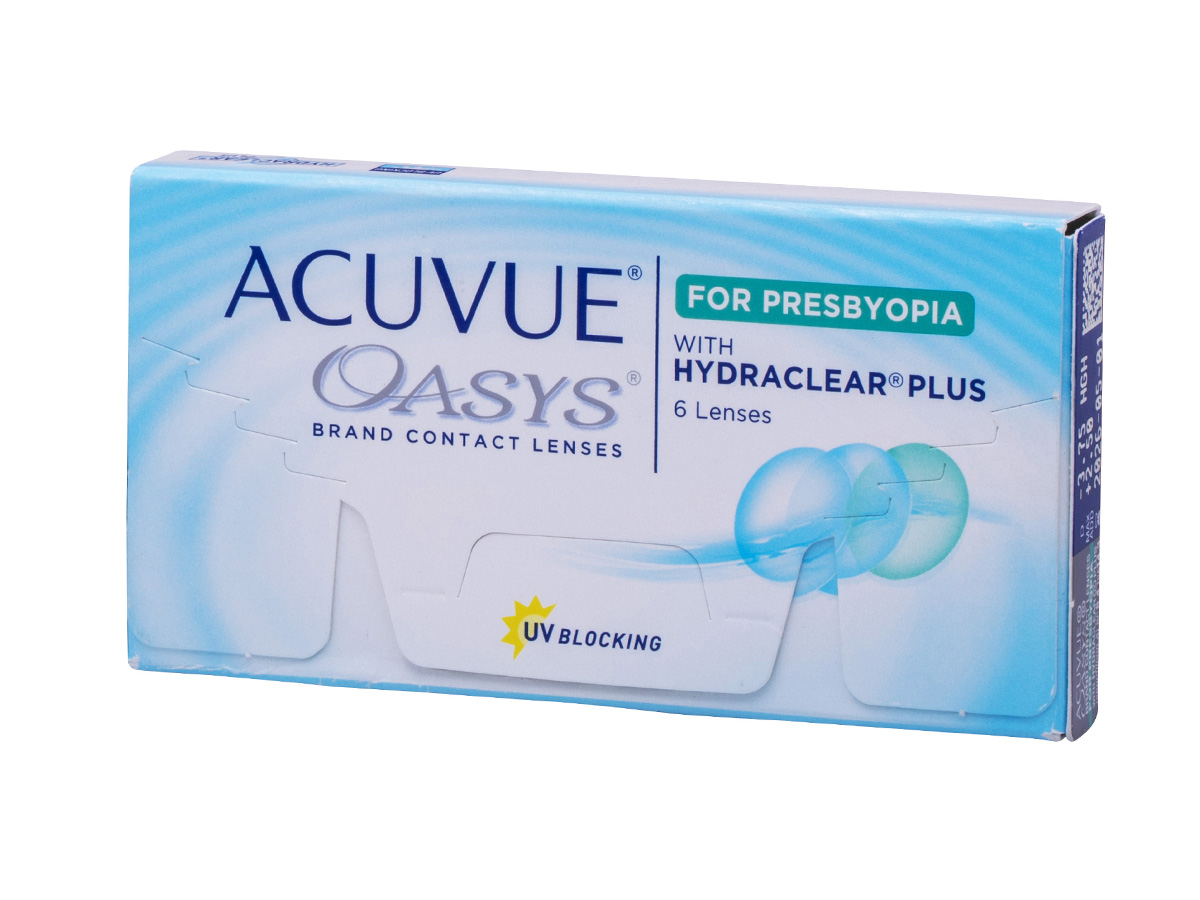
Acuvue Oasys for Presbyopia is a bi-weekly (2-week) disposable multifocal contact lens designed to correct age-related near-vision loss while maintaining distance clarity. Utilizing Stereo Precision Technology and Hydraclear Plus, these lenses provide a balanced visual experience for patients who require different corrective powers for reading, computer work, and driving, all within a high-oxygen silicone hydrogel material.
Understanding Presbyopia and the Visual Challenge
Presbyopia is a natural, age-related condition where the eye's crystalline lens loses its flexibility, making it difficult to focus on close objects. This typically becomes noticeable after the age of 40. For many years, the primary solution was reading glasses or "cheaters," but for active individuals or long-time contact lens wearers, these are often inconvenient.
Acuvue Oasys for Presbyopia addresses this by incorporating multiple corrective powers into a single lens. Unlike bifocal glasses, which have a visible line, these multifocal lenses use advanced optical zones that allow the brain to naturally select the focus needed based on the task at hand. By 2026, while newer "Multifocal" iterations have entered the market, the Oasys for Presbyopia platform remains a staple for practitioners due to its predictable fit and high patient satisfaction in specific refractive ranges.
Technological Core: Stereo Precision Technology
The defining characteristic of the Acuvue Oasys for Presbyopia is its Stereo Precision Technology. This is a zonal aspheric design that creates a seamless transition between various focal points.
Balanced Visual Zones
The lens is engineered with multiple concentric zones. The center and surrounding rings are calculated to provide distinct powers for near, intermediate, and distance vision. This "aspheric" geometry is crucial because it accounts for the natural spherical aberration of the human eye. By manipulating how light hits the retina, the technology ensures that images from different distances are available simultaneously, allowing the visual cortex to process the clearest image.
Intermediate Vision Optimization
One of the most significant complaints among presbyopic patients is the "intermediate gap"—the area approximately an arm's length away, common for computer use or viewing a car's dashboard. Stereo Precision Technology specifically targets this range, offering a smoother transition than traditional bifocals, which often jump abruptly from far to near.
Comfort and Material Science: Hydraclear Plus
Even the best optics are useless if the lens is too uncomfortable to wear for a full day. Acuvue Oasys for Presbyopia utilizes Senofilcon A, a silicone hydrogel material known for its high oxygen permeability (Dk/t).
Hydraclear Plus Technology
This proprietary technology integrates a large volume of a moisture-rich wetting agent (Polyvinylpyrrolidone, or PVP) throughout the lens matrix. Unlike surface coatings that can wear off or break down over time, Hydraclear Plus mimics the mucin layer of the tear film. This helps the lens maintain a low coefficient of friction, allowing the eyelid to glide over the lens as if it were the natural cornea.
Oxygen Transmissibility (Dk/t)
Because the lens is made of silicone hydrogel, it allows approximately 98% of available oxygen to reach the central cornea. This is vital for maintaining ocular health, preventing redness, and ensuring that the eyes do not become hypoxic (deprived of oxygen) during long wear cycles. In 2026, maintaining corneal integrity remains the top priority for optometrists prescribing multifocal lenses, as the aging eye often produces fewer tears and is more susceptible to irritation.
The Evolution: From "For Presbyopia" to "Multifocal"
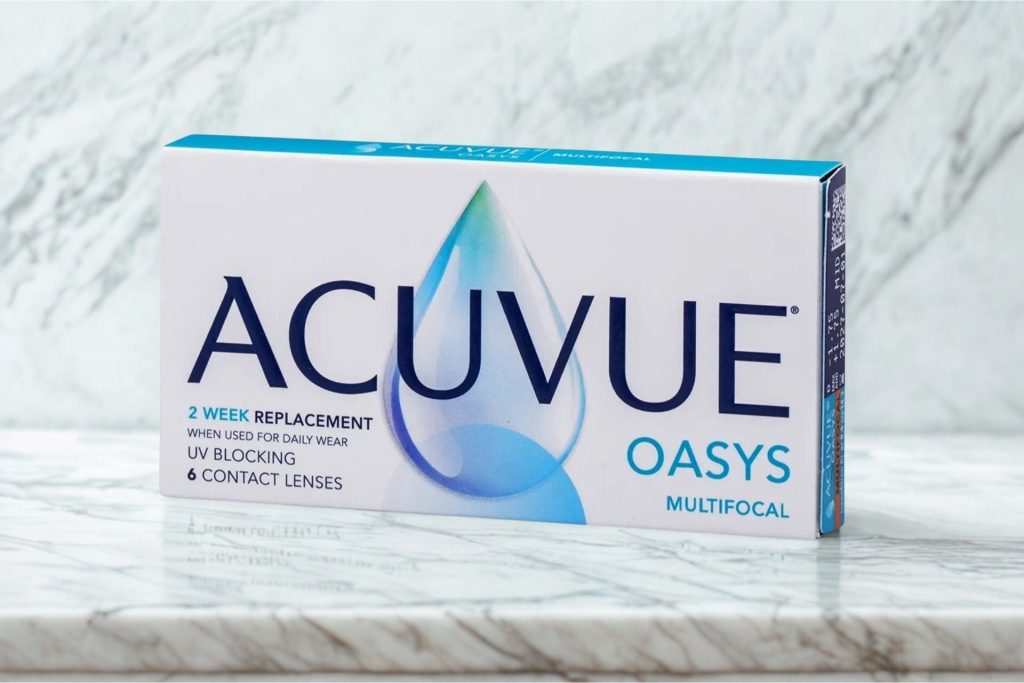
It is important to distinguish between the original Acuvue Oasys for Presbyopia and the newer Acuvue Oasys Multifocal with Pupil Optimized Design. As of 2026, both products may still be encountered in clinical settings, though the "Multifocal" version is the current flagship.
- Acuvue Oasys for Presbyopia: Uses a standard zonal aspheric design (Stereo Precision). It is highly effective but offers a more "generalized" approach to pupil size.
- Acuvue Oasys Multifocal: This newer iteration uses Pupil Optimized Design, which adjusts the optical zones based on the patient's age and refractive error (myopia vs. hyperopia). This is based on the clinical fact that pupils generally shrink with age and differ in size depending on whether the patient is nearsighted or farsighted.
For patients who have been successfully wearing the "for Presbyopia" version for years, practitioners often recommend staying with the proven design. However, new fits in 2026 are increasingly directed toward the Pupil Optimized version for a more bespoke visual outcome.
Technical Specifications and Parameters
When evaluating these lenses, understanding the technical limits is essential for determining eligibility. The following table outlines the standard parameters for Acuvue Oasys for Presbyopia.
| Feature | Specification |
|---|---|
| Material | Senofilcon A (Silicone Hydrogel) |
| Water Content | 38% |
| Base Curve | 8.4 mm |
| Diameter | 14.3 mm |
| Sphere Power Range | -9.00D to +6.00D (in 0.25D steps) |
| Addition (ADD) Powers | Low, Mid, High |
| Oxygen Transmissibility (Dk/t) | 147 x 10⁻⁹ |
| Replacement Schedule | 2 Weeks (Daily Wear) or 6 Nights/7 Days (Extended Wear) |
| UV Protection | Class 1 (99% UVB, 96% UVA) |
| Visibility Tint | Light Blue (for handling) |
Pros and Cons: A Balanced Assessment
Every multifocal lens involves a degree of compromise. Understanding the benefits and limitations helps manage expectations.
The Advantages
- Exceptional Comfort: The Hydraclear Plus technology makes these some of the most comfortable lenses for patients with "tired" or "dry" eyes, a common symptom in the 40+ demographic.
- High Oxygen Flux: The silicone hydrogel material prevents the "end-of-day redness" often associated with older hydrogel multifocals.
- UV Blocking: Acuvue remains a leader in UV protection, which is a significant benefit for long-term ocular health (reducing the risk of cataracts and macular degeneration).
- Flexibility: The 2-week replacement cycle is a "sweet spot" for many—more hygienic than monthly lenses but more cost-effective than daily disposables.
The Limitations
- Adaptation Period: Like all multifocal optics, there is a "neuro-adaptation" phase. It may take 1 to 2 weeks for the brain to learn how to ignore the ghost images from the zones not in use.
- Night Driving: Some users report halos or starbursts around headlights at night. This is a byproduct of the zonal aspheric design and varies significantly between individuals.
- Fitting Complexity: Achieving the perfect balance between near and distance vision often requires two or three follow-up visits with an eye care professional to "tweak" the powers.
The Fitting Process: What to Expect
Fitting Acuvue Oasys for Presbyopia is more complex than fitting a standard single-vision lens. In 2026, the protocol generally follows these steps:
- Comprehensive Refraction: Your optometrist will determine your exact distance prescription and your "ADD" power (the extra help needed for reading).
- Sensory Dominance Testing: The doctor determines which eye is your "dominant" eye. Often, the doctor will slightly favor the dominant eye for distance and the non-dominant eye for near vision to enhance the multifocal effect.
- Initial Trial: You will wear a pair of trial lenses in the office for about 15–20 minutes. This allows the lenses to settle on the tear film and allows your pupils to adjust.
- Real-World Testing: You are typically sent home with a trial pair to use in your normal environment (work, driving, using a phone) for a week.
- Follow-Up and Adjustment: Based on your feedback, the doctor may change the power in one eye by 0.25D to sharpen the vision at a specific distance.
Cost and Insurance Considerations in 2026
As of 2026, Acuvue Oasys for Presbyopia remains a premium lens category. On average, a six-month supply (two boxes of six lenses each per eye, totaling four boxes) costs between $180 and $240.
Insurance Coverage
Most vision insurance plans (such as VSP or EyeMed) categorize these as "elective" or "specialty" contact lenses.
- Allowances: Many plans provide a $130–$150 annual allowance.
- Fitting Fees: Be aware that multifocal fitting fees are higher than standard fees, often ranging from $60 to $150, and are sometimes not fully covered by basic insurance.
Value Comparison
While more expensive than standard Oasys lenses, the cost is often offset by the elimination of the need for high-quality progressive glasses or multiple pairs of readers.
Maintenance and Care Guidelines
To ensure the longevity of the 2-week cycle and maintain eye health, a strict cleaning regimen is required.
- Solution Compatibility: These lenses work best with high-quality multi-purpose solutions (like Acuvue RevitaLens) or hydrogen peroxide systems (like Clear Care). Hydrogen peroxide systems are particularly recommended for presbyopes, as they provide a deeper clean for the older eye which may produce more lipid deposits.
- The "Rub and Rinse" Method: Even with "no-rub" solutions, gently rubbing the lens in the palm of your hand for 10 seconds helps remove protein buildup that can blur multifocal optics.
- Replacement Schedule: Do not "stretch" the lenses beyond 14 days. The silicone hydrogel material is porous; over time, those pores clog, reducing oxygen flow and increasing the risk of infection.
Comparison with Market Competitors
In 2026, the multifocal market is highly competitive. Here is how Acuvue Oasys for Presbyopia stacks up against its primary rivals:
- Biofinity Multifocal (CooperVision): Biofinity is a monthly lens. It uses "Balanced Progressive Technology." It is often favored for patients with high astigmatism, as it offers more customizable parameters, but some find the Acuvue material superior for end-of-day comfort.
- Air Optix Plus Hydraglyde Multifocal (Alcon): This is also a monthly lens. It features a unique surface treatment to resist deposits. It is a strong competitor for those who struggle with oily deposits on their lenses.
- Dailies Total1 Multifocal: For those who prefer a daily disposable, this Alcon lens offers a water-gradient material. It is more expensive than Oasys for Presbyopia but eliminates the need for cleaning solutions.
Frequently Asked Questions
Can I sleep in Acuvue Oasys for Presbyopia?
While these lenses are FDA-approved for up to 6 nights of extended wear, most eye care professionals in 2026 recommend daily wear (taking them out at night). Sleeping in lenses increases the risk of corneal ulcers and inflammation. If you must sleep in them, consult your doctor for a specific schedule and more frequent check-ups.
Why is my vision blurry for the first few days?
This is usually due to "neuro-adaptation." Your brain is receiving multiple images (near and far) at the same time and must learn which one to prioritize. If the blurriness persists beyond 10 days, or if you experience significant headaches, the prescription may need a slight adjustment by your optometrist.
Does this lens work if I have astigmatism?
Acuvue Oasys for Presbyopia is designed for patients with minimal astigmatism (typically less than 0.75 diopters). If you have significant astigmatism, you may require a Multifocal Toric lens, a different category of contact lens that corrects both the shape of the eye and the presbyopia.
Can I use rewetting drops with these lenses?
Yes, but ensure they are labeled "for use with contact lenses." Avoid "redness-relief" drops, as they can cause rebound redness and may interact with the lens material. Preservative-free lubricating drops are the gold standard for maintaining comfort in 2026.
Is there an age limit for wearing these lenses?
There is no upper age limit. As long as your eyes are healthy and you can handle the lenses (insertion and removal), multifocal contacts are a viable option well into your 70s and 80s. However, conditions like severe dry eye or cataracts may eventually make lens wear less effective.
Final Recommendation
If you are struggling with the constant "on-and-off" routine of reading glasses and prioritize comfort, Acuvue Oasys for Presbyopia remains a top-tier choice in 2026. Its combination of Senofilcon A and Stereo Precision Technology offers a reliable solution for those who want to maintain an active lifestyle without sacrificing visual clarity.
Next Steps: Schedule a "Multifocal Evaluation" with your eye care provider. Specifically ask to trial the Acuvue Oasys platform to see if the zonal aspheric design aligns with your visual needs. Always follow the prescribed 2-week replacement schedule to ensure the long-term health of your eyes.