Accrued benefits in workers' compensation refer to the compensation payments, medical reimbursements, or death benefits that a claimant was entitled to receive during their lifetime but which remained unpaid at the time of their death. These benefits represent a vested interest for the estate or eligible survivors, ensuring that the financial obligations of the insurance carrier are honored even after the cessation of the primary claimant’s life.
When an individual passes away while receiving or awaiting workers' compensation benefits, the claim does not simply evaporate. Instead, the focus shifts to the "accrued" portion of the benefit—the funds that were legally due to the deceased worker but had not yet been disbursed by the insurer or the employer. Navigating this process requires understanding the legal distinction between ongoing disability payments and the specific arrears that constitute accrued benefits.
The Legal Basis of Accrued Benefits
In the context of workers' compensation law, "accrued benefits" are distinguished from future benefits. If a worker is awarded permanent total disability or ongoing temporary disability payments, their right to those funds is earned on a periodic basis. If the insurer fails to issue a check for a period the worker was alive and eligible, that debt remains outstanding.
From a jurisdictional standpoint, the laws governing these payments vary significantly by state. Most administrative systems treat accrued benefits as part of the deceased worker’s probate estate or direct them to statutory beneficiaries. The core principle remains that the insurance carrier’s obligation is a debt created by the workplace injury; the death of the recipient merely stops the accrual of new debt, it does not erase existing liabilities.
Distinguishing Accrued Benefits from Death Benefits
It is a common point of confusion to conflate accrued benefits with death benefits. While they may be settled in the same proceedings, they are legally distinct:
- Accrued Benefits: These represent money owed for the period between the date of the injury (or the start of disability) and the date of death. This is money that the employee should have already received.
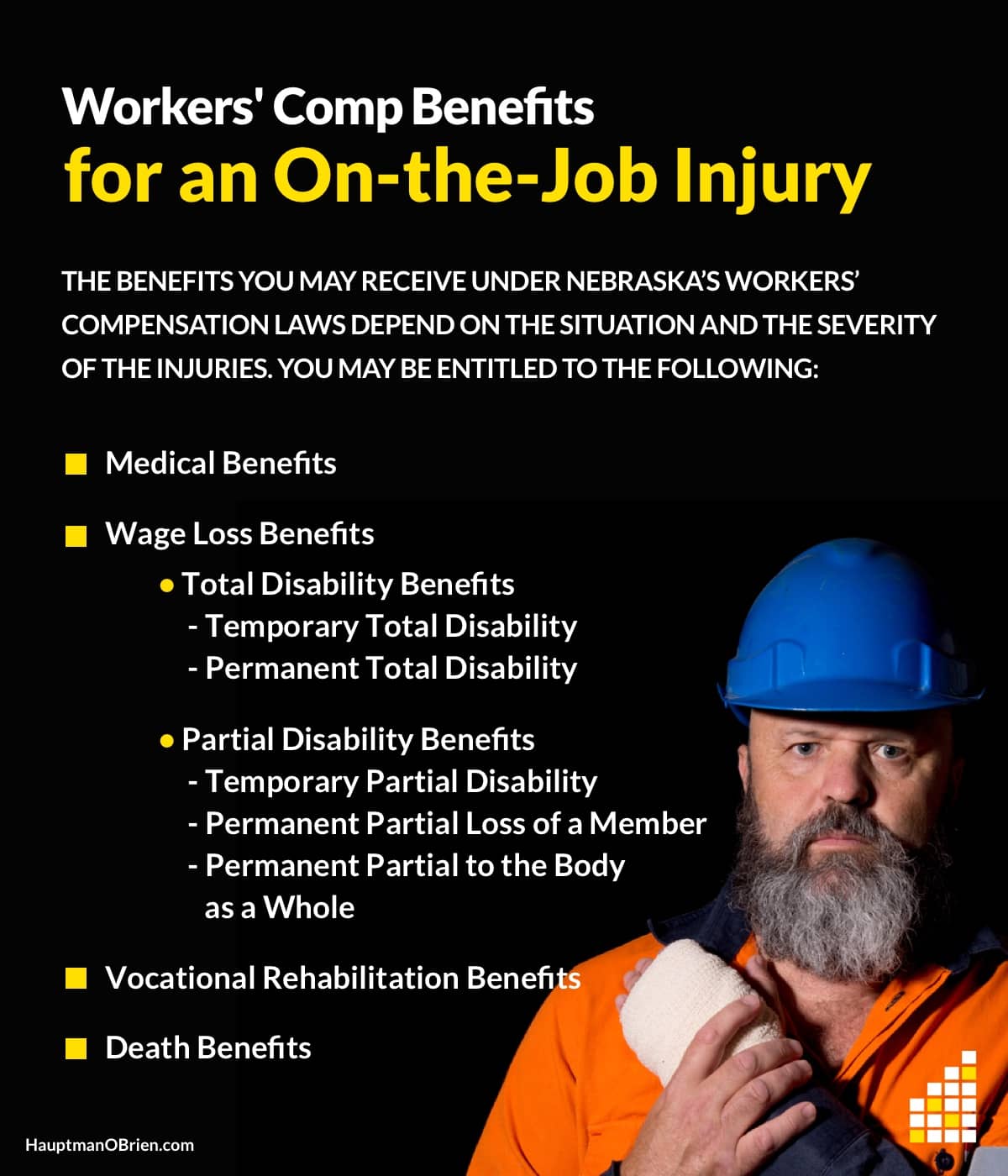
- Death Benefits: These are payments designed to compensate the surviving spouse, children, or dependents for the loss of income caused by the worker’s death. These are prospective payments determined by dependency status and state-specific statutory schedules.
If a worker passes away due to a cause unrelated to their work injury, they may still have "accrued benefits" owed to their estate, but there may be no "death benefits" payable to survivors. Conversely, if a worker dies due to the workplace injury, both accrued benefits (for the time they were disabled before passing) and death benefits (for the survivors) may be claimed.
Prerequisites for Claiming Accrued Benefits
To successfully recover accrued benefits, the estate representative or surviving dependent must provide specific documentation to the workers' compensation board or the insurance carrier. The process generally requires:
- Proof of Death: An official death certificate is required to establish the date of death.
- Evidence of Entitlement: Documentation showing that the deceased worker was under an active award or was in the process of a claim adjudication that would have resulted in payment for the period in question.
- Letters of Administration/Representation: In many jurisdictions, an executor or administrator must be appointed by a probate court to collect debts owed to the estate.
- Verification of Unpaid Periods: A precise ledger identifying the dates of disability for which no payment was received by the deceased.
Procedural Steps for Recovery
The recovery process involves several legal and administrative stages. Failing to follow these steps can lead to the denial of the claim or the forfeiture of funds to the insurance carrier's residual pool.
1. Notification
The employer’s workers' compensation insurance carrier must be notified immediately of the claimant's death. This prevents the carrier from erroneously issuing checks to a deceased person, which can cause significant banking and accounting complications.
2. Filing the Petition
In most states, the executor or the attorney representing the estate must file a formal petition with the state’s workers' compensation agency. This document formally asserts the right to the accrued benefits and requests a hearing if the carrier disputes the amounts owed.
3. Audit of Payments
The agency will perform an audit to compare the payments issued against the disability periods confirmed by medical records. If the deceased worker was entitled to benefits—such as a retroactive increase in the disability rate—the estate is entitled to the difference.
4. Disbursement
Once the administrative body approves the payment, the funds are disbursed according to state probate law. If there is a surviving spouse or child defined under the workers' compensation statute, those payments may bypass the probate estate and go directly to the dependents.
Comparison Table: Benefit Types and Eligibility
| Benefit Type | Timing of Payment | Who Receives Funds |
|---|---|---|
| Accrued Benefits | Owed for period prior to death | Estate or statutory heirs |
| Death Benefits | Owed for period following death | Eligible dependents/survivors |
| Medical Expenses | Owed for treatment before death | Medical providers or estate |
| Funeral Expenses | Paid upon death of worker | Estate or family (reimbursement) |
Common Pitfalls and Troubleshooting
Claimants often face delays or denials due to clerical errors or lack of preparation. Common issues include:
- Failure to Notify: If the insurance carrier is not informed of the death for an extended period, they may issue checks that are cashed by unauthorized parties, leading to complex litigation to recover those funds.
- Statute of Limitations: Just as with standard injury claims, there is a time limit for filing a claim for accrued benefits. Missing this window—which varies by state—can result in the permanent loss of the benefits.
- Medical Lien Issues: If the deceased worker had unpaid medical bills related to the injury, the insurance carrier may be legally required to pay those providers directly from the accrued benefit funds, leaving less money for the estate.
- Disputed Causation: If the worker died of natural causes, the insurance company might try to argue that they are no longer liable for any future medical monitoring, which may impact the calculation of the final settlement amount.
Handling Medical and Funeral Expenses
In addition to lost wages, workers' compensation policies often cover medical expenses and, in cases of fatal work injuries, funeral and burial costs. These are often categorized alongside accrued benefits. If the worker paid for medical treatments out-of-pocket prior to their death, those receipts should be submitted for reimbursement.
Funeral and burial benefit caps are set by state legislation. It is essential to verify the specific monetary limits in your jurisdiction. Ensure that all funeral home invoices are itemized and clearly linked to the costs incurred, as carriers will strictly audit these figures against their statutory maximums.
Legal and Professional Advice Limitation
The laws governing workers' compensation and estate distribution are highly localized. This information is intended for educational purposes and does not constitute legal or financial advice. Because workers' compensation claims involve complex statutes, strict filing deadlines, and potential conflicts with Social Security Disability Insurance (SSDI) offsets, consulting with a qualified workers' compensation attorney or an estate planner is strongly recommended. They can ensure that your specific jurisdictional requirements are met and that the interests of the estate are fully protected.
Frequently Asked Questions
Can the insurance company keep the unpaid benefits if the worker dies? No. If the benefits accrued while the worker was alive and entitled to payment, the insurance company remains liable for that debt. They cannot retain the funds simply because the claimant is deceased; they must pay the estate or the legally eligible survivors.
Do I need a lawyer to claim accrued benefits? While not strictly required by law, an attorney is highly recommended. The interaction between workers' compensation board rules and probate law is complex. An attorney can ensure that you meet all deadlines and correctly categorize the money as an estate asset or a dependency benefit to minimize tax and legal complications.
What if the worker had a pending settlement offer at the time of death? If a settlement agreement had been fully executed and approved by the board, the amount is usually considered a debt of the carrier and becomes part of the estate. However, if the settlement was merely in negotiation and not finalized, the status of those funds becomes much more complicated and often depends on whether the injury itself was the cause of death.
Are accrued benefits subject to taxes? In many jurisdictions, workers' compensation benefits are tax-exempt. However, when these benefits are paid out to an estate, they may be subject to estate taxes or other probate regulations. You should consult with a tax professional to understand how these funds will be treated in your specific state.
What if there is no surviving spouse or children? If there are no statutory dependents, the accrued benefits typically flow into the worker’s general estate. They are then distributed according to the deceased’s will or the state’s laws of intestate succession.
Next Steps for Claimants
If you are the representative of an estate or a survivor of a worker who had an open workers' compensation claim, you should take the following actions:
- Obtain multiple certified copies of the death certificate.
- Locate the deceased’s workers' compensation claim number and the contact information for the insurer or the third-party administrator.
- Notify the state workers' compensation board in writing, providing the case number and the date of death.
- Consult an attorney to review the status of any unpaid compensation to ensure that you do not waive the right to recover these funds through inaction.