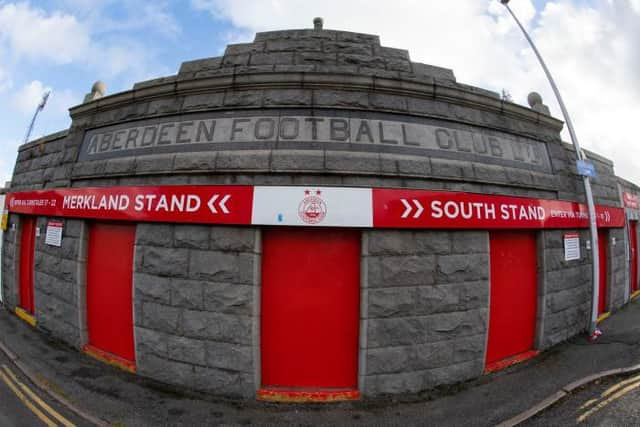
Pittodrie Stadium, situated in Aberdeen, Scotland, has served as the historic home of Aberdeen Football Club since the club's inception in 1903. Renowned globally for architectural innovations—including football’s first covered technical dugout and Britain’s first all-seater stadium—Pittodrie remains one of Scottish football’s most iconic and culturally significant sporting venues.
The Origins and History of Pittodrie Stadium
The story of Pittodrie Stadium begins long before the modern era of professional football. The ground on which the stadium sits was originally used as a dung heap for horses belonging to the local police force and tramway company. In 1899, the original Aberdeen Football Club (which predated the current club) leased the land from the Dun-D drive estate, recognizing its potential as a dedicated sporting ground. The terrain was cleared, leveled, and fitted with basic earth banking to accommodate spectators.
On August 2, 1899, the venue officially opened with a match between Aberdeen and Orion FC, attracting a crowd of roughly 2,500 spectators. However, the modern Aberdeen Football Club was not officially formed until 1903, following a pivotal merger between three local entities: Aberdeen, Victoria United, and Orion. The newly unified club retained Pittodrie as its permanent home ground, establishing a sporting continuous residence that has spanned more than a century.
- 1899: Site established by original Aberdeen FC
- 1903: Merger forms modern Aberdeen FC; Pittodrie becomes official home
- 1925: Main Stand constructed; capacity expands significantly
- 1934: Invention of the world's first covered technical dugout
- 1971: Main Stand destroyed by fire; rebuilt with updated facilities
- 1978: Stadium converted to Britain's first major all-seater venue
- 1993: Richard Donald Stand constructed, replacing the Beach End
During the early decades of the 20th century, Pittodrie underwent steady physical development. The club gradually converted simple earthen mounds into concrete terracing to handle rapidly expanding matchday crowds. In 1925, the club constructed the Main Stand, which housed the dressing rooms, administrative offices, and premium seated accommodation. By the mid-20th century, attendance routinely exceeded 30,000, reaching an all-time record on March 13, 1954, when 44,000 spectators squeezed into the stadium for a Scottish Cup quarter-final tie against Hearts.
The venue witnessed Aberdeen FC's most celebrated era under manager Alex Ferguson in the late 1970s and 1980s. Pittodrie served as the fortress from which the club mounted domestic league title campaigns and historic European runs, culminating in the memorable 1982–83 European Cup Winners' Cup campaign where Aberdeen defeated Bayern Munich at Pittodrie en route to lifting the trophy in Gothenburg.
Architectural Pioneers: Historic Firsts in World Football
Pittodrie holds an extraordinary position in global sports architecture, having introduced two structural innovations that fundamentally reshaped how football matches are conducted and viewed worldwide.
- 1930s: Invention of the Covered Dugout
- Introduced by Donald Coleman to analyze footwork and protect trainers from North Sea weather elements.
- 1978: Britain's First All-Seater Stadium
- Led by Chairman Dick Donald to enhance spectator safety, comfort, and crowd management control.
The Invention of the Technical Dugout
In the 1930s, Aberdeen FC trainer and manager Donald Coleman introduced a feature to Pittodrie that would eventually become standard across world football: the covered technical dugout.
Coleman desired a sunken shelter positioned close to the touchline. His primary motivation was analytical; by sitting at ground level, he could closely observe his players' footwork, tactical positioning, and body mechanics during match action. Furthermore, given Pittodrie’s proximity to the cold winds of the North Sea, the shelter provided essential protection from the harsh Scottish coastal climate.
Visiting teams initially viewed the subterranean seating arrangement as a curiosity, but the utility of sheltered sideline accommodation quickly became undeniable. Today, FIFA and UEFA regulations require professional stadiums to feature dugout technical areas for players and coaching staff—a standard born directly on the touchline of Pittodrie.
Britain's First All-Seater Stadium
Decades before all-seater grounds were mandated across high-level British football following the Taylor Report in 1990, Aberdeen FC pioneered the transition toward seated stadia.
Under the leadership of visionary chairman Dick Donald, the club undertook a major renovation of Pittodrie’s open terracing. By 1978, benches and individual seating were installed across the remaining open terraces, officially making Pittodrie the first stadium in Great Britain to become entirely bench- and bucket-seated.
This transformation significantly improved spectator safety, reduced matchday overcrowding, and elevated the overall comfort of matchgoers. The move proved prophetic, setting an operational blueprint for modern arena design throughout the United Kingdom and Europe.
Structural Breakdown of Pittodrie Stadium
Pittodrie Stadium features four distinct stands, each reflecting a different era of the stadium's construction and redevelopment history. Together, they create a traditional, enclosed rectangular football ground with a modern seating capacity of 20,866.
- North Stand (Richard Donald Stand)
- South Stand (Main Stand)
- West Stand (Merkland Road)
- East Stand (Beach End / Away Section)
- Pitch Area
The Main Stand (South Stand)
The Main Stand runs along the southern perimeter of the pitch and represents the historical heart of the complex. Rebuilt after a devastating fire destroyed much of the original wooden structure in 1971, this side houses the executive suites, media tribunes, player dressing rooms, trophy displays, and administrative headquarters.
Although structurally older than the opposite stand, the Main Stand contains the traditional Directors' Box and connects directly to the tunnel leading out to the pitch side.
The Richard Donald Stand (North Stand)
Constructed in 1993 to replace the old unroofed North Terrace, the Richard Donald Stand is the largest single structure within the complex. Named in honor of the former club chairman, this double-tiered cantilever stand added modern corporate hospitality suites, broad concourses, and over 6,000 seats. Its high elevation offers panoramic views of the pitch and dominates the stadium's skyline.
The Merkland Road Stand (West Stand)
Positioned behind the goal at the western end of the ground, the Merkland Road Stand traditionally functions as the primary home fan stand, often referred to as the "Merkland End." Known for hosting a dedicated family section, this covered end generates significant vocal support on matchdays. Its location adjacent to Merkland Road makes it a primary pedestrian entrance point for local supporters.
The South East / Beach End (East Stand)
Located at the eastern boundary of the ground closest to the coastline, this stand sits on the site historically known as the "Beach End." Today, it routinely accommodates visiting away supporters and secondary seating allocations. Because it faces directly toward the North Sea coast, spectators in this area are famously exposed to the chilly maritime breeze that has become part of Pittodrie lore.
Technical Specifications and Historical Timeline
To understand the evolution of Pittodrie Stadium, the following table outlines key technical specifications, operational milestones, and stand metrics that define the venue.
| Aspect / Section | Detail / Specification | Historical Significance & Notes |
|---|---|---|
| Location | Pittodrie Street, Aberdeen, Scotland (AB24 5QH) | Situated approximately 500 meters from the North Sea coast. |
| Current Capacity | 20,866 fully seated | Reduced from peak standing capacity following 1978 all-seated conversion. |
| Record Attendance | 44,000 spectators (March 13, 1954) | Achieved during a Scottish Cup fixture vs Heart of Midlothian. |
| Pitch Dimensions | 105 x 65 meters (115 x 71 yards) | Natural grass surface with specialized drainage and sub-pitch heating systems. |
| First Match | August 2, 1899 | Original Aberdeen FC vs Orion FC (Finished 1-1). |
| Dugout Invention | Introduced circa 1934 | Designed by trainer Donald Coleman; first sunken dugout in association football. |
| All-Seater Conversion | Completed 1978 | First major football stadium in Great Britain to achieve 100% seating coverage. |
| Richard Donald Stand | Opened 1993 | Multi-million-pound cantilever structure incorporating corporate hospitality facilities. |
Matchday Logistics and Visitor Guide
Visiting Pittodrie Stadium requires planning, particularly for supporters traveling from outside Aberdeenshire or international groundhoppers looking to experience Scottish football history.
- Traveling to Pittodrie Stadium
- By Rail: Aberdeen Railway Station (Guild Street)
- Walking: ~20 minutes (1.3 miles via King Street)
- Taxi / Local Bus: ~7-10 minutes
- By Car: Access via A90 / A96
- Matchday Parking: Very limited near stadium
- Recommended: Park & Ride services or city center parking garages
- On Foot: Northbound along King Street, then turn right onto Merkland Road or Pittodrie Street
- By Rail: Aberdeen Railway Station (Guild Street)
Transportation Options
- By Train: Aberdeen Railway Station, located on Guild Street in the city center, provides direct mainline rail connections to Edinburgh, Glasgow, Inverness, and London King's Cross (via LNER). The stadium sits approximately 1.3 miles northeast of the station. Visitors can walk to the stadium in roughly 20 to 25 minutes by heading north along King Street.
- By Bus: Local bus routes operated by First Bus Aberdeen service the area around Pittodrie. Routes running along King Street (such as Services 1, 2, and 13) drop passengers within a two-minute walk of the stadium turns.
- By Car & Parking: Drivers accessing Aberdeen via the A90 (from the South) or A96 (from the West) should note that direct street parking immediately surrounding Pittodrie Street, Golf Road, and Merkland Road is restricted on matchdays by local council permit regulations. Visitors are advised to park in city center multi-storey car parks or utilize regional Park & Ride services located at Bridge of Don or Kingswells.
Matchday Etiquette and Stadium Entry
Spectators should arrive at least 45 to 60 minutes prior to kickoff to navigate electronic turnstile access smoothly. Bag searches are standard operational procedure at all entry points.
- Ticket Purchasing: Tickets are issued digitally or via physical matchday passes through the official Aberdeen FC Ticketing Portal. High-profile fixtures (such as matches against Celtic, Rangers, or European ties) routinely sell out in advance, making early online booking essential.
- Accessibility Services: Pittodrie offers dedicated wheelchair accessible platforms situated in the Main Stand and Richard Donald Stand. Visitors requiring accessible seating or sensory accommodations should contact the club's Disability Access Officer prior to travel.
- Club Shop & Museum: The official Aberdeen FC Team Store is located adjacent to the Richard Donald Stand on Pittodrie Street. Supporters can purchase official team merchandise, match programmes, and commemorative memorabilia on matchdays and regular business hours.
The Relocation Context: Future of Aberdeen FC's Home
While Pittodrie is universally revered for its rich heritage, the physical limitations of an aging 19th-century site have presented long-term operational challenges for Aberdeen Football Club. Modern sports governance, revenue generation, corporate hosting, and spectator expectations require facilities that are difficult to retrofit into an enclosed urban site bordered by housing and sea lines.
- Pittodrie Stadium (Historic Home Ground)
- Historic matchday venue, 20,866 seating capacity
- Cormack Park (Opened 2019)
- State-of-the-art training complex & youth academy
- Future Stadium Proposals
- Strategic planning: Kingsford vs Beachfront site
Historical Move Proposals and Kingsford
For over two decades, the club evaluated alternative stadium locations across the city. Initial plans focused heavily on a site at Kingsford, situated to the west of Aberdeen near Westhill.
Phase 1 of the Kingsford project was successfully completed in October 2019 with the opening of Cormack Park—a £13 million elite training complex, youth academy, and community sports hub named after club chairman Dave Cormack. However, while the training facility opened successfully, plans for a accompanying 20,000-capacity stadium on the adjacent Kingsford plot faced logistical, transport, and planning hurdles.
The Aberdeen Beachfront Regeneration Project
In subsequent years, discussions pivoted toward a collaborative partnership with the Aberdeen City Council as part of a broader masterplan to regenerate the Aberdeen Beachfront area.
This vision proposes constructing a new multi-purpose stadium and sports complex just hundreds of yards away from the existing Pittodrie footprint. The proposed beachfront arena aims to keep the club within its historic neighborhood while embedding modern environmental sustainability, year-round commercial use, and state-of-the-art facilities into the build.
Until any new development is fully constructed and commissioned, Pittodrie Stadium remains the fully functional home ground of Aberdeen FC, hosting all domestic Scottish Premiership and cup fixtures.
Frequently Asked Questions
What is the official name and capacity of Aberdeen FC's stadium?
The official name of the ground is Pittodrie Stadium (often referred to simply as Pittodrie). Its current seating capacity is 20,866.
Why is Pittodrie Stadium famous in international football history?
Pittodrie is internationally famous for two major structural innovations: introducing world football’s first covered technical dugout (invented by Donald Coleman in the 1930s) and becoming Great Britain’s first all-seater stadium in 1978.
Can tourists and groundhoppers book stadium tours at Pittodrie?
Yes, Aberdeen FC offers guided stadium tours on select non-matchdays. Tours take visitors through the home dressing room, the players' tunnel, the dugouts, the trophy room, and the executive suites. Booking in advance through the official club office or online portal is required.
How far is Pittodrie Stadium from Aberdeen city center?
Pittodrie Stadium is approximately 1.3 miles (2.1 km) northeast of Aberdeen city center and the main railway station. It takes roughly 20 to 25 minutes to walk from the station to the stadium along King Street.
Is Pittodrie Stadium near the sea?
Yes, Pittodrie is situated only about 500 meters from the coastline of the North Sea. It is famously known among football fans for its brisk coastal winds during autumn and winter matchdays.
What is the record attendance ever recorded at Pittodrie?
The ground's all-time record attendance is 44,000 spectators, set on March 13, 1954, during a Scottish Cup quarter-final match between Aberdeen and Heart of Midlothian.
Practical Next Steps for Visitors and Supporters
Whether planning a matchday visit, organizing a football heritage pilgrimage, or researching Scottish sports history, consider the following checklist:
- Check Fixture Lists: Review the official Scottish Premiership schedule via the Scottish Professional Football League (SPFL) or Aberdeen FC portal before traveling, as television broadcast rescheduling frequently alters kickoff times.
- Reserve Tickets Early: Secure match seats early via official ticketing channels, especially for fixture dates involving traditional rivals or European competition.
- Prepare for Weather: Given Pittodrie’s location on the wind-exposed North Sea coast, dress in warm layers and bring waterproof clothing regardless of seasonal expectations.
- Explore Local Heritage: Allocate extra time prior to kickoff to walk down Merkland Road and Pittodrie Street to inspect the historic granite exterior elements and visit the team store.