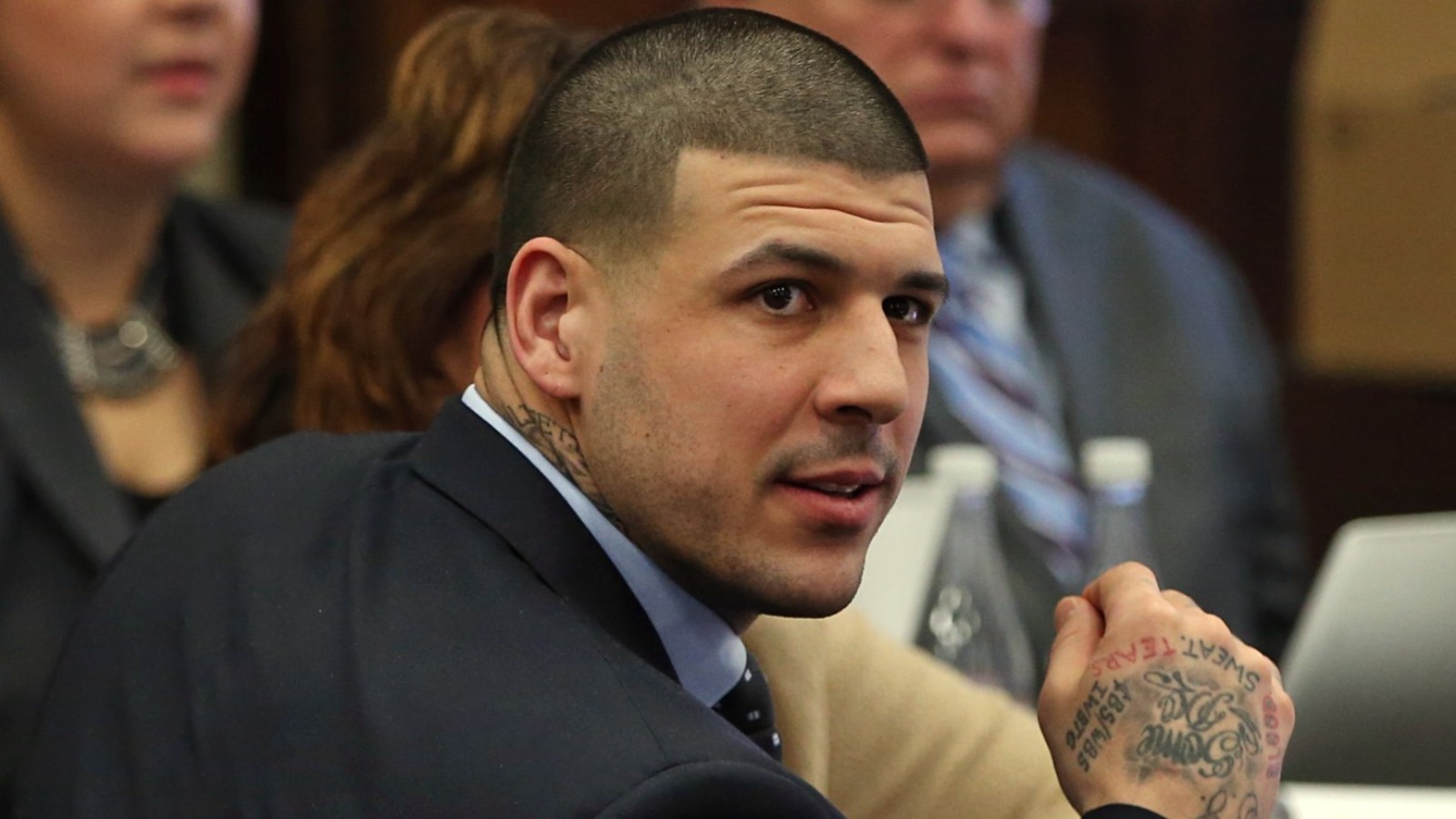
Aaron Hernandez was never proven innocent in the end; rather, a Massachusetts state court abated his 2015 murder conviction because he died before his direct appeal could be heard, following a legal doctrine known as abatement ab initio. This technical legal resolution vacated the judgment of conviction, but it did not establish his innocence, exonerate him of the charges, or alter the underlying factual findings of the jury.
The public perception surrounding the legal status of former New England Patriots tight end Aaron Hernandez remains a subject of considerable debate, confusion, and misconception. Following his death by suicide in April 2017 while serving a life sentence for the 2013 murder of Odin Lloyd, a complex series of legal maneuvers unfolded. These events triggered a rarely applied principle of Massachusetts criminal jurisprudence. To understand why some observers mistakenly believe Hernandez was cleared of wrongdoing, one must examine the intersection of criminal procedure, appellate rights, and the specific doctrine that erased his formal conviction without erasing the verdict.
Understanding the Legal Status of Aaron Hernandez at the Time of Death
To evaluate claims regarding the guilt or innocence of Aaron Hernandez, it is necessary to separate historical facts and trial outcomes from post-conviction legal procedures. In April 2015, a Bristol County Superior Court jury convicted Hernandez of the first-degree murder of Odin Lloyd, a semi-professional football player who was dating the sister of Hernandez’s fiancée. Under Massachusetts law, a conviction for first-degree murder carries a mandatory sentence of life imprisonment without the possibility of parole.
Following his conviction, Hernandez’s defense team immediately initiated the process of a direct appeal. Under the legal systems of the United States and individual states, every defendant convicted of a serious crime possesses a fundamental right to at least one direct appellate review of their trial. This review allows an appellate court to scrutinize the trial court proceedings for legal errors, constitutional violations, or procedural missteps that might have compromised the fairness of the trial.
However, before his direct appeal could be fully briefed, argued, and decided by the Massachusetts Supreme Judicial Court, Hernandez died. His death in his cell at the Souza-Baranowski Correctional Center fundamentally altered the procedural trajectory of his case under a longstanding common-law rule.
The Doctrine of Abatement Ab Initio Explained
The pivotal moment that gave rise to rumors of innocence was the application of abatement ab initio, a Latin phrase translating roughly to "from the beginning." Under this doctrine in Massachusetts and several other jurisdictions, when a defendant dies while their direct appeal is pending, the conviction is wiped away.
How Abatement Works in Practice
- Trial and Verdict: The trial proceeds through opening statements, evidence presentation, jury deliberation, and a verdict of guilty. At this stage, the defendant is legally guilty.
- Sentencing and Notice of Appeal: The judge imposes a sentence, and the defense files a notice of appeal, initiating the higher court review process.
- The Intervening Death: If the defendant dies before the appellate court issues a ruling on the merits of the appeal, the appellate process cannot be completed.
- Vacation of Judgment: Because the defendant is deprived of their constitutional right to a final review of the conviction, the court orders that the entire criminal proceeding, from its inception, be abated.
As a result of this ruling by the Massachusetts Supreme Judicial Court, the 2015 murder conviction of Aaron Hernandez was formally vacated. Legally speaking, it was as if the prosecution had never happened. The indictment was dismissed, and the official status of Hernandez reverted to that of an untried defendant presumed innocent under the law.
What Abatement Does Not Mean
Crucially, abatement ab initio is an administrative and constitutional mechanism, not a declaration of factual innocence. The legal doctrine does not evaluate the strength of the prosecution's evidence, nor does it review whether the jury made the correct factual determination. It simply recognizes that a deceased person cannot continue an appeal, and fairness dictates that a conviction should not stand permanently if the defendant was denied the opportunity to challenge it in a higher court.
The jury's verdict of guilt remained a historical reality, even though the legal judgment attached to it was erased. The physical evidence, witness testimony, ballistics reports, and video surveillance introduced during the 2015 trial were never subjected to appellate scrutiny to determine if reversible errors occurred. Therefore, the courts never ruled that Hernandez was innocent; they merely closed the case without a final conviction due to impossibility of further proceedings.
Comparison of Legal Status Stages for Aaron Hernandez
| Procedural Stage | Legal Status | Description and Implications |
|---|---|---|
| April 2015 Trial | Convicted | Jury found Hernandez guilty of first-degree murder; sentenced to life without parole. |
| April 2017 Death | Pending Appeal | Hernandez died while his direct appeal was awaiting briefing and argument in the state supreme court. |
| May 2018 Ruling | Abated Ab Initio | The Massachusetts Supreme Judicial Court vacated the conviction, dismissing the indictment. |
| Current Legal Standing | Unconvicted / Unresolved | Legally not a convicted murderer, but factual findings of the trial court remain un-reviewed. |
The Legal Aftermath: The Odin Lloyd Civil Suit and the Bristol Case
The legal proceedings surrounding Aaron Hernandez did not vanish entirely with the application of abatement ab initio. The resolution of his criminal case had direct ramifications for pending civil litigation and a separate criminal indictment.
The Civil Wrongful Death Lawsuit
Following the murder of Odin Lloyd, his family filed a wrongful death civil lawsuit against the estate of Aaron Hernandez. In civil court, the standard of proof is lower than in criminal court—requiring a preponderance of the evidence rather than proof beyond a reasonable doubt.
When Hernandez died and his criminal conviction was abated, his legal team initially attempted to use that abatement to dismiss or limit the civil claims. However, the civil case proceeded, and because Hernandez was no longer alive to defend himself, his estate was held liable. In 2019, lawyers for the Lloyd family reached a settlement with the trustees of the Hernandez estate, providing financial resolution to the victim's family. This outcome demonstrates that the civil liability—based on the underlying conduct—persisted independently of the criminal court's procedural reset.
The 2012 Double Homicide Trial
Prior to his death, Hernandez faced trial in 2017 for the 2012 double murder of Daniel de Abreu and Safiro Furtado in Boston. In that case, a Massachusetts jury acquitted Hernandez of first-degree murder and related charges, though he was convicted of unlawful possession of a firearm.
When Hernandez died, his appeal for that weapons conviction also triggered abatement ab initio, vacating the single weapons charge. Consequently, Hernandez holds an acquittal in the Boston double homicide case, meaning a jury evaluated the evidence and found him not guilty of those specific charges. This stands in stark contrast to the Odin Lloyd case, where a guilty verdict was returned, but the conviction was subsequently vacated solely due to his death before appeal.
Medical Discoveries: Chronic Traumatic Encephalopathy (CTE)
Much of the public discussion regarding the mental state, behavior, and ultimate fate of Aaron Hernandez involves Chronic Traumatic Encephalopathy (CTE). Following his death, researchers at Boston University's CTE Center examined his brain and announced that he suffered from severe Stage 3 CTE, the most severe case ever discovered in a person of his age.
While the revelation of advanced brain trauma provided significant context regarding his behavioral changes, mood swings, and cognitive decline during his professional football career, CTE does not carry a specific legal weight in terms of exoneration or innocence under criminal law.
Legal Relevance of CTE in Criminal Defense
- Insanity Defense: In criminal law, a mental disease or defect can form the basis of an insanity defense if it prevents the defendant from understanding the wrongfulness of their actions or conforming their conduct to the law. Hernandez's defense team did not pursue an insanity defense during the 2015 trial.
- Post-Conviction Relief: Scientific discoveries regarding neurodegenerative diseases made after a trial generally do not automatically overturn a verdict unless they meet strict statutory requirements for newly discovered evidence that directly undermines the constitutional validity of the trial.
- Public Perception vs. Legal Reality: While many analysts and medical professionals suggest that brain damage contributed to the impulsivity and aggression associated with the crimes, CTE is not recognized by courts as a legal justification or an automatic eraser of criminal culpability.
Frequently Asked Questions
Was Aaron Hernandez officially declared innocent by a judge?
No judge or court ever declared Aaron Hernandez innocent. The Massachusetts Supreme Judicial Court vacated his conviction because he died before his appeal could be heard, which is a procedural rule of fairness rather than a finding of factual innocence.
What does abatement ab initio mean in simple terms?
It is a legal doctrine meaning "from the beginning." When a defendant dies while an appeal is pending, the court erases the conviction and dismisses the indictment, treating the case as though the criminal proceedings never took place.
Did the abatement clear Hernandez of all charges he ever faced?
The doctrine applied only to cases where a direct appeal was actively pending at the time of his death. This included his 2015 conviction for the murder of Odin Lloyd and a minor weapons conviction from his 2017 trial. It did not change the fact that a jury acquitted him of murder in the 2012 double homicide case in Boston.
Can a dead person be tried or found guilty in a court of law?
No. American jurisprudence requires a living defendant who is able to confront witnesses and assist counsel. Once a defendant passes away, criminal proceedings cannot continue, which is why appellate courts vacate pending convictions rather than dismissing the appeals while letting the convictions stand.
How did his death affect the civil lawsuits filed against him?
The abatement of his criminal conviction did not prevent civil liability. The family of Odin Lloyd pursued a wrongful death lawsuit against his estate, which ultimately resulted in a legal settlement, proving that civil accountability operates under different standards than criminal appeals.
Conclusion and Next Actions
The belief that Aaron Hernandez was proven innocent is a misunderstanding of procedural criminal law. While the technical vacation of his conviction means he died legally unconvicted of the Odin Lloyd murder, the jury's verdict, the trial evidence, and the subsequent civil judgments paint a very different picture of his legal accountability. For those researching criminal procedure, appellate law, or high-profile legal cases, consulting official court documents from the Massachusetts Supreme Judicial Court provides the most accurate record of how and why the conviction was abated without any determination of innocence.