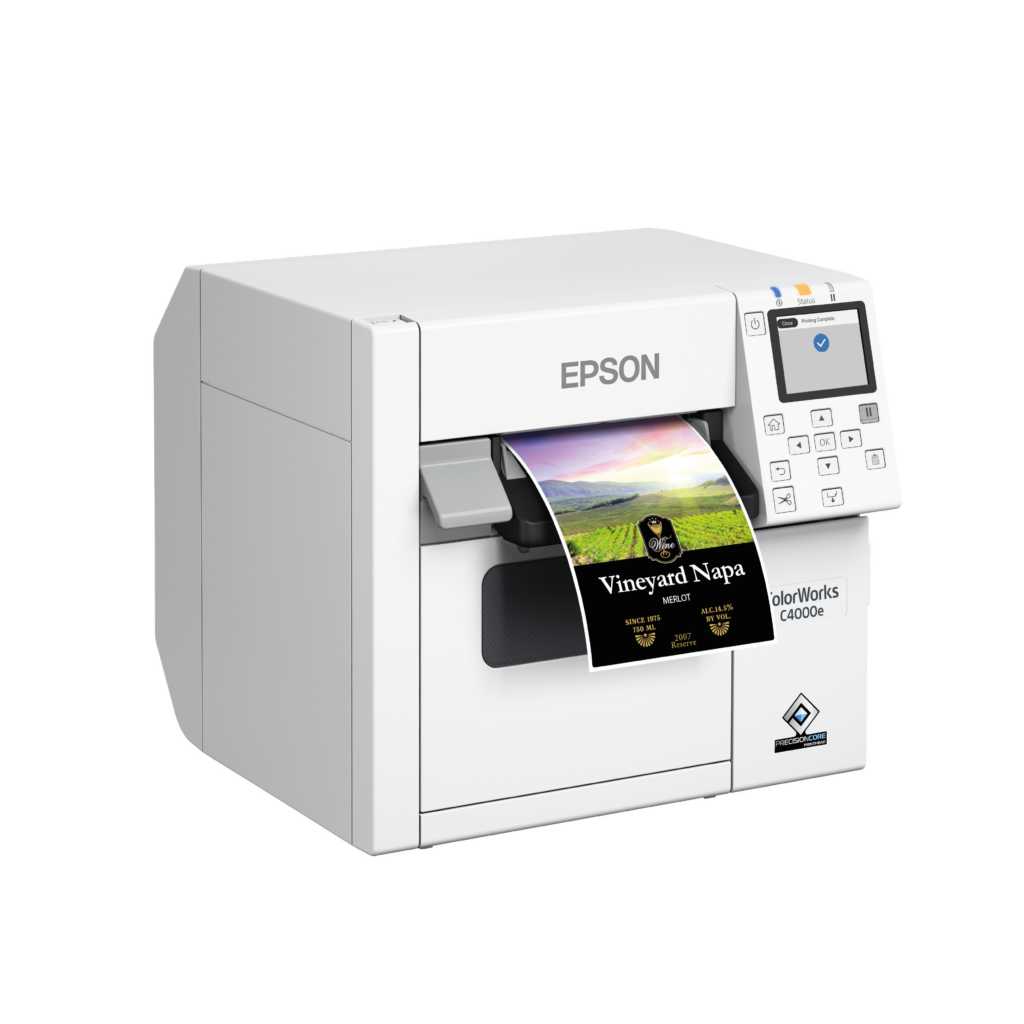
In 2026, the Epson TM-C3500 remains a cornerstone for businesses seeking a reliable, high-quality, on-demand color labeling solution. It solves the problem of high inventory costs associated with pre-printed labels by allowing users to print full-color, durable labels in-house, significantly reducing waste and improving operational flexibility for small to medium-sized batches.
The Epson TM-C3500 (also known as the ColorWorks C3500) has established itself as a workhorse in the industrial and commercial labeling sectors. While newer models have entered the market, the C3500 continues to be a preferred choice for organizations that prioritize a balance between initial capital expenditure and long-term durability. Whether you are managing a chemical warehouse requiring GHS compliance or a boutique retail operation needing custom branding, this printer provides a specialized feature set designed to handle rigorous environments.
Understanding why this specific model continues to hold its value in 2026 requires looking beyond basic specifications and examining how its ink chemistry, mechanical design, and integration capabilities solve real-world logistical challenges. Below are seven comprehensive reasons why the Epson TM-C3500 remains a top contender for your labeling needs.
1. On-Demand Color Printing Versatility
The primary advantage of the Epson TM-C3500 is its ability to eliminate the "pre-printed label trap." Historically, businesses had to order thousands of labels from external print houses to achieve a reasonable price per unit. These labels often included static branding, leaving only a small blank space for a thermal transfer printer to add variable data like barcodes or expiration dates.
By using the C3500, companies can print the entire label—including high-resolution logos, color-coded zones, and variable data—all in a single pass. This versatility is crucial for businesses with a high number of Stock Keeping Units (SKUs). Instead of maintaining a warehouse shelf full of fifty different pre-printed label rolls, you only need to stock blank media. When a product design changes or a new regulatory requirement emerges, you simply update your digital template and print the new version immediately. This agility reduces "label obsolescence," where thousands of dollars in pre-printed inventory must be discarded because of a minor text change.
2. Exceptional Durability with DURABrite Ultra Pigment Ink
The TM-C3500 utilizes Epson’s proprietary DURABrite Ultra pigment-based ink. To understand the value here, it is essential to distinguish between dye-based and pigment-based inks. Dye inks, commonly found in standard office printers, are vibrant but highly susceptible to smudging when wet and fading when exposed to UV light.
In contrast, pigment inks consist of solid particles suspended in a liquid carrier. When printed on compatible matte or glossy synthetic media, these particles bind to the surface, creating a label that is resistant to water, chemicals, and prolonged exposure to light. In industrial settings, this is not just a preference but a necessity. Labels on cleaning supplies, industrial chemicals, or outdoor equipment must remain legible for the life of the product. The C3500’s output resists smearing even when handled immediately after printing, ensuring that high-speed production lines are not slowed down by drying times.
3. Cost-Effectiveness through Individual Ink Cartridges
Waste reduction is a theme that runs through the TM-C3500’s design, particularly regarding its ink delivery system. The printer uses four separate cartridges: Cyan, Magenta, Yellow, and Black (CMYK). This is a significant advantage over "tri-color" cartridges where the entire unit must be replaced if one color runs out.
In many industrial applications, labels use a disproportionate amount of one color—for example, a "Danger" label might use significant amounts of Red (Magenta and Yellow). With individual tanks, you only replace the specific color that has been depleted. This maximizes the utility of every drop of ink and lowers the Total Cost of Ownership (TCO). Furthermore, the printer is designed with a high-capacity maintenance box that collects waste ink during cleaning cycles, which is also user-replaceable, minimizing the need for professional servicing and reducing downtime.
4. Industrial-Grade Reliability and Build Quality
Despite its relatively compact desktop footprint, the TM-C3500 is built for commercial duty cycles. Unlike consumer-grade printers that might fail under the strain of continuous printing, the C3500 features a robust internal chassis and a high-quality auto-cutter.
The auto-cutter is a critical component for businesses that need to produce labels of varying lengths from a continuous roll. It is designed to handle thousands of cuts through thick synthetic materials without dulling or jamming. Additionally, the printer includes an internal dust protection system. In warehouse or manufacturing environments where particulates are common, the C3500’s sealed design helps prevent debris from reaching the print head, which is the most common cause of "banding" (streaks in the print) and premature head failure. This reliability makes it a "set it and forget it" solution for many IT departments.
5. Compliance and Safety Standards (GHS/BS5609)
For the chemical and pharmaceutical industries, labeling is a matter of legal compliance. The Globally Harmonized System (GHS) requires specific color pictograms and formatting for hazardous materials. Crucially, these labels must pass the BS5609 standard, which tests the permanence of the print in marine environments (immersion in salt water for three months).
The Epson TM-C3500, when used with approved BS5609-certified media (such as certain PE or BOPP films), meets these stringent requirements. This allows chemical manufacturers to print their own GHS-compliant labels on-demand rather than ordering expensive, specialized pre-printed stock. The ability to produce compliant, waterproof, and chemical-resistant labels in-house provides a safety net against supply chain disruptions and ensures that every container leaving the facility is properly documented according to international law.
6. High-Speed Performance for Small to Medium Batches
Speed in color inkjet printing is often a bottleneck, but the TM-C3500 is optimized for throughput. It can reach speeds of up to 4 inches per second (103mm/sec). While this may be slower than high-end industrial thermal printers that only print in black, it is remarkably fast for a full-color inkjet.
The printer’s MicroPiezo inkjet technology allows for precise droplet placement at high speeds. Because it does not use heat to fire the ink (unlike thermal inkjet heads), the print head lasts longer and the printer requires less "warm-up" time. For a business that needs to print a batch of 500 labels for a daily production run, the C3500 can complete the task in a matter of minutes. This eliminates the waiting time often associated with color printing and allows the labeling station to keep pace with the rest of the packaging line.
7. Seamless Integration and Ease of Use
A printer is only as good as its ability to communicate with your existing software. The TM-C3500 features comprehensive driver support for Windows, and it is compatible with industry-standard label design software such as BarTender, NiceLabel, and Loftware.
Key integration features include:
- Ethernet and USB Connectivity: Easily switch between a standalone workstation and a networked environment where multiple users can send jobs to the printer.
- LCD Status Screen: Unlike many industrial printers that rely on cryptic blinking lights, the C3500 has a clear LCD that displays ink levels, maintenance status, and error codes in plain text.
- Top-Loading Media: The design allows for quick roll changes, which is essential during high-pressure production shifts.
Technical Specifications Comparison
To better understand where the TM-C3500 fits in the 2026 landscape, the following table compares it with typical alternatives in the same class.
| Feature | Epson TM-C3500 | Entry-Level Thermal Transfer | High-End Color Inkjet |
|---|---|---|---|
| Color Capability | Full CMYK Color | Monochrome (Black only) | Full CMYK Color |
| Max Speed | 4.0 Inches Per Second | 6.0 - 10.0 IPS | 10.0 - 12.0 IPS |
| Max Resolution | 720 x 360 dpi | 203 - 300 dpi | 1200 x 1200 dpi |
| Ink Type | Pigment (DURABrite) | Ribbon-based | Dye or Pigment |
| GHS Compliance | Yes (with certified media) | Limited (requires specific ribbons) | Yes |
| Initial Cost | Moderate | Low | High |
| Best Use Case | On-demand industrial/retail | High-volume shipping labels | High-res prime labeling |
Common Challenges and Troubleshooting
While the Epson TM-C3500 is highly reliable, maximizing its lifespan requires adhering to a few best practices. The most common issue users face is clogged nozzles, which usually occurs if the printer is left powered off for several weeks. In 2026, the best practice remains to keep the printer powered on; it will enter a low-energy sleep mode and perform periodic "self-maintenance" cycles to keep the ink flowing.
Another consideration is media selection. Because the C3500 uses pigment ink, it requires media with an "inkjet-receptive coating." Standard glossy paper intended for laser printers will not absorb the ink, leading to smearing. Always verify with your media supplier that the rolls are compatible with Epson ColorWorks pigment inks.
Implementation Strategy
If you are considering integrating the TM-C3500 into your workflow, start by auditing your current label waste. Calculate how many pre-printed labels you discard annually due to design changes. Most businesses find that the C3500 pays for itself within 12 to 18 months simply through the reduction of wasted inventory and the elimination of "rush" fees for external print jobs.
For setup, ensure your workspace has adequate ventilation and a stable, level surface. While the printer is rugged, excessive vibration can affect the alignment of the inkjet droplets. Connect the device via Ethernet to allow for remote monitoring of ink levels by your procurement or IT department, ensuring you never run out of a specific color mid-shift.
Frequently Asked Questions
Can the TM-C3500 print on transparent labels?
Yes, the TM-C3500 can print on certain inkjet-compatible clear synthetic media. However, because the printer does not use "white ink," any part of the design that is white in your digital file will appear transparent on the label. This is a crucial consideration for branding on dark-colored containers.
How long do the ink cartridges last?
Ink longevity varies significantly based on "ink coverage"—the percentage of the label covered in color. A small barcode with a tiny logo will use very little ink, while a solid-color background will deplete cartridges quickly. Generally, for a standard 4x3 inch label with moderate graphics, a set of cartridges can produce several thousand labels.
Is the TM-C3500 compatible with Mac or Linux?
Epson provides robust drivers for Windows and varying levels of support for Linux through CUPS. While Mac support has improved, it is always recommended to check the latest driver availability on the official Epson support site before purchase, as industrial label software is predominantly Windows-based.
Does the printer include design software?
The printer comes with basic drivers and a utility for monitoring status. While it can print from any application (including Word or PDF), most professional users invest in dedicated label software like BarTender or NiceLabel to handle complex barcode generation and database integration.
What is the maximum label width the C3500 can handle?
The TM-C3500 supports a maximum media width of 4.25 inches (108mm) and a maximum printable width of 4.1 inches (104mm). It can handle labels as narrow as 1.2 inches, making it versatile for everything from small vials to large shipping boxes.
Final Recommendation
The Epson TM-C3500 remains a standout choice in 2026 for businesses that require high-durability, full-color labels without the massive investment required for high-speed industrial presses. Its combination of pigment ink technology, individual color cartridges, and GHS compliance makes it particularly valuable for manufacturing, healthcare, and specialty retail sectors. If your goal is to reduce label inventory costs while improving the professional appearance of your packaging, the C3500 is a proven, reliable solution.