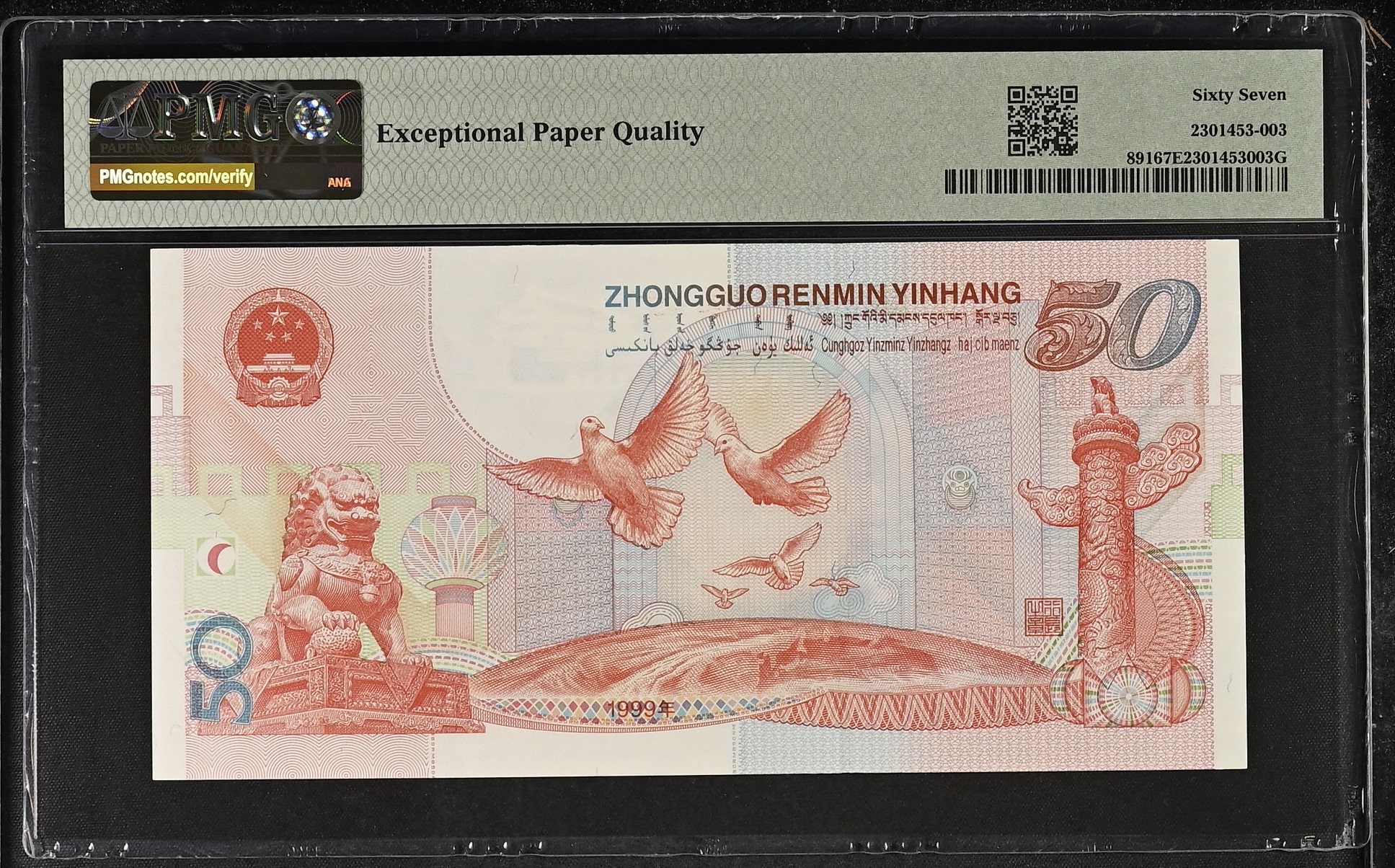
The 50th anniversary of the People’s Republic of China (PRC) was celebrated on October 1, 1999. This milestone marked a critical transition for the nation, transitioning from the foundational reforms of Deng Xiaoping to the era of modernization and global integration under Jiang Zemin. It featured a massive military parade in Beijing, the first of its kind in 15 years, signaling China’s emergence as a rising global power.
The Historical Context of 1999: A Nation at a Crossroads
By the time the 50th anniversary arrived in 1999, China was a significantly different country than it had been at its 35th anniversary in 1984. The decade leading up to the "Golden Jubilee" was marked by intense economic growth, urban development, and a gradual but firm re-emergence on the world stage. Writing from the vantage point of 2026, historians often look back at 1999 as the moment when the "Chinese Miracle" moved from a regional phenomenon to a global reality.
The political climate of 1999 was complex. Domestically, the government was focused on the "Three Represents" theory, an ideological framework intended to modernize the Communist Party. Internationally, the year was marred by the NATO bombing of the Chinese embassy in Belgrade in May 1999. This event cast a somber, more nationalistic shadow over the October celebrations, as it sparked widespread protests and a renewed emphasis on national defense and sovereignty.
Furthermore, 1999 was the year of "Two Returns." Hong Kong had returned to Chinese sovereignty in 1997, and the 50th anniversary celebrations occurred just months before the scheduled return of Macau in December 1999. These events were framed as the final steps in ending the "century of humiliation," making the 50th anniversary a deeply emotional and symbolic event for the Chinese population.
The 1999 Grand Military Parade: A Display of Modernization
The centerpiece of the 50th-anniversary celebrations was the grand military parade held in Tiananmen Square. This was the 13th National Day parade since 1949 but the first major demonstration of military might since the mid-1980s. For international observers, the parade was a rare opportunity to gauge the progress of the People’s Liberation Army (PLA) in its quest for "Informationized" warfare.
Key Military Statistics and Showcases
The parade involved over 11,000 personnel, 400 pieces of military equipment, and 132 aircraft. Unlike previous parades that relied heavily on older Soviet-era designs, the 1999 display featured domestically produced hardware that hinted at China's growing technological self-reliance.
- Strategic Missiles: The most significant reveal was the Dongfeng-31 (DF-31), a solid-fuel, road-mobile intercontinental ballistic missile (ICBM). Its appearance signaled a leap in China's nuclear deterrent capabilities.
- The Type 99 Tank: Then known as the Type 98, this main battle tank represented a new generation of armored warfare, featuring advanced composite armor and laser defense systems.
- Aviation Progress: The flyover included the J-10 fighter (though still in development and shrouded in some secrecy at the time) and the H-6 bombers, demonstrating improved aerial reach.
The choreography of the parade was meticulous, designed to project an image of discipline, unity, and modern professionalization. For the Chinese public, it was a source of immense pride; for the global community, it was a clear message that China was no longer a "sleeping giant" but a modernizing force to be reckoned with.
Socio-Economic Significance: The Bridge to the 21st Century
The 50th anniversary was not merely about military strength; it was a celebration of the "Reform and Opening-up" policy. Between 1949 and 1999, China’s GDP had grown exponentially, and the 1999 celebrations were used to highlight the success of special economic zones and the "Go West" (Xibu Da Kaifa) campaign, which aimed to reduce the wealth gap between coastal and inland provinces.
In 1999, China was also in the final stages of its 15-year quest to join the World Trade Organization (WTO). The anniversary served as a domestic rallying cry to prepare the economy for international competition. The government used the milestone to justify difficult state-owned enterprise (SOE) reforms, arguing that a strong, modernized nation required a competitive, market-oriented economic structure.
Cultural Impact and National Identity
The celebrations extended beyond Beijing. Every province and major city held its own festivals, emphasizing local contributions to the national story. This period saw a massive surge in "Red Tourism," where citizens visited sites of historical significance to the revolution. The 50th anniversary cemented the concept of the "National Day Golden Week," a week-long public holiday that revolutionized the domestic tourism industry and became a staple of Chinese economic life.
Comparing Milestones: 1999 vs. 2024 and 2026
As we evaluate these events from 2026, it is useful to compare the 50th anniversary with more recent milestones, such as the 75th anniversary in 2024. While 1999 was about proving China's potential, the 75th anniversary in 2024 focused on China’s established role as the world's second-largest economy and a leader in green technology and space exploration.
| Feature | 50th Anniversary (1999) | 75th Anniversary (2024) |
|---|---|---|
| Core Theme | Modernization and Sovereignty | National Rejuvenation and High-Tech Supremacy |
| Top Leadership | Jiang Zemin | Xi Jinping |
| Key Military Reveal | DF-31 ICBM | Hypersonic Glide Vehicles (DF-17) |
| Economic Context | WTO Accession Preparation | Digital Economy and Green Transition |
| Status of Territories | Macau Return imminent | Integration of Greater Bay Area |
| Global Standing | Emerging Regional Power | Global Superpower Contender |
The 1999 anniversary is now viewed as the "pivot point." It was the last time China was truly seen as a developing nation on the rise. By the time of the 60th (2009) and 70th (2019) anniversaries, the narrative had shifted toward global leadership and the challenges of a dominant power.
Diplomatic Relations and the 1999 Backdrop
The 50th anniversary also marked a period of delicate diplomacy. China was attempting to balance its "peaceful rise" with a firm stance on territorial integrity. Relations with the United States were strained due to the Belgrade embassy incident, yet both nations were economically codependent. The 1999 celebrations were attended by fewer high-ranking Western leaders compared to the 2008 Olympics, reflecting a period where the West was still "testing the waters" of China's long-term intentions.
Regionally, the anniversary served to reassure neighbors through the "Good Neighbor Policy," though the display of advanced missiles inevitably raised questions in Taipei and Tokyo. This duality—of a China that is both a cooperative trade partner and a formidable military power—became the defining characteristic of the 25 years that followed.
Legacy: Why the 50th Anniversary Still Matters in 2026
In 2026, the 50th anniversary remains a frequent reference point in Chinese political discourse. It represents the successful transition between the revolutionary generation and the technocratic generation. It proved that China could celebrate its communist roots while simultaneously embracing the tools of global capitalism.
For researchers and enthusiasts of Chinese history, the 1999 milestone provides the best data set for understanding the trajectory of the PLA and the Chinese Communist Party’s ability to mobilize national sentiment. The slogans of that year—focusing on "Advancing into the New Century"—turned out to be prophetic, as the subsequent two decades saw the most rapid urban and technological transformation in human history.
Frequently Asked Questions
What was the main theme of China's 50th anniversary in 1999?
The main theme was "Unity and Modernization." The government sought to show that China had successfully moved past the internal turmoils of the mid-20th century and was now a stable, unified, and technologically advancing nation ready for the 21st century.
Who was the leader of China during the 50th anniversary?
Jiang Zemin was the General Secretary of the Communist Party and the President of the PRC during the 1999 celebrations. He delivered the keynote speech from the rostrum of Tiananmen Square, wearing a Mao suit to symbolize continuity with the past while speaking of a future of high-tech development.
How did the 1999 parade differ from previous National Day parades?
The 1999 parade was significantly more tech-centric. It was the first time that nearly 95% of the equipment shown was domestically designed or significantly upgraded. It also featured a much larger participation of "intellectual" and technical corps within the PLA, moving away from the pure infantry focus of the 1949 and 1959 parades.
Was the 50th anniversary the start of the "Golden Week" holiday?
Yes, the Chinese government officially established the seven-day National Day holiday in 1999. This was done to encourage domestic consumption and boost the economy, following the impact of the 1997 Asian Financial Crisis. It has since become one of the busiest travel periods in the world.
How was the 50th anniversary received internationally?
The international reception was a mix of admiration for China's economic progress and concern regarding its military expansion. The unveiling of the DF-31 missile, in particular, led to renewed discussions in Washington and Brussels about the long-term balance of power in the Pacific.
Practical Guidance for Researchers
For those studying the 50th anniversary in 2026, the most reliable primary sources remain the archived broadcasts from China Central Television (CCTV) and the official white papers published by the State Council of the People's Republic of China. These documents provide the official state narrative and technical specifications of the era's military and economic goals. Comparing these with contemporary Western reports from 1999, such as those in the New York Times or The Guardian archives, offers a balanced view of how the milestone was perceived globally versus domestically.