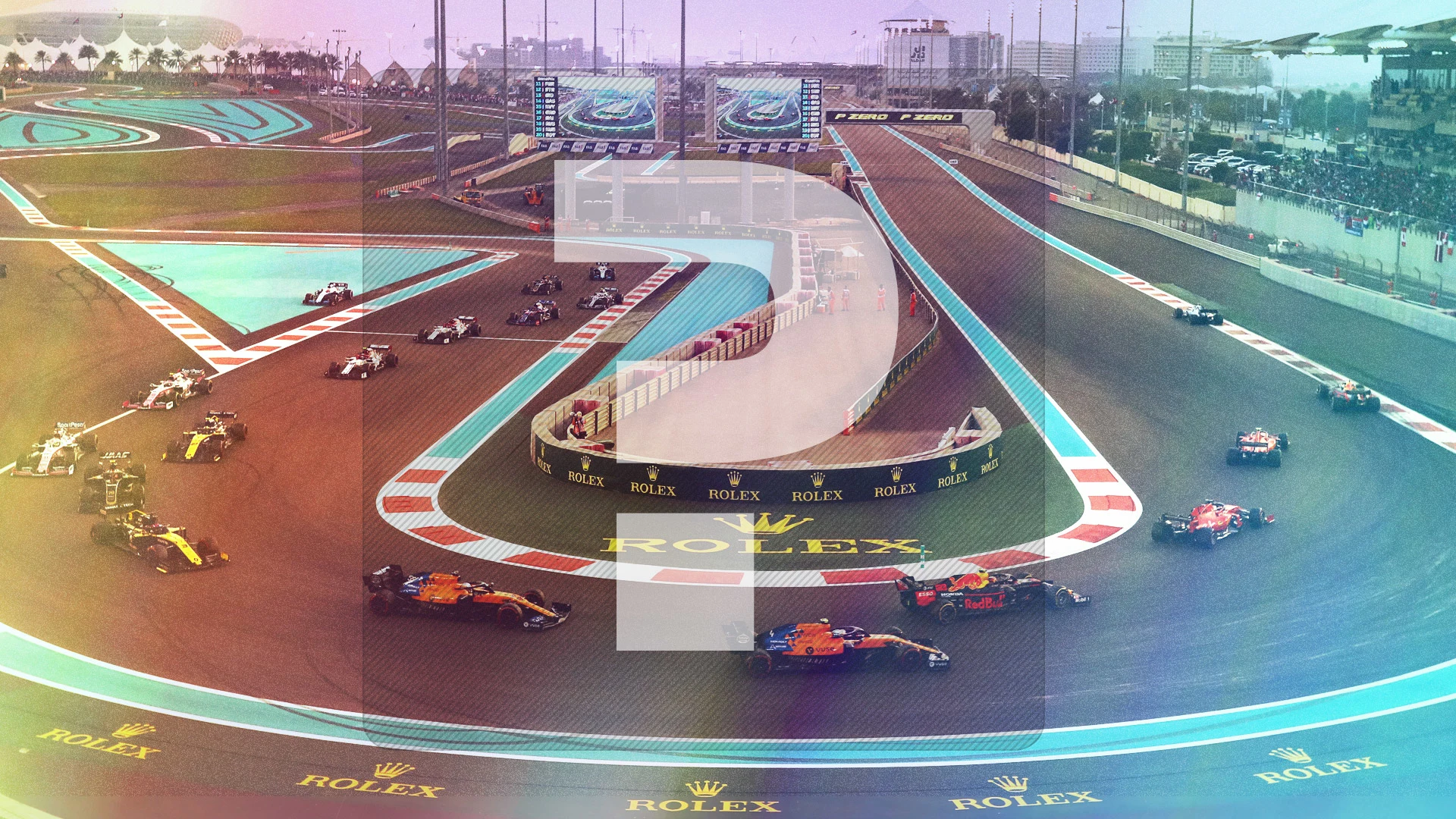
In the 2026 Formula 1 season, track length remains a critical variable for team strategy and car setup. The Circuit de Spa-Francorchamps continues to lead as the longest at 7.004 km, while the Circuit de Monaco remains the shortest at 3.337 km. These extremes define the technical challenges of the modern era.
The Engineering Significance of Track Length in the 2026 Era
Track length in Formula 1 is far more than a geographical statistic; it is a primary driver of aerodynamic configuration, fuel management, and energy recovery strategies. As we progress through the 2026 season, the introduction of the new Power Unit (PU) regulations has magnified the importance of lap distance. With the removal of the MGU-H (Motor Generator Unit – Heat) and an increased reliance on the MGU-K (Motor Generator Unit – Kinetic), which now provides nearly 350kW of power, the length of a circuit dictates how much energy can be harvested and deployed.
On a longer track, the Energy Recovery System (ERS) must be managed across a greater distance. This often leads to "clipping," where the electrical assistance cuts out at the end of long straights because the battery energy has been depleted before the next braking zone. Conversely, on shorter tracks, the high frequency of braking events allows for constant recharging, but the limited straight-line distance may prevent the car from ever reaching its theoretical top speed.
Furthermore, track length directly influences tire thermal degradation. A longer lap, such as those found in the Belgian Ardennes, allows tires a longer "rest" period on straights, but subjects them to massive energy loads through high-speed corners. Understanding the 5 most notable tracks by their length provides a window into the varied engineering demands placed on the world's most advanced racing machines.
1. Circuit de Spa-Francorchamps: The Apex of Endurance
The Circuit de Spa-Francorchamps in Belgium remains the undisputed heavyweight champion of the F1 calendar regarding length. Measuring 7.004 kilometers (4.352 miles), it is the only track on the current schedule to exceed the seven-kilometer mark. This distance creates a unique set of challenges that are not found anywhere else in the sport.
The Technical Challenge of the Ardennes
Because the lap is so long, the micro-climates of the Ardennes Forest often play a decisive role. It is not uncommon for the track to be bone-dry at the La Source hairpin while a heavy downpour denches the back straight at Blanchimont. For race engineers, this makes tire selection a gamble; a driver might spend over three kilometers on the wrong compound before they can return to the pits.
In 2026, the length of Spa is particularly taxing on the 50/50 power split of the new engines. Drivers must find a balance between using their 350kW electrical boost to climb the massive elevation at Eau Rouge and saving enough "juice" to defend their position along the nearly 2-kilometer Kemmel Straight. If a driver depletes their battery too early in the lap, they become a "sitting duck" for competitors utilizing DRS (Drag Reduction System).
Sector-Specific Demands
Spa is effectively three different tracks in one. Sector 1 is all about top speed and power. Sector 2 is a technical masterclass consisting of medium-to-high-speed corners like Pouhon, requiring maximum downforce. Sector 3 returns to a high-speed blast. Finding a setup that works for a 7-km lap involves compromising between being fast in the corners of Sector 2 and not being overtaken on the straights of Sectors 1 and 3.
2. Circuit de Monaco: The Short-Circuit Anomaly
At the opposite end of the spectrum lies the Circuit de Monaco. At just 3.337 kilometers (2.074 miles), it is the shortest track in Formula 1. Despite its lack of distance, it is widely considered the most difficult race to win due to its narrow confines and the lack of traditional overtaking zones.
The Physics of the Short Lap
Because the lap is so short, the race distance is comprised of 78 laps to meet the FIA-mandated minimum race distance of 305 km (Monaco is the only exception, with a shorter total race distance of approximately 260 km). The frequency of corners—19 in just 3.3 km—means drivers are constantly working. There is no "rest" on a 7-kilometer straight here; instead, the driver changes gear thousands of times over the course of the afternoon.
From an ERS perspective, Monaco is an "energy-rich" track. The frequent braking at Sainte-Dévote, Mirabeau, and the Chicane means the MGU-K is constantly harvesting. The challenge in 2026 isn't finding energy; it’s finding the traction to deploy it without spinning the rear wheels on the bumpy, low-grip street surface.
Logistics and Blue Flags
The short length creates a significant logistical headache during qualifying and the race. In the Q1 session, 20 cars occupy just 3.3 km of tarmac, leading to "traffic jams" that can ruin a flying lap. During the race, the leaders often begin lapping the backmarkers as early as lap 15, meaning the race leader must navigate constant blue-flag traffic, adding another layer of complexity to the strategy.
3. Las Vegas Strip Circuit: The Longest Modern Street Track
The Las Vegas Strip Circuit, which debuted in late 2023 and has become a staple of the 2026 calendar, is a marvel of modern length. Measuring 6.201 kilometers (3.853 miles), it is one of the longest tracks on the schedule and the longest street circuit currently in use if we define "street" as using existing city boulevards for the majority of its length.
High Speed and Thermal Management
Unlike Monaco, the length in Las Vegas is characterized by massive straights. The 1.9-kilometer stretch down the Las Vegas Strip allows cars to reach speeds exceeding 350 km/h. This creates a specific problem for the 2026 tires: the long straights cause the tire surface to cool down significantly. When the driver finally reaches a braking zone after nearly two kilometers of straight-line running, the tires may not be at the optimal temperature to provide grip, leading to frequent lock-ups.
The 2026 Power Unit Battle
Las Vegas is the ultimate test of the 2026 "Manual Override" mode. With the new regulations, drivers have access to an extra burst of power to aid overtaking. On a 6.2 km lap with such long straights, the timing of this deployment is the difference between a successful overtake and running out of battery 500 meters before the turn.
4. Jeddah Corniche Circuit: The Fastest Long Lap
The Jeddah Corniche Circuit in Saudi Arabia is a unique entry in the "notable length" category. At 6.174 kilometers (3.836 miles), it is the second-longest track on the calendar, yet it maintains the highest average speed of any street circuit in history.
The Geometry of Speed
What makes Jeddah notable is not just its 6.1 km length, but its 27 corners. Most long tracks use straights to make up distance; Jeddah uses a series of high-speed, sweeping bends. This means the lateral G-forces are sustained for much of the 6-kilometer lap, making it one of the most physically demanding tracks for the drivers’ necks and core.
Technically, the length of Jeddah requires a "low-drag" aerodynamic setup. Because the corners are so fast, you don't need the massive wings you would use in Monaco. However, because the track is over 6 km long, any aerodynamic inefficiency is "multiplied." A car that is 0.1% less efficient than its rival will lose significantly more time over a 6.1 km lap than it would at a shorter track like Zandvoort.
Safety and Sightlines
The length of Jeddah, combined with its high-speed nature and concrete walls, poses a significant safety challenge. With 6.1 kilometers of track to monitor, marshaling and incident response must be incredibly precise. The length also means that recovery vehicles have a longer distance to travel to reach a stranded car, which is why the Virtual Safety Car (VSC) is so frequently deployed here.
5. Baku City Circuit: The Hybrid Challenge
The Baku City Circuit in Azerbaijan rounds out the list of notable lengths at 6.003 kilometers (3.730 miles). It is famous for its extreme "Jekyll and Hyde" nature, featuring a incredibly narrow section through the Old City and a gargantuan 2.2-kilometer main straight.
The Longest Straight in F1
The most notable aspect of Baku’s 6 km length is the final sector. From Turn 16 to Turn 1, the cars are essentially flat-out for over two kilometers. This is the longest period of full throttle on the entire F1 calendar. In the 2026 engine era, this section is a nightmare for energy management.
Teams must decide whether to deploy all their electrical energy at the start of the straight to pull a gap or save it for the end of the straight to defend against DRS. This 2.2 km "power corridor" accounts for more than a third of the total track length, making engine horsepower the single most important factor for success in Baku.
Sector 2: The Tight Constraints
In contrast to the long straight, the middle of the 6 km lap contains the narrowest section of track in Formula 1 (the Castle Section). This forces teams to run a compromised setup. They need the speed for the 2.2 km straight, but if they take too much wing off, the car becomes undrivable in the tight 90-degree corners of Sector 1 and the winding turns of Sector 2.
Comparative Data of Notable Tracks (2026 Season)
The following table compares the physical and technical attributes of these five notable circuits to illustrate how length interacts with other race variables.
| Circuit Name | Length (km) | Total Turns | Race Laps | Primary Technical Focus |
|---|---|---|---|---|
| Spa-Francorchamps | 7.004 | 20 | 44 | Aero Efficiency & ERS Management |
| Monaco | 3.337 | 19 | 78 | Mechanical Grip & Precision |
| Las Vegas Strip | 6.201 | 17 | 50 | Top Speed & Tire Temperatures |
| Jeddah Corniche | 6.174 | 27 | 50 | High-Speed Flow & Reflexes |
| Baku City | 6.003 | 20 | 51 | Straight-line Speed vs. Low-speed Turn-in |
Technical Implications of Length on 2026 Power Units
The 2026 regulations have shifted the focus toward sustainability and electrical power. On the longest tracks (Spa, Las Vegas, Jeddah), the 400% increase in harvested energy required by the new rules is a significant hurdle. Engineers now use predictive AI to map out exactly where on a 7-kilometer lap the MGU-K should harvest energy and where it should "deploy."
On a track like Spa, the car might harvest energy during the heavy braking at the Bus Stop chicane and La Source, then deploy it in "short bursts" rather than one long continuous stream. This "tactical deployment" is necessary because the battery capacity is limited. A driver who uses all their energy in the first 4 kilometers of a 7-kilometer lap will be defenseless for the final 3 kilometers.
Conversely, at Monaco, the challenge is the heat. Because the lap is so short and the braking is so frequent, the electrical components do not have the long straights found in Baku or Spa to "air-cool." This makes cooling efficiency a priority for the shortest tracks on the calendar, even if the total energy demand is lower.
Frequently Asked Questions
Which F1 track has the most laps?
The Circuit de Monaco has the most laps of any race on the calendar, typically 78. This is necessary because the track is so short (3.337 km). By running more laps, the FIA ensures the race meets the minimum duration requirements, though Monaco is the only race allowed to fall short of the standard 305 km total distance.
Is a longer track harder for F1 drivers?
Generally, yes, but for different reasons. A longer track like Spa is mentally taxing due to the variety of corners and the length of time a driver must maintain focus for a single lap. However, a short track like Monaco is physically exhausting because there are no straights to rest on; the driver is constantly steering, shifting, and braking.
How does track length affect the 2026 Power Unit "Clipping"?
"Clipping" occurs when the electrical motor (MGU-K) stops providing boost at the end of a straight because the battery is empty or the regulated energy deployment limit has been reached. On long tracks like Baku (6.003 km) or Spa (7.004 km), clipping is very common because the straights are so long that the battery cannot provide 350kW for the entire duration.
Why don't all F1 tracks have the same length?
Formula 1 prides itself on variety. The diversity in track lengths—from the 3.3 km of Monaco to the 7.0 km of Spa—ensures that different car designs can shine at different points in the season. It tests the adaptability of the teams and prevents one single car design from dominating every type of circuit.
What was the longest F1 track in history?
The longest track ever used for a World Championship F1 race was the Pescara Circuit in Italy, used in 1957. It measured a staggering 25.8 kilometers (16 miles) per lap. Compared to modern standards, even Spa-Francorchamps seems short by comparison.
Strategic Recommendation for Fans and Analysts
When evaluating team performance during a race weekend, always look at the "lap time delta" relative to the track length. On a long track like Spa, a 0.5-second gap between teammates might actually be a smaller performance percentage than a 0.2-second gap in Monaco.
As we move deeper into the 2026 season, pay close attention to the end of the longest straights at Baku and Las Vegas. The cars that suffer the least from "clipping"—identifiable by a slight change in engine note and a visible drop-off in acceleration relative to competitors—will likely be the ones using the most sophisticated energy management software. For the best experience, utilize the official Formula 1 live timing and FIA technical delegates' reports to track how teams adapt their MGU-K deployment maps to the varying lengths of the circuit calendar.