Manifest content represents the literal storyline, characters, images, and events experienced directly within a dream, serving as the foundational narrative framework before psychoanalytic interpretation uncovers hidden latent meanings. When analyzing how the human mind constructs nocturnal narratives, examining concrete textual examples helps clarify the structural mechanics of dream storytelling.
Understanding Manifest Versus Latent Content in Dream Analysis
To comprehend why specific dream narratives unfold the way they do, it is necessary to examine the foundational psychological framework established by Sigmund Freud in his seminal 1899 work, The Interpretation of Dreams. Freud divided dream psychology into two distinct layers: manifest content and latent content.
- MANIFEST CONTENT
- (The literal storyline, visual images, objects, events)
- (Dream Work Process)
- LATENT CONTENT
- (Underlying wishes, repressed thoughts, emotional fears)
Defining Manifest Content
Manifest content encompasses everything a dreamer explicitly remembers upon waking up. It is the surface-level script, the cinematic projection of the mind during rapid eye movement (REM) sleep. This includes mundane details such as walking down a familiar street, interacting with a coworker, missing a train, or observing an unusual object. It lacks inherent symbolic translation at face value; a red door in the manifest content is simply a red door until the psychological processing of dream work transforms or interprets it.
Defining Latent Content
Conversely, latent content comprises the psychological meaning hidden beneath the manifest surface. It houses the unexpressed desires, anxieties, unresolved conflicts, and repressed memories that trigger the nocturnal narrative. The brain translates these abstract emotional states into visual and auditory metaphors through a process called "dream work," which involves condensation, displacement, representation, and secondary revision.
Why the Distinction Matters for Storytelling
When studying dreams as a form of spontaneous storytelling, the manifest content acts as the plot, setting, and character arc. Just as a novelist uses symbolism and subtext to convey deeper themes beneath a literal narrative, the sleeping brain constructs manifest scenarios to process waking-life stressors. Analyzing these literal scenarios allows psychologists, writers, and researchers to map out how human consciousness structures narrative tension, conflict, resolution, and emotional resonance without direct conscious control.
Example 1: The Chronological Pursuit Narrative (The Endless Chase)
The chase dream is one of the most widely reported nocturnal narratives across diverse demographic populations. It presents a clear, linear structure driven by immediate, primal conflict.
The Manifest Narrative
The dreamer finds themselves running through a dimly lit, labyrinthine urban environment—such as an unfamiliar, decaying downtown alleyway or an infinite hotel corridor. An unspecified, menacing entity, often perceived as a dark silhouette or a generalized threat, pursues them relentlessly. Despite the dreamer's desperate effort to run faster, their legs feel heavy, sluggish, or stuck in molasses. The narrative builds intense suspense through physical exhaustion, erratic pacing, and sensory details like echoing footsteps and ragged breathing, culminating either in sudden awakening just before capture or an abrupt shift in the scene.
Narrative Analysis and Storytelling Mechanics
- Conflict and Pacing: This manifest example demonstrates classic external conflict. The pacing accelerates through short, fragmented mental imagery, mimicking the physiological surges of the sympathetic nervous system during REM sleep.
- Narrative Arc: The story lacks a traditional three-act resolution; instead, it relies on an open loop. In literary terms, it represents the archetype of perpetual jeopardy, forcing the reader or dreamer to experience raw, unmitigated suspense.
- Underlying Processing: While the manifest plot is simply "being chased," sleep researchers note that this often reflects waking-life avoidance behaviors, chronic stress, or unaddressed professional deadlines. The brain externalizes internal psychological pressure into a physical adversary.
Example 2: The Public Exposure Narrative (The Unprepared Actor)
Social anxiety frequently manifests in dreams through scenarios that highlight vulnerability, judgment, and inadequacy before a crowd.
The Manifest Narrative
A professional or academic setting serves as the backdrop: a brightly lit auditorium, a university lecture hall, or a corporate boardroom. The dreamer walks onto the stage to deliver a major presentation, take a final exam, or perform a musical piece. Upon opening their folder, they realize the pages are entirely blank, foreign, or illegible. Looking down, they suddenly notice they are wearing pajamas or standing completely naked in front of hundreds of evaluating peers, colleagues, or strangers. The audience stares back with cold indifference or sharp judgment.
Narrative Analysis and Storytelling Mechanics
- Thematic Setup: This narrative relies on dramatic irony. The protagonist enters the scene with one objective, but the environment immediately introduces a catastrophic obstacle that completely undermines their preparedness.
- Sensory and Emotional Amplification: The manifest content effectively uses stark visual contrast—bright lights against a vulnerable protagonist—to heighten feelings of shame and exposure.
- Narrative Resolution: The story rarely concludes with a successful performance. Instead, it explores the psychological toll of social scrutiny, showcasing how the dreaming mind simulates worst-case scenarios to test emotional resilience.
Example 3: The Spatial Disorientation Narrative (The Impossible Architecture)
Dreams frequently defy the laws of physics and geography, creating surreal environments that challenge logical comprehension.
The Manifest Narrative
The dreamer is navigating a sprawling, familiar building—such as their childhood home, a school, or an office complex—but the interior geometry is fundamentally altered. Rooms multiply infinitely, staircases lead nowhere or twist into impossible loops, and doors open into completely unrelated outdoor landscapes, like a dense forest or an ocean beach. The dreamer attempts to find a specific exit or room but becomes hopelessly lost, wandering through shifting hallways where walls appear to breathe or change color.
Narrative Analysis and Storytelling Mechanics
- Surrealist Worldbuilding: Unlike realistic fiction, this manifest content utilizes environmental storytelling. The setting itself is the antagonist, reflecting a sense of lost control or life transition.
- Episodic Flow: The narrative unfolds episodically, moving from one distorted room to the next without a strict linear timeline. This mirrors how memory consolidation processes spatial data and emotional associations during sleep.
- Psychological Mapping: The inability to find a way out often mirrors waking-life feelings of being trapped in a career, relationship, or decision-making process. The physical maze serves as a direct metaphor for mental confusion.
Example 4: The Catastrophic Loss Narrative (The Failing Mechanical System)
Technical malfunctions and sudden infrastructural collapses provide a fertile ground for high-stakes narrative tension in dreams.
The Manifest Narrative
The dreamer is operating a complex machine or vehicle—driving a car down a steep mountain pass, piloting an aircraft, or managing a runaway industrial elevator. Suddenly, the primary control mechanisms fail. The brake pedal goes entirely to the floor without resistance, the steering wheel spins freely without engaging the tires, or warning lights flash frantically across the dashboard. The narrative centers on frantic, repeated attempts to regain control as the vehicle accelerates toward an inevitable collision or drop-off.
Narrative Analysis and Storytelling Mechanics
- Rising Action: The plot structure here is tightly compressed and escalation-focused. Every action taken by the protagonist fails to alter the catastrophic trajectory, maximizing narrative dread.
- Symbolic Mechanics: Vehicles in manifest content frequently represent the dreamer’s sense of autonomy and trajectory in life. The failing brakes signify a perceived lack of control over personal or professional circumstances.
- Climactic Cut-off: These stories almost always terminate abruptly at the moment of impact or immediate crisis, protecting the sleeper from experiencing actual physiological shock while providing a potent emotional release.
Example 5: The Metamorphic Identity Narrative (The Shape-Shifter)
Some dream stories focus inward, exploring themes of personal transformation, fragmented identity, and perceptual distortion.
The Manifest Narrative
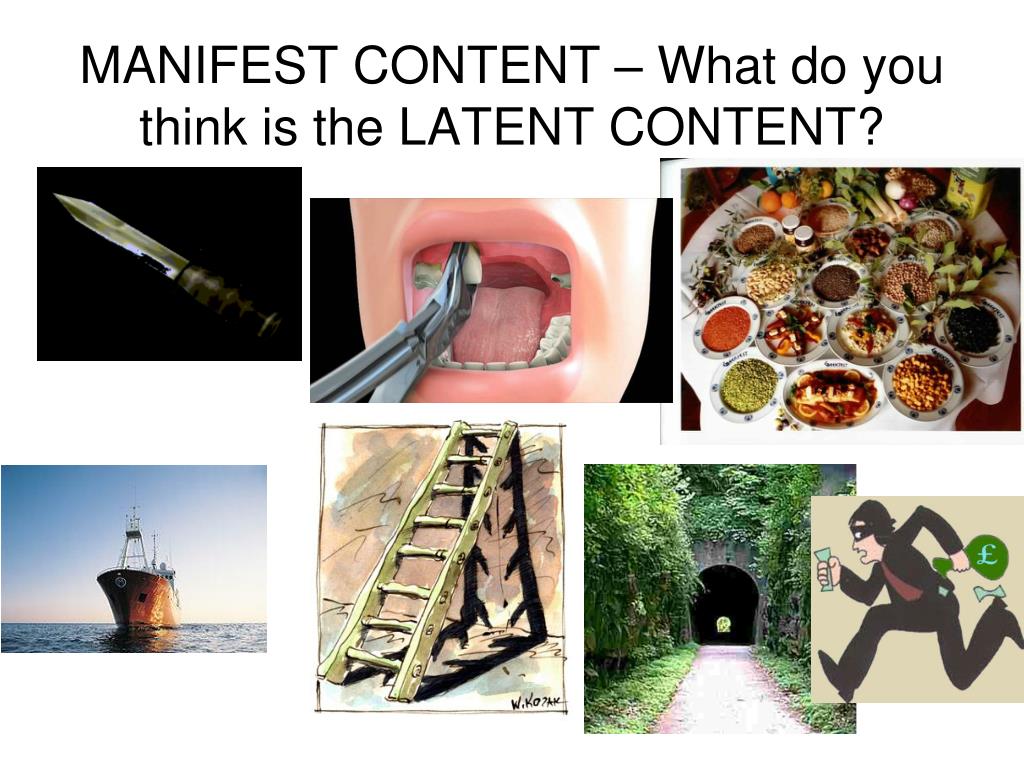
The dreamer looks into a mirror in a dimly lit bathroom, but the reflection does not match their physical reality. Their face is blurred, aged rapidly, replaced by someone else entirely, or their teeth begin to loosen and fall out one by one into their hands. In other variations of this narrative, the dreamer attempts to speak or shout, but no sound emerges from their mouth, rendering them entirely mute while others converse around them.
Narrative Analysis and Storytelling Mechanics
- Introspective Focus: This narrative shifts away from external action and focuses entirely on visceral bodily horror and identity disruption.
- Visual Metaphor: The crumbling of teeth or facial distortion serves as direct manifest imagery for loss of power, aging, health anxiety, or compromised communication in waking life.
- Narrative Climax: The tension arises from internal alienation—the protagonist becomes a stranger to themselves, creating a profound psychological narrative about self-perception and ego integrity.
Comparative Analysis of Dream Narrative Structures
To better understand how these distinct storylines function as pieces of psychological storytelling, the following table compares their core elements, narrative drivers, and primary thematic functions.
| Dream Narrative Type | Primary Setting / Environment | Core Conflict / Catalyst | Emotional Driver | Waking-Life Correlate |
|---|---|---|---|---|
| Chronological Pursuit | Labyrinthine urban or unfamiliar corridors | Relentless external pursuer; physical sluggishness | Fear, panic, urgency | Avoidance of responsibilities or conflicts |
| Public Exposure | Auditoriums, stages, or formal presentation halls | Blank documents, missing clothing, or lack of preparedness | Shame, vulnerability, inadequacy | Imposter syndrome, social anxiety |
| Spatial Disorientation | Morphing buildings, endless hallways, loops | Impossible architecture, lost destinations | Confusion, entrapment | Life transitions, lack of clear direction |
| Catastrophic Loss | Vehicles, runaway elevators, braking systems | Mechanical failure, loss of steering or stopping power | Dread, helplessness | Loss of control over life circumstances |
| Metamorphic Identity | Mirrors, bathrooms, silent social spaces | Distorted reflections, losing teeth, muteness | Alienation, shock, self-doubt | Identity crises, aging fears, communication barriers |
Methodologies for Analyzing Dream Content in Creative Writing
Writers, psychotherapists, and artists frequently study manifest dream narratives to enhance their storytelling techniques. Because dreams bypass conventional editorial censorship, they offer uninhibited examples of how the human brain generates suspense, atmosphere, and symbolic meaning.
1. Embracing Non-Linear Logic
Real-world storytelling often demands strict adherence to cause-and-effect logic. However, dream narratives prove that audiences can accept bizarre, disjointed transitions—such as stepping through a closet door into a desert—if the emotional tone remains consistent. Authors can apply this principle to magical realism and surrealist fiction to create immersive, dream-like pacing.
2. Utilizing Visceral Metaphors
Instead of explicitly stating that a character feels overwhelmed or unprepared, writers can adopt the manifest strategies of dream content: placing a character on a stage without a script or stripping away their control over a vehicle. Visceral, physical manifestations of anxiety resonate more deeply with readers than abstract emotional descriptions.
3. Exploiting Open-Ended Resolution
Many of the most memorable dreams end without neat conclusions. They cut to black at the moment of impact or leave the protagonist wandering indefinitely. Writers can utilize this technique to build lingering psychological tension, teaching audiences that not every narrative thread requires a tidy resolution to be impactful.
Frequently Asked Questions About Manifest Content and Dream Storytelling
What is the difference between manifest content and latent content?
Manifest content is the literal, surface-level plot, setting, and imagery experienced directly within a dream. Latent content consists of the hidden psychological meanings, repressed desires, and emotional anxieties that generated the dream narrative in the first place.
Why do manifest content dreams often feature negative emotions like fear or embarrassment?
The brain's emotional processing centers, particularly the amygdala, remain highly active during REM sleep. Negative simulations act as evolutionary "threat rehearsal" mechanisms, allowing the sleeping mind to practice responding to danger, social rejection, or loss of control without real-world consequences.
Can manifest content be controlled through lucid dreaming?
Yes. Lucid dreaming occurs when the sleeper becomes consciously aware that they are dreaming while the dream is still underway. Once lucidity is achieved, the dreamer can consciously alter the manifest storyline, change the environment, or confront the elements of the dream directly.
Do common dream storylines have universal meanings?
While certain manifest themes—such as falling, being chased, or public exposure—are experienced universally across cultures, their psychological interpretations depend entirely on the individual's personal history, current emotional state, and waking-life context. There is no single dictionary that applies a uniform meaning to every dream symbol.
How do psychologists use manifest content in therapy?
In psychodynamic and psychoanalytic therapies, clinicians ask patients to recount the literal manifest content of their dreams in vivid detail. By analyzing the associations, recurring motifs, and emotional tone of this manifest narrative, the therapist helps the patient uncover underlying unconscious conflicts.
Practical Next Steps for Dream Journaling and Analysis
To effectively study manifest content in your own nocturnal experiences or apply dream-storytelling mechanics to creative writing, consider implementing the following actionable steps:
- Maintain an Immediate Bedside Journal: Keep a notebook and pen directly beside your bed. Upon waking, record your dreams immediately before daily distractions fade the memory. Focus purely on the literal manifest details: colors, objects, dialogue, and sequence of events, avoiding premature interpretation.
- Map the Narrative Arc: Review your recorded dreams and identify the beginning, middle, and point of termination. Note how tension escalates and where the narrative cuts off.
- Differentiate Literal Events from Emotional Subtext: Separate what actually happened in the dream script from the emotional atmosphere you felt during the experience. This separation clarifies the mechanics of how the brain translates emotion into narrative action.