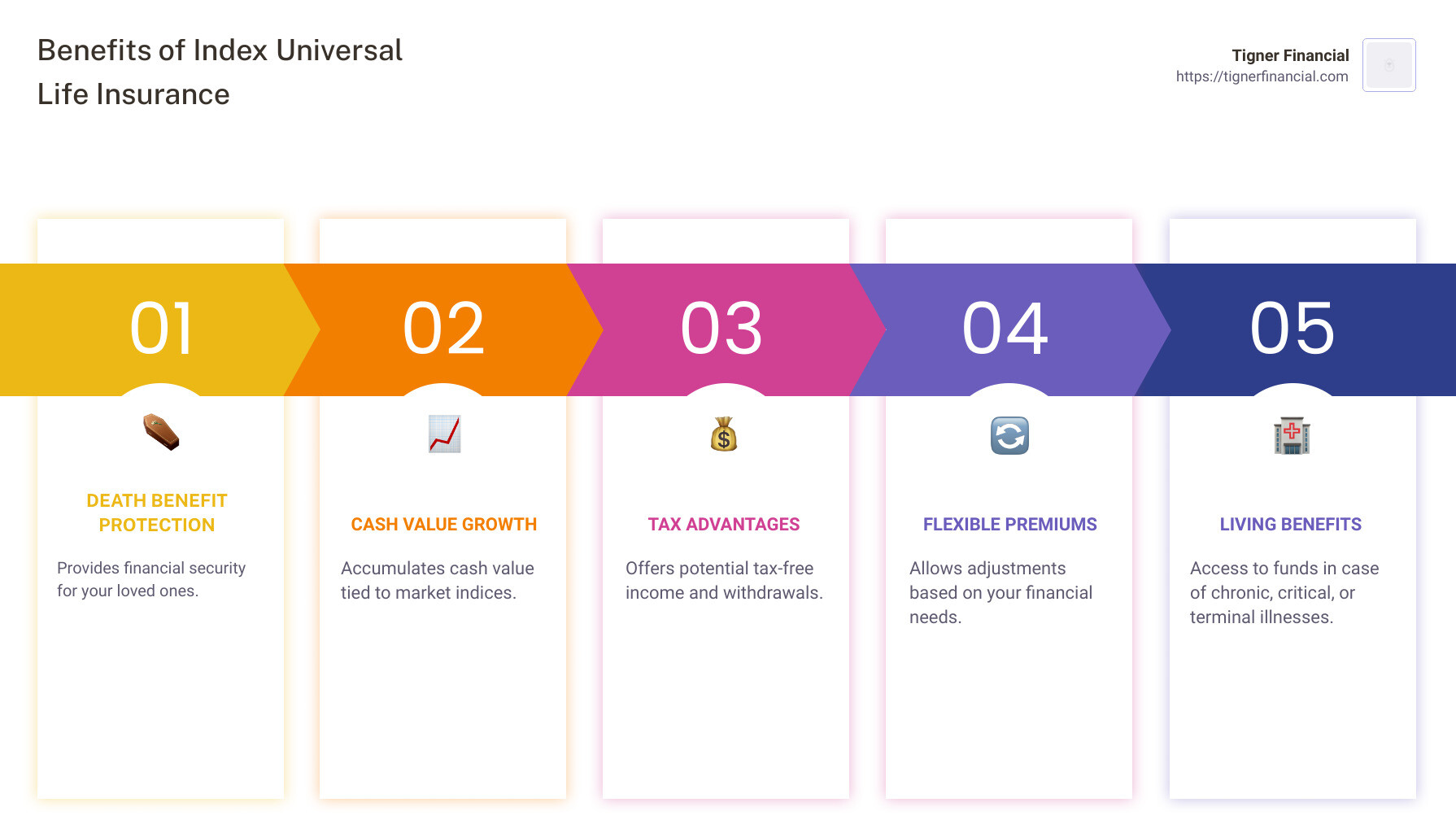
The best universal life insurance options for 2024 were characterized by high financial strength, flexible premium structures, and competitive cash value growth components. Leading providers included Northwestern Mutual, Prudential, Pacific Life, Penn Mutual, and Lincoln Financial, each offering distinct advantages for death benefit protection and long-term tax-advantaged wealth accumulation.
Understanding the Mechanics of Universal Life Insurance
Universal life (UL) insurance is a form of permanent life insurance that combines a death benefit with a savings component, known as cash value. Unlike whole life insurance, which has fixed premiums and a set death benefit, UL policies offer significant flexibility. Policyholders can adjust their premium payments and, in some cases, the face amount of the policy, provided the cash value is sufficient to cover the internal costs of the insurance.
In 2024, the landscape of universal life insurance was shaped by fluctuating interest rates and a heightened focus on "living benefits." From our current vantage point in 2026, we can see how these 2024 products were designed to withstand market volatility. The cash value in a UL policy earns interest based on the performance of a specific index (Indexed Universal Life), a portfolio of sub-accounts similar to mutual funds (Variable Universal Life), or a declared interest rate (Traditional Universal Life).
The core appeal of these 2024 options was their ability to adapt to the policyholder's changing financial stages. For instance, a young professional might prioritize cash accumulation, while an older individual might focus on maintaining a death benefit for estate liquidity. The technical complexity of these products requires a deep understanding of the "Cost of Insurance" (COI), which typically increases as the insured ages. If the cash value does not grow sufficiently to cover these rising costs, the policy risks lapsing, a factor that makes choosing the right carrier and product version critical.
Selection Criteria for the Top 2024 UL Providers
To identify the best options available in 2024, we evaluated carriers based on several technical and financial metrics. These criteria ensure that the policy remains a viable asset decades after the initial purchase.
- Financial Strength Ratings: We prioritized companies with "Superior" or "Excellent" ratings from independent agencies like AM Best, Moody’s, and Standard & Poor’s. These ratings indicate a carrier's ability to meet its ongoing insurance obligations and pay out death benefits.
- Product Flexibility: Top-tier policies in 2024 offered adjustable death benefits and "catch-up" provisions for premiums. This flexibility is essential for individuals whose income might fluctuate over time.
- Transparency of Fees: Universal life policies are known for their internal costs, including premium loads, surrender charges, and administrative fees. The best 2024 options provided clear disclosures regarding these expenses.
- Rider Availability: Riders allow policyholders to customize their coverage. In 2024, the most sought-after riders included Accelerated Death Benefits for chronic or terminal illness, which allow the insured to access a portion of the death benefit while still living.
- Historical Performance: For Indexed and Variable products, we examined the stability of the participation rates and cap rates offered by the carriers.
1. Northwestern Mutual: Custom Universal Life
Northwestern Mutual remained a dominant force in the 2024 insurance market, largely due to its status as a mutual company. Because the company is owned by its policyholders rather than shareholders, it has a long history of paying dividends, which can be used to increase the policy's cash value or reduce out-of-pocket premium costs.
The Custom Universal Life product offered in 2024 was specifically designed for those who wanted the flexibility of a UL policy with the stability typically associated with whole life. One of its standout features was the ability to "dial in" the level of protection and accumulation based on specific financial goals.
Northwestern Mutual’s financial strength is nearly unparalleled, consistently holding an A++ rating from AM Best. This provides a high level of security for policyholders concerned about the long-term solvency of their insurer. In 2024, their UL policies were particularly favored by high-net-worth individuals using life insurance as a tool for "tax-bracket management," as the cash value grows tax-deferred and can often be accessed tax-free through policy loans.
2. Prudential: PruLife Index Advantage UL
Prudential’s 2024 offerings were headlined by the PruLife Index Advantage UL. Prudential has historically been a leader in the Indexed Universal Life (IUL) space, and this product continued that trend by offering a variety of indexing accounts linked to major market benchmarks like the S&P 500.
What set Prudential apart in 2024 was its sophisticated underwriting process. They were often the preferred choice for individuals with "borderline" health issues or specific lifestyle risks that might lead to higher premiums elsewhere. Their "Vitality" program, which integrated wellness tracking with premium discounts, was also a significant draw for health-conscious consumers.
Technically, the PruLife Index Advantage provided a "0% floor," ensuring that the policy’s cash value would not lose money due to market declines (excluding the cost of insurance and fees). This protection against market volatility was a major selling point in 2024’s economic climate. Furthermore, the policy offered several death benefit options, including a "Return of Premium" rider that could appeal to conservative investors.
3. Pacific Life: Pacific Discovery Xelerator IUL 2
Pacific Life has long been recognized as a technical innovator in the universal life sector. In 2024, their Pacific Discovery Xelerator IUL 2 was one of the most competitive products for those focused on maximum cash value accumulation.
This policy featured a diverse range of indexed account options, including proprietary indices designed to perform well in various market cycles. One of the technical advantages of Pacific Life in 2024 was their "Performance Factor," a mechanism that could potentially boost the interest credited to the cash value based on the carrier's profitability and market conditions.
However, Pacific Life policies often require careful management. The 2024 versions were best suited for individuals who worked closely with a financial advisor to monitor the policy's performance. The "Xelerator" aspect of the product referred to its design for early cash value growth, making it a viable option for "Bank On Yourself" strategies or as a source of emergency liquidity later in life.
4. Penn Mutual: Accumulation Builder II IUL
Penn Mutual, another venerable mutual company, offered the Accumulation Builder II IUL in 2024. This product was lauded for its transparency and the strength of its guarantees. As a mutual company, Penn Mutual’s interests are naturally aligned with its policyholders, which often translates to more favorable caps and participation rates on their indexed products.
A key feature of Penn Mutual’s 2024 offering was the inclusion of built-in riders at no additional upfront cost. For example, their chronic illness accelerated benefit was often included automatically, providing a layer of "long-term care" style protection without the need for a separate policy.
The Accumulation Builder II was also noted for its "High Early Cash Value" rider, which was particularly useful for business owners who needed to list the policy as an asset on their balance sheets. From a 2026 perspective, Penn Mutual policies from 2024 have shown remarkable consistency in their crediting rates, validating their conservative but effective management style.
5. Lincoln Financial: Lincoln WealthPreserve IUL
Lincoln Financial Group focused heavily on the estate planning and wealth preservation aspects of universal life insurance. Their Lincoln WealthPreserve IUL (2024 version) was engineered for long-term stability and ease of use.
One of the most significant technical features of this policy was its "Extended Guaranteed Minimum Death Benefit." This allowed policyholders to ensure that the death benefit would remain in force for a specific duration—sometimes until age 120—regardless of the cash value performance, provided a certain minimum premium was met. This essentially gave the policy the characteristics of a Guaranteed Universal Life (GUL) policy with the upside potential of an IUL.
Lincoln Financial also excelled in its digital platform in 2024, making it easier for policyholders to manage their accounts and track their "safety net" progress. Their policies were frequently used in irrevocable life insurance trusts (ILITs) due to their predictable costs and strong death benefit guarantees.
Comparing the Top 2024 Universal Life Options
The following table summarizes the key attributes of the top five universal life insurance options available in 2024. Ratings and focus areas are based on the product performance and corporate standing as of that period.
| Carrier | Primary Product (2024) | AM Best Rating | Best For | Key Feature |
|---|---|---|---|---|
| Northwestern Mutual | Custom Universal Life | A++ (Superior) | Dividend potential | Mutual company ownership |
| Prudential | PruLife Index Advantage | A+ (Superior) | Underwriting flexibility | Vitality wellness integration |
| Pacific Life | Discovery Xelerator IUL 2 | A+ (Superior) | Cash value growth | Innovative indexing options |
| Penn Mutual | Accumulation Builder II | A+ (Superior) | Transparency/Stability | Built-in living benefit riders |
| Lincoln Financial | WealthPreserve IUL | A (Excellent) | Estate planning | Extended death benefit guarantee |
Technical Considerations: Riders and Fees
When evaluating these 2024 options, it is essential to look beyond the "sticker price" of the premium. Universal life insurance involves a complex set of internal charges that can impact long-term performance.
Common Policy Fees
- Premium Expense Charge: A percentage taken off the top of every premium payment before it is credited to the cash value. This covers state premium taxes and administrative costs.
- Cost of Insurance (COI): The actual cost of the pure life insurance protection. This is calculated based on the net amount at risk (the difference between the death benefit and the cash value) and the insured’s age.
- Surrender Charges: Fees applied if the policy is canceled during the first 10 to 15 years. These charges are intended to help the insurance company recoup the costs of issuing the policy.
Impactful Riders
In 2024, the "best" policies were often those that included or offered affordable riders to expand the policy's utility. The Long-Term Care (LTC) Rider was perhaps the most critical. Unlike a standalone LTC policy, an LTC rider on a UL policy allows the insured to use a portion of the death benefit to pay for home care or facility-based care. If the care is never needed, the full death benefit remains for the heirs, solving the "use it or lose it" dilemma of traditional LTC insurance.
Another important rider was the Waiver of Monthly Deductions. This rider ensures that if the policyholder becomes totally disabled, the insurance company will cover the internal costs of the policy, preventing it from lapsing even if the policyholder cannot make premium payments.
Managing Your Universal Life Policy: Avoid Common Pitfalls
Even the best universal life insurance policy from 2024 can fail if it is not managed correctly. One of the most common mistakes is "underfunding" the policy in the early years. Because premiums are flexible, many policyholders are tempted to pay only the minimum required to keep the policy in force. However, this can lead to a crisis later in life when the COI increases, and there is insufficient cash value to cover it.
To ensure the health of a UL policy, it is recommended to:
- Request Annual Inforce Illustrations: These documents project the future performance of the policy based on its current value and the current interest rate environment. They are essential for spotting potential lapses years before they happen.
- Monitor Index Performance: For IUL policies, the "cap rate" (the maximum interest you can earn) can be changed by the carrier. If a carrier significantly lowers its caps, it may be necessary to increase premiums to keep the policy on track.
- Be Cautious with Loans: While policy loans are a great way to access cash tax-free, they reduce the death benefit and the cash value available to cover internal costs. Unpaid loans also accrue interest, which can compound and cause the policy to collapse.
Frequently Asked Questions
Can I stop paying premiums on my universal life policy?
Yes, you can temporarily stop or reduce your premium payments if your policy has accumulated enough cash value to cover the monthly internal costs of insurance and administrative fees. However, doing this for an extended period will deplete your cash value and could eventually cause the policy to lapse. It is vital to check your "inforce illustration" before making significant changes to your payment schedule.
What is the difference between IUL and GUL?
Indexed Universal Life (IUL) focuses on cash value growth by linking interest credits to a market index, offering a balance of risk and reward. Guaranteed Universal Life (GUL) focuses almost entirely on the death benefit, offering a "no-lapse guarantee" as long as a specific premium is paid. GUL typically has little to no cash value accumulation but provides the most security for those who simply want a permanent death benefit at the lowest cost.
Are the 2024 products still competitive in 2026?
Most universal life products issued in 2024 were designed for the long term. While newer products in 2026 may offer different indexing strategies or updated riders, the 2024 options from top-tier carriers like Northwestern Mutual and Pacific Life remain robust. The key is how the policy was funded and how the carrier has managed its crediting rates over the last two years.
How do dividends work in a universal life policy?
Dividends are generally associated with "participating" policies from mutual insurance companies like Northwestern Mutual or Penn Mutual. They are essentially a return of part of the premium if the company’s financial performance (mortality, expenses, and investment income) is better than expected. Dividends are not guaranteed, but they can significantly enhance the cash value and death benefit over time.
Is the cash value in a universal life policy taxable?
The cash value in a universal life policy grows on a tax-deferred basis, meaning you do not pay taxes on the gains each year. If you withdraw money, it is taxed on a "first-in, first-out" (FIFO) basis, meaning your withdrawals are tax-free up to the amount of premiums you have paid (your basis). Policy loans are also generally tax-free as long as the policy remains in force. If the policy lapses or is surrendered with an outstanding loan, that loan amount could become taxable income.
Next Steps for Policyholders
If you currently own one of the "best" universal life policies from 2024, your primary action should be a performance review. Contact your agent or the carrier's customer service department to request an updated inforce illustration. This will show you how your policy is performing relative to the original projections and whether any adjustments to your premium payments are necessary to meet your long-term goals.
For those considering a new policy in 2026, the carriers highlighted here—Northwestern Mutual, Prudential, Pacific Life, Penn Mutual, and Lincoln Financial—continue to lead the industry. However, you should compare current 2026 product specifications, as interest rate environments and regulatory changes (such as updates to Section 7702 of the tax code) frequently result in revised product versions.