Converting 45 degrees Celsius to Fahrenheit yields exactly 113 degrees Fahrenheit. This extreme temperature represents an exceptionally hot day, often associated with severe heatwaves, desert climates, or industrial environments. Understanding how to execute this mathematical conversion accurately, recognizing the physiological impacts of such heat, and knowing how to respond safely are vital skills for navigating extreme weather conditions globally.
The Mathematical Formula Behind Temperature Conversions
To convert temperatures from Celsius to Fahrenheit manually, a specific linear equation must be applied. The Celsius scale, established by Anders Celsius, sets the freezing point of water at 0 degrees and the boiling point at 100 degrees under standard atmospheric conditions. Conversely, the Fahrenheit scale, developed by Daniel Gabriel Fahrenheit, sets water's freezing point at 32 degrees and its boiling point at 212 degrees. Because the two scales have different starting points and varying sized degrees, the conversion formula requires both multiplication and addition.
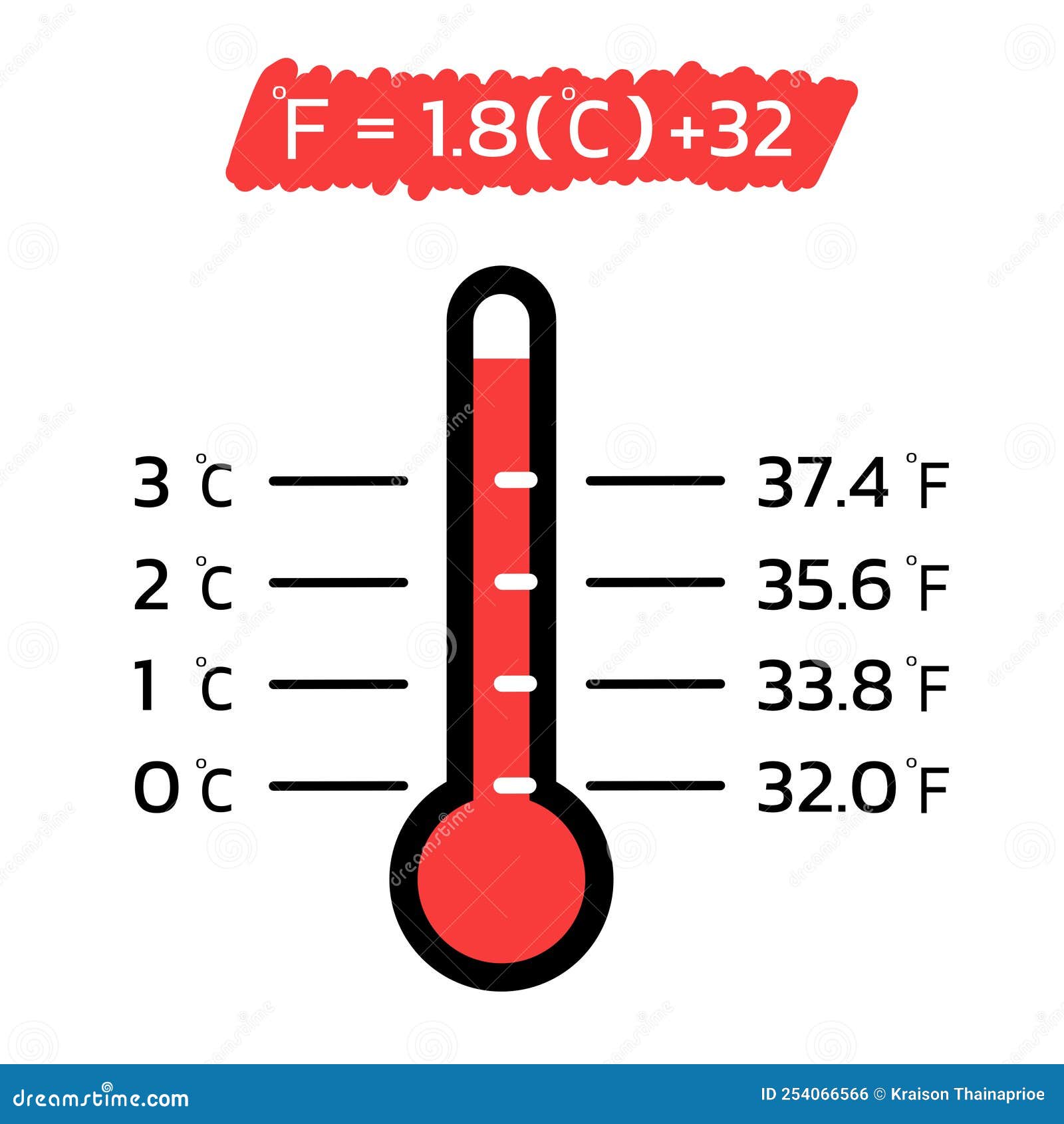
The standard formula to convert Celsius ($C$) to Fahrenheit ($F$) is:
$$F = (C \times \frac{9}{5}) + 32$$
Alternatively, this can be expressed using decimals as:
$$F = (C \times 1.8) + 32$$
Applying this formula to 45 degrees Celsius requires a step-by-step calculation:
- Multiply 45 by 1.8 (or $\frac{9}{5}$): $45 \times 1.8 = 81$.
- Add 32 to the resulting product: $81 + 32 = 113$.
Thus, 45 degrees Celsius equals 113 degrees Fahrenheit. This mathematical relationship remains constant regardless of whether the temperature is measured in a meteorological weather station, an automotive dashboard, or a digital household thermometer.
Understanding Extreme Heat: What 45 °C (113 °F) Means in Practice
Encountering an ambient temperature of 45 °C (113 °F) places individuals, infrastructure, and ecosystems under severe stress. While comfortable indoor room temperatures typically hover between 20 °C and 25 °C (68 °F to 77 °F), a reading of 45 °C far exceeds normal human thermal comfort zones.
On a global scale, temperatures reaching or exceeding 45 °C are increasingly common during summer months in hyper-arid regions such as Death Valley in the United States, parts of the Middle East, North Africa, and inland regions of Australia. These environments test the limits of both human physiology and technological cooling systems. When ambient air temperatures match or approach internal human body temperature (approximately 37 °C or 98.6 °F), the body's primary cooling mechanism—sweat evaporation—becomes less efficient, particularly when relative humidity levels are also high.
| Celsius (°C) | Fahrenheit (°F) | Thermal Description & Environmental Context |
|---|---|---|
| 35 °C | 95.0 °F | Very hot summer day; heat advisories typically issued. |
| 38 °C | 100.4 °F | Severe heatwave conditions; heightened risk of heat-related illness. |
| 40 °C | 104.0 °F | Extreme meteorological event; intense stress on urban infrastructure. |
| 42 °C | 107.6 °F | Dangerous threshold; prolonged outdoor exposure is hazardous. |
| 45 °C | 113.0 °F | Exceptional heat event; asphalt softening, high risk of heat stroke. |
| 50 °C | 122.0 °F | Historic high temperatures recorded in extreme desert climates. |
Physiological Impacts and Safety Guidelines
When environmental temperatures reach 45 °C (113 °F), the human body must work exceptionally hard to maintain core internal temperature homeostasis. Without proper precautions, exposure to this level of heat can rapidly lead to heat exhaustion or heat stroke, both of which are medical emergencies.
Key Risks Associated with 113 °F Heat
- Dehydration: The body loses significant amounts of water and essential electrolytes through perspiration in an attempt to cool down.
- Heat Exhaustion: Symptoms include heavy sweating, weakness, dizziness, nausea, headache, and a weak, rapid pulse.
- Heat Stroke: A life-threatening condition where the body's thermoregulatory system fails, core temperature rises above 40 °C (104 °F), and confusion, altered mental state, or unconsciousness may occur.
Essential Safety and Mitigation Steps
- Seek Air-Conditioned Shelter: Move indoors to climate-controlled buildings immediately. If home air conditioning is unavailable, visit designated public cooling centers.
- Hydrate Continuously: Drink plenty of water throughout the day, avoiding alcoholic or heavily caffeinated beverages that can accelerate dehydration.
- Limit Outdoor Exertion: Reschedule strenuous physical labor or outdoor exercise for the coolest parts of the day, typically early morning or late evening.
- Wear Appropriate Clothing: Choose lightweight, loose-fitting, light-colored clothing made of breathable fabrics like cotton or specialized moisture-wicking materials.
- Check on Vulnerable Populations: Monitor elderly neighbors, young children, and pets, as they are exceptionally susceptible to rapid heat-related illness.
Technological and Infrastructural Impacts
Extreme heat events involving temperatures of 45 °C (113 °F) or higher extend far beyond human health, posing significant challenges to modern infrastructure and mechanical systems.
Electrical power grids frequently experience peak demand surges during these periods as millions of air conditioning units run simultaneously, raising the risk of brownouts or rolling blackouts. Transportation networks also suffer; asphalt roads can soften or warp under extreme solar radiation and ambient heat, while steel railway tracks can expand and buckle, requiring speed restrictions for trains. Furthermore, internal combustion engine vehicles face a higher incidence of engine overheating, battery failure, and tire blowouts due to elevated road surface temperatures.
Frequently Asked Questions
Is 45 degrees Celsius considered a record-breaking temperature globally?
While 45 °C (113 °F) is an extreme and dangerous temperature, it is not the highest ever recorded on Earth. Global record highs have exceeded 54 °C (129.2 °F) in locations like Death Valley, California. However, 45 °C represents a severe heatwave threshold capable of triggering official extreme weather warnings in many parts of the world.
How can I convert Celsius to Fahrenheit quickly without a calculator?
A quick mental estimation method involves doubling the Celsius temperature and adding 30. For 45 °C, doubling it gives 90, and adding 30 yields 120 °F. While this mental shortcut is slightly higher than the precise mathematical conversion of 113 °F, it provides a fast, workable approximation during everyday weather checks.
Why does high humidity make 45 °C feel even hotter?
High humidity means the air is already saturated with moisture, which inhibits the evaporation of sweat from human skin. Because sweat evaporation is the primary way the human body cools itself down, high humidity traps heat and makes the apparent temperature—often measured as the heat index—feel significantly higher than the actual air thermometer reading.
What should I do if someone shows signs of heat stroke at 113 °F?
Heat stroke is a medical emergency requiring immediate action. Call emergency services right away. Move the affected person to a shaded or air-conditioned area, remove excess clothing, and actively cool their body using cool water applied to the skin, ice packs placed in the armpits and groin, or a fan. Do not force them to drink liquids if they are disoriented or unconscious.
Do digital weather apps automatically convert Celsius and Fahrenheit?
Yes, most modern weather applications and digital operating systems allow users to toggle effortlessly between metric (Celsius) and imperial (Fahrenheit) units via settings menus, automatically updating all localized forecasts and temperature readings instantly.