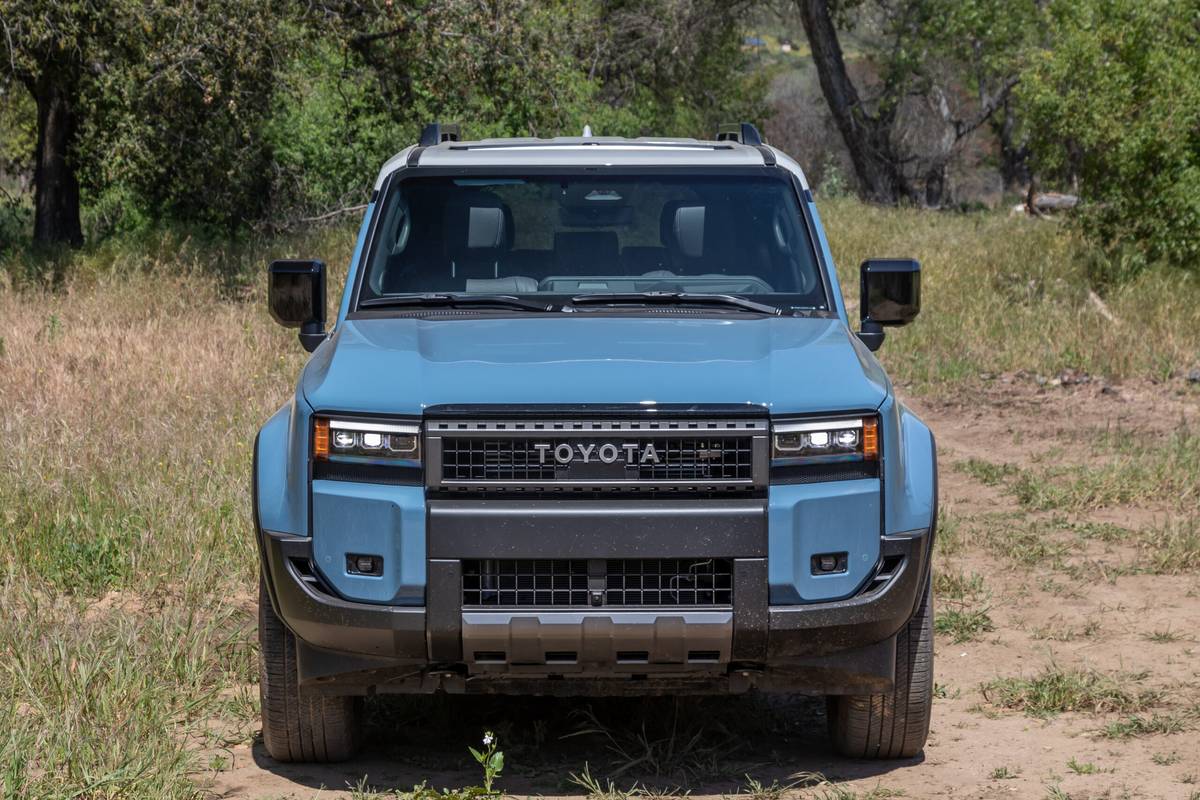
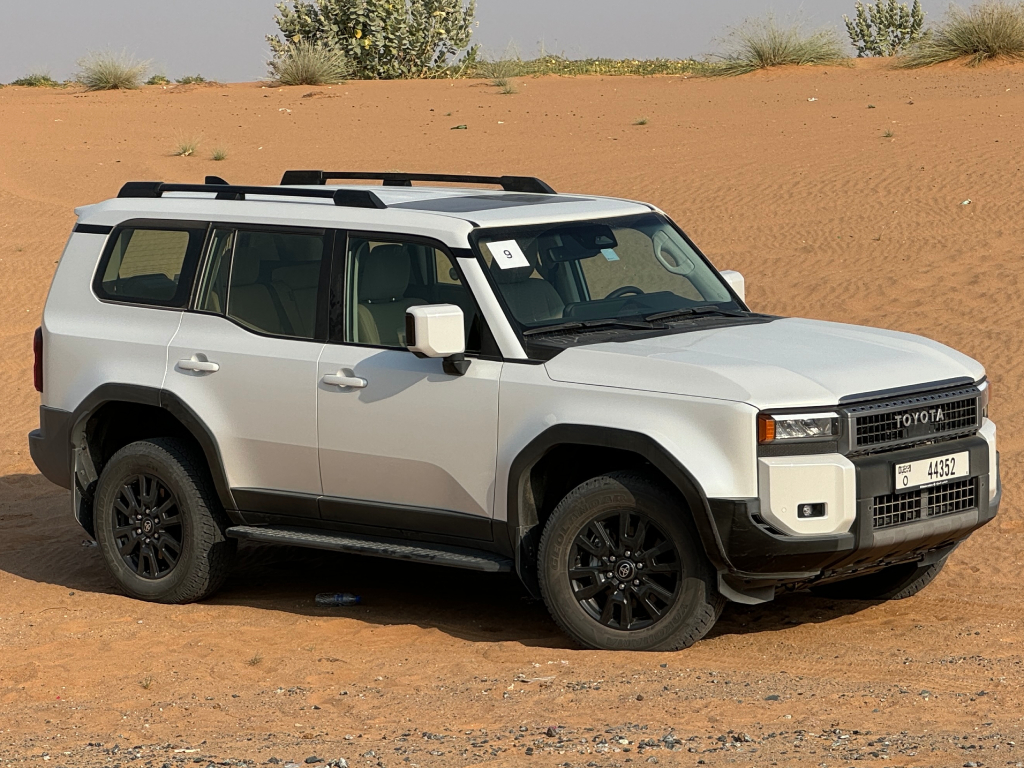
The 2nd generation Toyota Land Cruiser, known internally as the 20 Series, was produced between 1955 and 1960. It transformed the Land Cruiser from a rigid military-spec utility vehicle into a globally recognized civilian off-roader, introducing the iconic "F" series engine and establishing Toyota’s reputation for legendary durability across international markets.
Disambiguating the Generations: Identifying the True 2nd Gen
When discussing the "2nd gen Land Cruiser," enthusiasts often experience a moment of confusion. In modern automotive vernacular, many casual observers mistake the legendary 40 Series (produced from 1960 to 1984) as the second generation because of its massive cultural impact. However, technically and historically, the 20 Series is the true second generation of the Land Cruiser lineage.
The first generation (the Toyota BJ and FJ) was a rugged, Spartan machine developed primarily for the National Police Reserve in Japan during the early 1950s. While functional, it lacked the refinement necessary for global export. The 20 Series was the strategic response to this limitation. It took the mechanical robustness of the BJ and clothed it in a body that was more palatable to civilian consumers and international government agencies. By the time 2026 collectors look back at the brand's history, the 20 Series is recognized as the "missing link" that bridged the gap between a military prototype and a global icon.
Historical Context and the Birth of a Global Nameplate
The 20 Series was born in an era when Toyota was desperate to prove its engineering prowess on the world stage. In 1954, Director of Technology Hanji Umehara renamed the vehicle the "Land Cruiser" to compete directly with the British Land Rover. When the 20 Series debuted in 1955, it wasn't just a new model; it was Toyota's first major attempt at a global export product.
The design philosophy shifted from "military necessity" to "civilian utility." The 20 Series featured more rounded bodywork, integrated headlights (moving from the fenders into the front grille area), and a slightly more comfortable interior. This generation also marked the beginning of Toyota’s dominance in South America and Australia—regions where the 20 Series' ability to survive extreme heat and punishing terrain made it an instant favorite. In 1958, an FJ25 became the first Land Cruiser officially exported to the United States, marking the start of Toyota’s longest-running nameplate in the North American market.
Technical Specifications and the Legendary F Engine
The heart of the 2nd generation Land Cruiser was the Type F engine. While the first generation had experimented with various powerplants, the 20 Series popularized the 3.9-liter (3878cc) inline-six OHV gasoline engine. As of 2026, the "F" engine series remains one of the most respected powerplants in Toyota's history for its low-end torque and sheer simplicity.
Engine Performance and Engineering
The F engine was designed for longevity rather than high-speed performance. In its initial 20 Series configuration, it produced approximately 105 horsepower, which was later bumped to 125 horsepower as refinements were made. More importantly, it produced significant torque at low RPMs, which is critical for crawling through mud or climbing steep inclines.
The engine featured a cast-iron block and head, contributing to its heavy weight but also its extreme thermal stability. In an era before complex electronic fuel injection, the F engine relied on a simple carburetor setup that was easy to repair in the field with basic tools—a trait that would define the Land Cruiser philosophy for decades.
Drivetrain and Chassis
The 20 Series utilized a four-speed manual transmission. A notable technical quirk of early 20 Series models was the lack of a traditional low-range transfer case. Instead, the four-speed transmission had an ultra-low first gear designed to handle technical off-road maneuvers. However, as the series evolved toward the late 1950s, more sophisticated four-wheel-drive systems were integrated.
The chassis was a traditional ladder frame, significantly reinforced compared to the 1st generation. This provided the torsional rigidity needed for heavy-duty hauling. Suspension consisted of semi-elliptical leaf springs on both the front and rear axles. While this resulted in a stiff, "truck-like" ride on pavement, it offered incredible durability and ease of maintenance in environments where shock absorbers and bushings were subjected to constant abuse.
Body Styles and Model Variants
One of the defining characteristics of the 20 Series was the proliferation of wheelbases and body styles. Toyota realized that a "one size fits all" approach would not work for global markets, leading to the development of several distinct variants.
The FJ25: The Short-Wheelbase Icon
The FJ25 is perhaps the most recognizable 2nd gen model. It featured a short wheelbase (2285mm) and was typically seen as a soft-top or a hard-top utility vehicle. Its compact dimensions made it exceptionally maneuverable in dense forests or rocky trails. This model was the primary choice for the Japanese Forest Service and early export testers.
The FJ28: The Medium and Long Wheelbase
To accommodate more passengers and cargo, the FJ28 was introduced with a longer wheelbase (roughly 2430mm to 2650mm depending on the specific sub-variant). These models often served as troop carriers or small buses in developing nations. They provided the blueprint for what would eventually become the "Troopy" (Troop Carrier) variants in later generations.
The FJ35V: The Precursor to the Station Wagon
The FJ35V (and the later FJ35) represented the first steps toward the modern luxury SUV. It was a four-door "van" or station wagon style that offered more interior volume and protection from the elements. While still very basic by 2026 standards, the FJ35V was the ancestor of the 55, 60, 80, 100, 200, and 300 Series Land Cruisers. It signaled Toyota's realization that there was a market for people who wanted off-road capability without sacrificing the ability to transport a family in relative comfort.
Comparison of Early Land Cruiser Generations
The following table highlights the evolution from the 1st generation to the 2nd (20 Series) and its transition into the famous 3rd generation (40 Series).
| Feature | 1st Gen (BJ/FJ) | 2nd Gen (20 Series) | 3rd Gen (40 Series) |
|---|---|---|---|
| Production Years | 1951–1955 | 1955–1960 | 1960–1984 |
| Primary Engine | Type B (Diesel) / Type F (Gas) | Type F (3.9L I6 Gas) | Type F / 2F / B-Series Diesel |
| Wheelbase Options | Single (2400mm) | Multiple (2285mm–2650mm) | Multiple (2285mm–2950mm) |
| Transmission | 3-Speed Manual | 4-Speed Manual | 3, 4, or 5-Speed Manual |
| Transfer Case | Part-time 4WD | Part-time 4WD (Improved) | Dual-range Transfer Case |
| Visual Hallmark | External Headlights | Inset Headlights / Rounded Hood | Iconic White Bezel Grille |
The 2026 Collector Market and Restoration Challenges
As of 2026, the 2nd generation Land Cruiser has become one of the most sought-after "blue chip" collector vehicles in the vintage SUV market. However, owning and maintaining a 20 Series is a significantly different experience than owning the more common 40 or 60 Series.
Rarity and Valuation
Because the production run was relatively short (only five years) and many of these vehicles were used in harsh industrial or agricultural environments until they literally fell apart, surviving 20 Series examples are rare. In 2026, a "barn find" FJ25 can command prices that rival fully restored 40 Series models, while concours-quality restorations often reach six-figure sums at specialized auctions.
The "Part Hunting" Reality
Restoration is notoriously difficult. Unlike the 40 Series, for which there is a massive aftermarket of reproduction parts, 20 Series specific components—especially body panels, trim pieces, and early-style dashboard gauges—are nearly impossible to find. Restorers often have to resort to "donor" vehicles or custom-fabricating parts from original blueprints. Mechanical parts for the F engine are more accessible since the engine continued in production for decades, but the specific 20 Series cooling systems and electrical components remain a challenge.
Ownership Considerations
For those looking to purchase a 2nd gen Land Cruiser in 2026, rust is the primary enemy. These vehicles were produced before modern rust-proofing and galvanization techniques. Particular attention must be paid to the rear floorboards, the "birfield" joints in the front axle, and the frame mounting points. Furthermore, the 20 Series is a "pure" driving experience—there is no power steering, no power brakes, and the pedal layout can feel cramped to modern drivers.
Global Impact: The Brazilian "Bandeirante" Connection
One cannot discuss the 2nd generation Land Cruiser without mentioning its impact on South America, specifically Brazil. In the late 1950s, Toyota began local assembly of the 20 Series in Brazil. This eventually evolved into the Toyota Bandeirante.
While the Japanese 20 Series production ended in 1960, the spirit of the 20 and early 40 Series lived on in Brazil for decades. The Bandeirante utilized Mercedes-Benz diesel engines for much of its life, but the chassis and body architecture were rooted in the lessons learned during the 2nd generation's development. This branch of the Land Cruiser family tree proved that the 20 Series' fundamental design was so robust that it could remain commercially viable in rugged markets for nearly half a century with only incremental updates.
FAQs
What is the main difference between an FJ25 and an FJ40?
The FJ25 is the 2nd generation model (20 Series), while the FJ40 is the 3rd generation. The FJ25 lacks the dual-range transfer case found in most FJ40s and has a more rounded, primitive body style. The FJ40 introduced the signature white-painted grille bezel and more refined interior controls that became the global standard for Land Cruisers.
Is the 2nd gen Land Cruiser good for daily driving?
In the context of 2026 traffic, the 2nd gen Land Cruiser is generally not recommended as a daily driver. It has a low top speed, lacks modern safety features (like crumple zones or airbags), and requires significant physical effort to steer and brake. It is best enjoyed as a weekend cruiser, a parade vehicle, or a specialized off-road hobbyist machine.
Where can I find parts for a 20 Series restoration?
Parts are typically sourced through specialized vintage Toyota communities, international auction sites, or by cross-referencing later "F" engine parts for mechanical needs. For body and interior parts, many owners join global registries to trade "New Old Stock" (NOS) items or share digital files for 3D printing small plastic components.
Does the 20 Series have a diesel engine option?
While the 1st generation had the "B" type diesel, the 2nd generation 20 Series was overwhelmingly powered by the gasoline "F" engine. It wasn't until the 40 Series and the Brazilian Bandeirante variants that diesel engines became a staple of the Land Cruiser's global identity.
Why is it called the "20 Series"?
The name follows Toyota's internal chassis coding system. The 1st generation was the 10 Series (BJ/FJ), the 2nd was the 20 Series, the 3rd was the 40 Series, and so on. The leap from 20 to 40 was intended to signify a major technological and design advancement.
Final Recommendations for Enthusiasts
The 2nd generation Land Cruiser (20 Series) remains a cornerstone of automotive history. If you are a collector or enthusiast in 2026 looking to acquire one, prioritize structural integrity over cosmetic perfection. Mechanical components like the F engine can be rebuilt, but a compromised frame or extensively rusted body on an FJ25 is a monumental project that requires expert-level metalwork.
For those who appreciate the heritage but want a more usable vehicle, looking toward the early 40 Series might be a more practical entry point. However, for the true purist, nothing matches the historical significance and "unplugged" mechanical soul of the 20 Series. It is the vehicle that proved Toyota could take on the world's most unforgiving environments and win.