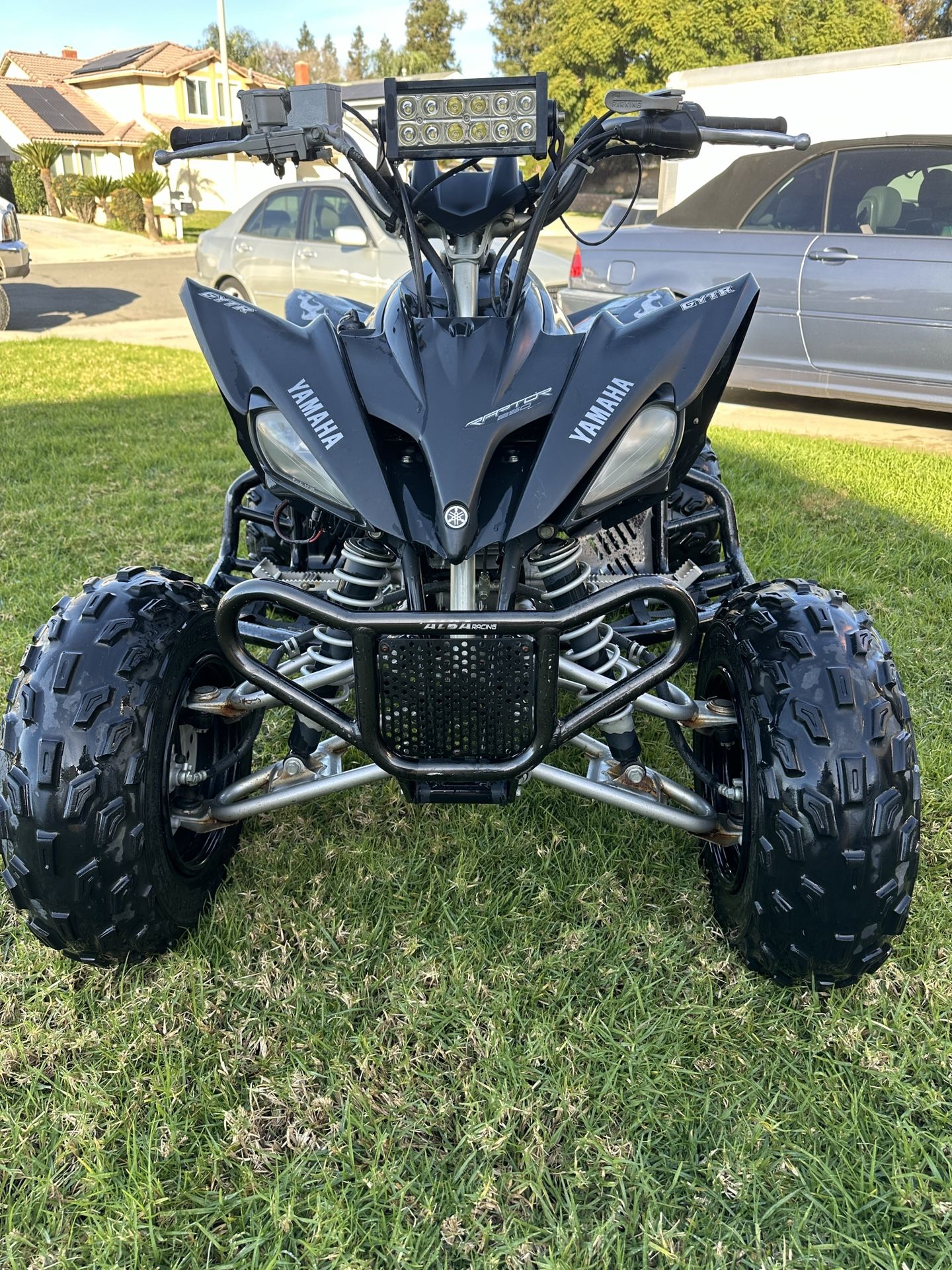
The Yamaha Raptor 250, produced between 2008 and 2013, is widely regarded for its lightweight agility and approachable power delivery. In stock condition, the Raptor 250 reaches a top speed of approximately 55 to 60 miles per hour (mph), depending on rider weight, terrain conditions, tire pressure, and the mechanical health of the engine.
The Engineering Philosophy of the Raptor 250
When Yamaha introduced the Raptor 250, the design objective was not to compete with the high-displacement, big-bore machines in the "pure speed" category. Instead, the engineers focused on creating an entry-level sport ATV that balanced weight, handling, and torque.
The machine is powered by a 249cc, air-cooled, four-stroke engine. This power plant was specifically tuned for mid-range power and throttle response rather than high-end terminal velocity. Because the engine is air-cooled, it lacks the complexity of liquid-cooled systems but also has thermal limitations that become apparent during sustained periods of high-RPM operation. Understanding that the Raptor 250 is geared for short-course agility, woods riding, and entry-level trail exploration explains why its top speed is modest compared to the larger Raptor 700 or even the YFZ450R.
Factors Influencing Real-World Speed
While the estimated 55–60 mph range is the manufacturer-suggested baseline for a well-maintained stock unit, various environmental and mechanical variables can shift this number significantly.
Rider Weight and Aerodynamics
At 250cc, the engine produces roughly 18 to 20 horsepower at the crank. Because the total output is relatively low, the power-to-weight ratio is highly sensitive to the rider’s physical mass. A 150-pound rider will naturally achieve a higher terminal velocity than a 220-pound rider simply because the engine has to work less to overcome rolling resistance and wind drag. Furthermore, body positioning—crouching low to reduce the frontal surface area—can shave off seconds in a speed test by optimizing aerodynamics.
Terrain and Rolling Resistance
The Raptor 250 is a sport-clutch machine frequently used on varied terrain. If you attempt to reach top speed on deep sand or tall grass, the rolling resistance is significantly higher than on packed dirt or asphalt. Friction consumes power; therefore, the softer the surface, the lower the actual top speed. Tire pressure also plays a pivotal role. Under-inflated tires increase the contact patch and friction, while over-inflated tires may reduce grip but slightly increase speed by reducing the tire’s deformation under load.
Gearing Ratios
The most significant mechanical factor affecting the 250 Raptor’s top speed is the final drive gearing. The stock sprocket setup is optimized for acceleration, which is vital for the target demographic of trail riders and beginners. By changing the rear sprocket to a smaller one or the front sprocket to a larger one, a rider can technically increase the top speed. However, this is a trade-off; higher gearing reduces the engine’s ability to pull in the lower gears, making the machine feel "sluggish" during acceleration or when climbing hills.
Comparison of Yamaha Raptor Models
To contextualize the performance of the 250, it is helpful to look at where it stands within the Yamaha Raptor family lineage.
| Model | Engine Displacement | Typical Top Speed (Stock) | Primary Use Case |
|---|---|---|---|
| Raptor 90 | 90cc | 25–30 mph | Youth/Training |
| Raptor 250 | 249cc | 55–60 mph | Entry-Level/Woods |
| Raptor 350 | 348cc | 65–70 mph | Trail Riding |
| Raptor 700 | 686cc | 75–80 mph | Racing/Dunes |
This table illustrates that the Raptor 250 occupies a specific "goldilocks" zone—it offers more than double the power of the entry-level 90cc models while remaining significantly more manageable and lightweight than the high-performance 700cc variants.
Mechanical Maintenance and Longevity
Reaching the advertised top speed of any powersports vehicle is only possible if the machine is performing at its peak. Several maintenance factors are often overlooked by owners chasing higher speeds:
- Air Filtration: The Raptor 250 uses a foam air filter. If this filter is clogged with dust or old oil, the engine cannot "breathe" at high RPMs, leading to a drop in power output.
- Valve Clearances: As a single-cylinder, air-cooled engine, the Raptor 250 requires periodic valve adjustments. If valves are too tight or too loose, the engine will suffer from poor combustion and decreased power at high revs.
- Chain Tension: A loose or seized chain creates unnecessary drag. Keeping the chain properly lubed and adjusted ensures that the power produced by the transmission is efficiently transferred to the rear wheels.
- Fuel Quality: Using low-octane or stale fuel can lead to engine "pinging" or knock. While the 250 isn't a high-compression racing engine, it performs most consistently when using clean, fresh gasoline.
Safety Considerations for High-Speed Operation
Operating an ATV at its top speed threshold increases the risk of mechanical failure and loss of control. The Raptor 250 has a narrower track width compared to competition-spec race quads, which makes it feel "twitchy" at higher speeds.
When attempting to reach top speed, riders should ensure they are on a wide, flat, and clear surface with high visibility. Avoid attempting high-speed runs on unfamiliar trails, as the Raptor 250’s suspension is not designed to absorb high-impact obstacles at maximum velocity. Always wear appropriate personal protective equipment (PPE), including a DOT-approved helmet, goggles, gloves, and boots. Riders should also be aware that the stock tires are designed for multi-purpose traction; they are not speed-rated for sustained high-velocity road use.
Troubleshooting Potential Speed Issues
If your Raptor 250 is failing to reach the expected 55 mph range, consider the following troubleshooting steps:
- Check for Drag: Put the ATV in neutral and roll it by hand. If it feels like it is resisting, check your brake calipers to see if they are dragging against the disc. A stuck brake piston is a common cause of lost speed.
- Inspect the Spark Plug: A fouled or old spark plug can cause misfires under heavy load. A healthy plug should have a light tan color on the electrode. If it is black and sooty, your carburetor may be running too rich.
- Check the Carburetor: The 250 uses a Mikuni carburetor. If the jetting is not set correctly for your local altitude, the engine may lean out or bog down. Consult the factory service manual for the correct jetting specifications based on your elevation.
Frequently Asked Questions
Can I make my Raptor 250 faster with aftermarket parts? Yes, but with limitations. Aftermarket exhausts, high-flow air filters, and re-jetting the carburetor can improve throttle response and peak power. However, because the engine is relatively small, these modifications provide marginal gains in top speed. The best way to increase speed is to change the sprocket gearing, though this will sacrifice your low-end "snap."
Why does my Raptor 250 feel like it's vibrating at top speed? Single-cylinder engines are inherently prone to vibration. At higher RPMs, this vibration is intensified. Ensure that your engine mounts are tight and that the counterbalancer is functioning correctly. Excessive vibration at high speed can also indicate a worn-out crankshaft bearing or loose mounting hardware elsewhere on the chassis.
Is the Raptor 250 dangerous to drive at top speed? Any ATV can be dangerous if the rider exceeds their skill level or the capabilities of the terrain. The Raptor 250 is a light machine, and it can be easily deflected by ruts or rocks at high speed. It is best suited for technical, tight-turn riding rather than sustained high-speed straightaways.
Should I use premium fuel to get higher top speeds? No. The Raptor 250 is designed to run on standard pump gasoline (typically 87 octane). Using higher octane fuel will not increase your top speed and may actually hinder performance if the fuel doesn't burn efficiently at the compression ratio set by the engine.
Does the weight of the exhaust system affect top speed? While a lighter exhaust system reduces the overall weight of the bike, the impact on top speed is negligible. The primary benefit of an aftermarket exhaust system is the improvement in exhaust gas scavenging, which allows the engine to rev more freely, potentially helping you reach your top speed slightly faster.
Recommendation for Performance Optimization
If you find that your Raptor 250 is not performing as expected, start by conducting a full service rather than jumping into aftermarket modifications. Ensure the air filter is clean, the valves are within factory specifications, and the chain is properly adjusted and lubricated. These three simple tasks often recover lost power that riders mistakenly attribute to engine age. If you consistently find yourself wanting more speed, it is often more cost-effective and reliable to move up to a larger displacement model—such as the Raptor 350 or 700—rather than pushing the 250cc engine beyond its intended thermal and mechanical design limits.