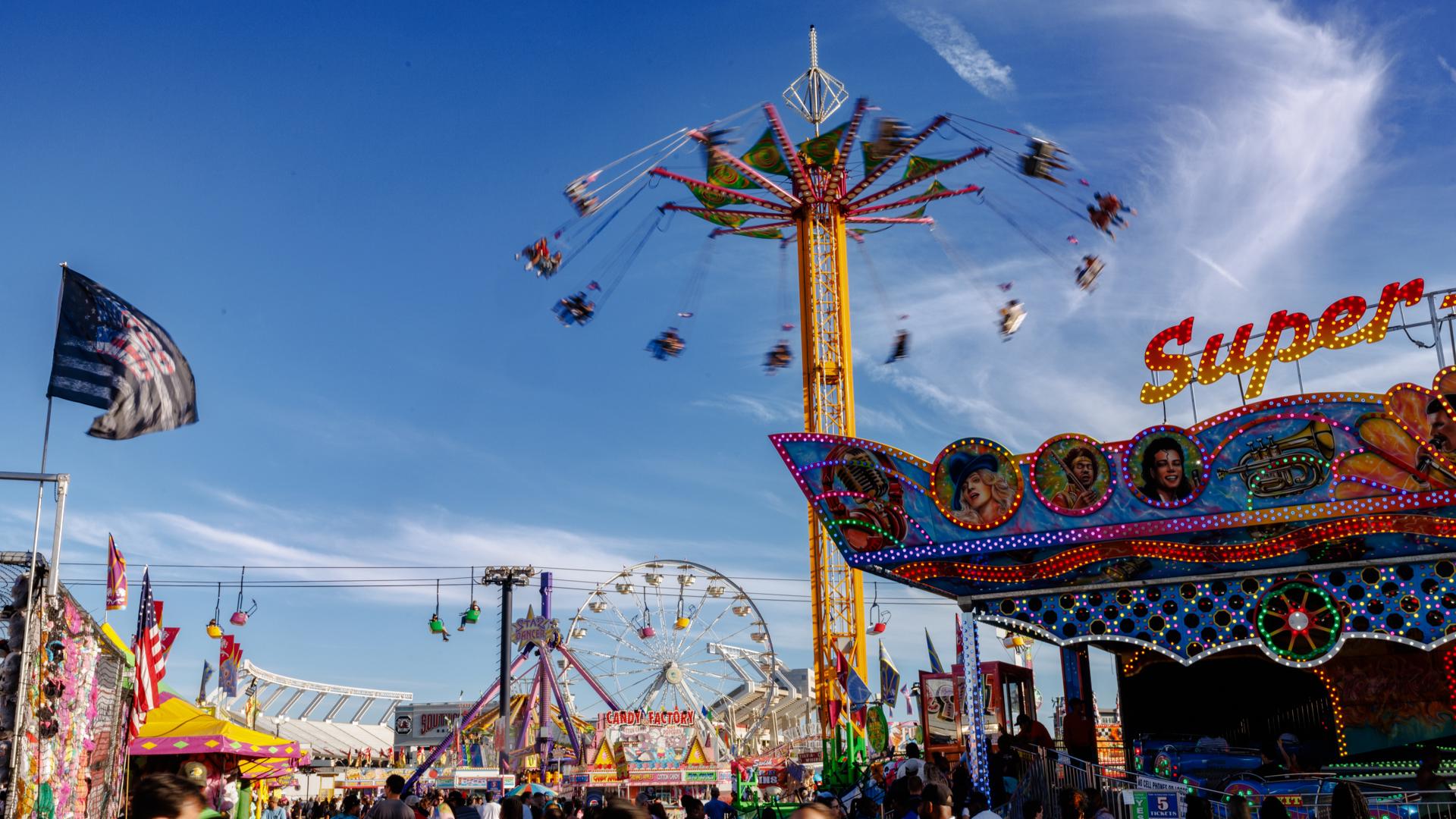
During the 2025 OC Fair season, ride safety underwent unprecedented scrutiny due to a combination of updated California state mandates and proactive local oversight. This intensified focus resulted in rigorous daily inspections, advanced non-destructive testing for high-thrill attractions, and increased transparency regarding maintenance logs to ensure the highest safety standards for millions of visitors.
The 2025 Orange County Fair, held at the OC Fair & Event Center in Costa Mesa, served as a turning point for the amusement industry in Southern California. While the fair has long maintained a reputation for safety, the 2025 season was defined by "New Safety Scrutiny" that responded to both evolving state regulations and a public demand for greater accountability. As we look back from 2026, it is clear that the protocols established during the 2025 season have set a new benchmark for temporary amusement installations across the country.
The Regulatory Framework: DOSH and the California Mandate
The primary driver of the 2025 scrutiny was the California Division of Occupational Safety and Health (DOSH), specifically its Amusement Ride and Tramway Unit. In early 2025, California implemented updated safety protocols that required more frequent and technically demanding inspections for portable "major" and "spectacular" rides.
Under California law, all portable amusement rides must be inspected by DOSH before they can operate at a new location. For the 2025 OC Fair, this meant that every piece of equipment—from the iconic La Grande Wheel XL to the high-g-force thrillers—had to pass a state-level certification process before the gates opened. However, the 2025 scrutiny went beyond the initial setup.
The Role of Qualified Safety Inspectors (QSI)
A significant component of the 2025 oversight involved the integration of independent Qualified Safety Inspectors. While the ride operator, Ray Cammack Shows (RCS), employs its own certified mechanics, the fair board and state regulators mandated additional third-party audits. These inspectors focused on:
- Structural Integrity: Checking for stress fractures, weld failures, and corrosion in the load-bearing components of the rides.
- Electrical Systems: Ensuring that all grounding, wiring, and control systems met the 2025 National Electrical Code (NEC) standards for temporary installations.
- Redundancy Checks: Verifying that secondary locking mechanisms on restraints and harnesses were functioning as designed, with no "single-point-of-failure" risks.
Ray Cammack Shows (RCS) and Operational Changes
As the long-time midway provider for the OC Fair, Ray Cammack Shows (RCS) was at the center of the 2025 safety scrutiny. To meet the heightened requirements, RCS expanded its maintenance team and transitioned to a fully digital logging system. This move allowed for real-time data sharing between the operator, the fair's management, and state inspectors.
Daily Maintenance and Opening Protocols
During the 2025 season, the daily "pre-opening" inspection became more exhaustive. Before a single guest could board a ride, each attraction underwent a multi-stage verification process:
- Visual Inspection: Mechanics walked the tracks and structures, looking for any signs of movement or wear that occurred during the previous day’s operation.
- Operational Cycles: Every ride was run through a minimum number of empty cycles (often three to five) to ensure that sensors, brakes, and computers were communicating correctly.
- Restraint Testing: Every individual lap bar, shoulder harness, and seatbelt was manually tested for locking pressure and release functionality.
The 2025 scrutiny also introduced "mid-day audits," where inspectors would perform spot checks during peak operating hours to ensure that ride operators were following the specific loading and unloading procedures mandated by the manufacturers.
Technological Advances in Ride Scrutiny
One of the most notable aspects of the 2025 safety environment was the application of advanced diagnostic technology. The "scrutiny" was not just a matter of more people looking at rides; it was a matter of people using better tools to see what the naked eye cannot.
Non-Destructive Testing (NDT)
For "spectacular" rides—those that reach high speeds or heights—the 2025 protocols required extensive Non-Destructive Testing. NDT allows technicians to examine the internal structure of metal components without damaging them. Common methods used during the 2025 fair included:
- Magnetic Particle Testing: Used on steel components to find surface and near-surface cracks. By applying a magnetic field and iron particles, inspectors could identify "leakage fields" caused by defects.
- Ultrasonic Testing (UT): High-frequency sound waves were used to measure the thickness of metal parts and detect internal flaws or inclusions in the steel.
- Dye Penetrant Inspection: A liquid dye was applied to welds; if a crack existed, the dye would seep in and become visible under a developer or UV light.
These technical deep dives were particularly focused on rides like the Titan, which subjects its components to extreme cyclical stress. By identifying microscopic fatigue before it could lead to a mechanical failure, the 2025 scrutiny successfully prevented downtime and ensured passenger safety.
Impact on Fairgoers and the Guest Experience
While the 2025 scrutiny was primarily a technical and regulatory effort, it had a visible impact on the guest experience. Some visitors noted longer wait times for certain rides during the first few days of the fair as state inspectors performed final sign-offs. However, the fair board countered this by launching a "Safety First" transparency initiative.
The Transparency Initiative
For the first time, the OC Fair & Event Center provided QR codes at the entrance of major rides. By scanning these codes, guests could view a simplified version of the ride’s most recent safety clearance and the date of its last state inspection. This level of transparency was a direct response to the "new scrutiny" and aimed to build public trust in the wake of national headlines regarding carnival safety.
The board also increased the visibility of "Safety Ambassadors"—staff members dedicated to enforcing height requirements and ensuring that guests followed rider-conduct rules, such as securing loose items and remaining seated throughout the ride cycle.
Comparative Analysis of Safety Protocols
The following table outlines the differences between the standard operating procedures of previous years and the enhanced scrutiny of the 2025 OC Fair.
| Feature | Pre-2025 Standards | 2025 Enhanced Scrutiny |
|---|---|---|
| Inspection Frequency | Daily operator check + Initial state sign-off | Daily operator check + Independent 3rd-party audits + Random state spot-checks |
| Documentation | Paper-based logs stored in ride trailers | Real-time digital logging with cloud access for regulators |
| Testing Methods | Primarily visual and operational | Mandatory NDT (Non-Destructive Testing) for spectacular rides |
| Staff Training | Annual certification | Enhanced 2025 curriculum with focus on emergency evacuation |
| Public Transparency | Permits available upon request | QR-code accessible safety data at ride entrances |
| Sensors & Telemetry | Basic mechanical limits | Integrated digital sensors with automated "kill-switch" triggers |
Addressing the Challenges of Temporary Installations
A core reason for the 2025 scrutiny is the unique nature of "portable" rides. Unlike fixed attractions at theme parks (like Disneyland or Knott’s Berry Farm), fair rides are designed to be dismantled, transported on trailers, and reassembled dozens of times a year.
The "New Safety Scrutiny" of 2025 specifically addressed the "Tear-Down and Set-Up" cycle. Regulators identified that the highest risk of wear-and-tear occurs during the transit and assembly phases. Consequently, the 2025 inspections included a "Pin and Bolt" audit, where every major fastener used to hold the ride together was checked for the correct grade of steel and proper torque.
Weather and Environmental Scrutiny
The 2025 OC Fair also faced fluctuating weather conditions, including high-heat days and typical coastal humidity. The "scrutiny" extended to how these environmental factors affected ride operations. For example, high temperatures can affect hydraulic fluid viscosity, which in turn impacts the braking speed of certain rides. The 2025 protocols required operators to adjust maintenance schedules based on the ambient temperature, ensuring that mechanical systems remained within manufacturer-specified operating ranges.
The Economic and Insurance Perspective
From an industry standpoint, the 2025 scrutiny was also a response to the hardening insurance market. Insurance premiums for amusement operators have risen significantly. To maintain coverage, operators like RCS must prove they are adhering to the highest possible safety standards.
By embracing the "new scrutiny" of 2025, the OC Fair was able to demonstrate a lower risk profile. This proactive approach helped mitigate the rising costs of liability insurance, which ultimately helps keep ticket and ride prices more stable for the consumer. It proved that safety is not just a moral obligation but a financial necessity for the survival of large-scale public events.
Expert Opinions on the 2025 Season
Industry safety consultants highlighted the 2025 OC Fair as a model for "Integrated Safety Management." Rather than seeing the state inspectors as adversaries, the fair management and RCS worked collaboratively.
"The 2025 scrutiny wasn't about finding fault," noted one safety engineer during a 2026 industry conference. "It was about creating a redundant system where multiple layers of oversight—mechanical, digital, and human—all pointed toward the same goal. When you have the state, the operator, and the independent auditor all looking at the same bolt, the margin for error effectively vanishes."
Frequently Asked Questions
Were any rides closed during the 2025 OC Fair due to safety scrutiny?
Yes, several rides experienced temporary "precautionary" closures during the 2025 season. These were typically not due to failures, but rather because the "new scrutiny" required additional documentation or a specific NDT clearance that was delayed. Most rides were reopened within 24 to 48 hours once the required verification was completed.
How do I know if a ride at the OC Fair is safe to ride?
As established in 2025, every ride must display a current permit issued by the California Division of Occupational Safety and Health (DOSH). Additionally, look for the QR codes provided by the fair which link to recent inspection data. If you see a "State of California - Amusement Ride Inspection" sticker with a current year, the ride has passed the state’s rigorous safety checks.
Who is responsible for ride safety at the OC Fair?
Safety is a shared responsibility between three main entities: Ray Cammack Shows (the operator), the OC Fair & Event Center (the host/management), and DOSH (the state regulator). Independent third-party inspectors also provide an additional layer of oversight as part of the enhanced scrutiny protocols.
Did the 2025 safety scrutiny increase ticket prices?
While there was a slight adjustment in ride credit pricing in 2025, fair officials attributed this to a variety of factors, including labor and energy costs. However, the investment in safety technology and additional staff was a significant part of the operational budget, ensuring that the fair remained a safe destination for families.
What should I do if I see something concerning on a ride?
If you notice a mechanical issue, an inattentive operator, or any safety concern, you should immediately report it to a "Safety Ambassador" or visit the Guest Services booth. The 2025 protocols empowered all fair staff to trigger a "stop-and-check" if a credible safety concern was raised by a member of the public.
Practical Recommendations for Fairgoers
Based on the outcomes of the 2025 scrutiny, visitors to future fairs should remain proactive about their own safety. Always adhere to posted height and weight restrictions, as these are determined by the manufacturer to ensure the restraint systems function correctly. Ensure that all loose items, such as phones and hats, are secured, as falling objects were a key focus of the 2025 safety updates. Finally, if you or your child are feeling unwell or have pre-existing health conditions, consult the "Rider Requirement" signs at each attraction, which provide specific guidance on who should avoid certain high-intensity experiences.
The 2025 OC Fair proved that while amusement rides are complex machines, rigorous scrutiny and a commitment to transparency can provide a safe, thrilling environment for the community. The lessons learned in 2025 continue to guide safety operations as we move through the 2026 season.