In 2023, the Intel Core i9-9900KF stood as a high-performance relic, offering a specialized upgrade path for users on the aging LGA 1151 platform. While its $488 launch price was premium in 2019, its 2023 second-hand market value of approximately $200–$230 allowed it to compete with modern entry-level chips, providing eight powerful cores for gaming and productivity.
Understanding the Legacy of the Core i9-9900KF
The Intel Core i9-9900KF arrived in early 2019 as a variant of the legendary i9-9900K. At that time, it represented the pinnacle of Intel’s 14nm++ manufacturing process. The "KF" designation indicated two things: the "K" meant the multiplier was unlocked for overclocking, and the "F" indicated the absence of integrated graphics (Intel UHD Graphics 630).
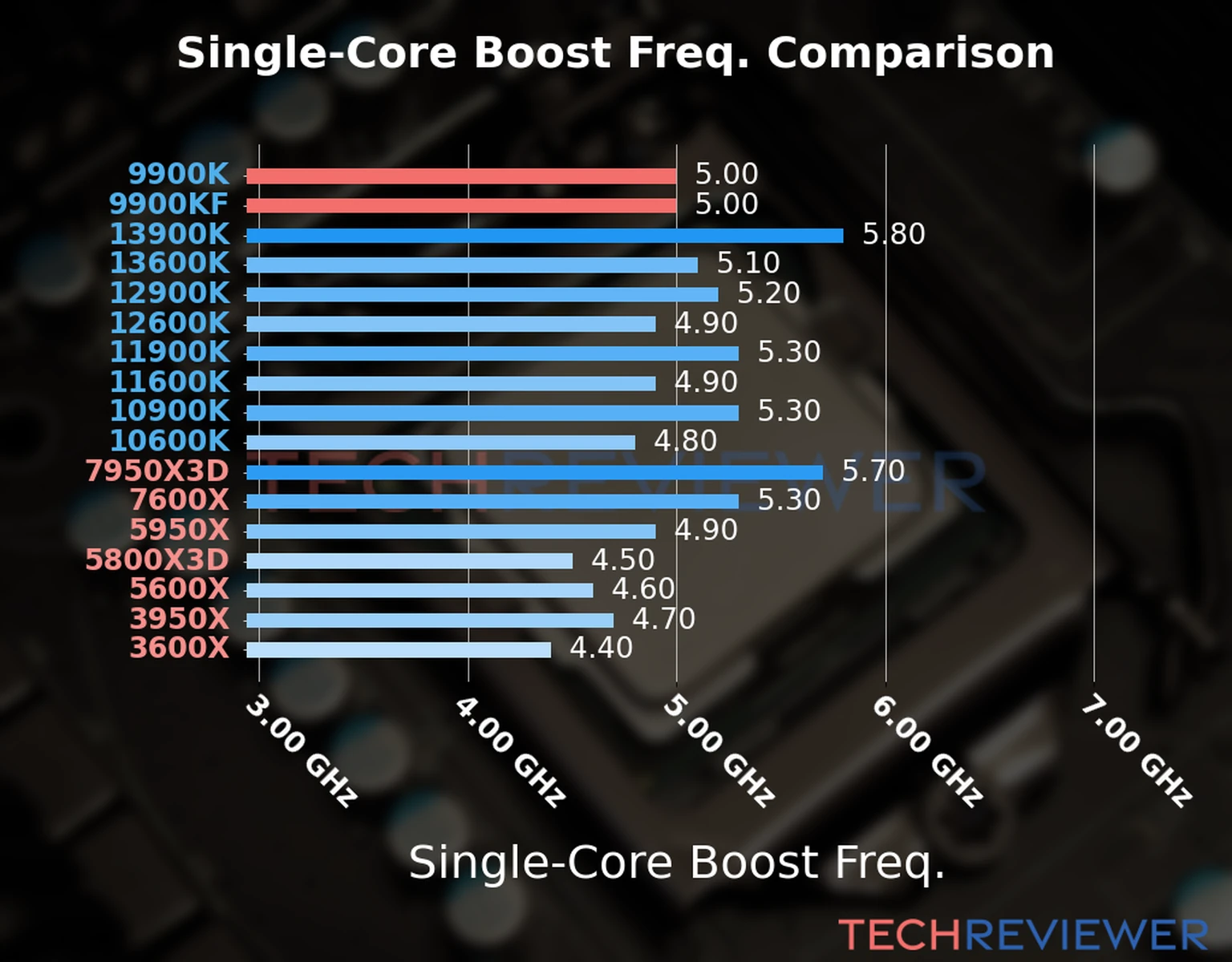
By 2023, the hardware landscape had shifted dramatically with the arrival of Intel’s 13th and 14th Generation "Raptor Lake" processors. However, the i9-9900KF remained a significant point of discussion for a specific demographic: those who owned high-end Z370 or Z390 motherboards and wanted to maximize their current hardware without the expense of a new motherboard and DDR5 memory. The 9900KF features 8 cores and 16 threads, with a maximum turbo frequency of 5.0 GHz, which, even four years after its release, maintained a respectable level of performance in 2023’s demanding software environment.
The Financial Equation: Launch Price vs. 2023 Market Value
Analyzing the launch price of the Core i9-9900KF is essential to understanding its value trajectory. When it hit the market, Intel set the Recommended Customer Price (RCP) at $488. In the 2019 retail environment, prices often fluctuated between $470 and $500, depending on availability. This was a flagship price for a flagship product, competing directly with AMD’s rising Ryzen 3000 series.
By 2023, the financial context had changed:
- Depreciation and Resale: On the used market in 2023, the i9-9900KF typically sold for between $180 and $240. Interestingly, its price remained relatively high compared to other aging components because it was the "end-of-the-line" upgrade for the LGA 1151 socket.
- The New Alternative: A 2023 builder could purchase an Intel Core i5-13400 for roughly $200. This newer chip offered 10 cores (6 Performance-cores and 4 Efficient-cores) and outperformed the 9900KF in almost every metric while consuming less power.
- Platform Costs: The true "value" of the 9900KF in 2023 was only realized if the user already owned a compatible motherboard. Buying a 9900KF and a used Z390 board in 2023 was generally considered a poor investment compared to buying a modern B760 motherboard and an i5-12400 or i5-13400.
Technical Architecture: The Final Stand of 14nm++
The Core i9-9900KF was built on the Coffee Lake Refresh architecture. This was a period where Intel was refining its 14nm process to its absolute limits to compete with AMD’s move to 7nm. The 9900KF utilized Solder Thermal Interface Material (STIM), which was a significant upgrade over the "thermal paste" used in previous generations. This allowed for better heat transfer to the integrated heat spreader (IHS), which was crucial for maintaining the 5.0 GHz boost clock.
The absence of integrated graphics in the "F" model was often rumored to allow for better overclocking headroom due to lower heat density on the die. While silicon lottery remains the primary factor in overclocking, many enthusiasts in 2023 still sought out the KF models for their perceived stability at higher voltages. However, it is important to note that for productivity tasks, the lack of Intel QuickSync (found in the non-F models) was a disadvantage for video editors using software like Adobe Premiere Pro or DaVinci Resolve.
2023 Gaming Performance Analysis
In 2023, gaming benchmarks showed that the i9-9900KF was still a capable "workhorse" for 1080p and 1440p gaming. When paired with a modern GPU like an RTX 3070 or RTX 4070, the 9900KF was rarely the primary bottleneck in triple-A titles.
- 1080p Competitive Gaming: In titles like Valorant, CS:GO (transitioning to CS2 in 2023), and Rainbow Six Siege, the 9900KF easily maintained frame rates well above 240 FPS, making it viable for high-refresh-rate monitors.
- Open-World Demands: In more CPU-intensive games of 2023, such as Starfield or Cyberpunk 2077 (Phantom Liberty update), the 9900KF began to show its age. While it could maintain a steady 60 FPS, the 1% low frame rates—a key metric for smoothness—were significantly lower than those of the i5-13600K or the Ryzen 7 7800X3D.
- Ray Tracing: As ray tracing became more standard in 2023, the CPU's role in managing complex game logic and draw calls became more critical. The 8-core/16-thread configuration of the 9900KF was sufficient, but it lacked the architectural IPC (Instructions Per Clock) gains seen in later generations, leading to some stuttering in highly congested game areas.
Productivity and Multitasking in a Modern Context
In 2023, the "8 cores" of the i9-9900KF were no longer the high-end standard. With the introduction of hybrid architectures (P-cores and E-cores), even mid-range chips were sporting 10 to 14 cores.
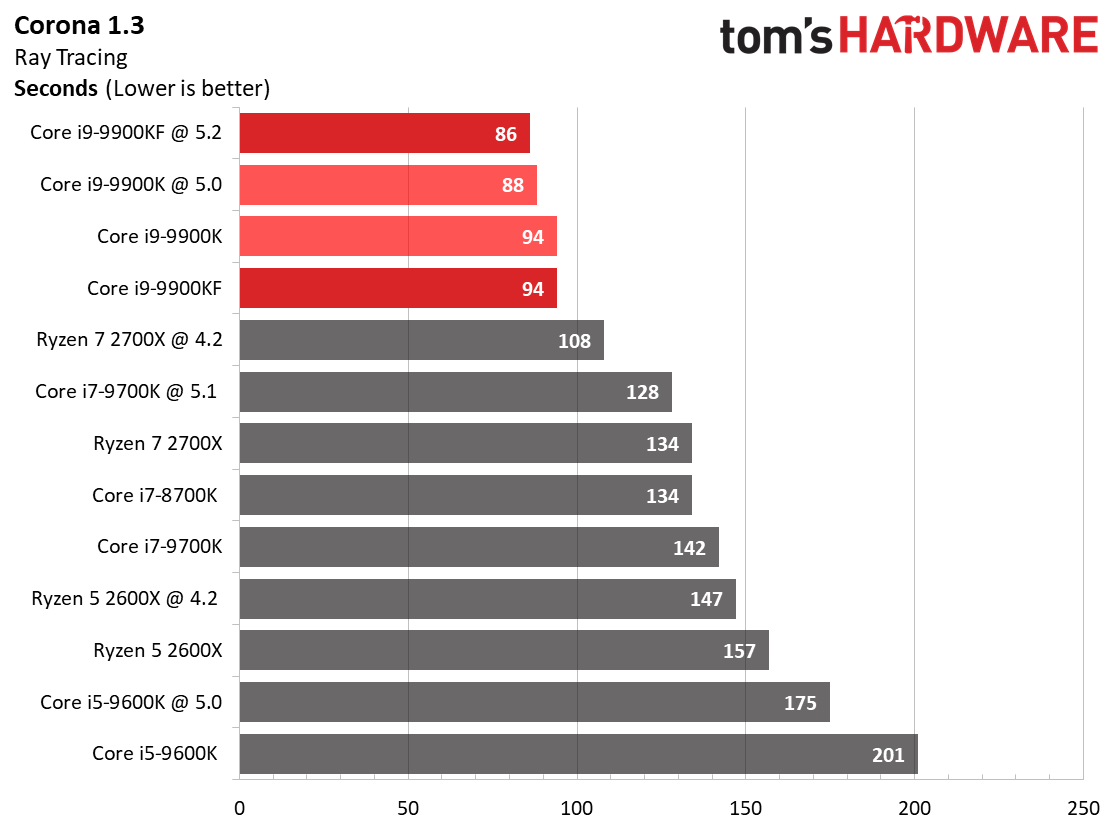
For content creation, the 9900KF in 2023 was a solid entry-level choice for 4K video editing and 3D rendering. However, its lack of AVX-512 support and older instruction sets meant it fell behind in specialized workloads. In Cinebench R23, a standard benchmark in 2023, the 9900KF would typically score around 12,000 to 13,000 points. For comparison, the i5-13600K was pushing past 24,000 points, nearly doubling the multi-threaded performance for a similar initial launch price.
Thermal Management and Power Consumption
One of the major hurdles for i9-9900KF owners in 2023 was the power draw. Despite being rated at a 95W TDP (Thermal Design Power), the 9900KF is notorious for consuming much more under load. When the "Power Limits" are removed on high-end Z390 motherboards to sustain a 5.0 GHz all-core boost, the chip can pull over 200 watts.
To maintain these speeds in 2023, users required high-end cooling solutions:
- AIO Liquid Coolers: A 280mm or 360mm radiator was the recommended standard to prevent thermal throttling during heavy workloads.
- Air Cooling: Only the largest dual-tower air coolers, such as the Noctua NH-D15 or Be Quiet! Dark Rock Pro 4, could effectively manage the heat of an overclocked 9900KF.
- Case Airflow: Due to the heat radiated by both the CPU and the more power-hungry GPUs of 2023 (like the 30-series and 40-series), case airflow became a critical factor in preventing the 9900KF from reaching its 100°C T-junction limit.
Core i9-9900KF Technical Specifications Comparison
The following table compares the i9-9900KF against its primary 2023 mid-range competitor to illustrate the technological gap.
| Feature | Intel Core i9-9900KF (2019) | Intel Core i5-13600K (2023 Context) |
|---|---|---|
| Cores / Threads | 8P / 16T | 6P + 8E / 20T |
| Architecture | Coffee Lake Refresh (14nm++) | Raptor Lake (Intel 7) |
| Max Turbo Freq | 5.0 GHz | 5.1 GHz |
| L3 Cache | 16 MB | 24 MB |
| Memory Support | DDR4-2666 (Native) | DDR4-3200 / DDR5-5600 |
| PCIe Version | 3.0 | 5.0 |
| Integrated Graphics | None | Intel UHD 770 (Non-F) |
| Launch MSRP | $488 | $319 |
| 2023 Used Price | ~$210 | ~$300 (New) |
The "Dead Platform" Dilemma
The most significant drawback of the Core i9-9900KF in 2023 was its socket: LGA 1151 (Revision 2). This platform reached its end-of-life with the 9th Generation.
Buying into this platform in 2023 meant:
- No PCIe 4.0 or 5.0: The 9900KF is limited to PCIe 3.0. While this had a negligible impact on most GPUs in 2023, it significantly capped the speed of NVMe SSDs. Users could not take advantage of the 7,000 MB/s+ speeds offered by Gen4 drives like the Samsung 980 Pro.
- DDR4 Limitations: While the 9900KF supports DDR4, it is officially rated for 2666 MHz. While it can handle 3600 MHz+ via XMP on Z390 boards, it cannot touch the 6000 MHz+ speeds of DDR5 available to modern platforms.
- Windows 11 Hurdles: While the 9th Gen fully supports Windows 11 and TPM 2.0, the platform's age started to raise concerns regarding long-term driver support for the latest motherboard chipsets.
Frequently Asked Questions
Is the i9-9900KF still good for gaming in 2023?
Yes, the i9-9900KF remains a very capable gaming CPU in 2023. It can handle almost any modern title at 60+ FPS. However, in extremely CPU-bound scenarios or at very high refresh rates (360Hz+), it will lag behind 12th, 13th, and 14th Gen processors due to lower IPC.
How much should I pay for a Core i9-9900KF in 2023?
In the 2023 used market, a fair price for an i9-9900KF is between $180 and $220. If the price exceeds $250, it is generally better to invest in a modern platform, such as an i5-13400 and a B760 motherboard, which offers better features and a future upgrade path.
Does the i9-9900KF require a specific motherboard?
Yes, the i9-9900KF requires an LGA 1151 (Revision 2) motherboard. It is most compatible with Z390 and Z370 chipsets. It is not compatible with older Z170 or Z270 motherboards, nor is it compatible with newer LGA 1200 or LGA 1700 sockets.
Can I use the i9-9900KF for streaming?
Absolutely. With 8 cores and 16 threads, it can handle software encoding (x264) while gaming. However, because it lacks integrated graphics (QuickSync), you cannot use the CPU's internal encoder for streaming, meaning you must rely on your Nvidia (NVENC) or AMD (AMF) GPU encoder for the best performance.
Is the i9-9900KF better than the i5-12600K?
No. The i5-12600K, released in 2021, outperforms the i9-9900KF in both single-core and multi-core tasks. The 12600K’s architectural improvements and the addition of E-cores make it a superior choice for both gaming and productivity in 2023.
Final Recommendation: Should You Buy in 2023?
As we look at the Core i9-9900KF from a 2026 perspective, reviewing its 2023 status reveals a very clear divide in its utility.
For existing Z370/Z390 owners: If you are currently using an i3-9100 or i5-9400 and find a 9900KF for under $200, it is a fantastic "final" upgrade. It will extend the life of your current PC by several years, allowing you to bypass the need for a new motherboard and RAM.
For new builders: Avoid the i9-9900KF in 2023. The cost of acquiring a high-end Z390 motherboard (which is often expensive on the used market due to rarity) and the 9900KF itself will likely equal the cost of a brand-new i5-13600K system. The newer system will provide PCIe 5.0, DDR5 support, better power efficiency, and significantly higher performance across the board.
The i9-9900KF was a monumental chip that defined the peak of the 14nm era. While its 2023 performance was still respectable, it moved from being the "king of the hill" to a "smart legacy upgrade."