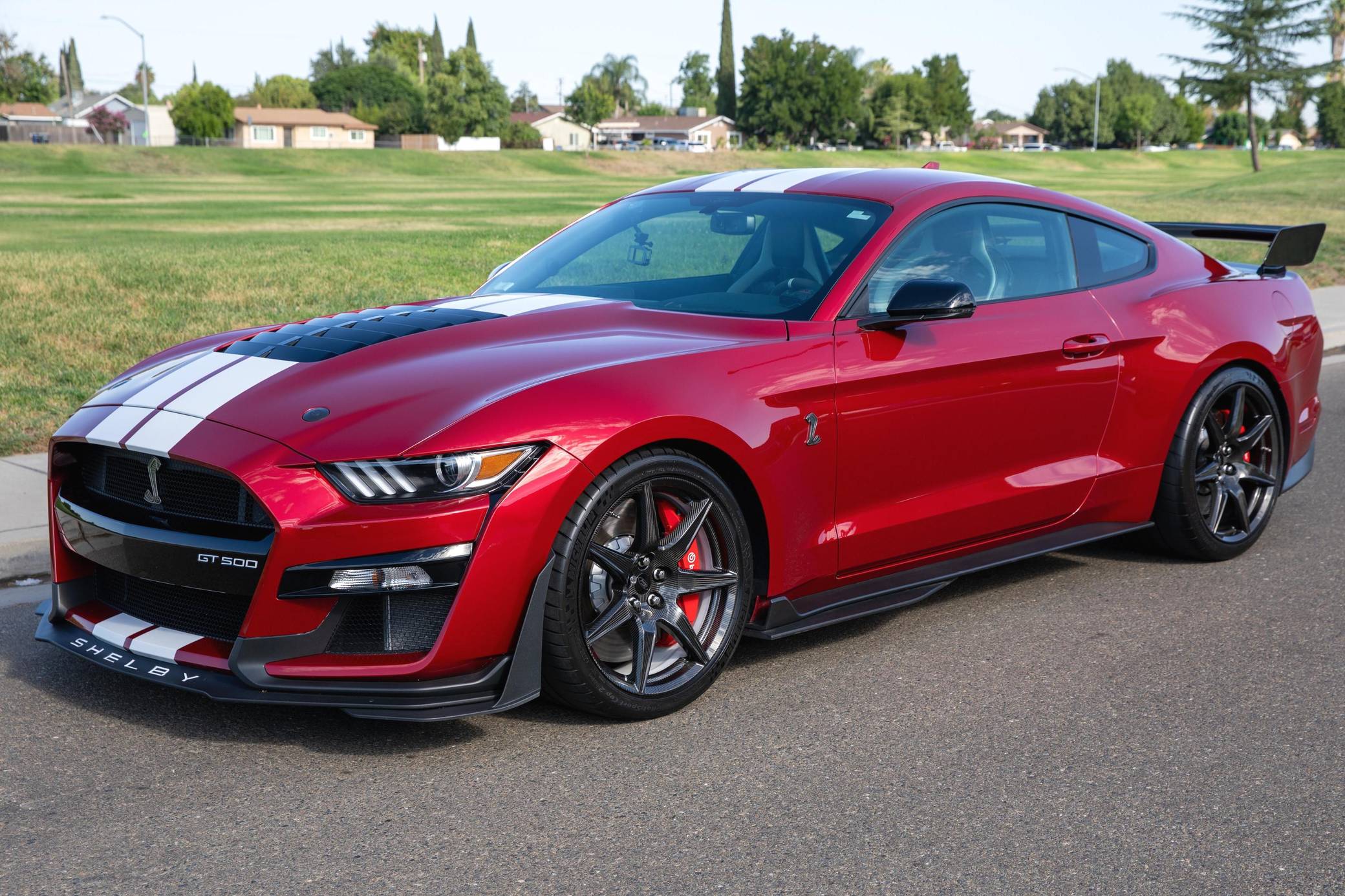
The 2021 Ford Mustang Shelby GT500 produces 760 horsepower and 625 lb-ft of torque. This output is generated by a hand-built 5.2-liter supercharged cross-plane crank V8 engine, making it the most powerful street-legal production Ford Mustang developed at the time of its release.
The 2021 Ford Mustang Shelby GT500 remains a benchmark in modern American muscle car engineering. By combining forced induction with advanced transmission technology, Ford created a vehicle that balances high-horsepower output with track-ready handling characteristics. Understanding the mechanics behind these numbers is essential for owners and enthusiasts who wish to appreciate the platform's engineering pedigree.
The Powerplant: 5.2-Liter Supercharged V8
At the heart of the 2021 GT500 is a specialized 5.2-liter V8 engine. Unlike the flat-plane crank engine found in the GT350, the GT500 utilizes a cross-plane crankshaft, which is engineered to handle the immense cylinder pressures generated by a 2.65-liter roots-type supercharger. This supercharger is inverted, meaning the intake is positioned facing downward, which allows for shorter, more efficient plumbing to the intercooler and cylinder heads.
This configuration is critical for maintaining consistent power delivery. The supercharger features a 2.65-liter displacement and can spin at speeds up to 16,000 RPM, forcing compressed air into the engine to achieve the 760-horsepower rating. To accommodate this heat and pressure, Ford utilized specialized materials throughout the engine, including forged connecting rods and high-strength aluminum cylinder heads.
Transmission and Drivetrain Integration
The immense horsepower of the GT500 is routed through a Tremec TR-9080 7-speed dual-clutch transmission (DCT). Ford opted against a traditional manual transmission for this model to ensure shift times were significantly faster than human capability, specifically clocking in at under 100 milliseconds.
The DCT is programmed with several drive modes—Normal, Weather, Sport, Drag, and Track—which adjust the shift logic to suit the driving environment. In Track or Drag mode, the transmission keeps the engine in the peak power band, ensuring that the 760 horsepower is available immediately upon throttle application. The integration of this transmission is a primary reason the vehicle can accelerate from 0 to 60 mph in roughly 3.3 to 3.5 seconds, depending on surface conditions and tire grip.
Technical Specifications Overview
To contextualize the performance of the 2021 Shelby GT500, it is useful to view the core technical metrics side-by-side. The following table highlights the critical performance figures that define the vehicle's capabilities.
| Feature | Specification |
|---|---|
| Engine Type | 5.2L Supercharged Cross-Plane V8 |
| Horsepower | 760 hp @ 7,300 rpm |
| Torque | 625 lb-ft @ 5,000 rpm |
| Transmission | 7-Speed Dual-Clutch (DCT) |
| Induction | 2.65L Roots-type Supercharger |
| Drivetrain | Rear-Wheel Drive (RWD) |
| Curb Weight | ~4,171 lbs |
Cooling and Aerodynamics
Managing the heat generated by 760 horsepower is a significant engineering challenge. The 2021 GT500 features a massive front-end cooling system with six heat exchangers, including a large radiator and a dedicated oil cooler. These systems are supported by a front fascia design that provides 50% more cooling pack airflow compared to the Mustang Shelby GT350.
Aerodynamics play an equally important role in how that horsepower is translated to the pavement. The optional Carbon Fiber Track Package includes an adjustable exposed carbon fiber wing and carbon fiber wheels, which reduce unsprung weight and increase downforce. This allows the car to maintain stability at the high speeds that the engine's power output allows it to reach. Without effective aerodynamics, the high power output would be difficult to manage, particularly during high-speed cornering or heavy acceleration.
Managing High-Performance Requirements
Operating a vehicle with 760 horsepower requires strict adherence to maintenance schedules. The 5.2-liter supercharged engine demands high-quality synthetic oil and specific fuel grades. Ford recommends the use of 93-octane pump gas to achieve the full power rating; using lower-octane fuel will trigger the engine control unit (ECU) to adjust timing and ignition, effectively reducing total power output to protect the engine from detonation.
Furthermore, the 7-speed DCT requires specific fluid changes at prescribed intervals. Ignoring these requirements can lead to delayed shifts or degraded performance in track conditions. Owners should also be aware that the high torque levels can contribute to accelerated tire wear, necessitating the use of the specific Michelin Pilot Sport Cup 2 tires that came equipped on many 2021 models to maintain the intended handling and traction characteristics.
Common Performance Questions
Does the 2021 GT500 make its full 760 horsepower on all fuel types? The 760-horsepower rating is achieved using 93-octane gasoline. While the engine is designed to run on lower octane fuel in emergency scenarios, the ECU will retard ignition timing, resulting in a loss of peak horsepower to prevent engine knock or damage.
Why did Ford choose a dual-clutch transmission instead of a manual for the 2021 GT500? The DCT was chosen because it allows for lightning-fast gear changes that are impossible with a manual gearbox. Given the high-torque nature of the supercharged V8, the dual-clutch system provides superior control over power delivery and ensures the car remains stable and fast during track driving.
What is the impact of the Carbon Fiber Track Package on engine performance? The Carbon Fiber Track Package does not change the engine's output, but it significantly improves how that power is utilized. By reducing weight and increasing aerodynamic downforce, the car can put its power down more effectively through corners, leading to faster lap times.
How does the 2021 GT500 compare to other high-horsepower Mustangs? While other Mustangs, such as the Mach 1 or the standard GT, are capable track vehicles, the GT500 is in a different performance tier. It is the only production model of that year with the 5.2L supercharged cross-plane crank engine, providing a unique combination of high-RPM power and torque that is distinct from the 5.0L Coyote engine found in other variants.
Are there known issues with the 2021 GT500's cooling system? The cooling system is highly robust and designed for track use. However, it is essential to ensure that the air intakes remain free of debris. Owners participating in track days should inspect the front radiator openings to ensure that bugs, leaves, or track debris are not obstructing airflow, as this is the primary cause of heat-related power reduction.
Next Actions for Owners
If you are currently operating or considering a 2021 Mustang GT500, the best next step is to familiarize yourself with the specific track-day supplement provided in the owner's manual. This document details the exact cooling, fluid, and tire pressure adjustments required for the car to operate at its full potential on a closed course. For long-term preservation, prioritize using manufacturer-approved lubricants and cooling fluids, as the specialized engine components rely on these specific chemical properties to manage the extreme thermal loads produced by the supercharger. Always perform a walk-around inspection before high-performance driving to ensure no cooling fins are blocked and that all tires are at the recommended pressure settings for your specific environment.