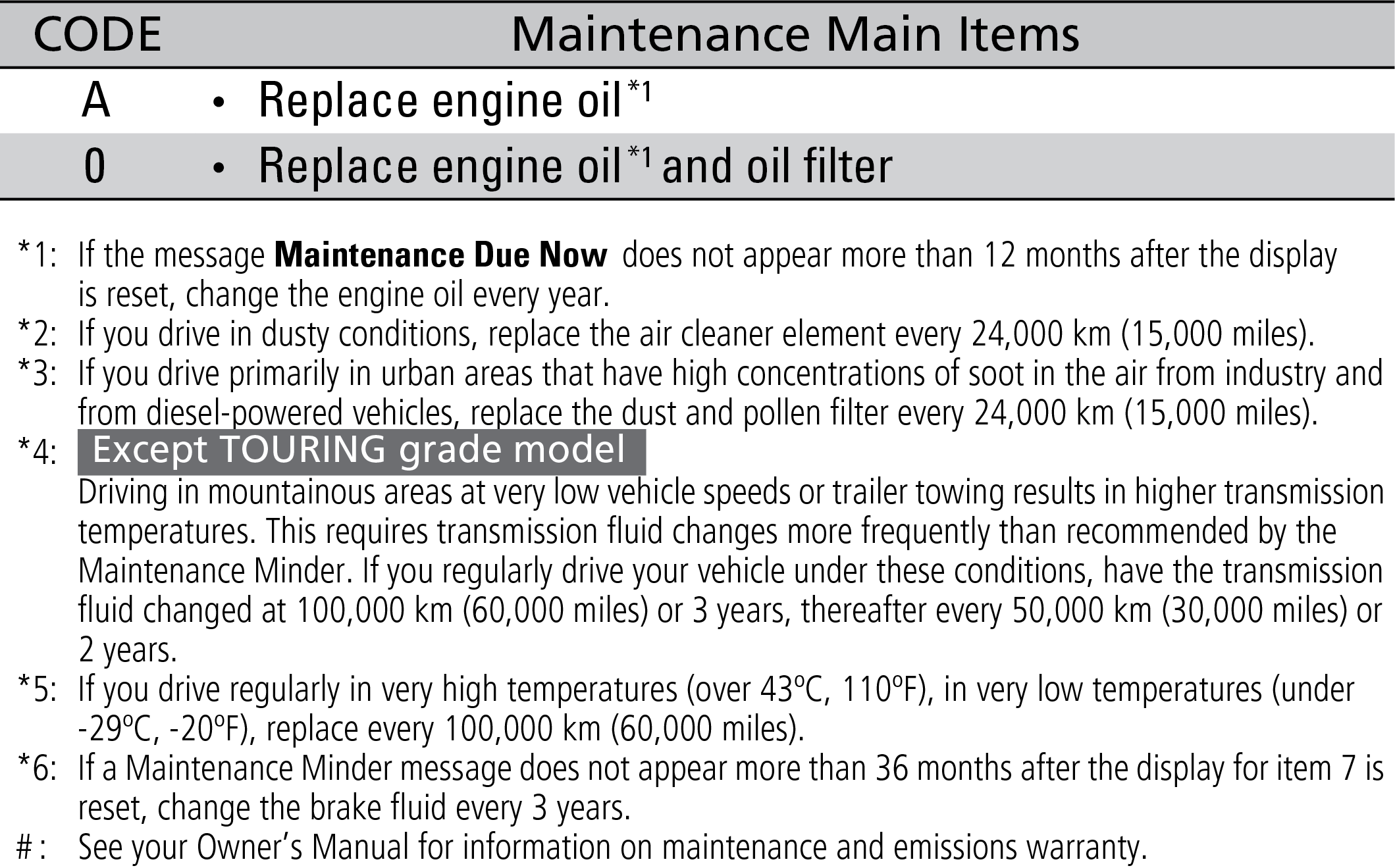
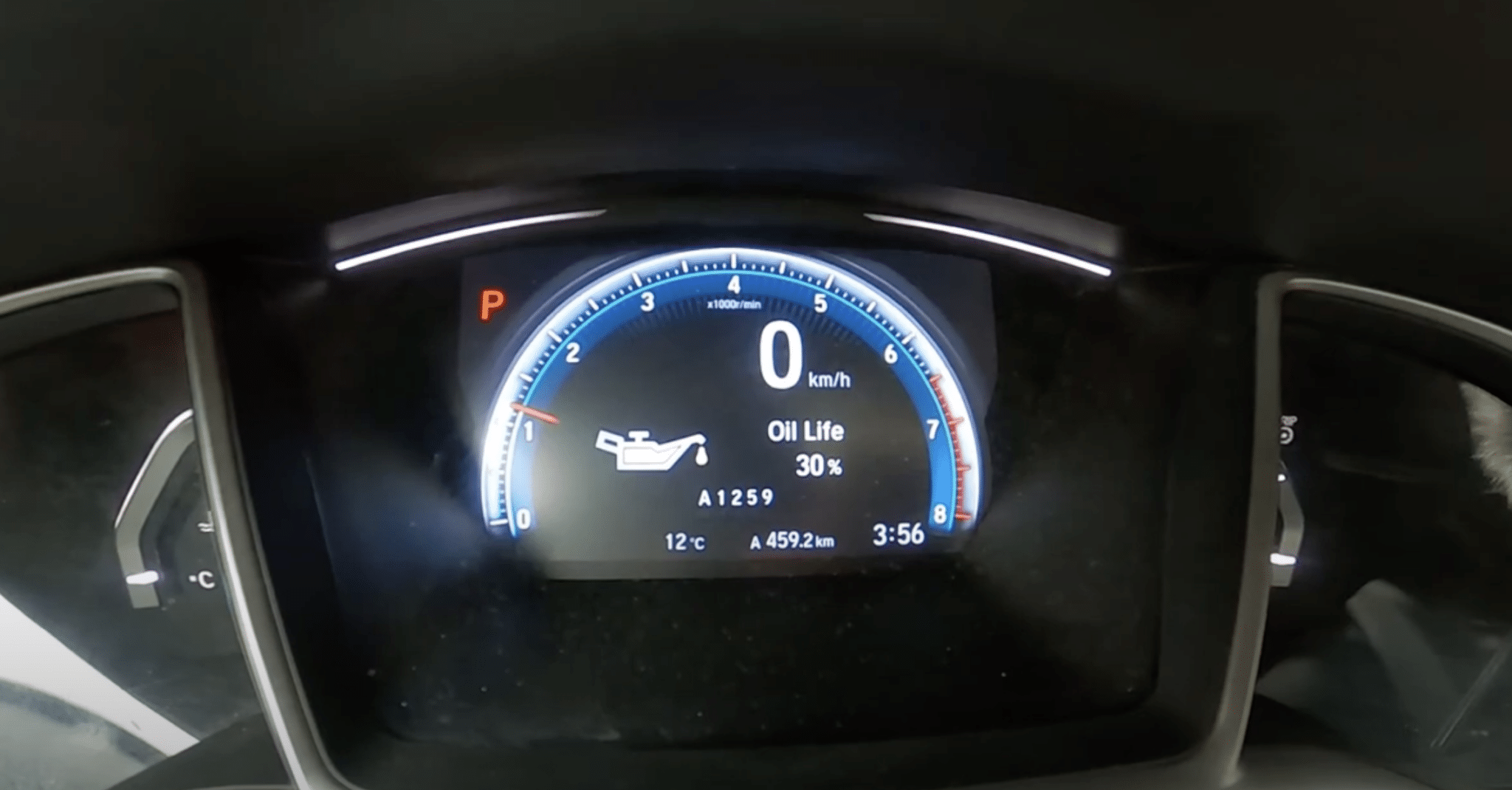
The 2016 Honda Civic uses the Maintenance Minder system to display alpha-numeric codes, such as A1 or B12, indicating specific service needs. Main Code A or B signals oil and filter changes, while Sub-codes 1–7 identify additional requirements like tire rotations, fluid replacements, or spark plug service based on actual driving conditions.
Understanding the maintenance codes on a 2016 Honda Civic is essential for preserving the longevity and resale value of this 10th-generation model. As of 2026, many of these vehicles have reached the ten-year milestone, making adherence to these specific service prompts more critical than ever. Unlike older vehicles that relied on a rigid mileage-based schedule, the 2016 Civic utilizes an onboard computer to monitor engine operating conditions, ambient temperature, and driving habits to calculate when components actually require attention.
How the Honda Maintenance Minder System Works
The Maintenance Minder system is an intelligent algorithm designed to optimize the life of your vehicle’s components. Instead of a "one size fits all" approach, it tracks engine revolutions, temperature, and trip duration to determine the rate of oil degradation. For example, a Civic driven primarily in short trips during cold winters will trigger a maintenance light sooner than one driven consistently at highway speeds in temperate climates.
When the oil life reaches 15%, the "Maintenance Due Soon" indicator appears on the instrument cluster, accompanied by a specific code. By the time it reaches 5%, the message changes to "Maintenance Due Now." If the oil life hits 0%, the message becomes "Maintenance Past Due," and the system will begin counting negative mileage to show how far you have driven beyond the recommended service interval.
As we look at these vehicles in 2026, the data gathered by these systems has proven invaluable for maintaining the high-mileage reliability the Civic is known for. Properly interpreting these codes prevents over-servicing while ensuring that critical long-term items—like CVT fluid and coolant—are not neglected.
Decoding the Main Maintenance Codes: A and B
Every service alert begins with a Main Code. In the 2016 Honda Civic, there are only two primary Main Codes: A and B. While both involve an oil change, the depth of service varies significantly between them.
Main Code A: Basic Oil Service
Main Code A is the most straightforward alert. It specifically calls for a replacement of the engine oil. Interestingly, according to official Honda documentation, Code A does not strictly require an oil filter replacement—only the oil itself. However, in modern automotive practice and specifically for the 2016 Civic's turbocharged or naturally aspirated engines, most technicians and owners choose to replace the filter regardless, as it is a low-cost way to ensure the new oil remains clean.
Main Code B: Comprehensive Inspection and Oil Service
Main Code B is more intensive. It indicates that the vehicle requires an engine oil change and a new oil filter, along with a suite of mechanical inspections. This code usually appears when the vehicle needs a more thorough "check-up." The inspections included under Code B are:
- Brake System Inspection: Checking the front and rear brakes, pads, and rotors for wear, and ensuring the brake hoses are not leaking or cracked.
- Tie-Rod Ends and Steering Gearbox: Inspecting the steering system for play or damage to the boots.
- Suspension Components: Checking for leaking shocks/struts or worn bushings.
- Driveshaft Boots: Inspecting for cracks or grease leaks that could lead to axle failure.
- Fluid Levels: Checking and topping off all fluids, including washer fluid, coolant, and brake fluid.
- Exhaust System: Looking for rust, holes, or loose heat shields.
- Fuel Lines and Connections: Checking for leaks or degradation.
Decoding the Sub-codes: 1 through 7
Sub-codes appear alongside Main Codes (e.g., B127) to indicate specific maintenance tasks that have reached their service limit based on time or mileage.
| Sub-code | Required Maintenance Action | Significance for the 2016 Civic |
|---|---|---|
| 1 | Rotate tires | Ensures even tread wear and extends tire life. |
| 2 | Replace air cleaner element and dust/pollen filter | Protects engine intake and ensures clean cabin air. |
| 3 | Replace transmission fluid | Critical for the longevity of the CVT or Manual transmission. |
| 4 | Replace spark plugs and inspect valve clearance | Maintains engine efficiency and prevents misfires. |
| 5 | Replace engine coolant | Prevents engine overheating and internal corrosion. |
| 7 | Replace brake fluid | Prevents moisture buildup and maintains stopping power. |
Detailed Breakdown of Sub-codes
Sub-code 1 (Tire Rotation): This is the most common sub-code. Rotating tires every 5,000 to 7,500 miles is vital for the front-wheel-drive 2016 Civic, as the front tires handle the majority of braking, steering, and acceleration forces, causing them to wear faster than the rear tires.
Sub-code 2 (Filters and Drive Belt): This code requires replacing the engine air filter and the cabin (dust and pollen) filter. It also prompts an inspection of the drive belt. In 2026, many drive belts on 2016 models are showing signs of "dry rot" or cracking due to age, making this inspection critical to prevent a snapped belt and subsequent loss of power steering and alternator function.
Sub-code 3 (Transmission Fluid): For the 2016 Civic, this most often refers to the Continuously Variable Transmission (CVT) fluid. The CVT is sensitive to fluid degradation. Using the correct Honda HCF-2 fluid is mandatory. Neglecting this code can lead to "judder" or belt slippage within the transmission.
Sub-code 4 (Spark Plugs and Valves): This code typically appears around the 100,000-mile mark. The 2016 Civic's 1.5L Turbocharged engine, in particular, relies on healthy spark plugs to maintain optimal combustion. The valve clearance inspection is also vital to ensure the engine runs quietly and efficiently.
Sub-code 5 (Engine Coolant): Honda uses a long-life "Type 2" blue coolant. This code generally appears after the first 10 years or 100,000 miles, and then every 5 years thereafter. As we are currently in 2026, most 2016 Civics are now due for their first or second coolant flush.
Sub-code 7 (Brake Fluid): Unlike other codes that are based on the Maintenance Minder algorithm, brake fluid is typically a time-based service. Honda recommends replacing the brake fluid every 3 years, regardless of mileage, because brake fluid is hygroscopic (it absorbs moisture from the air), which can lead to soft brake pedals and internal rust in the ABS modulator.
(Note: Sub-code 6 is generally reserved for rear differential fluid in AWD Honda models like the CR-V and is rarely seen on the 2016 Civic unless it is a specific regional trim.)
Maintenance Considerations for the 2016 Civic in 2026
As the 2016 Honda Civic enters its second decade of service, the maintenance codes take on a new level of importance. Owners should be aware of several "age-related" factors that the Maintenance Minder might not explicitly capture but are often associated with the codes provided.
High-Mileage Fluid Integrity
By 2026, many 2016 Civics have surpassed 120,000 miles. At this stage, the Sub-code 3 (Transmission Fluid) should be treated with high priority. The 10th-generation Civic was one of the first to widely adopt Honda's modern CVT. Evidence from the past decade suggests that regular fluid changes are the single most effective way to prevent total transmission failure in these models.
Turbocharger Care (1.5L Models)
For owners of the EX-T, Touring, or Sport trims equipped with the 1.5L Turbo engine, the Main Code A or B (Oil Change) is vital. Turbochargers are cooled and lubricated by engine oil. Using a high-quality 0W-20 full synthetic oil—as recommended by the American Petroleum Institute (API)—is non-negotiable for protecting the turbo bearings from heat-related failure.
Battery and Electrical Health
While not a specific Maintenance Minder code, an aging battery can sometimes trigger false warnings or "ghost codes" in the Civic’s sophisticated electronic dashboard. If you see multiple maintenance lights appearing simultaneously with no clear cause, have the battery and alternator tested.
Step-by-Step: How to Reset the Maintenance Minder
After the required service has been performed, the Maintenance Minder must be reset to begin the next tracking cycle. The process varies slightly depending on whether your 2016 Civic has a physical ignition key (LX trim) or a push-button start (EX and higher).
For Models with Information Display (LX Trim):
- Turn the ignition to the "On" (II) position without starting the engine.
- Press the Select/Reset knob on the instrument panel repeatedly until the oil life is displayed.
- Press and hold the Select/Reset knob for about 10 seconds until the oil life and maintenance code begin to blink.
- Press and hold the Select/Reset knob again for about 5 seconds until the oil life displays "100%."
For Models with Display Audio (Touchscreen - EX, Touring):
- Turn the ignition to the "On" position (press the Engine Start button twice without touching the brake).
- On the steering wheel, press the Info (i) button until the wrench icon appears.
- Press the Enter button to enter the maintenance sub-menu.
- Press and hold the Enter button for about 10 seconds until the reset mode appears on the screen.
- Scroll to select the item you wish to reset (or "All Due Items") and press Enter.
Estimated Service Costs (2026 Projections)
Maintenance costs have fluctuated over the years. In 2026, owners should expect the following price ranges for services associated with these codes at reputable independent shops or dealerships.
| Service Code | Estimated Cost (Labor & Parts) | Frequency |
|---|---|---|
| Main Code A/B | $85 – $150 | Every 5,000–10,000 miles |
| Sub-code 1 | $30 – $60 | Every 5,000–7,500 miles |
| Sub-code 2 | $100 – $180 | Every 15,000–30,000 miles |
| Sub-code 3 | $250 – $400 | Every 30,000–60,000 miles |
| Sub-code 4 | $300 – $550 | Every 100,000 miles |
| Sub-code 5 | $150 – $250 | Every 100,000 miles / 10 years |
| Sub-code 7 | $120 – $200 | Every 3 years |
Frequently Asked Questions
Can I ignore the "B" inspection and just change the oil?
While technically possible to just change the oil, it is not recommended for a vehicle of this age. The "B" inspections are designed to catch small issues—like a torn CV boot or a minor brake leak—before they become catastrophic and expensive failures. By 2026, rubber components in the 2016 Civic's suspension are likely reaching the end of their lifespan, making these inspections vital for safety.
Is it safe to drive with the maintenance light on?
When the "Maintenance Due Soon" (15% oil life) light appears, you generally have several hundred miles of buffer. However, once it reaches 0% or negative mileage, the oil’s ability to lubricate and cool the engine is significantly compromised. Prolonged driving with 0% oil life can lead to sludge buildup and increased engine wear.
Why did my Maintenance Minder skip a sub-code?
The system is designed to group services together to minimize the number of visits to the mechanic. If a sub-code was "nearly" due when you performed a different service, the system might have included it then, or it might be waiting to group it with a future oil change. This is normal behavior for the Honda algorithm.
Does the 2016 Civic require special oil?
Yes, all 2016 Civic engines require 0W-20 synthetic oil. This low-viscosity oil is essential for the tight tolerances of modern Honda engines and helps achieve the fuel economy ratings the car was designed for. Using a different weight, such as 5W-30, can negatively impact the VTEC or Turbocharger systems.
How do I know if my 2016 Civic has any recalls related to these codes?
Maintenance codes do not indicate recalls. To check for recalls on your specific VIN, visit the NHTSA Recall Website. Common recalls for the 10th Gen Civic have included AC condenser issues and fuel pump replacements, which should be handled by a dealer at no cost.
Final Recommendation for 2016 Civic Owners
To ensure your 2016 Honda Civic remains reliable through 2026 and beyond, the best course of action is to perform all services indicated by the Sub-codes as soon as they appear. While it may be tempting to delay a Sub-code 3 (Transmission) or Sub-code 4 (Spark Plugs) due to cost, these are the very components that define the vehicle's long-term health. Always use genuine Honda fluids (HCF-2 for transmission and Type 2 for coolant) to maintain compatibility with the vehicle's internal seals and alloys.