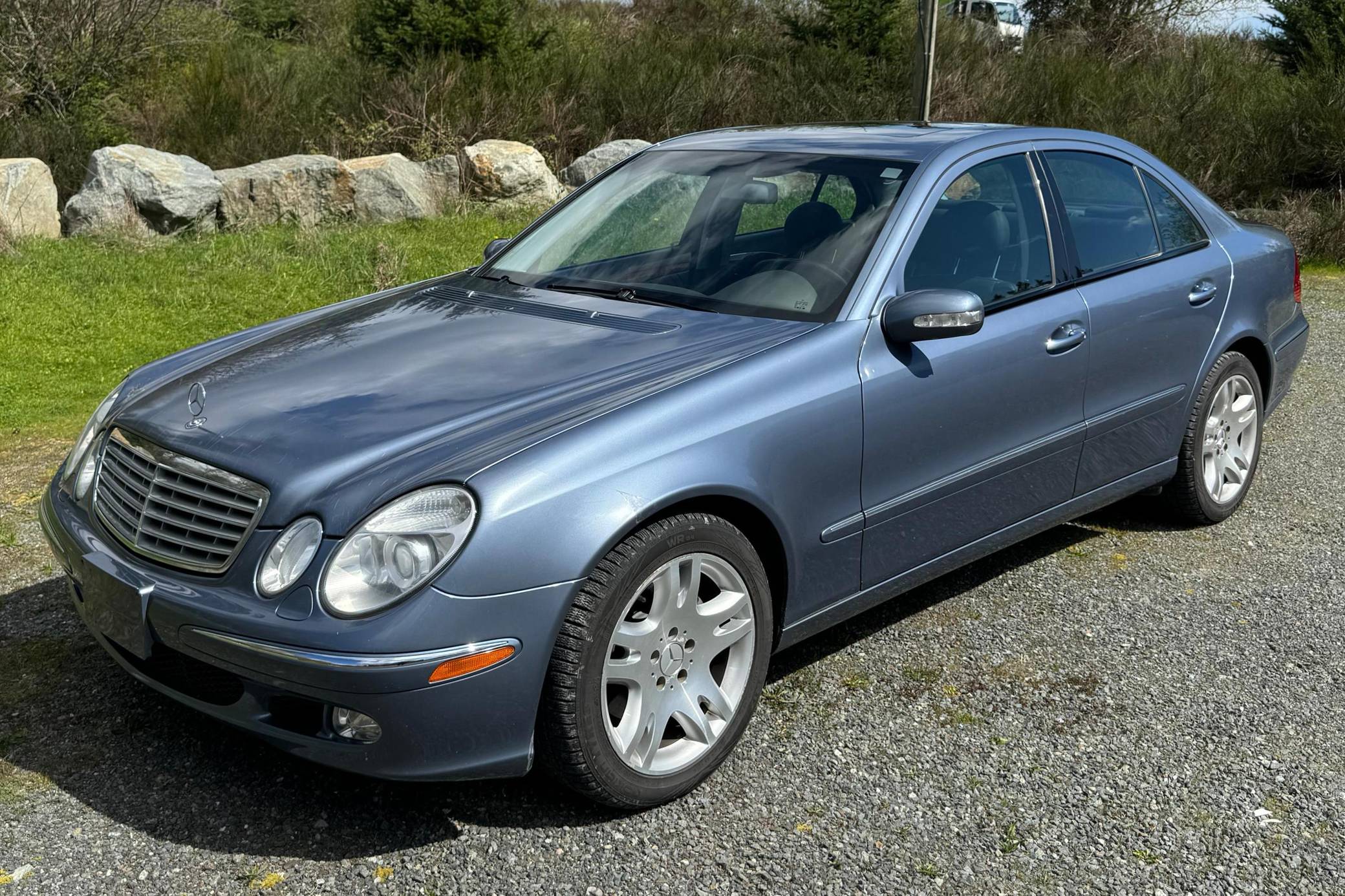
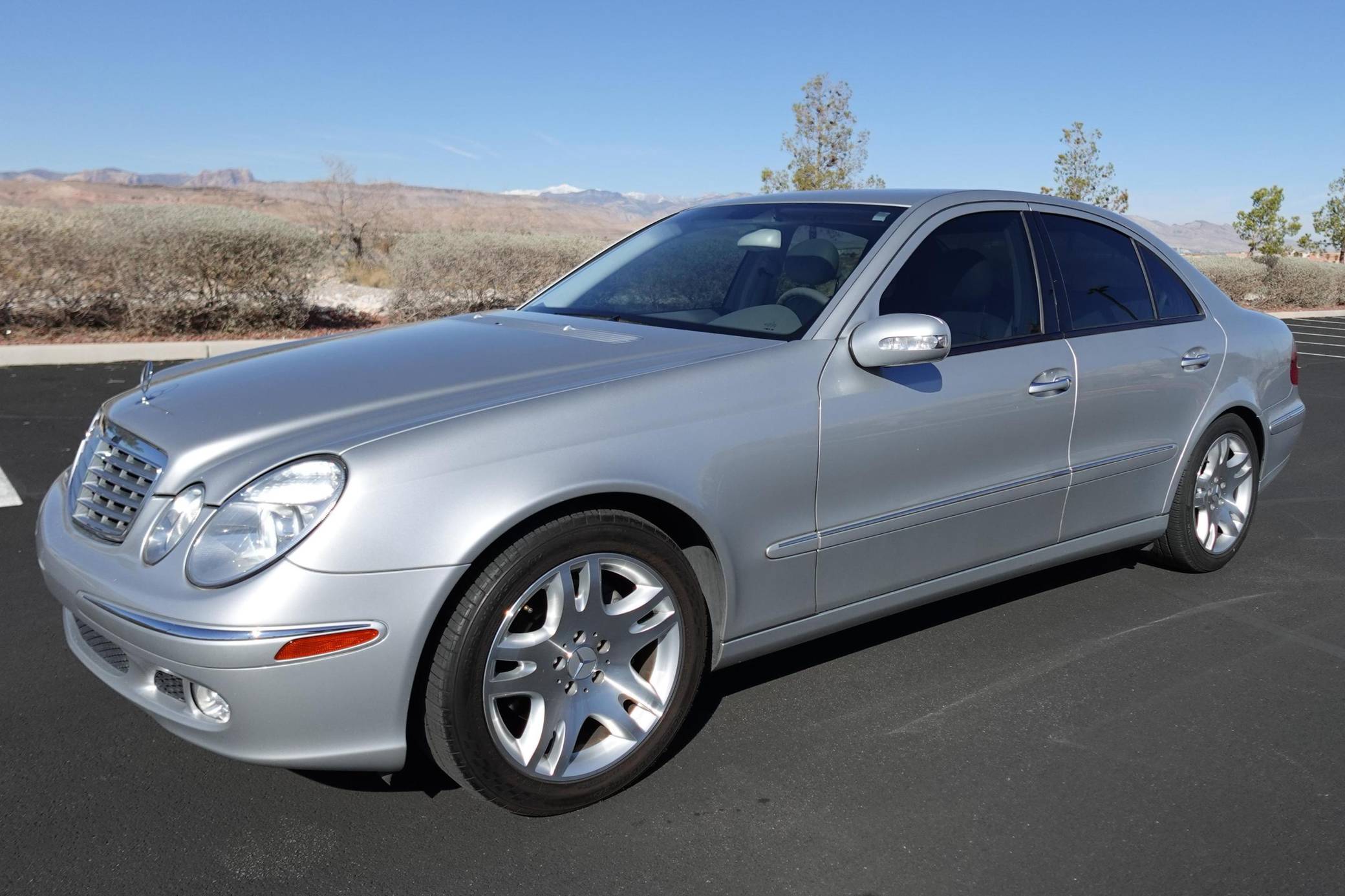
The 2003 Mercedes-Benz E500 packs a naturally aspirated 5.0-liter V8 engine that delivers 302 horsepower and 339 lb-ft of torque, bridging the gap between luxury cruising and muscular straight-line performance through a sophisticated powertrain and advanced chassis engineering.
When Mercedes-Benz introduced the W211 generation for the 2003 model year, the mid-size executive sedan segment shifted dramatically. Among the lineup, the E500 stood out as a velvet hammer, offering effortless high-speed capability wrapped in understated elegance. At a time when competitors were increasingly relying on forced induction or high-revving smaller displacement multi-valve layouts, Mercedes committed to a robust, large-displacement V8 architecture. Understanding what makes this powertrain and its supporting dynamic systems tick requires looking past the glossy marketing brochures of the early 2000s and examining the actual engineering hardware, calibration choices, and mechanical quirks that define the 2003 Mercedes E500 today.
The Heart of the Beast: The M113 5.0L V8 Engine
At the core of the 2003 Mercedes E500's performance profile is the M113 E50 engine. This aluminum-block, aluminum-head powerplant is widely regarded by automotive historians and independent technicians as one of the most mechanically durable V8 engines ever built by the German automaker. Displacing 4,966 cubic centimeters, the M113 utilizes a single overhead camshaft (SOHC) configuration with three valves per cylinder—two intake and one exhaust—sparked by dual spark plugs per cylinder managed by a sophisticated twin-spark ignition system.
This triple-valve setup was designed to optimize combustion efficiency and emissions control while providing a broad, flat torque curve. The engine produces its peak torque of 339 lb-ft across a remarkably wide plateau from 2,700 to 4,250 rpm. This means the driver does not need to wring the engine out to high revolutions to get moving quickly. Tip-in throttle response is immediate, and the car surges forward with authoritative linear acceleration from almost any legal speed.
Furthermore, the M113's closed-deck aluminum crankcase with Silitec (silicon-aluminum) cylinder bores provides exceptional structural rigidity without the massive weight penalty typically associated with cast-iron blocks of the era. Dual-length variable intake runners help tune the air charge dynamics, ensuring that the engine breathes efficiently whether idling in city traffic or sustaining triple-digit speeds on the German Autobahn.
Transmission Dynamics: The 722.6 Five-Speed Automatic
Power from the M113 V8 is routed to the rear wheels via the venerable 722.6 (W5A580) five-speed electronic automatic transmission. While Mercedes-Benz was already developing its pioneering seven-speed 7G-Tronic transmission for release in subsequent model years, the 2003 E500 relied on this heavy-duty five-speed unit, which was famously over-engineered to handle torque loads well beyond what the stock V8 could produce.
The 722.6 transmission features an adaptive shift control program that monitors driving style, vehicle load, and road incline, continuously adjusting shift points to match the driver's intent. In everyday driving, shifts are executed with seamless smoothness, virtually imperceptible to occupants. When the driver demands aggressive acceleration, the transmission drops gears swiftly, holding ratios up to the redline if the manual gate (Touch Shift) is engaged.
| Performance Metric | 2003 Mercedes-Benz E500 Specification |
|---|---|
| Engine Type | M113 5.0L Naturally Aspirated V8 |
| Horsepower | 302 hp @ 5,600 rpm |
| Torque | 339 lb-ft @ 2,700–4,250 rpm |
| Transmission | 722.6 5-Speed Electronic Automatic |
| 0–60 mph Acceleration | ~5.8 to 6.0 seconds |
| Top Speed | 155 mph (Electronically Governed) |
| Curb Weight | Approx. 3,815 lbs (1,730 kg) |
Straight-Line Acceleration and Real-World Velocity
On paper, the 2003 Mercedes E500 dispatched the sprint from zero to 60 mph in approximately 5.8 to 6.0 seconds, depending on atmospheric conditions and fuel loads. While modern hot hatches and electric sedans have warped perceptions of straight-line acceleration, a sub-six-second 0–60 mph time for a luxury mid-size sedan in 2003 was formidable territory, putting it within striking distance of dedicated sports cars of the era.
More impressive than the stationary launch, however, is the rolling acceleration. Passing slower traffic on a two-lane highway requires little more than a decisive press of the accelerator pedal. The transmission kicks down seamlessly, the M113 V8 emits a subdued, cultured baritone growl, and the E500 eats up passing distances with effortless authority. The electronically governed top speed of 155 mph is achieved with a level of high-speed directional stability that inspires absolute confidence, a hallmark of Stuttgart’s high-speed testing ethos.
Ride and Handling: Airmatic DC Suspension
Power is meaningless if it cannot be translated to the pavement safely and comfortably. The 2003 E500 distinguished itself from lesser W211 models (which often rolled on conventional steel-spring setups) by featuring standard Airmatic DC (Dual Control) semi-active air suspension.
Airmatic DC combines pneumatic air springs with electronically controlled adaptive shock absorbers. The system continuously monitors road conditions, vehicle speed, steering angle, and braking force, adjusting the damping characteristics at each individual wheel within milliseconds. Drivers can select between three distinct suspension modes:
- Comfort: Softens damping for long-distance highway cruising, isolating occupants from road irregularities and expansion joints.
- Sport 1: Tightens damper rates and reduces body roll during spirited cornering, offering a tighter connection to the asphalt.
- Sport 2: Firms the suspension to its maximum threshold, minimizing pitch and dive during aggressive driving maneuvers.
Additionally, the system automatically lowers the vehicle’s ride height by approximately 15 millimeters at speeds above 87 mph to reduce aerodynamic drag and improve high-speed stability.
Braking Performance and the SBC Controversy
To rein in its substantial mass and potent engine output, the 2003 E500 was equipped with large vented disc brakes front and rear, managed by one of the most controversial technological innovations of the era: Sensotronic Brake Control (SBC).
SBC is a fully electro-hydraulic braking system. Instead of a direct mechanical link between the brake pedal and the master cylinder, SBC uses a computer-controlled high-pressure hydraulic reservoir to apply brake pressure instantly upon sensing foot input. The system calculates driver intent, pre-loads the brake pads closer to the rotors in emergency situations, and dynamically distributes brake force across all four wheels based on weight transfer and traction limits.
In period testing, SBC delivered phenomenal stopping power, bringing the E500 to a halt from 70 mph in impressively short distances with zero noticeable brake fade. However, the system's reliance on complex electronics, specialized hydraulic pumps, and strict actuation cycle limits made it a frequent point of discussion among long-term owners. While Mercedes-Benz extended warranties on SBC components in many markets, prospective buyers and current enthusiasts must verify the health of the hydraulic accumulator and pump motor to ensure optimal stopping performance.
Fuel Economy and Operational Realities
Managing a high-displacement naturally aspirated V8 from the early 2000s involves accepting certain economic and thermodynamic realities. The EPA fuel economy ratings for the 2003 E500 typically hover around 15 mpg in city driving and 22 mpg on the highway. In real-world mixed commuting, drivers should expect figures closer to 16 to 18 mpg.
The engine requires premium unleaded fuel (91 octane or higher) to prevent destructive engine knock, as its compression ratio is optimized for higher-octane ratings. Maintenance requirements mirror its high-end pedigree: routine servicing involves spark plug changes (all 16 of them, courtesy of the twin-spark layout), synthetic oil changes holding nearly eight quarts of fluid, and vigilant monitoring of rubber suspension components and engine mounts, which tend to compress and wear over two decades of thermal cycling.
Conclusion and Verdict
The 2003 Mercedes-Benz E500 remains a fascinating study in turn-of-the-century luxury performance engineering. By pairing the bulletproof M113 V8 with sophisticated Airmatic suspension and cutting-edge-for-its-time brake technology, Mercedes created a grand tourer disguised as a business sedan. While its complex electronic systems demand respect and diligent maintenance, the actual driving experience—characterized by velvety torque, exceptional high-speed poise, and timeless styling—ensures that the E500 holds a respected place in automotive history. For enthusiasts seeking a classic executive cruiser with genuine V8 muscle, inspecting a well-documented E500 provides an accessible entry point into an era of uncompromising German engineering.