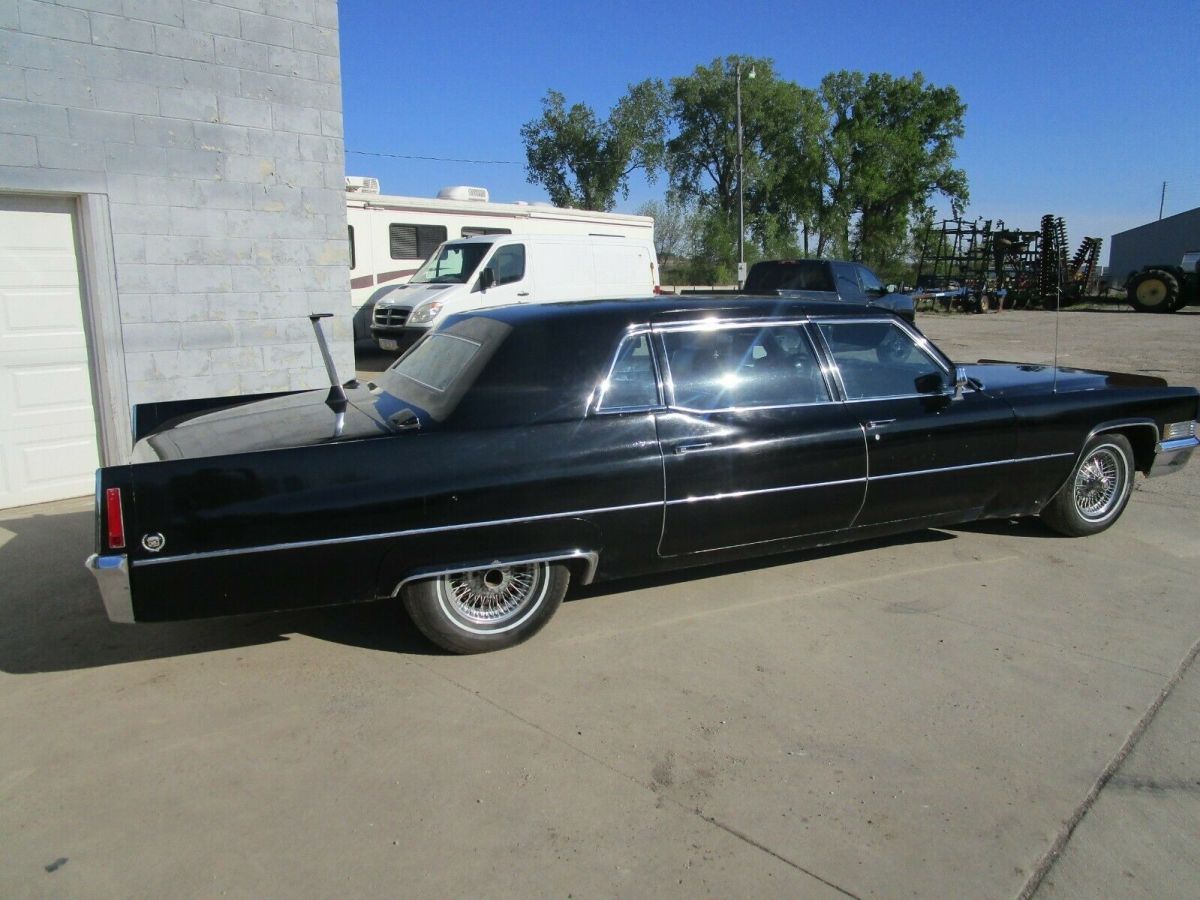
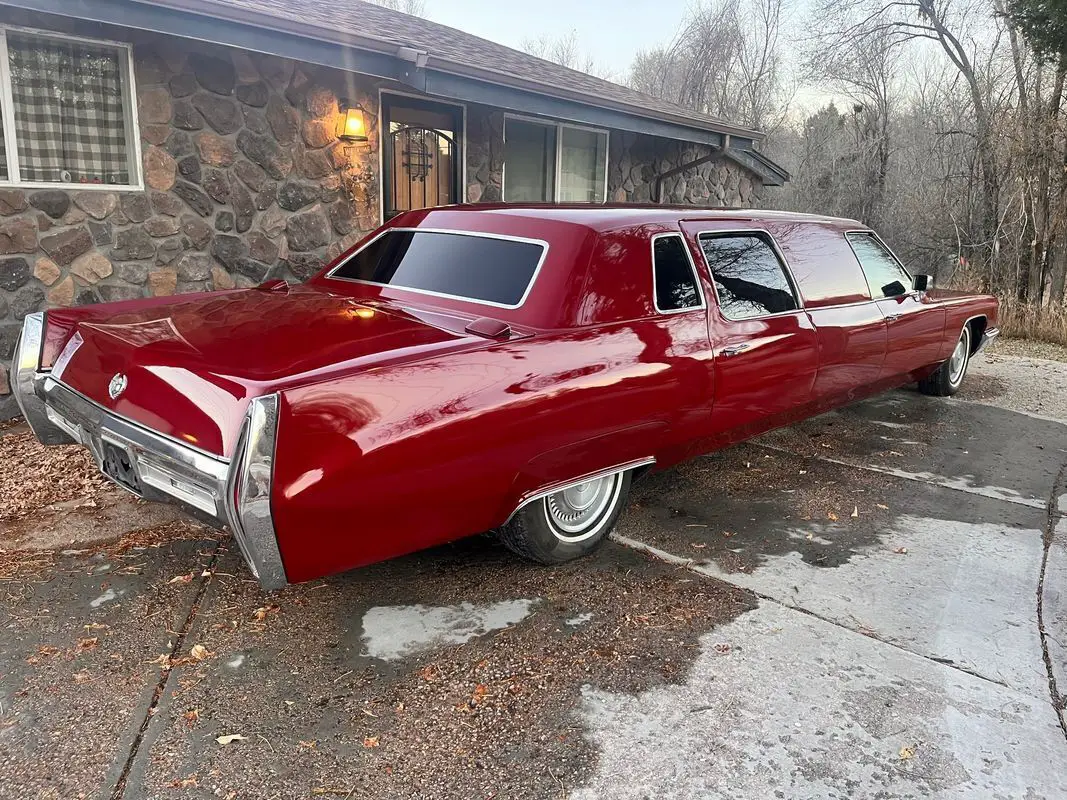
The 1970 Cadillac limousine represents the absolute apex of the traditional, massive-displacement American luxury cruiser, combining a robust 472-cubic-inch V8 engine, a factory-authorized Fleetwood formal design, and coachbuilt exclusivity that defined an era of uncompromised automotive grandeur.
The year 1970 marked a definitive milestone in the history of American luxury automobiles. It was the final model year for the third-generation Cadillac Fleetwood Limousine and Series 75 styling era before the drastic federal bumpers and emissions regulations of the 1970s altered automotive design. For enthusiasts, collectors, and historians, the 1970 Cadillac limo captures a unique intersection of traditional coachbuilding craftsmanship, immense physical scale, and peak mid-century executive prestige. Understanding this vehicle requires exploring its production origins, mechanical specifications, coachbuilding heritage, and the realities of owning and maintaining a vintage American luxury transport today.
Evolution of the Fleetwood Series 75 Limousine
To understand the 1970 Cadillac limo, one must examine the lineage of the Fleetwood Series 75. Cadillac had long established dominance in the chauffeured-transport market, competing with bespoke European coachbuilders by offering factory-warranted, mass-produced luxury limousines.
By 1970, the Series 75 was available in two primary body styles: the nine-passenger Fleetwood Sedan and the formal Fleetwood Limousine. The fundamental difference between the two configurations lay in the passenger compartment layout. The limousines featured a fixed glass partition window separating the driver from the rear passengers, accompanied by an intercom system, folding auxiliary jump seats upholstered to match the main bench, and individual rear climate control vents.
The design language of the 1970 model year refined the sharp, creased lines introduced in 1967. While the exterior sheet metal saw subtle updates—such as a revised grille with thirteen vertical blades, repositioned parking lamps, and delicate vertical taillight bezels—the car retained its imposing presence. Measuring over 247 inches in length with a massive 153.7-inch wheelbase, the 1970 Cadillac limo remains one of the longest passenger cars ever produced in volume by an American manufacturer.
Mechanical Specifications and Powertrain
Beneath the long, sculpted hood of the 1970 Cadillac limo sits a powerplant engineered specifically to haul heavy luxury loads with effortless torque: the 472-cubic-inch (7.7-liter) 90-degree V8 engine.
| Specification Feature | 1970 Cadillac Fleetwood Limousine Data |
|---|---|
| Engine Displacement | 472 cu in (7.7 Liters) |
| Horsepower (Gross) | 375 hp @ 4,400 RPM |
| Torque | 525 lb-ft @ 3,000 RPM |
| Transmission | Turbo Hydra-Matic 400 3-Speed Automatic |
| Wheelbase | 153.7 inches |
| Overall Length | 247.2 inches |
| Curb Weight | Approx. 5,300 - 5,500 lbs |
| Fuel Economy | Approx. 8 - 11 MPG |
This massive engine utilized a single Rochester four-barrel carburetor and delivered 375 gross horsepower alongside an immense 525 lb-ft of torque at a low 3,000 RPM. This torque output was critical; moving a vehicle weighing upwards of 5,500 pounds required substantial low-end grunt to achieve smooth, effortless acceleration expected by dignitaries, corporate executives, and high-end livery services.
Power was routed to the rear wheels via GM’s legendary Turbo Hydra-Matic 400 (TH400) three-speed automatic transmission. Known for its durability and smooth engagement, the TH400 managed the engine's output without sacrificing ride quality. The chassis utilized an independent front suspension with coil springs and upper/lower control arms, paired with a four-link rear suspension equipped with automatic level control, which used air shocks to maintain proper ride height regardless of rear-cabin passenger loads.
Coachbuilding Heritage and Factory Production
Unlike modern stretched limousines, which are typically cut and modified by aftermarket secondary-stage coachbuilders (such as Lehmann-Peterson or Americar), the 1970 Cadillac Fleetwood Limousine was constructed directly under General Motors' quality controls, though the body shells were finished with specialized interior appointments.
Fisher Body division manufactured the basic shell, but the specialized roof stampings, rear window frames, division partitions, and heavy-duty commercial chassis components distinguished the Series 75 from standard Fleetwood Brougham sedans. The car was engineered from the factory to handle the structural stress of an extended wheelbase without suffering from cowl shake or chassis flex.
Interior appointments in the 1970 model reflected the height of 1970s luxury. The driver's compartment was typically trimmed in durable black leather, while the rear executive compartment featured high-grade broadcloth or optional pleated leather upholstery, deep-pile carpeting, wood-grain trim accents, pull-out writing tables, and specialized reading lamps. The separation glass operated via a heavy-duty electric motor controlled by rear passengers, ensuring absolute privacy for private conversations or state business.
Ownership Realities, Maintenance, and Collecting
Acquiring, restoring, or maintaining a 1970 Cadillac limo in the modern era presents a distinct set of operational considerations. While these vehicles are robustly engineered, their age and unique dimensions require specialized knowledge.
Sourcing Parts and Mechanical Upkeep
Mechanically, the 472 cubic-inch V8 shares many components with standard Cadillac passenger cars of the era, making engine rebuild kits, gaskets, ignition components, and suspension bushings relatively straightforward to source through specialty vendors. However, model-specific parts—such as interior partition glass motors, rear door seals, specific window trim, and Series 75-exclusive driveshafts or brake lines—can be exceptionally difficult to find and often require scavenging from donor cars or custom fabrication.
Structural Integrity and Rust
Due to their massive size and heavy use in commercial or livery fleets, these limousines are susceptible to rust in structural areas. Particular attention must be paid to the frame rails, lower rocker panels, floor pans beneath the heavy carpets, and the cowl area where moisture can accumulate. Inspecting a prospective purchase for frame rot is paramount, as professional structural repair on a 25-foot chassis is cost-prohibitive.
Storage, Transport, and Handling
Driving a 1970 Cadillac limo requires adapting to its substantial footprint. Maneuvering in modern parking structures, narrow city streets, and tight residential drives requires patience and spatial awareness. Furthermore, standard home garages rarely accommodate a vehicle exceeding 247 inches in length, meaning dedicated off-site storage or specialized outdoor protection is often mandatory for collectors.
Frequently Asked Questions
How many passengers can a 1970 Cadillac limo legally and comfortably carry?
The factory-specified capacity for the Fleetwood Limousine is typically nine passengers, including the driver. This is accommodated via the front driver's bench, two fold-down auxiliary jump seats behind the partition, and the expansive rear bench seat. While three adults can sit across the rear bench, two passengers experience optimal comfort with the jump seats deployed.
What is the fuel economy of a 1970 Cadillac limo?
In real-world driving conditions, a properly tuned 1970 Cadillac limo typically achieves between 8 and 11 miles per gallon. Driven aggressively or in heavy urban traffic, fuel economy can drop into the single digits. Owners must account for this low efficiency, as well as the requirement for lead additives or high-octane fuel to prevent engine knock in high-compression vintage engines.
Is the 1970 Cadillac limo considered a true factory limousine?
Yes. Unlike aftermarket stretched limousines built by cutting existing sedans and welding in middle sections, the Series 75 Fleetwood Limousine was built on a dedicated heavy-duty commercial chassis directly through Cadillac and Fisher Body production lines, ensuring uniform structural integrity and factory warranty coverage when new.
How does the 1970 model differ from later 1970s Cadillac limos?
The 1970 model represents the final year before stricter federal crash standards mandated heavy, prominent 5-mph bumper systems and increasingly restrictive emissions equipment. Later 1970s limousines featured heavier front and rear overhangs, reduced horsepower ratings due to lower compression ratios, and more cumbersome exterior bulk.
What should buyers look for when inspecting a vintage Cadillac limo?
Priority should be given to rust-free frame rails, the operational integrity of the heavy-duty power division window, complete rear-cabin accessories (such as the intercom and climate controls), and the condition of the specialized glass and stainless exterior trim, which are nearly impossible to replace if damaged.
Next Actions for Enthusiasts and Collectors
For those considering adding a 1970 Cadillac limo to a collection or utilizing one for vintage livery work, the primary step is securing a comprehensive pre-purchase inspection from a mechanic experienced in vintage General Motors commercial chassis vehicles. Focus on verifying the health of the cooling system, verifying that the automatic level control compressor functions properly, and ensuring all electrical systems within the complex rear compartment are operational. Preserving one of these magnificent land yachts ensures that a defining chapter of mid-century American automotive craftsmanship remains active on the road.