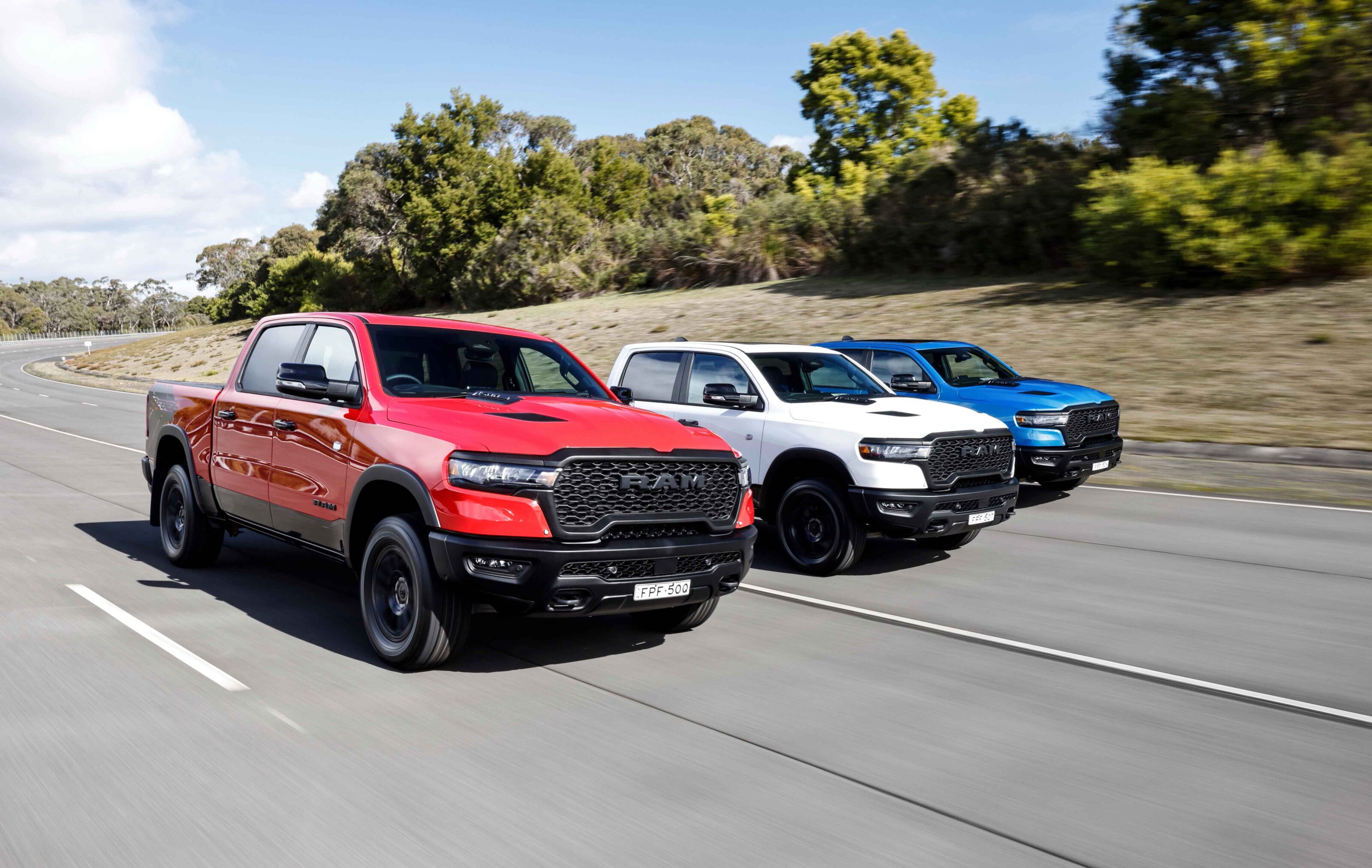
When shopping for a modern full-size pickup truck, manufacturers typically categorize their lineups into light-duty and heavy-duty tiers using standardized numeric badges: 1500, 2500, and 3500. These numbers correspond directly to light-duty half-ton, heavy-duty three-quarter-ton, and heavy-duty one-ton capacities. Choosing the right tier requires a careful analysis of your daily driving needs, towing requirements, payload limits, fuel economy constraints, and budget.
Decoding the Nomenclature: What Do 1500, 2500, and 3500 Mean?
Historically, truck classifications originated from payload capacity measured in tons. A "half-ton" truck (1500) could theoretically carry 1,000 pounds in its bed, a "three-quarter-ton" truck (2500) could handle 1,500 pounds, and a "one-ton" truck (3500) was rated for 2,000 pounds. Modern engineering has dramatically surpassed these legacy thresholds. Today, even a light-duty 1500 truck frequently handles well over 2,000 pounds of payload, while heavy-duty models routinely exceed thousands of pounds of capacity.
Despite these dramatic capability increases, the numeric naming convention remains an indispensable industry standard. It helps buyers instantly recognize where a vehicle sits within a manufacturer’s hierarchy. Major American truck manufacturers—including Ram, Chevrolet, GMC, and Ford (which uses an equivalent F-150, F-250, and F-350 naming structure)—employ these designations to separate comfortable daily drivers from commercial-grade workhorses.
The 1500 Class: Light-Duty Versatility and Daily Comfort
The 1500 series represents the most popular segment of the pickup truck market. Designed primarily for a blend of everyday commuting, light-to-moderate hauling, and recreational towing, light-duty trucks prioritize ride comfort, cabin technology, fuel efficiency, and maneuverability over raw commercial muscle.
Ride Quality and Suspension Architecture
One of the defining characteristics of a 1500 truck is its suspension. While heavy-duty trucks rely on stiff leaf springs to manage massive loads, many modern 1500 trucks utilize independent front suspension paired with sophisticated rear setups, such as coil springs or multi-link systems. Some models even feature four-corner air suspension. This engineering approach significantly dampens road imperfections, providing a ride quality that closely mimics a large SUV rather than a traditional commercial vehicle.
Engine Options and Efficiency
Light-duty trucks offer the widest variety of engine configurations. Buyers can choose from fuel-efficient turbocharged four-cylinders, refined naturally aspirated V6s, high-output turbocharged V6s, traditional V8 powerplants, and efficient light-duty diesel engines. This diversity allows buyers to optimize for fuel economy during highway commuting or opt for robust torque when pulling a mid-sized travel trailer or boat.
Limitations of the 1500 Tier
While exceptionally versatile, the 1500 class has strict physical boundaries. Their Gross Vehicle Weight Rating (GVWR) is lower, meaning they cannot legally or safely carry the heavy equipment, large slide-in campers, or massive gooseneck trailers associated with heavy labor. Pushing a 1500 truck beyond its designated towing and payload limits accelerates mechanical wear on the transmission, brakes, and axle components, while also compromising vehicle stability.
The 2500 Class: Heavy-Duty Capability for Serious Hauling
Stepping up to the 2500 series moves you from consumer-oriented light-duty trucks into the realm of heavy-duty machinery. Often referred to as three-quarter-ton trucks, 2500 models are engineered to bridge the gap between daily drivability and commercial-grade towing.
| Feature / Metric | 1500 (Light-Duty) | 2500 (Heavy-Duty) | 3500 (Heavy-Duty) |
|---|---|---|---|
| Legacy Weight Class | Half-Ton | Three-Quarter-Ton | One-Ton |
| Typical Max Payload | 1,500 to 2,500+ lbs | 2,500 to 4,000+ lbs | 4,000 to 7,500+ lbs |
| Typical Max Towing | 7,000 to 13,000+ lbs | 15,000 to 20,000+ lbs | 20,000 to 37,000+ lbs |
| Rear Suspension | Coils, Leaf, or Air | Heavy-Duty Leaf Springs | Heavy-Duty Leaf or Dual Rear Wheels |
| Primary Powertrains | Gas V6, V8, Turbo-4, Light Diesel | Heavy Gas V8, High-Output Diesel | Heavy Gas V8, High-Output Diesel |
Chassis and Suspension Upgrades
A 2500 truck features a fully boxed, high-strength steel frame that is substantially thicker and stiffer than its 1500 counterpart. The suspension is significantly firmer, utilizing heavy-duty leaf springs in the rear to prevent excessive sag when loaded. This rigidity translates to a bouncy ride when the truck is unloaded, but it provides the essential stability required when pulling large equipment trailers, heavy livestock trailers, or large RVs.
Powertrains Built for Torque
Under the hood, 2500 trucks ditch light-duty engines in favor of heavy-duty powerplants. Buyers can select massive displacement gasoline V8 engines designed for sustained workload endurance, or opt for heavy-duty turbocharged diesel engines. Diesel options in this class deliver immense low-end torque, allowing the truck to pull heavy loads up steep inclines without straining the engine.
Braking and Control Systems
Towing heavy loads requires robust stopping power. The 2500 tier incorporates larger brake rotors, heavy-duty calipers, and sophisticated exhaust brakes or integrated trailer brake controllers. These systems use the engine's compression or a variable-geometry turbocharger to slow the vehicle down under load, preserving the physical service brakes from overheating during long descents.
The 3500 Class: Commercial-Grade Power and Maximum Limits
At the apex of consumer-available pickup trucks sits the 3500 series. Often designated as one-ton trucks, these vehicles are built to handle extreme commercial workloads, massive fifth-wheel trailers, and heavy payload demands without compromise.
Single Rear Wheel (SRW) vs. Dual Rear Wheel (DRW)
The 3500 class introduces a critical configuration choice: Single Rear Wheel (SRW) or Dual Rear Wheel (DRW), commonly known as a "dually." A dually features four tires on the rear axle instead of two, providing a wider footprint that dramatically increases lateral stability, weight distribution, and rear payload capacity. Dual-rear-wheel trucks are essential for hauling heavy fifth-wheel campers, large construction equipment, or commercial flatbed setups safely.
Maximum Towing and Payload Capacity
When equipped with high-output diesel engines and proper axle ratios, modern 3500 trucks can achieve maximum towing capacities approaching or exceeding 30,000 to 37,000 pounds, depending on the manufacturer. Payload capacity can surpass 7,000 pounds. This makes the 3500 tier the definitive choice for full-time RVers, heavy construction contractors, farmers, and commercial transporters.
Trade-Offs of Daily Living with a 3500
The supreme capability of a 3500 truck comes with distinct compromises for everyday use. The ride is exceptionally stiff when unladen, the vehicle footprint is massive and difficult to park in tight urban environments, and fuel economy—even when unloaded—is lower than that of a 1500 model. Furthermore, maintenance costs for heavy-duty diesel engines, heavy-duty transmissions, and larger tires are significantly higher.
Key Comparison Factors: How to Choose the Right Class
Selecting the correct truck requires honest evaluation of your real-world usage patterns rather than hypothetical scenarios. Buying more truck than you need introduces unnecessary expenses, while buying too little creates severe safety and operational hazards.
Towing Requirements
- Under 10,000 lbs: A properly equipped 1500 truck handles utility trailers, small boat trailers, and mid-sized travel trailers comfortably.
- 10,000 to 18,000 lbs: This range falls squarely into 2500 territory, where stability and engine braking become critical.
- Over 18,000 lbs: A 3500 truck—frequently in a dual-rear-wheel configuration—is mandatory for safe, legal operation.
Payload and Bed Capacity
Consider what you put in the bed rather than just what you pull behind. If you carry heavy tools, a camper shell, and fuel tanks daily, a 1500's payload limit can be quickly exhausted. Heavy-duty trucks provide the structural headroom to absorb heavy cargo weights without compromising steering responsiveness.
Operating Costs and Maintenance
Initial purchase price is only the starting point. Heavy-duty trucks (2500 and 3500) carry higher insurance premiums, require more expensive commercial-grade tires, demand larger quantities of specialized fluids during routine service, and often incur higher fuel costs. If you do not regularly utilize their heavy-duty capabilities, the financial overhead of ownership is difficult to justify.
Frequently Asked Questions
Can a 1500 truck pull a heavy fifth-wheel trailer?
No. 1500 trucks lack the structural frame strength, suspension rigidity, and payload capacity required to support the pin weight of a fifth-wheel trailer safely. Attempting to install a fifth-wheel hitch in a light-duty truck bed almost always exceeds the vehicle's maximum Gross Vehicle Weight Rating. Fifth-wheel towing requires at least a 2500, and often a 3500 dual-rear-wheel truck.
Do 2500 and 3500 trucks require a commercial driver's license (CDL)?
In most jurisdictions for personal, non-commercial use, standard driver's licenses are sufficient for driving 2500 and 3500 trucks, even when towing a large recreational trailer. However, if the combined weight rating of the truck and trailer exceeds specific commercial thresholds (typically 26,000 pounds gross combined weight rating) for business purposes, commercial licensing regulations may apply. Check local state or regional department of motor vehicles guidelines for precise legal definitions.
Why is the ride quality so much firmer in a 2500 or 3500 compared to a 1500?
Heavy-duty trucks utilize heavy-duty multi-leaf rear suspension systems and reinforced frame rails designed to support immense weight without sagging. Because these components are engineered to bear thousands of pounds of cargo, they do not flex easily when the truck is empty. This lack of compliance under light loads causes the rear end to bounce over bumps, whereas 1500 trucks utilize softer coil or independent springs tuned for passenger comfort.
Is a diesel engine mandatory for a 2500 or 3500 truck?
Diesel engines are not mandatory, but they are widely preferred for heavy towing. Modern heavy-duty trucks offer powerful gasoline V8 engines that cost significantly less upfront, feature lower maintenance costs, and are well-suited for buyers who need heavy payload capacity and moderate towing without the complexity of a diesel emissions system. Diesel engines are selected primarily by those who tow heavy loads frequently or across mountainous terrain.
How does fuel economy compare across these three classes?
Fuel economy ratings for 1500 trucks vary widely, with efficient V6 and turbocharged engines offering respectable highway efficiency. Because 2500 and 3500 trucks exceed light-duty weight limits, official government fuel economy tests are often not posted on window stickers. Real-world fuel consumption for heavy-duty trucks is substantially higher due to increased vehicle weight, large displacement engines, and aerodynamic drag, regardless of whether you choose gas or diesel.
Final Recommendation
Assess your primary use case before visiting a dealership. If your truck serves as a daily commuter, family vehicle, and occasional weekend hauler for light utility trailers, a 1500 model delivers superior comfort, better fuel economy, and easier maneuverability. If you regularly pull a heavy camper, livestock trailer, or equipment weighing between 10,000 and 18,000 pounds, step up to a 2500 for necessary braking and stability. Finally, if you manage heavy commercial loads, large fifth-wheel configurations, or require maximum payload capacity, invest in a 3500—ideally with dual rear wheels—to ensure safe, confident, and reliable operation under extreme demands.