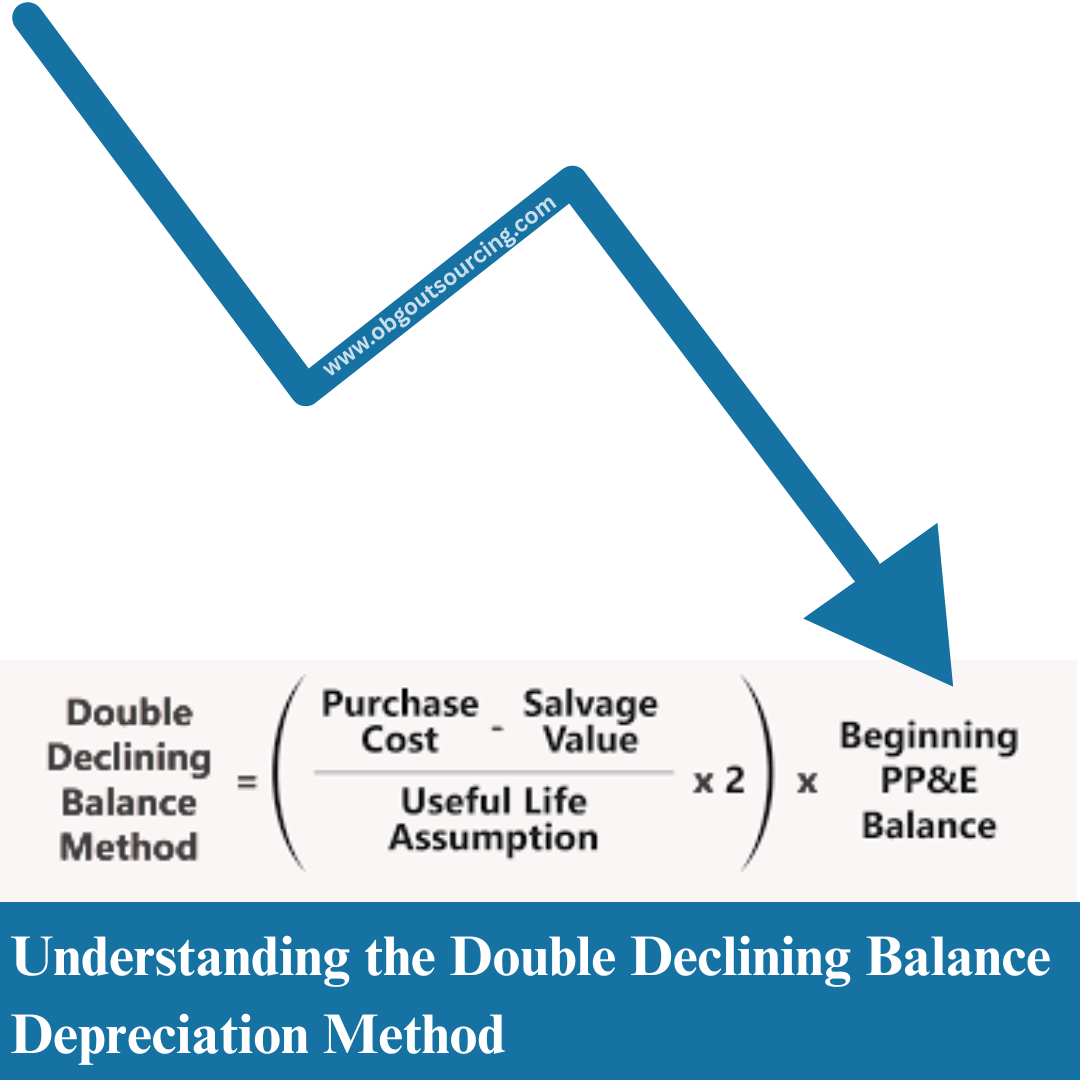
The 150 declining balance depreciation method is an accelerated accounting technique that writes off a fixed percentage of an asset's remaining book value each year, resulting in higher depreciation expenses in the early life of the asset and lower expenses in later years.
Introduction to Declining Balance Depreciation
Understanding how assets lose value over time is fundamental to accurate financial reporting, asset management, and tax planning. When a business purchases long-term capital assets—such as machinery, vehicles, office equipment, or computers—these items do not contribute equally to revenue generation across every year of their operational lifespan. Generally, assets are most productive, require less maintenance, and suffer the most rapid utility loss during their initial years of service. Traditional straight-line depreciation spreads the cost evenly across every year, failing to reflect this economic reality.
To bridge the gap between financial accounting and actual economic wear and tear, accelerated depreciation methods were developed. Among these, the declining balance method stands out as a powerful tool for matching expenses with revenues. Specifically, the 150 declining balance method—often referred to as the 150% declining balance method—offers a moderate acceleration rate compared to the more aggressive double-declining balance (200%) method, making it a preferred choice for specific regulatory frameworks, tax compliance mandates, and industries with moderate asset turnover rates.
This comprehensive guide breaks down the mechanics, mathematical formulas, strategic applications, tax implications, and operational comparisons of the 150 declining balance depreciation method, providing finance professionals, business owners, and accounting students with a thorough resource for mastering the concept.
Fundamental Concepts of Asset Depreciation
Before diving into the mechanics of the 150 declining balance approach, it is necessary to establish a firm grasp of the core variables utilized in all depreciation calculations. Every asset depreciation schedule relies on four primary components:
- Cost Basis: The total capitalized cost of acquiring the asset and preparing it for its intended use. This includes the purchase price, delivery fees, installation charges, and legal or transactional fees directly tied to acquisition.
- Salvage Value (Residual Value): The estimated net realizable value of the asset at the end of its useful life. Under the 150 declining balance method, the salvage value is not subtracted from the initial cost basis when calculating periodic depreciation during the asset's active life, but the asset cannot be depreciated below this predetermined floor.
- Useful Life: The estimated period during which the asset is expected to be economically usable by the business, typically expressed in years or operating hours.
- Book Value: The net value of the asset recorded on the balance sheet at any given time, calculated as the original cost basis minus accumulated depreciation up to that date.
Depreciation does not represent a physical cash outflow; rather, it is a non-cash expense that allocates the historical cost of an asset across the accounting periods it helps generate revenue. By utilizing an accelerated approach like the 150 declining balance method, organizations can optimize their taxable income and align asset write-offs more closely with physical reality.
Mechanics of the 150 Declining Balance Method
The defining characteristic of any declining balance method is that the depreciation rate is applied to the declining book value of the asset rather than its original cost basis. Because the book value decreases every year, the resulting depreciation expense naturally shrinks annually.
Determining the Depreciation Rate
To calculate the annual depreciation expense under the 150 declining balance method, you must first determine the straight-line depreciation rate and multiply it by the acceleration factor of 1.5 (or 150%).
- Calculate the Straight-Line Rate: Divide $100%$ by the asset's useful life in years. For example, an asset with a 5-year useful life has a straight-line rate of $\frac{100%}{5} = 20%$ per year.
- Apply the 150% Factor: Multiply the straight-line rate by $1.5$. Continuing the example: $20% \times 1.5 = 30%$.
This resulting percentage ($30%$ in this case) becomes the fixed depreciation rate applied to the remaining book value each year.
The Mathematical Formula
The mathematical expression for calculating the annual depreciation expense in year $n$ is:
$$\text{Depreciation Expense}_n = \text{Beginning Book Value}_n \times \left(\frac{1.5}{\text{Useful Life}}\right)$$
Where:
- $\text{Beginning Book Value}_n = \text{Cost Basis} - \text{Accumulated Depreciation through year } (n-1)$.
Because the beginning book value decreases each year, the absolute dollar amount of depreciation decreases annually, even though the percentage rate remains constant.
Step-by-Step Practical Calculation Example
To visualize how the 150 declining balance method operates over time, let us trace a hypothetical asset through its complete lifecycle.
- Asset: Commercial Delivery Van
- Cost Basis: $$50,000$
- Salvage Value: $$5,000$
- Useful Life: $5 \text{ years}$
Step 1: Calculate the Depreciation Rate
$$\text{Straight-Line Rate} = \frac{1}{5} = 20%$$ $$\text{150% Declining Balance Rate} = 20% \times 1.5 = 30% \text{ per year}$$
Step 2: Construct the Depreciation Schedule
| Year | Beginning Book Value | Calculation ($30%$ of BBV) | Depreciation Expense | Accumulated Depreciation | Ending Book Value |
|---|---|---|---|---|---|
| 1 | $$50,000.00$ | $$50,000 \times 0.30$ | $$15,000.00$ | $$15,000.00$ | $$35,000.00$ |
| 2 | $$35,000.00$ | $$35,000 \times 0.30$ | $$10,500.00$ | $$25,500.00$ | $$24,500.00$ |
| 3 | $$24,500.00$ | $$24,500 \times 0.30$ | $$7,350.00$ | $$32,850.00$ | $$17,150.00$ |
| 4 | $$17,150.00$ | $$17,150 \times 0.30$ | $$5,145.00$ | $$37,995.00$ | $$12,005.00$ |
| 5 | $$12,005.00$ | Switch/Adjustment | $$7,005.00$ | $$45,000.00$ | $$5,000.00$ |
Handling the Salvage Value Floor and Switching
A critical technical rule in declining balance depreciation is that an asset cannot be depreciated below its estimated salvage value. In the example above, if we strictly applied the $30%$ rate in Year 5, the depreciation would be $$12,005 \times 0.30 = $3,601.50$, resulting in an ending book value of $$8,403.50$. This violates our salvage value floor of $$5,000$.
To resolve this, accountants cap the final year's depreciation expense so that the ending book value equals exactly the salvage value. Therefore, in Year 5, the depreciation expense is simply the difference between the beginning book value and the salvage value:
$$$12,005.00 - $5,000.00 = $7,005.00$$
Furthermore, under standard financial accounting frameworks (such as GAAP), organizations often switch from the declining balance method to the straight-line method halfway through an asset's life if the straight-line calculation yields a higher or more consistent expense for the remaining period.
Comparison: 150% vs. Double-Declining (200%) Balance
Businesses evaluating accelerated depreciation often weigh the 150 declining balance method against the double-declining balance (200%) method. While both methods front-load expenses, their operational profiles differ significantly.
| Feature | 150% Declining Balance | 200% (Double) Declining Balance |
|---|---|---|
| Acceleration Factor | Multiplied by $1.5$ ($150%$) | Multiplied by $2.0$ ($200%$) |
| Early-Year Expense | Moderate front-loading | Aggressive front-loading |
| Tax Regulatory Standing | Frequently mandated for specific property classes under tax codes (e.g., U.S. MACRS 15-year and 20-year property) | Standard for general accelerated financial reporting and specific personal property tax classes |
| Income Statement Impact | Smooths earnings volatility better than 200% while still providing tax shields | Causes sharper reductions in early-year net income |
| Book Value Decay | Slower reduction curve, maintaining higher asset values on the balance sheet longer | Rapid reduction curve, driving book values down quickly |
Choosing between these two methods depends heavily on internal financial strategy, external reporting requirements, and local tax compliance guidelines.
Tax Implications and Regulatory Standards
Depreciation is not only an internal management metric for tracking asset utility; it is also a cornerstone of corporate taxation. Tax authorities worldwide establish rigid guidelines regarding which depreciation methods businesses may use to calculate taxable income.
The U.S. MACRS Context
In the United States, the Modified Accelerated Cost Recovery System (MACRS) governs tax depreciation. Under MACRS statutory tables:
- 200% Declining Balance is typically prescribed for 3-year, 5-year, 7-year, and 10-year property.
- 150% Declining Balance is mandated for 15-year and 20-year property, as well as for all property used in farming operations or specific utility property classes.
Using the prescribed tax depreciation method ensures compliance with statutory requirements, avoiding costly audits or adjustments. It is important to note that tax depreciation often operates independently of financial accounting (GAAP or IFRS) depreciation, requiring businesses to maintain parallel asset ledgers—one for book purposes and one for tax purposes.
Deferred Tax Consequences
Because the 150 declining balance method accelerates deductions into earlier years compared to straight-line depreciation, a company's taxable income is lower in the asset's early life, reducing current tax liabilities. However, in later years, the annual tax depreciation drops below straight-line levels, resulting in higher taxable income. This timing difference creates a deferred tax liability on the balance sheet, reflecting future tax obligations that have been postponed rather than eliminated.
Strategic Advantages and Limitations
Every accounting methodology carries inherent trade-offs. Implementing the 150 declining balance method offers distinct operational benefits alongside notable limitations.
Advantages
- Better Expense Matching: Aligns higher depreciation charges with periods of high productivity and heavy maintenance costs, stabilizing net operating cash flow perception.
- Tax Shield Maximization: Accelerates tax deductions into the present, improving early-stage corporate liquidity and freeing up working capital for reinvestment.
- Regulatory Alignment: Simplifies tax filing compliance by adhering directly to statutory requirements for mid-tier recovery property classes.
- Conservatism in Valuation: Maintains lower asset carrying values on the balance sheet during periods of rapid market obsolescence, protecting the organization from overstating its asset base.
Limitations
- Initial Income Depression: Reduces net income during the first few years of asset ownership, which can negatively impact financial ratios, borrowing capacity, or investor perceptions focused on short-term profitability.
- Mathematical Complexity: Requires more intricate tracking and computational safeguards than the straight-line method, particularly regarding salvage value floors and mid-year convention adjustments.
- Divergence from Economic Reality: While accelerated, a fixed percentage formula may still fail to capture the precise, non-linear market value degradation of specialized assets.
Common Mistakes and Troubleshooting
When setting up and maintaining a 150 declining balance depreciation schedule, accounting teams frequently encounter common operational pitfalls:
- Subtracting Salvage Value Too Early: A prevalent error is subtracting the salvage value from the cost basis before calculating the initial annual depreciation rate. Under declining balance rules, the percentage is always multiplied against the unadjusted book value; salvage value is only enforced as an ending floor.
- Ignoring Conventions: Failing to apply statutory conventions (such as the half-year convention or mid-quarter convention) can distort tax filings. For instance, the half-year convention assumes all assets were placed in service precisely at the midpoint of the tax year, restricting Year 1 depreciation to exactly six months regardless of the actual purchase date.
- Depreciating Past the Floor: Letting software or manual schedules drive the book value below the established salvage value. Regular audits of the fixed asset ledger prevent over-depreciation.
- Mixing Book and Tax Ledgers: Applying tax depreciation rules directly to financial statements where GAAP requires a different allocation logic can lead to severe discrepancies during independent audits.
Conclusion and Next Actions
The 150 declining balance depreciation method provides a balanced middle ground for businesses seeking to capture accelerated tax shields and match expenses to asset productivity without resorting to the more aggressive drops of the double-declining method. By understanding how to calculate depreciation rates, manage book values, respect salvage value floors, and align practices with statutory regulations, financial professionals can ensure accurate reporting and optimized cash flow management.
To implement or audit this depreciation method within your organization, take the following next actions:
- Review your current fixed asset register to identify which asset classes fall under 150 declining balance mandates for tax compliance.
- Verify that your accounting software is correctly configured to halt depreciation once assets reach their designated salvage value.
- Consult with a certified public accountant (CPA) or tax professional to evaluate whether switching between financial and tax depreciation methods will yield optimal working capital benefits for your specific business structure.