Mastering badminton requires a solid understanding of the official Laws of Badminton, fundamental court etiquette, and strategic match conduct. Whether you are stepping onto the court for your first recreational match or preparing for a competitive tournament, adhering to established guidelines ensures fair play, reduces the risk of injury, and elevates your overall performance.
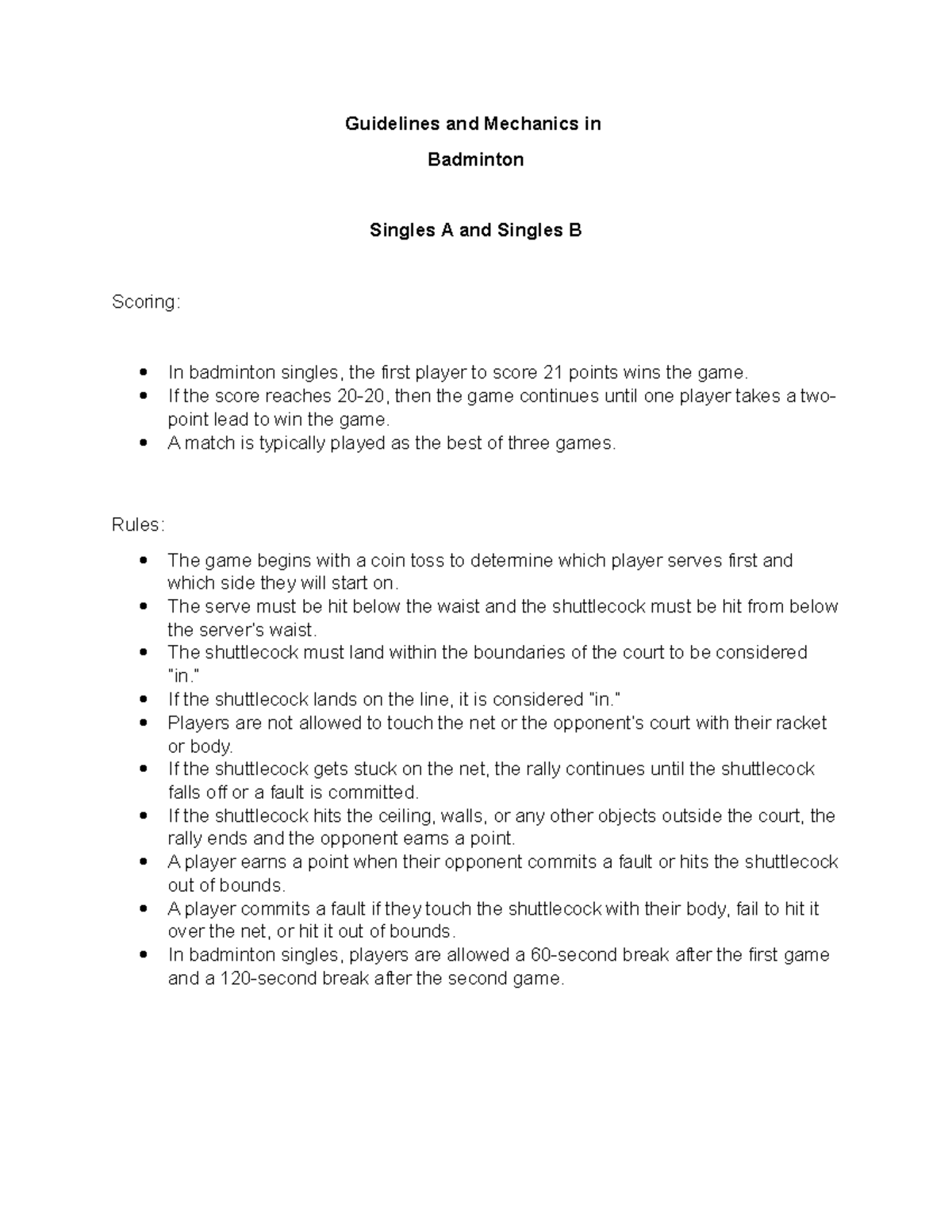
1. Understand the Official Scoring System and Match Format
Every badminton player must master the official scoring format established by the Badminton World Federation (BWF). Knowing how points are calculated dictates your match strategy, pacing, and mental approach.
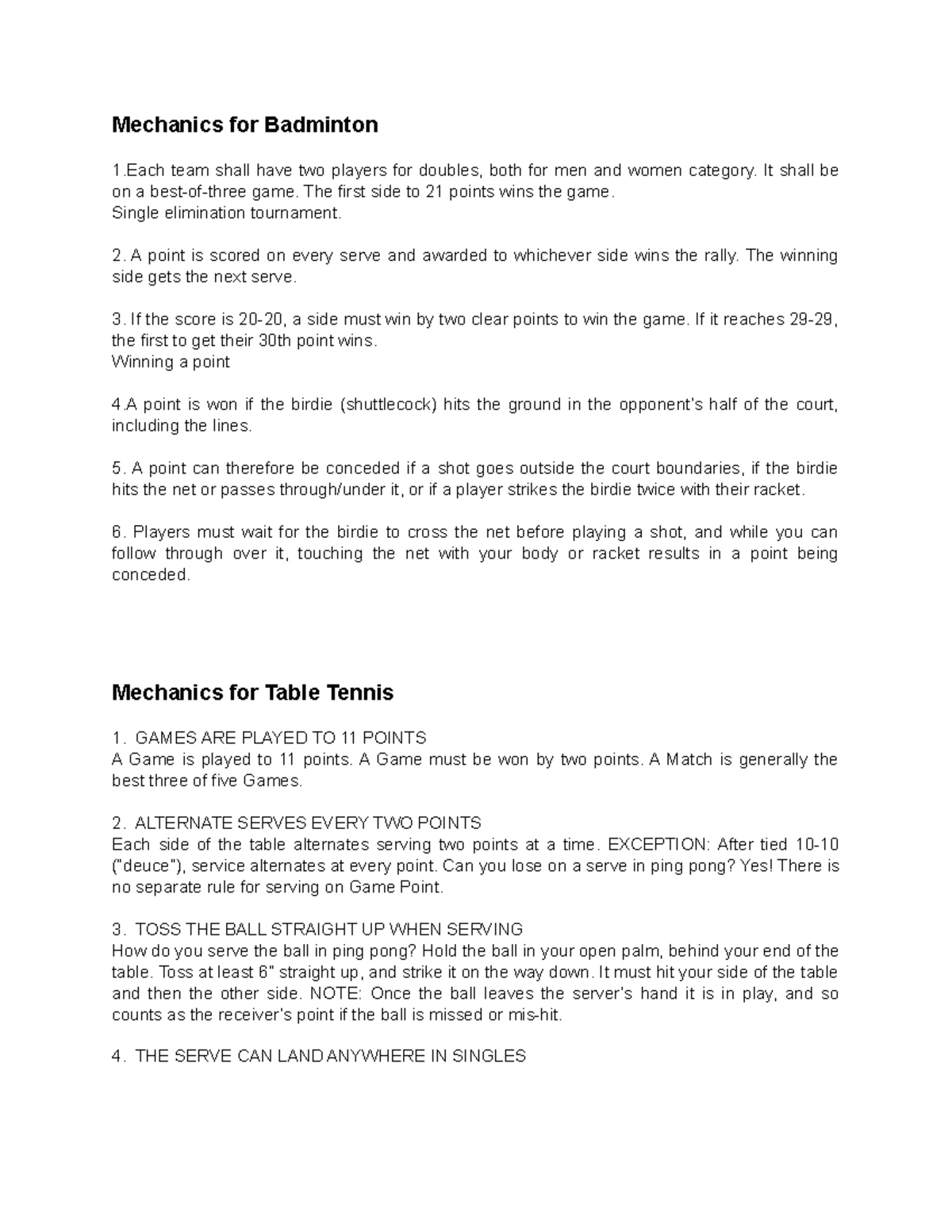
Modern international and domestic matches follow a best-of-three games format. Each game is played to 21 points, with a few critical caveats regarding margins of victory and setting:
- Scoring Method: Rally point scoring is used, meaning a point is scored on every single serve, regardless of which side served.
- Winning a Game: The first side to reach 21 points wins the game, provided they hold a lead of at least two points.
- The 30-Point Cap: If the score reaches 20-all, the game continues until one side secures a two-point advantage. If the score ties at 29-all, the 30th point decides the winner, making 30 the maximum score in any single game.
Understanding this structure helps players manage fatigue. You must budget your physical energy across multiple games, especially if a match extends into a tight third set where every unforced error carries heavy consequences.
2. Execute Legal Serves According to BWF Regulations
The serve is arguably the most scrutinized action in badminton. Faulty service techniques yield immediate free points to your opponent, destroying momentum early in a rally.
Under current BWF regulations, the entire service action must adhere to strict biomechanical and positioning constraints:
- Height Restriction: The server's racket head must be clearly striking the shuttle below the waist level at the moment of impact. The BWF defines the waist as an imaginary line around the body level with the lowest part of the player's bottom rib.
- Racket Shaft Orientation: The shaft of the racket must point in a downward direction at the point of impact. This eliminates illegal sweeping or upward-flicking motions that impart excessive deceptive spin.
- Contact Point: The shuttle and the entire head of the racket must be below the server's waist at contact.
- Feet Placement: Both feet of the server and the receiver must remain in stationary contact with the surface of the court from the start of the service until the delivery of the service. Dragging, lifting, or stepping before contact results in a foot fault.
- Continuous Motion: Once the backward movement of the server's racket starts, the service must continue forward without undue delay. Faking or hesitating during the service motion is strictly prohibited.
3. Master Court Positioning and Rotation Dynamics
Badminton is a game of rapid transitions and precise spatial awareness. Knowing where you should be standing when your opponent is attacking versus when you are on the offensive dictates your success in both singles and doubles play.
In singles, the primary strategy revolves around recovering to the center base after every shot. The center base sits slightly behind the short service line in the middle of your court width, allowing you to react with equal efficiency to drop shots, clears, and smashes.
In doubles, partnership dynamics demand strict adherence to rotational geometry:
- Attacking Formation (Front-and-Back): When your team is hitting downwards (clears, drops, and smashes), one player patrols the front court near the net to intercept weak returns, while the partner covers the mid-to-rear court to sustain the pressure.
- Defensive Formation (Side-by-Side): When your opponents are attacking with downward shots, partners split the court down the middle, each taking responsibility for their respective half-court sideline to maximize coverage against sharp smashes.
4. Respect Line Calls and Umpire Authority
Integrity is a cornerstone of racquet sports. In un-umpired recreational matches, players are solely responsible for calling lines on their respective sides of the net. In officiated matches, the chair umpire, service judge, and line judges hold total authority.
When playing recreationally, follow the golden rule of line calling: if you are not 100% certain the shuttle landed out, give the benefit of the doubt to your opponent. Guessing close calls in your favor erodes sportsmanship and turns matches contentious.
For officiated competitive play, respect the finality of decisions. Arguing with line judges or the chair umpire not only disrupts your mental focus but can also lead to formal warnings, point penalties, or disqualification under the BWF disciplinary code for unsportsmanlike conduct.
5. Prioritize Warm-Up Protocols and Physical Safety
Badminton places immense strain on the rotator cuffs, Achilles tendons, knees, and lower back due to explosive lunges, sudden stops, and overhead torque. Skipping your warm-up routine is a direct invitation to injury.
A comprehensive badminton warm-up should last between 10 and 15 minutes and incorporate dynamic movements:
- General Aerobic Activation: Light jogging, skipping rope, or shadow footwork to elevate core body temperature and increase heart rate.
- Dynamic Stretching: Leg swings, arm circles, torso twists, and lunges to lubricate synovial joints and prepare muscle fibers for explosive contractions.
- Specific Hit-Around: Gradual rallying from the rear court, practicing clear-to-clear shots, drop shots, and gentle net play before hitting full-power smashes.
Proper footwear is equally critical. Always wear non-marking court shoes designed with lateral support to prevent ankle sprains during abrupt directional changes. Running shoes, which feature thick soles and high centers of gravity, should never be worn on a badminton court.
6. Adhere to Proper Etiquette During Breaks and Intervals
Match regulations allow for specific rest periods and intervals designed to let players hydrate, receive tactical coaching, and recover physically. Respecting these time limits keeps the match flowing smoothly.
- Intervals: A strict 60-second interval is permitted when the leading score in any game reaches 11 points. Furthermore, a 2-minute interval is enforced between the first and second games, and again between the second and third games.
- Shuttle Retrieval: Do not violently smash or strike the shuttle away when a rally ends. Retrieve the shuttle promptly and hand it or gently tap it across the net to your opponent.
- Communication: Refrain from shouting, using offensive language, or distracting your opponent while they are preparing to serve.
7. Maintain Legal Service Court Assignments
One of the most common technical errors among intermediate and beginner players involves serving from the incorrect side of the court. Service courts dictate where you stand based on your current score.
- Even Scores: When your team's score is 0 or an even number (2, 4, 6, etc.), the server must serve from the right service court.
- Odd Scores: When your team's score is an odd number (1, 3, 5, etc.), the server must serve from the left service court.
- Doubles Service Rotation: In doubles, players do not switch service courts after every point. They only switch service courts when their side wins a point while serving. If the receiving side wins the point, they take over the serve without changing their standing positions.
Failing to follow these positioning rules results in a service fault, instantly awarding a point and the serve to the opposing side.
8. Understand the Definition of a Let
During a fast-paced rally, unexpected interruptions occur. When an unforeseen incident disrupts play through no fault of either player, the umpire (or players, in friendly matches) must call a let.
When a let is called, the rally stops immediately, the point does not count, and the server serves again from the same service court. Valid reasons for a let include:
- A shuttle from an adjacent court landing on your playing surface during an active rally.
- An accidental obstruction or interference caused by a spectator, official, or stray equipment.
- The receiver not being ready when the server strikes the shuttle, provided the receiver made no attempt to return it.
- The shuttle getting stuck on top of the net or disintegrating mid-air during play.
Note that if the shuttle hits the top of the net during a serve or a regular rally and continues over into the opponent's court, play continues—the net is "live" in modern badminton.
9. Choose and Manage Equipment Within Regulation Standards
The equipment you use directly influences your stroke mechanics and compliance with tournament rules. Understanding what is permitted keeps your setup legal and optimized.
- The Racket: Must conform to strict dimensional limits outlined by the BWF. The frame must not exceed 680 mm in overall length and 230 mm in overall width. It must remain free of attached devices designed to alter its physical properties significantly during play, other than vibration dampeners.
- The Shuttlecock: Modern play utilizes either traditional feathered shuttlecocks (crafted from 16 goose or duck feathers fixed in a cork base) or approved synthetic nylon shuttlecocks. Feather shuttles must weigh between 4.74 and 5.50 grams and feature a distinct flight speed rating (usually ranging from 77 to 79 for standard atmospheric conditions).
| Equipment Type | Standard Regulation / Material | Key Performance Factor |
|---|---|---|
| Feather Shuttlecock | 16 genuine goose/duck feathers | Superior aerodynamic drag and descent trajectory for advanced play. |
| Nylon Shuttlecock | Durable synthetic plastics with cork base | Cost-effective alternative; higher durability ideal for recreational training. |
| Badminton Racket | Max length 680mm; graphite/carbon fiber construction | Balances structural rigidity, head-weight distribution, and swing speed. |
| Court Shoes | Non-marking rubber gum soles with lateral stabilization | Prevents slipping and protects ankle joints during sharp directional changes. |
10. Exercise Emotional Control and Sportsmanship
Badminton requires intense physical endurance, razor-sharp reflexes, and extreme mental focus. Under high-pressure match conditions, emotional outbursts can severely degrade your performance and damage your reputation within the sporting community.
True sportsmanship involves more than simply shaking hands at the net after the final point. It requires:
- Grace in Defeat and Victory: Acknowledge your opponent's exceptional shots with a nod or a raised hand, and avoid excessive or disrespectful celebrations directed at a struggling opponent.
- Honoring Equipment and Facilities: Do not slam your racket against the floor, net posts, or walls when frustrated. Respect club property and public sporting facilities.
- Constructive Communication with Partners: In doubles, maintain positive reinforcement with your partner. Blaming teammates for unforced errors creates psychological friction that almost always leads to a deteriorated team performance on court.
Frequently Asked Questions
Can the shuttle hit the net during a serve and still be legal?
Yes. As long as the shuttle touches the top of the net and lands within the correct opposing service court, the serve is completely legal and play continues. There is no longer a "service let" rule for net-grazing serves in modern BWF regulations.
What happens if my racket touches the net during a rally?
Touching the net or its supports with your racket, body, or clothing while the shuttle is in play is an immediate fault. The only exception is if your racket follows through over the net after you have struck the shuttle on your own side of the court first.
How do I know if a shuttle landed in or out on the sideline?
In badminton, any shuttle that touches any part of the boundary line is considered "in." If even a fraction of the cork or feather base clips the outer edge of the white line, the shot is legally good.
Can I reach over the net to hit the shuttle?
Generally, no. You cannot cross the net with your racket or body while playing the shot. However, your follow-through may cross over the net if the initial point of contact with the shuttle occurred entirely on your side of the court.
How do doubles partners decide who serves first in a new game?
At the beginning of any game in doubles, the side winning the coin toss or serving right decides who serves first. That player serves from the right service court when their score is zero. Their partner takes subsequent serves based on the team's running score and position rotation.
Final Recommendation
To elevate your badminton performance, start by reviewing your service technique and court positioning during practice sessions. Eliminate illegal service motions and establish a consistent pre-serve routine. By respecting the rules, maintaining court etiquette, and conditioning your body properly, you will build a strong foundation for both competitive success and long-term enjoyment of the sport.