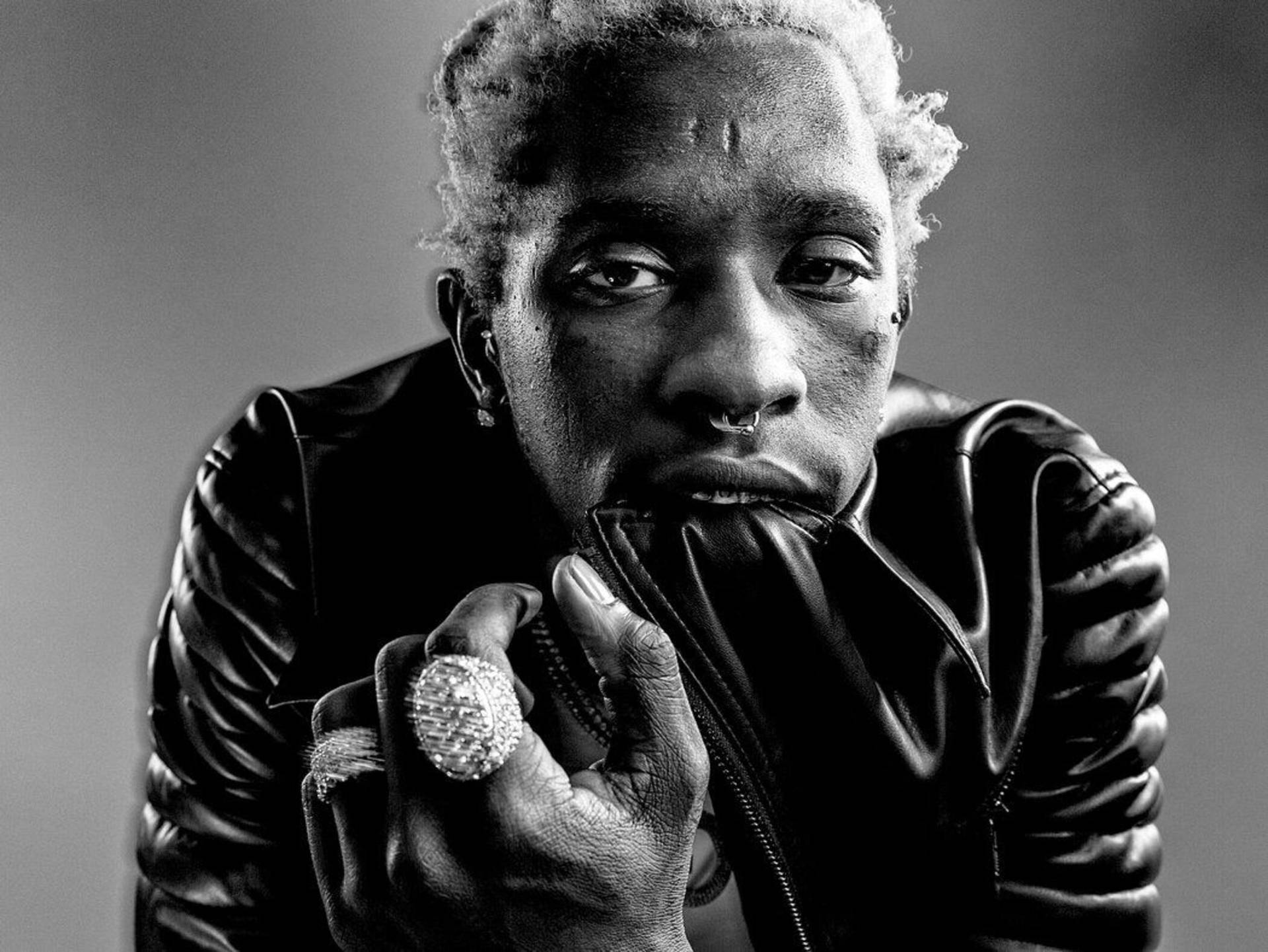
Young Thug’s Slime Season 3 (often stylized as SS3) arrived in February 2016 as a masterclass in vocal distortion, avant-garde trap production, and uninhibited cadence that fundamentally reshaped the trajectory of modern hip-hop, cementing his role as a blueprint for contemporary melodic rap.
Introduction: The Crucible of 2016 Atlanta Trap
The release of Slime Season 3 in early 2016 marked a pivotal boiling point in the evolution of modern hip-hop. By this juncture, Jeffrey Lamar Williams—known globally as Young Thug—had already transitioned from a regional Atlanta underground curiosity into a polarizing, highly influential force. Yet, his career was characterized by a chaotic mixtape rollout strategy, frequent leaks, and a major-label ecosystem that struggled to commercialize his eccentricities.
SS3 served as a concise, highly concentrated dose of his artistic ethos. Comprising just eight tracks with zero primary featured artists, the project forced listeners and critics alike to confront his vocal dexterity and structural deconstruction of songcraft without the safety net of traditional hooks or conventional guest verses. By examining SS3, one can observe how a commercially ambiguous mixtape permanently altered the sonic landscape, influencing everything from the emergence of SoundCloud rap to the melodic calculus of contemporary streaming-era hits.
Deconstructing the Sound: Production Choices and Vocal Delivery
To understand why SS3 shifted the rap landscape, one must analyze its sonic architecture. The project relied heavily on minimalist, atmospheric, and often jarring trap production crafted by architects like London on da Track, Mike Will Made-It, and Isaac Flame. Rather than utilizing warm, orchestral samples or booming, predictable stadium-trap chords, these producers constructed hollow, metallic soundscapes that left vast amounts of empty space.
This sonic minimalism provided Young Thug with an unencumbered canvas to experiment with his voice as a lead instrument. On tracks like "With Them" and "Memo," he bypasses traditional lyrical verse structures, opting instead for a fluid stream-of-consciousness delivery. He shifts effortlessly from high-pitched, manic squeals to deep-throated growls and rhythmic warbles, often within the span of a single bar.
Key Production and Vocal Innovations on SS3
- Melodic Distortion: Emphasizing raw, unpolished vocal takes treated with heavy pitch-correction and delay, turning imperfections into stylistic features.
- Structural Deconstruction: Abandoning the traditional verse-chorus-verse blueprint in favor of cyclical, mantra-like refrains that rely on hypnotic repetition.
- Spatial Minimalism: Utilizing sparse high-hat rolls and sub-bass frequencies that allowed Thug's vocal gymnastics to dominate the frequency spectrum.
The Rejection of Traditional Song Structure
Prior to the mid-2010s, mainstream rap largely adhered to rigid structural conventions: a 16-bar verse, a catchy sung or chanted hook, a second verse, and a bridge. Young Thug’s approach on SS3 systematically dismantled this framework, introducing an era of unstructured, emotion-driven composition.
On songs such as "Digits" and "Slime Shit," conventional narrative progression is replaced by emotional texture. Thug treats words as phonemes rather than strictly semantic tools, stretching syllables, dropping consonants, and inventing slang terms on the fly. This liberation from lyrical rigidity proved intoxicating to a younger generation of aspiring artists who watched him improvise entire songs in the recording booth without writing down a single word. This improvisational methodology became the gold standard for the streaming era, where rapid content output and raw emotional immediacy superseded painstaking lyrical revision.
Comparison: Rap Landscape Before and After SS3
| Element | Pre-SS3 Era (Traditional Trap) | Post-SS3 Era (Modern Melodic Rap) |
|---|---|---|
| Vocal Style | Clear articulation, punchlines, steady cadence | Fluid, heavily processed, experimental pitch shifts |
| Song Structure | Verse-Chorus-Verse with prominent bridges | Hook-heavy loops, stream-of-consciousness, unstructured flow |
| Production | Orchestral samples, heavy brass, dense orchestration | Minimalist trap beats, spacious synths, atmospheric pads |
| Lyrical Focus | Linear storytelling, clever wordplay, boastful narratives | Vibe-oriented, phonetic phrasing, emotional abstraction |
Influence on the SoundCloud Era and Emo Rap
The shockwaves generated by SS3 were felt almost immediately across underground digital distribution platforms, most notably SoundCloud. Artists who would later define the late-2010s emo-rap and hyperpop-adjacent hip-hop movements—such as Lil Uzi Vert, Trippie Redd, and the late Juice WRLD—frequently cited Young Thug as a foundational influence.
The DNA of SS3 is clearly audible in the way these artists approached vocal processing and emotional vulnerability. By proving that a rapper could sound unhinged, vulnerable, aggressive, and melodic all within the same three-minute track, Young Thug paved the way for a generation of performers who rejected hyper-masculine posturing in favor of unfiltered emotional expression. The melodic cadence of tracks like "Worth It" demonstrated that trap music could be deeply atmospheric and melancholic without losing its street-level credibility.
Critical Re-Evaluation and Cultural Legacy
When SS3 was released in February 2016, critical reception was generally positive, though some mainstream publications struggled to contextualize its unconventional structure and short runtime. Reviewers often viewed it as a transitional placeholder between his Slime Season mixtape series and his impending full-length commercial debut, JEFFERY.
However, historical hindsight has elevated SS3 from a well-received mixtape into a watershed cultural artifact. Musicologists and hip-hop historians now recognize it as the moment contemporary trap music fully unmoored itself from traditional rap constraints. It proved that a project did not need a sprawling 20-track runtime or heavy radio collaborations to capture the cultural zeitgeist. Its brevity—clocking in at just under thirty minutes—foreshadowed the consumption habits of the algorithmic streaming era, where concise, high-impact releases consistently outperform bloated double albums.
Common Misconceptions Regarding the Project's Rollout
Discussions surrounding SS3 often involve myths regarding its commercial intent and creation. A frequent misconception is that the project was thrown together hastily to satisfy contractual obligations with 300 Entertainment. While tensions between Young Thug and his label during this period were well documented—often exacerbated by internet leaks—the precise sequencing and tight curation of the eight tracks point to a deliberate artistic statement.
Another common point of confusion involves the absence of guest artists. Far from being a result of industry blackballing or creative isolation, keeping the tracklist entirely solo was a calculated move to reinforce Thug's singular dominance over the sonic world he had built. In an era defined by crowded posse cuts and strategic feature trading, SS3 stood alone as a testament to an artist operating entirely in a league of his own.
Frequently Asked Questions
What makes Slime Season 3 different from the first two Slime Season tapes?
SS3 is a much more concise, commercially targeted, and sonically cohesive project than its predecessors. While Slime Season and Slime Season 2 functioned as massive, sprawling compilations of heavily circulated leaks, SS3 was curated as a focused statement designed to transition Thug into a formal album rollout cycle.
Why does SS3 have no featured artists?
Keeping the project feature-free was an intentional artistic choice that emphasized Young Thug's singular vocal versatility. By removing guest verses, the project highlights his ability to carry every track entirely on his own merits through shifting cadences and varied vocal textures.
How did SS3 influence modern SoundCloud rap?
The project's heavy use of vocal distortion, unorthodox phrasing, and improvisational recording techniques provided a direct blueprint for SoundCloud-era artists who prioritized raw emotional delivery and melodic experimentation over traditional lyrical structure.
What producers contributed to the sound of SS3?
The mixtape features prominent contributions from elite trap producers such as London on da Track and Mike Will Made-It, whose minimalist, spacious production choices created the ideal sonic backdrop for Thug’s vocal improvisations.
Conclusion: Next Actions for Music Discovery
For listeners seeking to deeply understand the lineage of modern melodic trap, revisiting Slime Season 3 offers a masterclass in risk-taking and sonic deconstruction. To fully grasp its impact, listen to the project back-to-back with seminal releases from 2016 onward by artists influenced by Atlanta's avant-garde movement, noting how the structural freedom pioneered on tracks like "Digits" and "With Them" continues to echo through today's streaming charts.