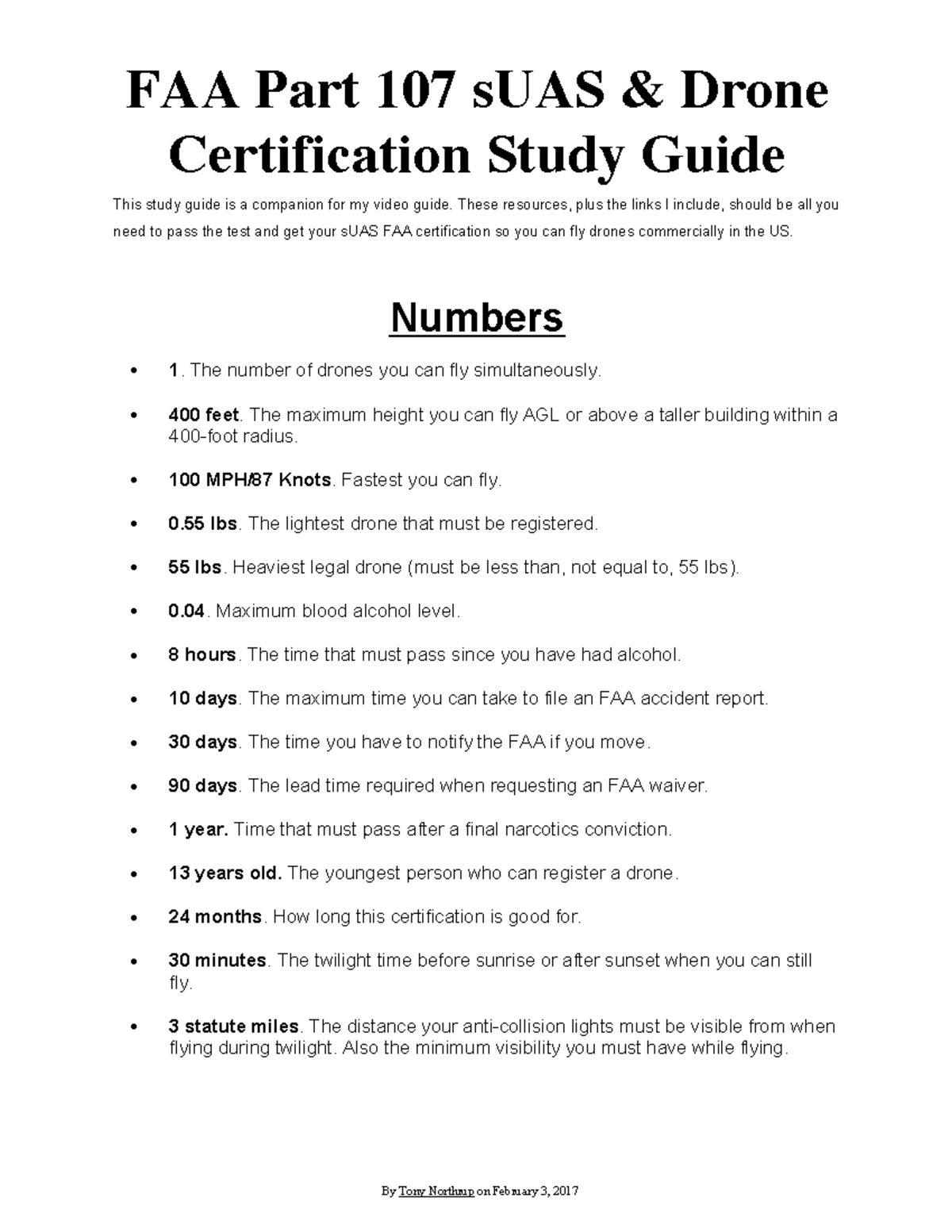
Operating a small unmanned aircraft system (sUAS) commercially in the United States requires a comprehensive understanding of the Federal Aviation Administration's (FAA) regulatory framework, most notably Title 14 of the Code of Federal Regulations (14 CFR) Part 107. This overview of FAA Part 107 class rules establishes the foundational operational parameters, pilot certification requirements, and airspace classifications that govern safe commercial drone integration into the National Airspace System.
Introduction to FAA Part 107
The Federal Aviation Administration established Part 107 to provide a flexible yet rigorous regulatory structure for routine commercial drone operations. Before its implementation, commercial operators had to secure a specialized Section 333 exemption or a Certificate of Waiver or Authorization (COA), processes that were time-consuming and cumbersome. Part 107 democratized commercial sUAS use—encompassing photography, real estate inspection, surveying, and agriculture—by introducing a standardized certification path.
Under these rules, a remote pilot in command (RPIC) must successfully pass an initial aeronautical knowledge test to earn an Remote Pilot Certificate with a small UAS rating. The regulation bridges the gap between traditional aviation and modern unmanned flight, maintaining high safety standards while acknowledging the economic and utility benefits of drone technology. Compliance with Part 107 is mandatory for any flight that is commercial, furtherance of a business, or conducted for compensation, distinguishing it strictly from recreational-only flying governed by separate statutory exceptions.
Core Operational Limitations and Parameters
Part 107 imposes strict physical and environmental boundaries on sUAS operations to protect people and property on the ground as well as manned aircraft in the sky. Every remote pilot must master these baseline limitations before planning any flight mission.
Altitude and Speed Restrictions
The maximum allowable altitude for a Part 107 operation is 400 feet above ground level (AGL), unless the drone is flown within a 400-foot radius of a structure, in which case it may operate up to 400 feet above the topmost boundary of that structure. Furthermore, the aircraft's ground speed cannot exceed 100 ground mph (87 knots). Maintaining these limits ensures the sUAS remains well clear of low-altitude manned aviation traffic, such as crop dusters and medical helicopters, which generally operate down to 500 feet AGL.
Visibility and Weather Minimums
Weather compliance is non-negotiable for remote pilots. Part 107 mandates a minimum flight visibility of 3 statute miles from the control station. Additionally, the drone must maintain clear separation from clouds, specifically requiring positions 500 feet below clouds and 2,000 feet horizontally from clouds. Operations during night hours are permitted without a special waiver, provided the drone is equipped with anti-collision lights visible for at least 3 statute miles and the pilot has completed updated night-operations training.
Right-of-Way and Visual Line of Sight
Perhaps the most fundamental operational tenet of Part 107 is the absolute requirement for the remote pilot or visual observer to maintain a visual line of sight (VLOS) with the aircraft at all times. First-person view (FPV) cameras cannot solely satisfy this requirement, as unaided human vision (except for corrective lenses) must be maintained to scan the airspace. Furthermore, small unmanned aircraft must yield the right-of-way to all manned aircraft, including airplanes, helicopters, and gliders, exercising extreme vigilance and executing evasive maneuvers immediately when necessary.
Airspace Classifications and Authorization Rules
Airspace in the United States is categorized into different classes, each dictating specific entry requirements, communication protocols, and operational limitations for drone pilots. Navigating these airspace classes correctly is essential for legal compliance.
- National Airspace System (NAS)
- Controlled Airspace (Classes B, C, D, and Surface E Areas Designated for Airports)
- Requires Prior FAA Authorization via LAANC or DroneZone
- Uncontrolled Airspace (Class G)
- Permitted up to 400 ft AGL without Prior ATC Clearance
- Controlled Airspace (Classes B, C, D, and Surface E Areas Designated for Airports)
Controlled Airspace (Classes B, C, D, and E)
Controlled airspace surrounds airports and other areas where air traffic control (ATC) provides active separation services.
- Class B: High-density major airports (e.g., LAX, JFK).
- Class C: Moderate-density airports with radar control (e.g., municipal hubs).
- Class D: Smaller controlled airports with an operational control tower.
- Class E: Controlled airspace extending upward from the surface or a designated altitude, often surrounding smaller regional airports.
Under Part 107.41, no person may operate a small unmanned aircraft in controlled airspace under 400 feet without prior authorization from the FAA. To streamline this, the FAA utilizes the Low Altitude Authorization and Notification Capability (LAANC), a digital system that provides near-instantaneous automated approval for flights in participating controlled airspace up to pre-approved altitude ceilings.
Uncontrolled Airspace (Class G)
Class G airspace represents the portion of the airspace that has not been designated as Class A, B, C, D, or E. In Class G airspace, air traffic control does not exercise authority or control over air traffic. Under Part 107 rules, drone operators do not require prior ATC authorization to fly in Class G airspace, provided they remain below 400 feet AGL, maintain visual line of sight, and adhere to all other standard meteorological and operational limitations.
Comparison of Airspace Operational Requirements
To easily distinguish what is required for different operational environments, review the structured comparison below regarding airspace classes, authorization needs, and standard constraints.
| Airspace Class | ATC Control Level | Prior Authorization Required? | Typical Altitude Ceiling | Primary Operational Consideration |
|---|---|---|---|---|
| Class B | High (Major Hubs) | Yes (Mandatory via LAANC/DroneZone) | 0–400 ft AGL (per grid ceiling) | Heavy commercial jet traffic, strict speed limits |
| Class C | Moderate (Towered) | Yes (Mandatory via LAANC/DroneZone) | 0–400 ft AGL (per grid ceiling) | Two-way radio communication requirements if manned |
| Class D | Local Tower | Yes (Mandatory via LAANC/DroneZone) | 0–400 ft AGL (per grid ceiling) | Active control tower coordination |
| Class E | Surface Areas | Yes if surface-designated, No otherwise | 0–400 ft AGL | Weather minimums and visibility checks |
| Class G | Uncontrolled | No | Up to 400 ft AGL | General vigilance; lack of ATC radar advisories |
Pilot Certification and Aircraft Registration Requirements
Operating legally under Part 107 extends beyond knowing airspace rules; it requires proper administrative credentials for both the operator and the aircraft itself.
Remote Pilot Certification Steps
- Meet Eligibility Requirements: Must be at least 16 years old, able to read, speak, write, and understand English, and physically and mentally fit to safely operate a sUAS.
- Study Aeronautical Knowledge: Review official FAA study materials covering airspace, weather, loading and performance, radio communications, and emergency procedures.
- Schedule and Pass the Test: Take the initial aeronautical knowledge test ("Unmanned Aircraft General-Small") at an FAA-approved Knowledge Testing Center (KTC).
- Apply via IACRA: Complete FAA Form 8710-13 through the Integrated Airman Certification and Rating Application (IACRA) system.
- Receive Certificate: Await background vetting by the Transportation Security Administration (TSA) and print the temporary certificate while awaiting the permanent plastic card.
Aircraft Registration and Remote ID
Every drone used for commercial purposes under Part 107 must be registered with the FAA, regardless of its weight (unlike recreational drones, which enjoy an exemption if under 255 grams). Registration is conducted via the FAA DroneZone portal and must be renewed every three years. Furthermore, aircraft must comply with the FAA's Remote ID rule, which requires capable drones to broadcast identification and location data during flight, ensuring accountability across the national airspace.
Common Mistakes and Operational Troubleshooting
Even experienced remote pilots occasionally run into compliance hurdles. Recognizing these pitfalls helps ensure safe, legal flights.
- Failing to Check LAANC Altitudes: Operators often assume a blanket 400-foot ceiling everywhere. In controlled airspace near airports, LAANC grid ceilings may restrict flights to 0, 100, or 200 feet. Flying above these limits without manual authorization violates Part 107.41.
- Neglecting Weather Minimums: Relying on mobile weather apps rather than official aviation weather reports can lead to operating in substandard visibility or cloud-clearance violations.
- Improper Battery and Weight Calculations: Exceeding the maximum takeoff weight of 55 pounds (including all attachments) instantly invalidates Part 107 eligibility, requiring a special airworthiness certificate instead.
- Ignoring Remote ID Broadcast Failures: Launching a drone with an inactive or malfunctioning Remote ID module exposes the pilot to civil penalties. Always verify module status prior to takeoff.
Frequently Asked Questions
Can I fly my drone over people under Part 107?
Yes, but compliance depends on the specific risk category of your drone. The FAA establishes four categories for operations over people based on weight, exposed rotating parts, and potential injury severity (measured by foot-pounds of kinetic energy transfer). Category 1, 2, 3, and 4 drones have distinct labeling, parachute, and declaration-of-compliance requirements outlined in the updated Part 107 regulations.
Do I need a visual observer for every commercial flight?
No. A visual observer is not strictly mandatory under Part 107 rules. The Remote Pilot in Command may choose to use a visual observer, but they can also operate solo, provided they maintain continuous visual line of sight with the aircraft themselves at all times.
What happens if I fly commercially without a Part 107 license?
Operating a drone commercially without a valid Remote Pilot Certificate is a direct violation of federal aviation regulations. This can result in severe civil penalties, substantial monetary fines levied by the FAA against both the individual pilot and the business entity, and potential legal liability in the event of an accident.
Are night operations permitted under Part 107 rules?
Yes. Night operations are fully permitted without a specific waiver, provided the remote pilot has completed the updated recurrent training course covering night physiology and collision avoidance, and the drone is equipped with anti-collision lighting visible for at least 3 statute miles.
How often must I renew my Remote Pilot Certificate?
To maintain currency under Part 107, a remote pilot must successfully complete a recurring aeronautical knowledge recency test every 24 months. This recurrent training is available online free of charge through official FAA safety portals.
Final Recommendations for Compliant Operations
Mastering the overview of FAA Part 107 class rules requires ongoing dedication to safety, regulatory updates, and pre-flight planning. Before every mission, establish a rigorous workflow: verify airspace classifications using official sectional charts or LAANC-approved software, check current weather and NOTAMs (Notices to Air Missions), confirm your remote pilot certificate and aircraft registration are up to date, and conduct a thorough physical inspection of your sUAS. Prioritizing systematic compliance protects your commercial investment, respects the safety of shared airspace, and ensures the sustainable growth of unmanned aviation.