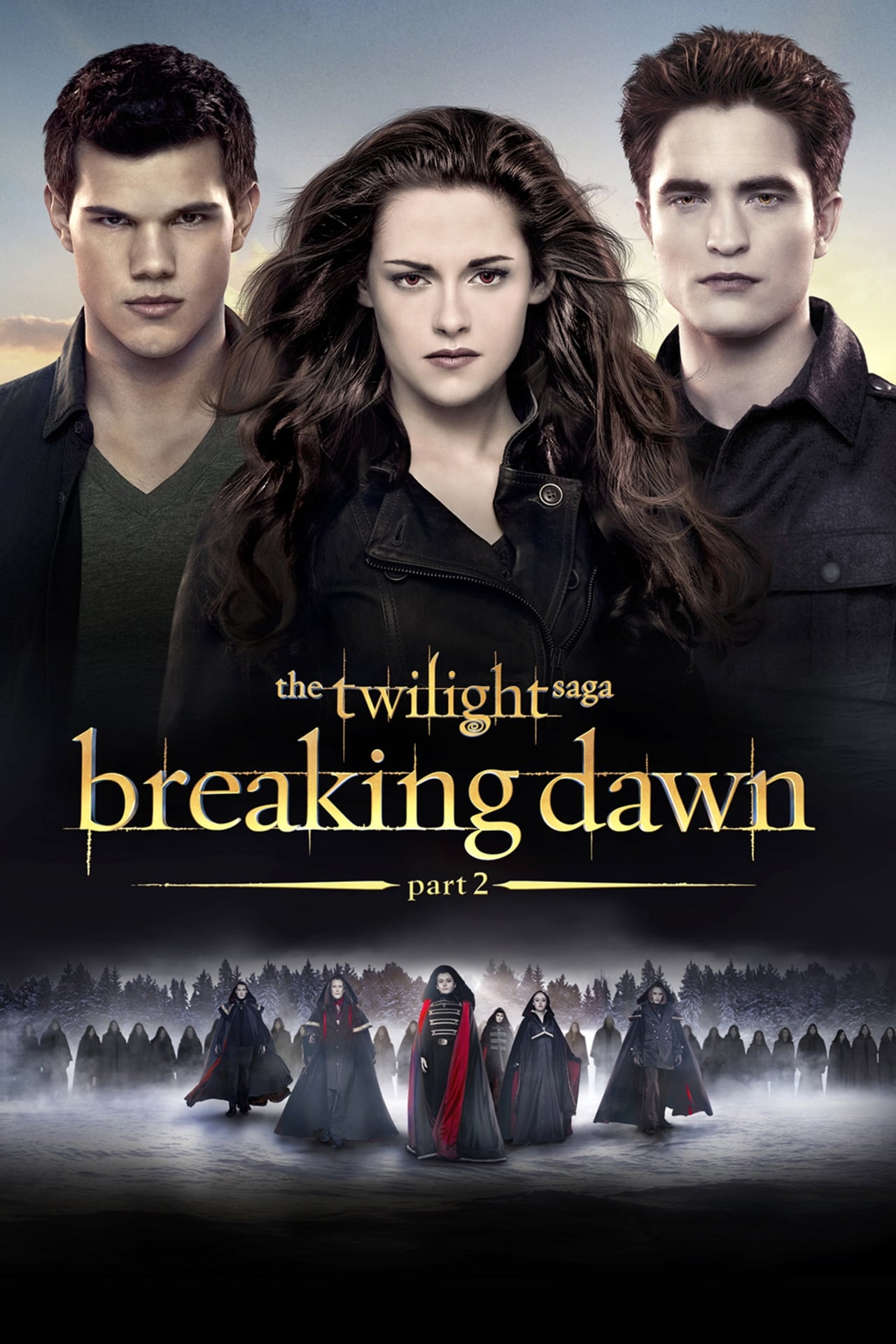
The definitive, most discussed change in The Twilight Saga: Breaking Dawn – Part 2 is the massive, high-stakes vampire battle that unfolds in the snow near the end of the film—a sequence that never happens in Stephenie Meyer’s original novel, where the confrontation is resolved entirely through dialogue and diplomatic tension.
When The Twilight Saga: Breaking Dawn – Part 2 premiered in theaters, it sent shockwaves through a global fanbase that had spent years dissecting every page of Stephenie Meyer’s final book. While previous cinematic adaptations of the Twilight series stayed remarkably faithful to their source material, the climax of the final film introduced a daring narrative twist. By staging a brutal, full-scale war between the Cullen family and their witnesses against the mighty Volturi, director Bill Condon and screenwriter Melissa Rosenberg subverted literary expectations. This cinematic pivot fundamentally altered how the franchise concluded, transforming a tense, bloodless standoff into an explosive visual spectacle. Understanding why this change was made, how it played out on screen, and its broader impact on the narrative requires a deep dive into the adaptation process of modern blockbuster cinema.
The Literary Climax: How Breaking Dawn Ends on the Page
To appreciate the magnitude of the cinematic battle, it is essential to examine the source material. In Stephenie Meyer’s 2008 novel Breaking Dawn, the climax of the story relies heavily on psychological tension, legalistic posturing, and dialogue rather than physical combat.
When the Volturi arrive at the clearing with their massive army to destroy Renesmee—mistaking her for an immortal child—they are met by an unexpected sight. Edward and Bella Cullen have gathered an impressive coalition of international vampire witnesses, alongside a pack of shape-shifting Quileute wolves, to bear witness to the truth: Renesmee is a half-human, half-vampire mortal child who poses no threat to the secrecy or safety of the vampire world.
| Feature | Novel (Stephenie Meyer) | Film Adaptation (Bill Condon) |
|---|---|---|
| Nature of Climax | Peaceful diplomatic standoff | Full-scale, violent warfare |
| Resolution Mechanism | Alice's testimony & Nahuel's proof | Alice's vision & Volturi retreat |
| Major Casualties | None (Zero vampire/wolf deaths) | Jasper, Carlisle, and many others |
| Tone of Confrontation | Intellectual and cautious | Visceral and apocalyptic |
In the novel, Aro, the leader of the Volturi, is genuinely hesitant to engage in a reckless battle, especially given the formidable strength of the Cullen defense and the uncertainty of victory. The turning point occurs when Alice Cullen arrives at the last possible moment, accompanied by Nahuel, a half-vampire, half-human hybrid who proves that children like Renesmee grow up, control their thirst, and do not expose the vampire species. Faced with irrefutable evidence and realizing he lacks a legitimate justification for destruction, Aro accepts defeat and retreats with his guard. The book closes without a single drop of main-character blood being shed in the snow clearing.
Translating Page to Screen: The Cinematic Necessity of Visual Stakes
Adapting a novel for the cinema often demands structural adjustments because literary interiority and dialogue-driven negotiations do not always translate into compelling visual media. In a book, internal monologues and slow-building tension create high stakes; in a blockbuster film ending a multi-billion-dollar franchise, audiences anticipate a cathartic, high-energy climax.
The filmmakers faced a distinct creative dilemma. If the movie followed the book precisely, the entire narrative tension—which had been building across two films and hundreds of millions of ticket sales—would dissolve into a conversation and a peaceful exit. For casual moviegoers and action-oriented audiences, a bloodless, talk-based resolution might have felt anti-climactic.
By introducing the massive battle sequence, the filmmakers achieved several artistic and commercial goals:
- Elevating the Stakes: It visually validated the mortal danger the Cullens faced, proving that Aro and the Volturi were ruthless tyrants willing to slaughter innocents to expand their power.
- Paying Off Action Promoters: It gave the various vampire covenants—from the Amazonian coven to the Romanian nomads—a chance to showcase their unique supernatural combat abilities on screen.
- Subverting Expectations: Because fans assumed they knew every beat of the story, the twist weaponized the audience's preexisting knowledge to generate genuine shock, grief, and suspense.
Alice’s Vision: The Mechanism of the Twist
The brilliant narrative device that makes the cinematic battle possible without breaking the internal logic of the story is Alice Cullen’s prophetic vision.
As Aro deliberates in the clearing, trying to find a loophole to justify his attack, Alice takes his hand. Because Alice’s power allows her to see potential futures based on decisions people are about to make, she shares her vision of the impending war with him. This is not an illusion conjured by someone like a mind-reader or a trickster; it is a direct projection of the horrific carnage that will ensue if Aro gives the order to attack.
This sequence is where the cinematic battle actually occurs within the chronology of the film. For roughly ten intense minutes, viewers watch beloved characters meet brutal, shocking ends. Carlisle is decapitated early in the skirmish, sparking the Cullen family’s ferocious retaliation. Jasper Hale is overcome by Volturi guards, plunging Alice into profound grief. Even major Volturi members, including Caius and Marcus, meet violent demises, while Aro himself is ultimately destroyed by Edward and Bella.
When the vision concludes, Aro and the Volturi are shaken to their core. Having seen a future where their own destruction is guaranteed alongside the Cullens, Aro chooses self-preservation over conquest. The physical reality snaps back to the present moment in the clearing. The battle has not yet happened; it was a preemptive vision of a future avoided.
Audience Reception and Cultural Impact
When Breaking Dawn – Part 2 landed in theaters in November 2012, the ending generated intense, polarized reactions among the fanbase.
For many viewers, the twist was a masterstroke of adaptation. In a theater filled with readers who had memorized every line of the book, hearing gasps and seeing tears during the deaths of Carlisle and Jasper created a shared, unforgettable communal experience. It delivered the epic action sequence fans craved while preserving the happy ending of the original novel.
Conversely, some purists criticized the sequence as a cheap narrative trick or a "fake-out." They argued that faking the deaths of major characters devalued the emotional weight of those losses once the vision dissolved and everyone miraculously returned to life. However, most film critics and industry analysts praised the boldness of the choice, noting that it solved the inherent adaptation problem of translating an anti-climactic literary ending into a satisfying cinematic conclusion.
FAQ
Why did the filmmakers change the ending of Breaking Dawn Part 2?
The filmmakers added the massive battle sequence to provide visual catharsis and dramatic tension. A literal translation of the book’s peaceful dialogue-driven resolution would have felt flat and anti-climactic for a blockbuster movie finale, so the twist elevated the theatrical stakes.
Did any main characters actually die during the battle in the film?
No. While characters like Carlisle and Jasper appear to die violently during the battle sequence, it is revealed that the entire war was merely a prophetic vision shown to Aro by Alice Cullen to deter him from fighting. Once the vision ends, everyone is alive.
How does the book ending differ from the movie ending?
In the novel by Stephenie Meyer, the confrontation in the snow ends peacefully through negotiation and the presentation of Nahuel as proof that hybrid children are harmless. There is no physical fight, and the Volturi simply retreat after realizing they lack a valid justification for attack.
Is Alice’s vision considered canon within the Twilight universe?
Yes, within the cinematic continuity of the Twilight Saga, Alice's vision represents a concrete potential future that was successfully averted because Aro witnessed the catastrophic cost of initiating the conflict.
Conclusion and Next Actions
The cinematic climax of The Twilight Saga: Breaking Dawn – Part 2 remains one of the most daring adaptations in modern franchise history. By turning a peaceful literary negotiation into an apocalyptic battle—and then pulling the rug out from under the audience via Alice’s vision—the filmmakers successfully satisfied both action-seeking moviegoers and devoted book fans. To further explore the film, consider rewatching the sequence with commentary from director Bill Condon to gain deeper insight into the logistical challenges of choreographing Hollywood's most famous fake-out battle.