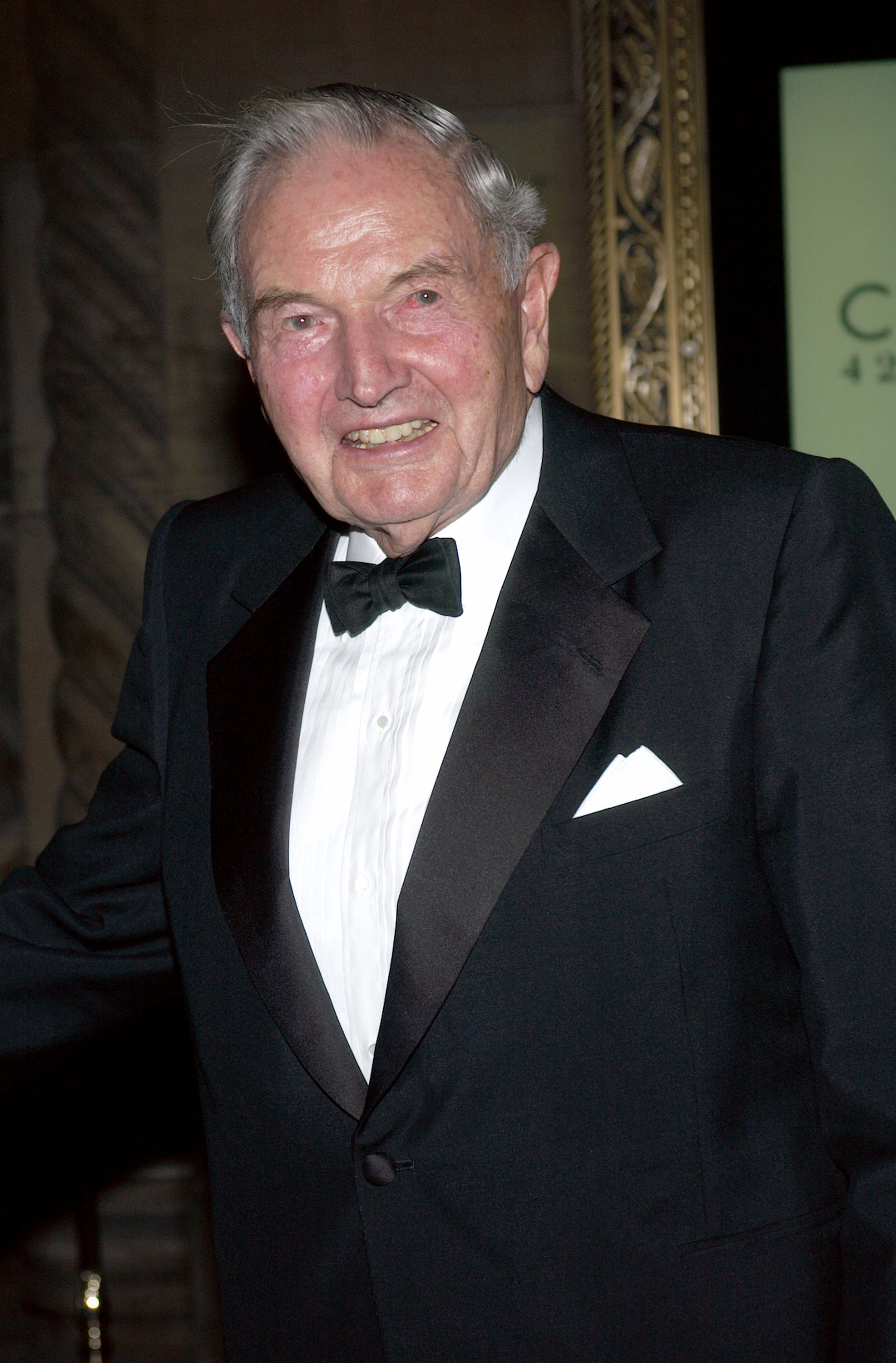
David Rockefeller’s amassed fortune and the legendary Room 5600 represent one of the most enduring chapters in American financial and philanthropic history. Spanning decades of global banking leadership, multi-industry investments, and strategic family office management, the Rockefeller name became synonymous with institutional capitalism. While estimating the precise net worth of a multi-generational dynasty patriarch involves navigating complex trusts, private foundations, and closely held corporate assets, historical financial analyses place David Rockefeller’s personal estate at an estimated $3.3 billion at the time of his passing in 2017.
At the center of this financial empire stood Room 5600—the Rockefeller family’s private administrative headquarters located on the 56th floor of 30 Rockefeller Plaza in New York City. This clandestine yet highly efficient nerve center managed not only David Rockefeller’s personal assets and philanthropic endeavors, but also coordinated the economic, political, and social interests of the entire Rockefeller family. Understanding the intersection of David Rockefeller’s net worth and the operational mechanics of Room 5600 provides vital insight into how modern multi-family offices evolved and how institutional wealth was preserved and distributed across the twentieth and twenty-first centuries.
Historical Context and the Origins of Rockefeller Wealth
The foundation of the Rockefeller fortune trace back to John D. Rockefeller, David’s grandfather and the founder of Standard Oil. Established in 1870, Standard Oil grew to control roughly 90 percent of American oil refining and distribution, generating unprecedented industrial profits. Following the landmark 1911 antitrust ruling by the United States Supreme Court, Standard Oil was broken down into 34 separate companies—such as Exxon, Mobil, and Chevron—which paradoxically multiplied the family’s wealth as these independent entities appreciated significantly over the subsequent decades.
David Rockefeller, born in 1915 as the youngest son of John D. Rockefeller Jr., inherited a financial infrastructure designed to protect, grow, and distribute this massive capital base. Unlike his grandfather, who focused ruthlessly on industrial consolidation, David charted a course through international finance and public diplomacy. He spent his career at the Chase Manhattan Bank—rising to become its chairman and chief executive officer—while simultaneously managing the sprawling portfolio of real estate, venture investments, and public equities tied to the family name.
Structuring Dynastic Wealth: Trusts and Foundations
The preservation of the Rockefeller net worth across generations required sophisticated legal and financial engineering. Rather than dividing the Standard Oil fortune outright among heirs, John D. Rockefeller Jr. and his financial advisors established a complex web of irrevocable trusts. These legal entities ensured that the principal capital remained protected from market volatility, hasty liquidation, and excessive taxation, while distributing income to family beneficiaries.
Key elements of this generational wealth preservation strategy included:
- Irrevocable Family Trusts: Established for children and grandchildren, these trusts generated consistent dividend and interest income without diminishing the underlying asset base.
- The Rockefeller Foundation: Founded in 1913, this philanthropic vehicle allowed the family to direct substantial capital toward global health, scientific research, and education while establishing a structured framework for tax-exempt asset management.
- Diversified Portfolios: Over the twentieth century, advisors systematically divested from heavy concentration in oil equities, reallocating capital into blue-chip stocks, commercial real estate, international markets, and emerging venture capital opportunities.
Inside Room 5600: The Nerve Center of the Dynasty
While family trusts provided the legal architecture for the wealth, Room 5600 served as its operational heart. Occupying the 56th floor of the RCA Building (now the Comcast Building at 30 Rockefeller Plaza), Room 5600 was established in the 1920s and functioned as the private office for John D. Rockefeller Jr. and his descendants. By the time David Rockefeller directed his affairs from this suite, it had transformed into a sophisticated administrative hub employing dozens of financial analysts, accountants, lawyers, secretaries, and archivists.
Room 5600 was never a monolithic corporate entity; rather, it operated as the original single-family office. Its primary mandate was to protect the privacy of the family members while managing their overlapping financial, philanthropic, and civic commitments. Because the Rockefeller family expanded into dozens of branches—collectively known as "The Cousins"—Room 5600 acted as the unifying administrative glue that kept the extended family aligned on major investments and charitable distributions.
Operational Functions and Responsibilities
The staff inside Room 5600 handled a staggering array of daily responsibilities that bridged private wealth management, public relations, and institutional philanthropy.
- Asset Management and Accounting: Professional portfolio managers tracked investments in real estate, corporate bonds, public equities, and private equity funds, ensuring liquidity for family members while optimizing tax strategies.
- Philanthropic Coordination: Staff vetted thousands of charitable requests annually, coordinating donations from individual family members, the Rockefeller Brothers Fund, and the Rockefeller Foundation.
- Biographical and Archival Management: A dedicated team maintained meticulous records of the family's history, public engagements, and correspondence, preserving the institutional memory of the dynasty.
- Security and Travel Logistics: Given the prominent public profile of David Rockefeller and his relatives, Room 5600 coordinated secure travel, personal security details, and confidential communications.
Financial Breakdown: Estimating David Rockefeller's Net Worth
When David Rockefeller passed away in March 2017 at the age of 101, financial publications such as Forbes estimated his personal net worth at approximately $3.3 billion. While this figure made him exceptionally wealthy by global standards, it represented only a fraction of the total cumulative wealth generated by the broader Rockefeller family, much of which was locked away in multi-generational trusts and philanthropic foundations that could not be attributed to a single individual.
To understand the composition of his estate, financial analysts look across several distinct asset classes that made up his personal holdings and direct investments.
| Asset Category | Description & Approximate Allocation | Primary Management Entity |
|---|---|---|
| Real Estate Holdings | Extensive properties including the historic Pocantico Hills estate ("The Kykuit") in New York, a residence in Westchester County, and retreats in Maine and the Caribbean. | Room 5600 / Private Trusts |
| Corporate Equities | Substantial legacy holdings in JPMorgan Chase (formerly Chase Manhattan Bank), ExxonMobil, and other blue-chip multinational corporations. | Room 5600 Asset Management |
| Art Collections | World-class fine art collection including works by Picasso, Monet, Matisse, and Rothko, later auctioned for historic sums. | Christie's / Estate Executors |
| Venture and Private Equity | Early-stage investments in international markets, real estate development partnerships, and venture funds. | Specialized Investment Partnerships |
The Historic 2018 Estate Auction
The true scope of David Rockefeller's personal collection and accumulated wealth became publicly apparent following his death and the subsequent liquidation of his personal property. In May 2018, Christie's auction house hosted "The Collection of Peggy and David Rockefeller," a multi-day sale that featured impressionist art, fine furniture, porcelain, and decorative items.
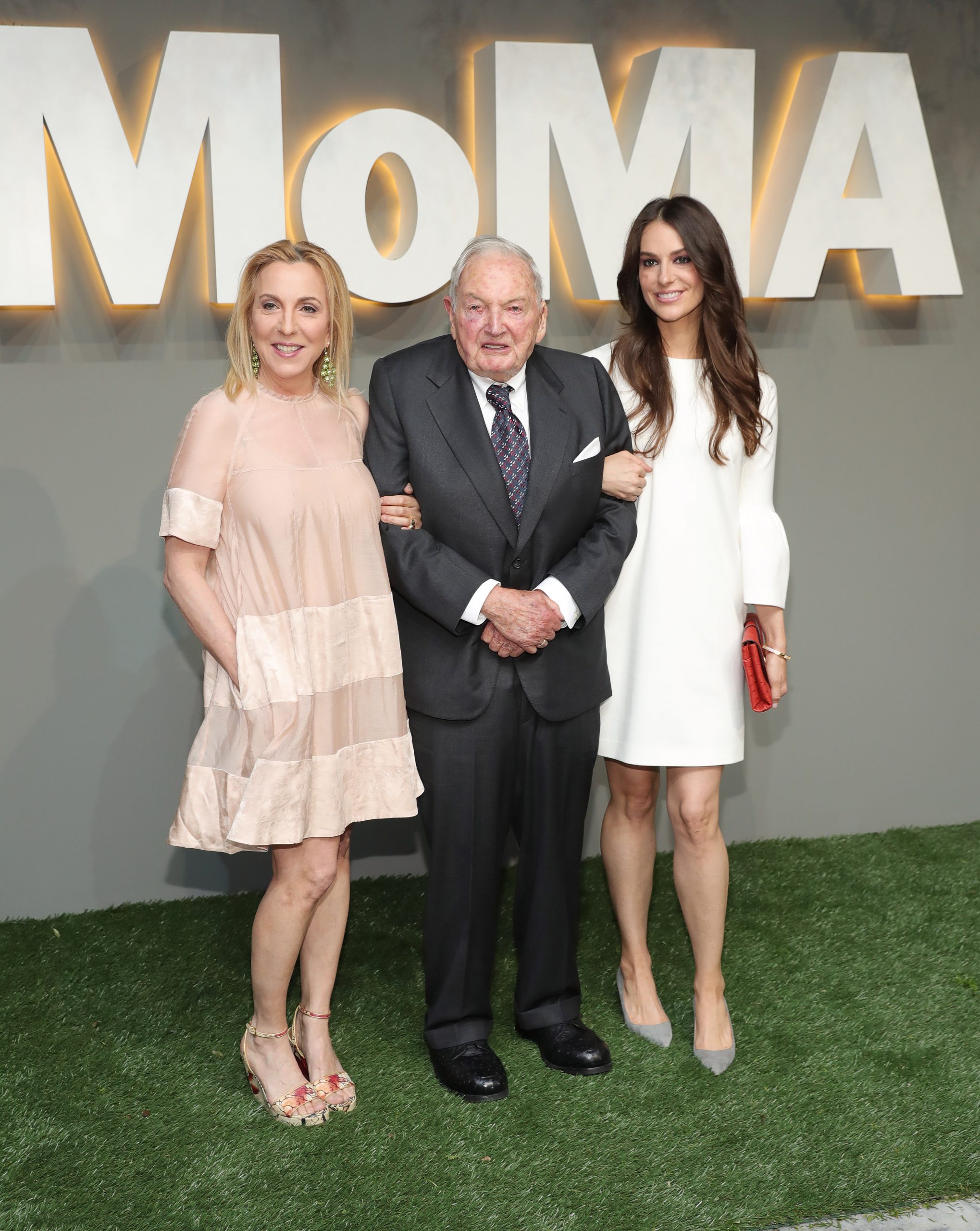
The auction shattered records by generating a staggering $835 million in total sales. In accordance with David Rockefeller's philanthropic commitments during his lifetime, 100 percent of the proceeds from the auction were directed to a wide array of cultural, educational, and environmental charities, including the Museum of Modern Art (MoMA), Harvard University, and the Rockefeller University. This massive liquidation demonstrated that a significant portion of his accessible net worth was tied up in physical movable assets rather than purely liquid cash or stock portfolios.
The Evolution of Single-Family Offices: Room 5600’s Legacy
The operational model pioneered by Room 5600 at 30 Rockefeller Plaza fundamentally shaped the modern private wealth management industry. Before the term "family office" became common vernacular in financial circles, Room 5600 served as the blueprint for how ultra-high-net-worth individuals could centralize administrative, legal, and investment functions under one secure roof.
As global wealth expanded dramatically toward the end of the twentieth and into the twenty-first century, descendants of industrial fortunes and modern technology entrepreneurs adopted the Room 5600 philosophy. Today, single-family offices manage trillions of dollars globally, mirroring the multi-disciplinary approach pioneered by the Rockefellers—integrating direct venture investments, generational tax planning, and institutional philanthropy.
Key Lessons from the Rockefeller Wealth Model
- Institutional Continuity: Wealth survives multi-generational transition only when separated from the immediate whims of individual heirs through structured trusts and professional management teams.
- Centralized Administration: Maintaining a dedicated physical and administrative headquarters—akin to Room 5600—prevents asset fragmentation among distant family branches.
- Strategic Philanthropy: Using organized philanthropic entities not only supports civic causes but also provides structured governance frameworks for younger generations to learn financial stewardship.
Frequently Asked Questions
What was David Rockefeller's net worth at the time of his death?
At the time of his passing in March 2017 at age 101, David Rockefeller's personal net worth was estimated by financial publications like Forbes to be approximately $3.3 billion. This figure accounted for his personal real estate, equity holdings, and valuable art collection, but excluded funds held within broader multi-generational family trusts and charitable foundations.
What was Room 5600?
Room 5600 was the private administrative headquarters and single-family office of the Rockefeller family, located on the 56th floor of 30 Rockefeller Plaza in New York City. Established in the 1920s, it managed the financial portfolios, legal affairs, public relations, and philanthropic commitments of David Rockefeller and extended family members.
How much did David Rockefeller's art collection sell for?
In May 2018, Christie's auction house sold "The Collection of Peggy and David Rockefeller" for a total of $835 million. Per David Rockefeller's explicit instructions, 100 percent of the auction proceeds were distributed to designated cultural, educational, and medical charities.
Was David Rockefeller the richest person in his family?
No. While David Rockefeller was a billionaire and a prominent global financier, his grandfather John D. Rockefeller amassed a fortune that, adjusted for inflation, made him one of the wealthiest individuals in modern history. David's wealth was shared among numerous cousins and distributed across complex family trusts and foundations.
Does Room 5600 still exist today?
The administrative offices managing Rockefeller family assets and philanthropic ventures have evolved over the decades, adapting to modern financial technology and decentralized work models, continuing the legacy of centralized family asset administration established at 30 Rockefeller Plaza.
Conclusion and Next Actions
Examining David Rockefeller’s net worth alongside the administrative footprint of Room 5600 reveals a masterclass in dynastic wealth preservation, institutional banking leadership, and structured philanthropy. Rather than letting a massive industrial fortune dissipate through uncoordinated inheritance, the family utilized professionalized single-family office management and ironclad legal trusts to sustain its influence across generations. For researchers, finance professionals, and modern wealth planners, analyzing the Rockefeller model offers enduring lessons in balancing capital growth, operational privacy, and civic responsibility. To explore this topic further, examine historical records of early American single-family offices, study the legal evolution of irrevocable dynastic trusts, or review institutional archives detailing the philanthropic impact of the Rockefeller Foundation.