Navigating the New York City subway requires understanding the OMNY contactless payment system, mastering the distinction between local and express trains, and utilizing official real-time tracking tools. By preparing your payment method in advance and learning how to read station signage and line maps, you can efficiently traverse all five boroughs using the Metropolitan Transportation Authority (MTA) network.
Understanding the MTA Subway Infrastructure
The New York City subway system is one of the world's most complex and extensive public transit networks. Operated by the MTA, it provides 24-hour service across 472 stations. Unlike many international systems that are organized by zone, the New York subway uses a flat-fare structure, meaning the cost remains the same regardless of how far you travel within the system.
Local vs. Express Service
One of the most critical concepts for new riders is the difference between local and express trains.
- Local trains: These trains stop at every station along their designated line. If you are traveling between adjacent neighborhoods, a local train is your primary option.
- Express trains: These trains skip smaller, less busy stations to prioritize speed. They typically stop only at major hubs and transfer points.
When looking at a subway map, local stops are indicated by a solid black circle, while express stops are marked by a white circle or a specific icon denoting a hub. Always check the illuminated signs on the subway platform or the digital display board to confirm whether an approaching train is local or express before boarding.
Directions and Terminals
Subway platforms are marked by the terminal station (the end of the line) rather than simple cardinal directions like "North" or "South." For example, if you are in Manhattan and want to go toward Brooklyn, look for signs indicating "Brooklyn-bound" or the name of the final station on that specific route. If you board a train going in the wrong direction, do not panic; simply exit at the next stop, cross to the opposite platform, and take a train back.
Payment Systems: The Shift to OMNY
As of 2026, the OMNY (One Metro New York) system is the standard method for fare payment. While legacy MetroCards are still accepted, the MTA has prioritized the contactless OMNY platform as the most efficient way to ride.
How OMNY Works
OMNY allows you to pay your fare by tapping a contactless credit/debit card, a digital wallet on your smartphone (such as Apple Pay or Google Wallet), or a wearable device on the OMNY reader at the turnstile.
- Fare Capping: One of the significant advantages of using OMNY is automatic fare capping. If you pay for 12 rides within a single Monday-to-Sunday week using the same card or device, all subsequent rides for the remainder of that week are free. This effectively replaces the traditional weekly unlimited pass model.
- Single Rides: You can also purchase an OMNY card at participating retail stores if you do not wish to use your personal bank card or smartphone.
The Role of the Legacy MetroCard
The MTA has been phasing out the physical MetroCard. While machines remain in many stations, these should be viewed as a backup. If you choose to use a physical card, ensure you check your balance at the vending machines located inside station entrances before attempting to pass through the turnstile.
| Payment Method | Mechanism | Best For |
|---|---|---|
| Contactless Credit/Debit | Tap at turnstile | Occasional riders |
| Digital Wallet | Mobile device tap | Frequent riders / Convenience |
| OMNY Card | Reloadable card | Riders without bank accounts |
| MetroCard | Magnetic stripe swipe | Legacy users |
Navigating the Network: Tools and Resources
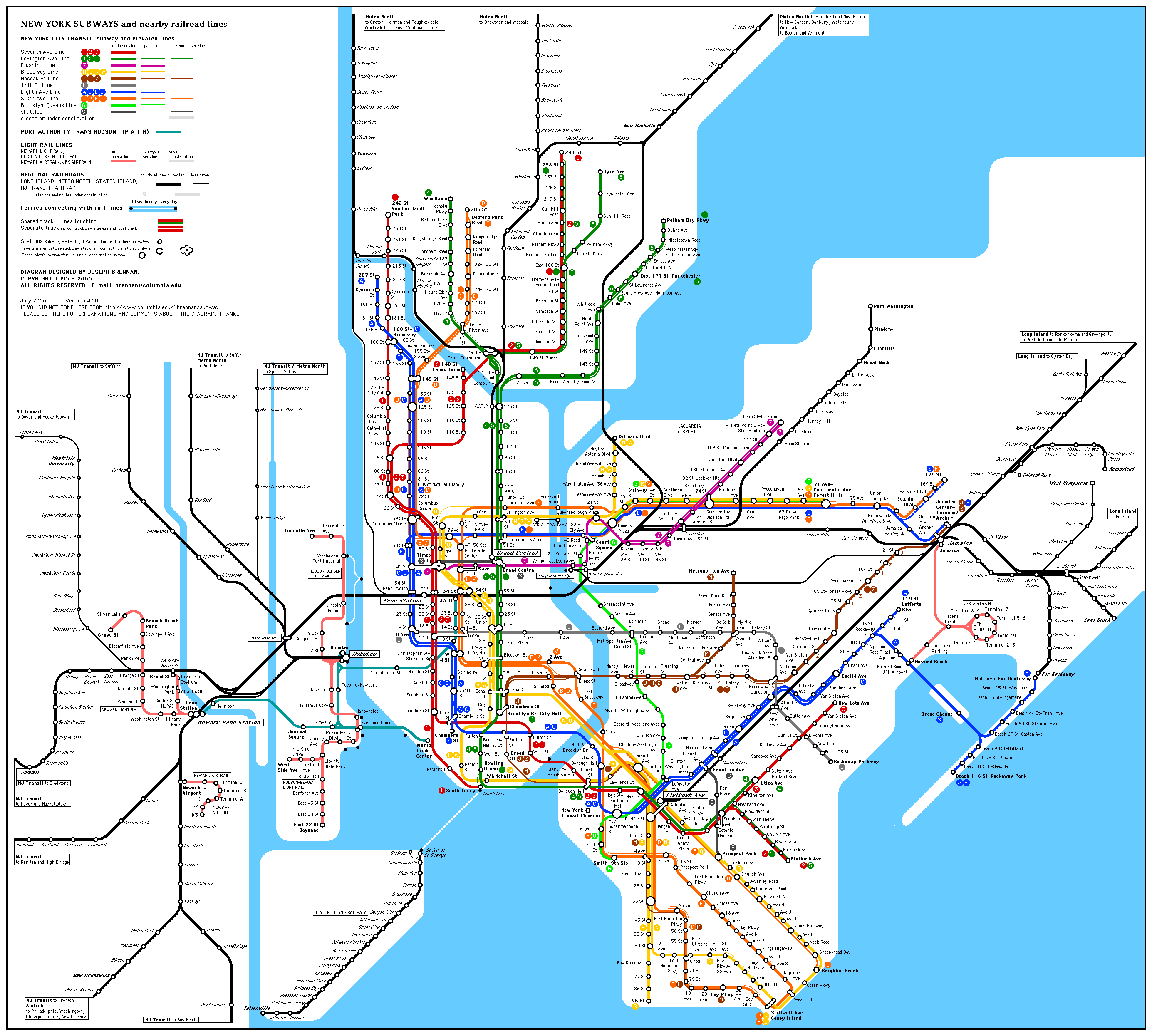
Efficiency in the subway comes from access to real-time data. Relying on paper maps can be helpful for understanding the "big picture" of the grid, but they do not account for construction, maintenance, or delays.
Official MTA Tools
The official MTA website and the "MYmta" mobile application are the primary sources for service status updates. Before starting your commute, check the "Planned Work" section of the website. The MTA frequently performs track maintenance, especially on weekends and late at night, which can lead to lines being rerouted or express trains making local stops.
Third-Party Navigation
While the official tools are the authority on service alerts, many commuters use third-party apps like Citymapper or Google Maps. These applications integrate MTA real-time feed data to provide turn-by-turn directions, including which subway entrance is closest to your destination and which subway car is best to board for a quicker exit at your transfer point.
Safety and Etiquette Protocols
The subway system is a high-traffic environment governed by specific MTA Rules of Conduct. Adhering to these norms ensures a smoother experience for all passengers.
Boarding and Alighting
The most common mistake tourists make is standing directly in front of the subway doors. Always stand to the side of the door and allow passengers to exit the train completely before you attempt to step inside. Once inside, move toward the center of the car to allow others to board, and never block the doorways.
Personal Safety
The MTA maintains a heavy presence of police and station agents, but personal situational awareness remains the best safety practice.
- Stay alert: Avoid wearing noise-canceling headphones at a high volume, particularly when waiting on the platform.
- Platform awareness: Stay behind the yellow tactile strip on the platform edge until the train has come to a complete halt.
- Report concerns: If you observe an emergency or a safety hazard, use the "Help Point" intercoms located on every platform to contact station personnel or law enforcement.
Troubleshooting Common Issues
Even with careful planning, unexpected situations arise. Knowing how to resolve these issues can save significant time.
What to do during a delay
If a train stops in a tunnel, stay inside the subway car. MTA operators are trained to communicate with the transit control center to resolve mechanical issues or signal delays. Do not attempt to open the doors or leave the train unless explicitly instructed to do so by uniformed MTA personnel or an automated announcement.
Missed Connections
If you miss a transfer, simply wait for the next train. During off-peak hours (late night), service intervals may be longer. Check the digital screens on the platform, which provide the estimated arrival time for the next three incoming trains. If the next train is delayed significantly, consider using the subway map to identify an alternative route that utilizes a different line to reach your destination.
Accessibility Challenges
Not all subway stations are fully ADA-compliant. If you have mobility restrictions or are traveling with a stroller or heavy luggage, check the MTA website for "Accessible Stations." These stations are marked with an accessibility icon (a wheelchair symbol). Before you travel, verify that the elevators at your destination station are currently in service via the "Elevator and Escalator" status page on the MTA website.
Frequently Asked Questions
Can I use the same OMNY payment for more than one person? No. Each OMNY reader is designed for a single tap per person. If you are traveling with a group, each individual must use their own contactless credit card, smartphone, or OMNY card to pass through the turnstile.
How late does the subway run? The New York City subway system operates 24 hours a day, 7 days a week. However, service frequency decreases significantly between midnight and 5:00 AM. Expect longer wait times during these hours.
Are there children’s fares? Children who are 44 inches tall or shorter can ride the subway for free when accompanied by a fare-paying adult. This policy applies to up to three children per adult.
What should I do if I lose an item on the subway? The MTA maintains a Lost Property Unit. If you lose an item, visit the official MTA website and fill out a lost item report. Provide as much detail as possible, including the subway line, the time you were on the train, and the direction of travel.
Can I bring luggage or strollers on the train? Yes, but you must be able to carry your belongings through the turnstiles and onto the train independently. Large items that obstruct the aisles or doorways can be a safety hazard. During peak rush hours, it is advised to avoid traveling with oversized luggage if possible.
Final Recommendations for Your Journey
Preparation is the best defense against transit-related stress in New York. Before your trip, confirm your route using a digital tool and identify your payment method. If you are visiting for an extended period, remember that your seventh day of travel within a single week is essentially free due to the OMNY fare capping feature. Stay aware of your surroundings, keep your belongings secure, and allow yourself extra time for travel, as the size and age of the system mean that unforeseen delays can occasionally occur.