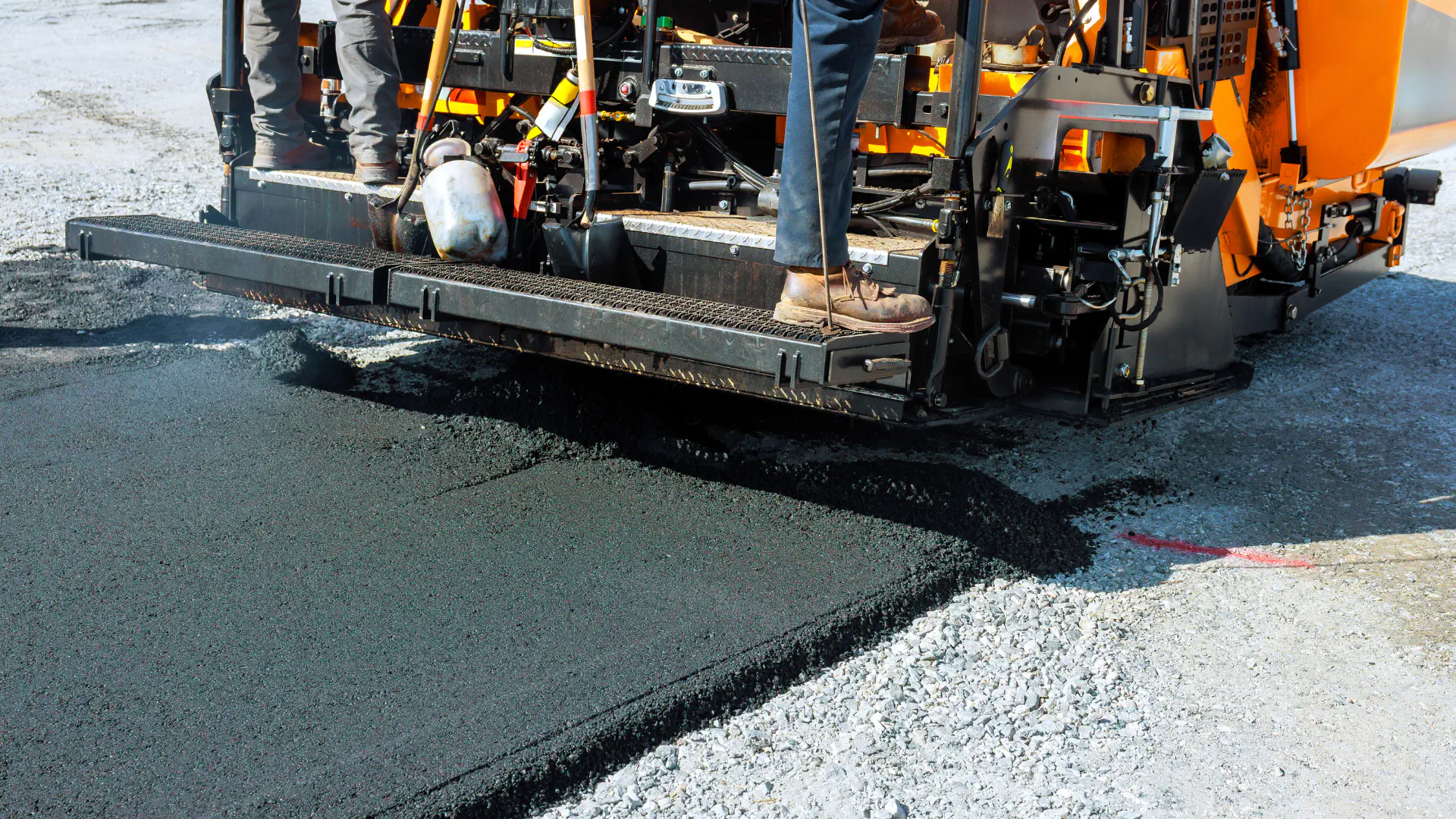
An asphalt tree company is a specialized service provider operating at the intersection of civil engineering and urban forestry. These firms manage the installation and maintenance of asphalt surfaces while simultaneously preserving the health of surrounding tree systems. They utilize root-mitigation technologies, permeable materials, and specialized excavation techniques to prevent structural pavement damage caused by root growth.
Defining the Asphalt Tree Company Entity
In the professional landscape of 2026, the term asphalt tree company refers to a niche contractor that bridges the gap between traditional paving companies and professional arborist services. Historically, these two industries operated in silos: paving companies focused on the structural integrity and smoothness of the surface, while tree companies focused on the health and aesthetic of the canopy. This separation often led to "root-pavement conflict," where trees were either removed to protect driveways or driveways were destroyed by encroaching root systems.
An asphalt tree company provides an integrated solution. These entities are typically staffed by both NAPA-certified (National Asphalt Pavement Association) paving specialists and ISA-certified (International Society of Arboriculture) arborists. Their primary objective is the co-existence of "gray" infrastructure (roads, paths, driveways) and "green" infrastructure (urban canopies). This definition has expanded in 2026 to include the implementation of climate-resilient materials that reduce the urban heat island effect while allowing for the natural expansion of root zones.
The Industry Context: Why This Niche Emerged
The emergence of the asphalt tree company as a distinct industry segment is the result of several converging urban planning and environmental factors. As of 2026, municipal regulations in many jurisdictions have become significantly more stringent regarding tree preservation.
The Urban Heat Island Effect
Urban areas are often several degrees warmer than surrounding rural areas due to the heat-absorbing properties of traditional asphalt. Trees are the primary biological defense against this effect. However, as cities densify, the space available for both parking and planting is reduced. This created a demand for contractors who could install durable asphalt surfaces without compromising the root systems that support the cooling canopy.
Infrastructure Longevity
Traditional asphalt installation over root zones is a recipe for premature failure. Root heave—the upward pressure exerted by growing roots—can crack a standard 3-inch asphalt lift within years. By hiring a specialized asphalt tree company, property owners and municipalities reduce long-term maintenance costs. These companies use specialized sub-base designs that direct root growth downward or away from the surface, extending the life of the pavement significantly.
Legal and Liability Frameworks
In 2026, the legal liability associated with sidewalk tripping hazards caused by root-lifted asphalt has increased. Property owners are now frequently held liable for injuries resulting from poorly maintained or root-damaged paths. Asphalt tree companies offer "abatement and preservation" contracts that provide legal documentation of professional root management, potentially lowering insurance premiums for commercial property owners.
Key Services Provided by Asphalt Tree Specialists
To understand the industry context, one must examine the specific technical services that differentiate these firms from standard "mowing and blowing" or "pave and go" contractors.
1. Root-Sensitive Excavation
Standard excavation involves heavy machinery that can easily sever structural roots, leading to tree instability or death. Asphalt tree companies utilize supersonic air tools (AirSpades) to blow soil away from roots without damaging the delicate bark or vascular system. This allows the contractor to see exactly where the roots are located before any paving decisions are made.
2. Specialized Root Barriers
Once roots are exposed, these companies install mechanical and chemical barriers. Modern 2026 standards often involve bio-barrier fabrics embedded with growth inhibitors that redirect roots without killing them. This ensures that the new asphalt remains flat while the tree continues to thrive in a different direction.
3. Structural Soil Installation
One of the most significant technical advancements in this niche is the use of CU-Structural Soil or similar gap-graded aggregates. This material is designed to be compacted to 95% Proctor density to support heavy asphalt loads while remaining porous enough for roots to grow through the voids. An asphalt tree company specializes in the precise mixing and installation of these specialized substrates.
4. Permeable Asphalt Solutions
In 2026, stormwater management is a primary concern for most paving projects. Asphalt tree companies often install porous asphalt, which allows water to drain through the surface directly into the root zone below. This provides the tree with necessary hydration and reduces the runoff that contributes to local flooding.
Technical Specifications and Materials in 2026
The materials used by an asphalt tree company differ significantly from the standard Hot Mix Asphalt (HMA) used on highways. In 2026, the focus is on flexibility and permeability.
| Material Feature | Standard Asphalt Company | Asphalt Tree Company |
|---|---|---|
| Primary Goal | Load-bearing capacity & cost | Load-bearing & tree health |
| Sub-Base | Compacted crushed stone | Structural soil or ventilated aggregates |
| Permeability | Usually 0% (Impermeable) | 15% - 25% (Porous options) |
| Root Management | Root removal/cutting | Redirection and barrier systems |
| Typical Binder | Petroleum-based Bitumen | Bio-based or polymer-modified binders |
| Lifespan near Trees | 5–8 years (before cracking) | 15–20 years (with mitigation) |
Polymer-Modified and Bio-Binders
By 2026, the industry has shifted toward binders that offer higher elasticity. Traditional bitumen is brittle; when a root pushes against it, the surface snaps. Polymer-modified binders allow the asphalt to "flex" slightly, accommodating the slow, incremental growth of roots without immediate structural failure. Furthermore, many asphalt tree companies now use bio-binders derived from lignin or vegetable oils, which are more compatible with sensitive urban ecosystems.
Costs and Project Planning Considerations
Engaging a specialized asphalt tree company generally involves a higher initial capital expenditure compared to a standard paving contractor. However, the total cost of ownership (TCO) is typically lower when factoring in tree replacement costs and pavement repairs.
Pricing Factors in 2026
- The "Tree Protection Zone" (TPZ) Fee: Specialized firms charge for the assessment and fencing of the TPZ to ensure no heavy equipment compacts the soil around the tree's drip line.
- Root Pruning Costs: If roots must be cut, it must be done cleanly by an arborist rather than crushed by a backhoe. This surgical precision adds to the labor cost.
- Permeable Material Premiums: Porous asphalt and structural soils currently carry a 15% to 30% price premium over standard materials due to specialized logistics and installation requirements.
Project Stages
- Arboricultural Assessment: Evaluating tree health and root spread.
- Engineering Design: Determining the load requirements and sub-base depth.
- Soft Excavation: Using air tools to clear the area around major roots.
- Mitigation: Installing barriers or bridging over significant roots using "suspended" pavement techniques.
- Paving: Laying the asphalt with specialized equipment that minimizes soil compaction.
Challenges in Asphalt and Tree Management
Despite the advancements in 2026, several challenges remain inherent to this industry niche.
Soil Compaction Paradox
Asphalt requires high soil compaction to prevent settling and potholes. Trees require loose, oxygen-rich soil to survive. Reconciling these two opposing physical requirements is the primary technical challenge of any asphalt tree company. Failure to balance this often leads to "anaerobic" soil conditions, where the tree effectively suffocates under the pavement.
Species Sensitivity
Not all trees react to pavement in the same way. For instance, species like the Silver Maple or American Elm have aggressive, shallow root systems that are particularly difficult to manage. An asphalt tree company must have the botanical expertise to identify species-specific growth patterns and adjust the engineering plan accordingly.
Regulatory Compliance
Many cities now have "Critical Root Zone" (CRZ) ordinances. These laws may prohibit any paving within a certain radius of a protected tree. Asphalt tree companies must act as intermediaries, presenting technical mitigation plans to city foresters to secure permits that a general contractor would likely be denied.
How to Select a Qualified Asphalt Tree Contractor
When seeking a company that fits this definition, verification of credentials is the most critical step. Because "Asphalt Tree" can be a broad descriptor, users should look for specific indicators of expertise.
- Dual Certification: Ensure the company has an ISA Certified Arborist on staff who works directly with the paving foreman.
- Specialized Equipment: Ask if they own or have experience with AirSpades and vacuum excavation. A company that only uses picks and shovels is not a true specialist in this field.
- Portfolio of Longevity: Request references for projects that are at least five years old. Any contractor can make a new driveway look good over tree roots; the real test is how that driveway looks five years later.
- Insurance Coverage: Standard general liability may not cover "professional errors and omissions" related to tree health. Verify that the company’s policy specifically covers arboricultural work.
FAQs
What is the primary difference between a regular paving company and an asphalt tree company?
A regular paving company focuses on creating a stable, flat surface, often at the expense of any vegetation in the way. An asphalt tree company uses specialized tools (like air excavation) and materials (like structural soil) to ensure the pavement remains stable while the tree remains healthy and hydrated.
Can you pave over existing tree roots?
It is possible but requires specific techniques. You should never pave directly over roots with standard asphalt and a standard sub-base. An asphalt tree company will typically use a "floating" or "suspended" pavement system or install a layer of structural soil and root barriers to allow the roots space to breathe and grow without lifting the asphalt.
How much more expensive is a specialized asphalt tree project?
Generally, you can expect to pay 20% to 40% more than a standard paving job. This covers the cost of arborist consultations, careful air-tool excavation, and higher-cost materials like porous asphalt or bio-barriers. However, this cost is often offset by the lack of future repair bills for cracked pavement.
Will the tree eventually die if I pave near it?
If done by a non-specialist, the risk of tree death is high due to root suffocation and soil compaction. However, if an asphalt tree company uses permeable materials and avoids compacting the Critical Root Zone, trees can continue to live for decades alongside the pavement.
Is porous asphalt harder to maintain than regular asphalt?
Porous asphalt requires occasional vacuum sweeping (usually once a year) to prevent the pores from clogging with debris and sediment. If the pores clog, it loses its benefit to the tree roots. Aside from that, maintenance is very similar to standard asphalt.
Final Recommendation
For any project involving pavement within the drip line of a significant tree, do not hire a general paving contractor. Instead, seek a specialized asphalt tree company or a firm that can demonstrate a collaborative workflow between civil engineers and arborists. The investment in root-sensitive excavation and specialized sub-bases in 2026 is no longer just an "environmental choice"—it is a financial necessity for long-term infrastructure durability. Prioritize contractors who provide a written "Root Management Plan" alongside their paving estimate.