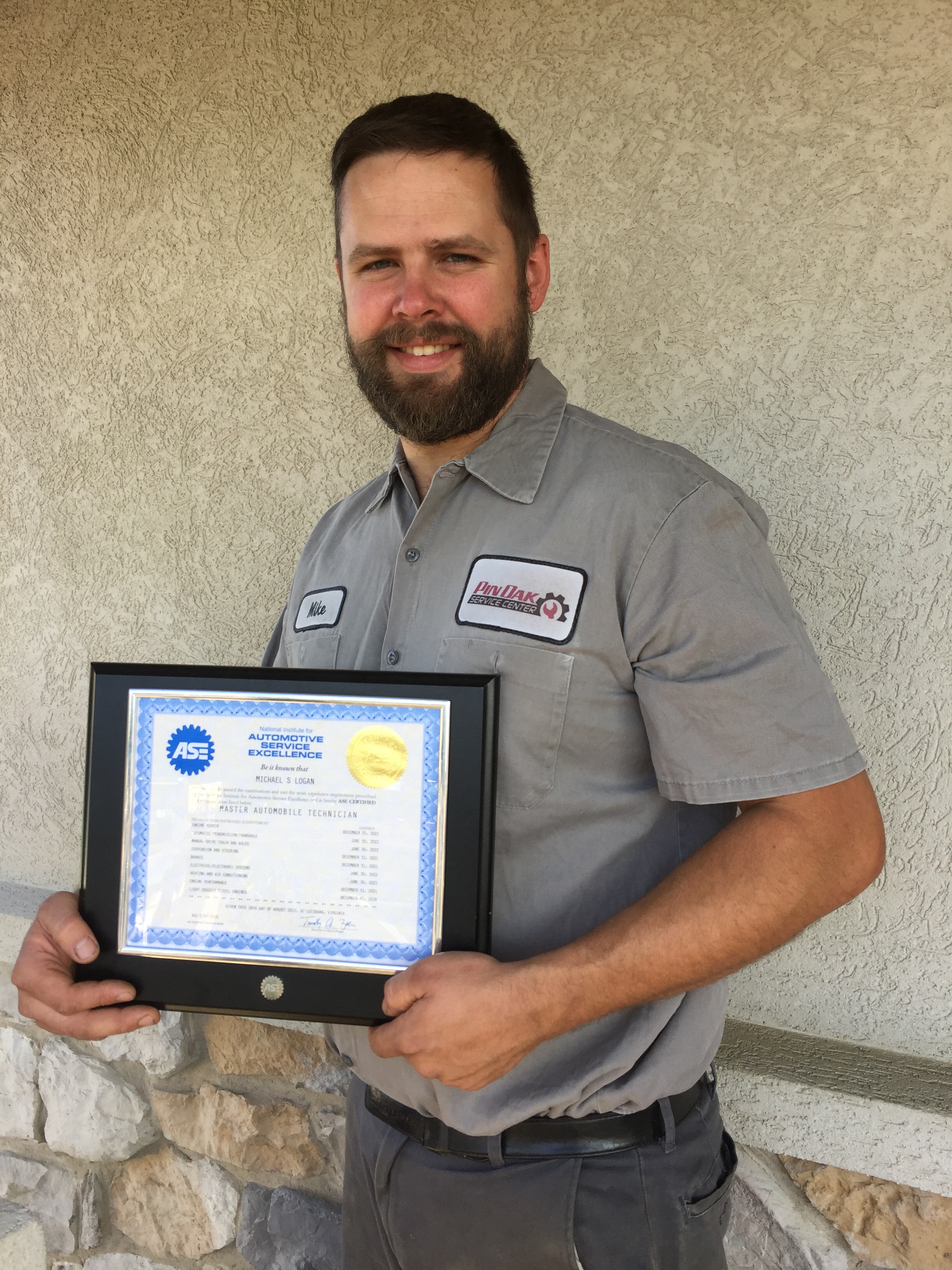
The ASE Master Technician certification is the highest professional credential awarded by the National Institute for Automotive Service Excellence (ASE). To earn this status, a technician must pass a specific series of rigorous exams—such as the A1 through A8 tests for automobiles—and document at least two years of relevant, hands-on work experience. It identifies an individual as an expert across all core systems of a vehicle category.
Understanding the ASE Master Technician Designation
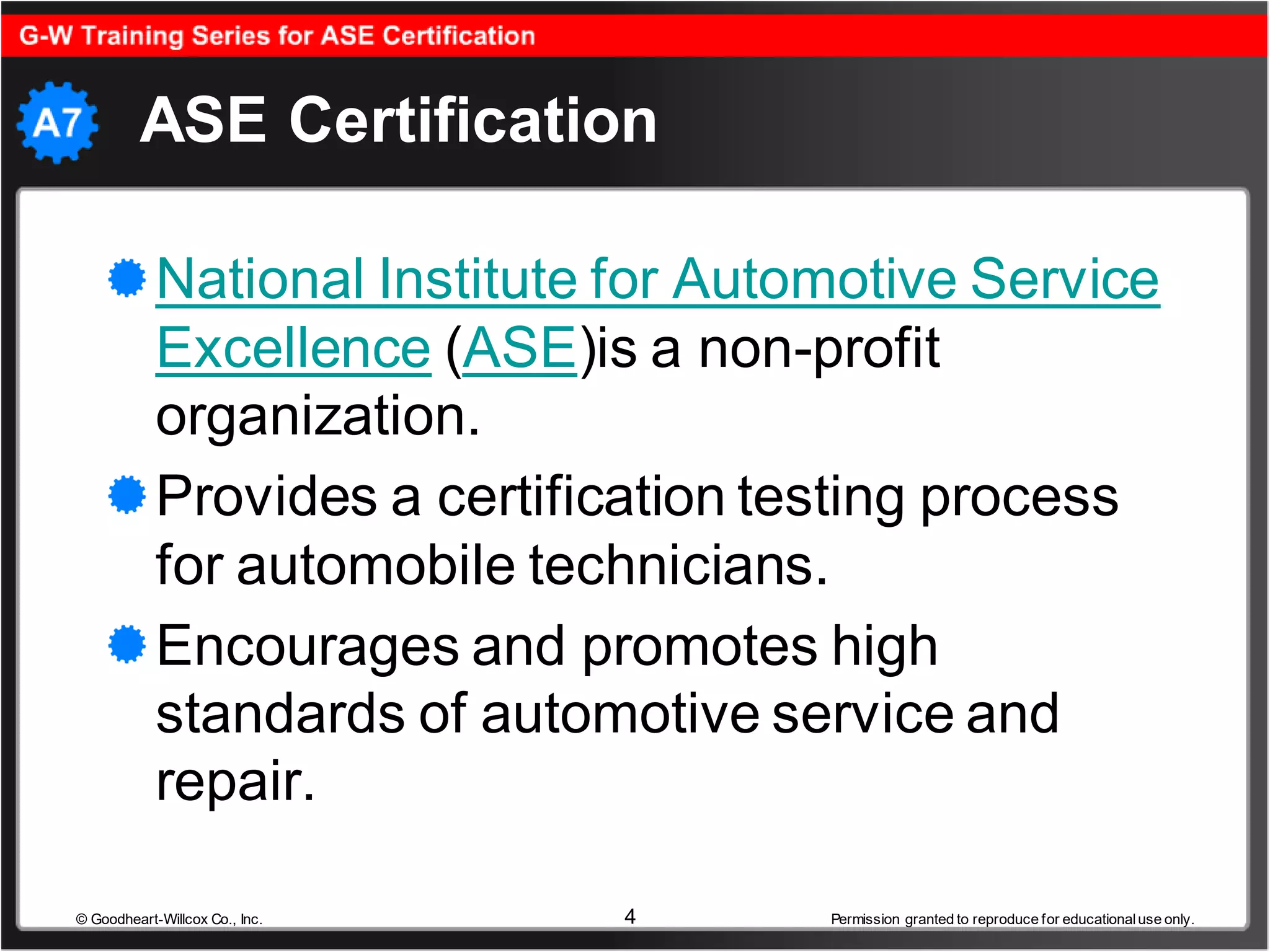
The National Institute for Automotive Service Excellence was established in 1972 as a non-profit organization dedicated to improving the quality of vehicle repair and service. In 2026, the ASE remains the industry standard for verifying the technical competency of automotive professionals. While individual ASE certifications prove proficiency in specific areas, such as brakes or electrical systems, the Master Technician designation is a comprehensive status reserved for those who demonstrate mastery across the entire spectrum of a vehicle's mechanical and electrical systems.
Becoming a Master Technician is not a single event but the culmination of multiple successful testing cycles and years of field experience. This status is not permanent; it requires regular recertification to ensure that the technician remains current with the rapid evolution of automotive technology, including high-voltage systems in electric vehicles (EVs) and advanced driver-assistance systems (ADAS).
For the consumer, the ASE blue seal is a mark of trust. For the technician, it is a tool for career advancement, often leading to higher hourly wages, better benefits, and opportunities for management or specialized diagnostic roles.
The Core Paths to Master Status
ASE offers Master Technician status in several distinct categories. A technician does not become a "Master" of everything at once; they earn the title within a specific track by passing all required tests in that series.
Automobile and Light Truck (A Series)
The most common path is the Automobile and Light Truck series. To become an ASE Certified Master Automobile Technician, a professional must pass eight tests:
- A1: Engine Repair
- A2: Automatic Transmission/Transaxle
- A3: Manual Drive Train and Axles
- A4: Suspension and Steering
- A5: Brakes
- A6: Electrical/Electronic Systems
- A7: Heating and Air Conditioning
- A8: Engine Performance
Note that the A9 (Light Vehicle Diesel Engines) test is often taken by these professionals, but as of 2026, it is generally not a requirement for the "Master Automobile Technician" designation, though it is highly recommended for those working on modern light-duty trucks.
Collision Repair and Refinish (B Series)
Technicians in the body shop environment pursue the Master Collision Repair and Refinish Technician status. This requires passing four tests:
- B2: Painting and Refinishing
- B3: Non-Structural Analysis and Damage Repair
- B4: Structural Analysis and Damage Repair
- B5: Mechanical and Electrical Components
Medium-Heavy Truck (T Series)
For those working on Class 4 through Class 8 trucks, the Master Medium-Heavy Truck Technician status is the goal. This requires passing seven tests (T2 through T8). These exams cover heavy-duty systems like diesel engines, air brakes, and complex hydraulic systems.
Other Master Tracks
ASE also provides Master status for:
- School Bus (S Series): Requires S1 through S6.
- Transit Bus (H Series): Requires H1 through H8.
- Truck Equipment (E Series): Requires E1 through E3.
Prerequisites and Experience Requirements
Passing the exams is only half of the requirement. ASE will not grant Master status until the technician has also met the Work Experience Requirement. As of 2026, the standard requirement is two years of full-time, hands-on work experience in the relevant field.
Documenting Experience
Technicians must submit a "Work Experience Form" through the ASE MySuite portal. This documentation must be verifiable. ASE may contact former or current employers to confirm the duration and nature of the work performed.
Educational Substitutions
For those who have attended formal training, ASE allows educational credits to substitute for a portion of the work experience:
- High School Training: Completing a three-year engine repair or automotive program can count for six months of experience.
- Post-Secondary Training: A certificate or degree from a technical school or community college can count for up to one year of experience.
- Apprenticeships: Formally registered apprenticeship programs may also be credited toward the two-year requirement.
Even with the maximum educational credit, at least one year of actual on-the-job experience is typically required to achieve Master status.
The Testing Process: What to Expect in 2026
ASE testing is conducted via Computer-Based Testing (CBT) at proctored centers, primarily through providers like Prometric. The exams are designed by a panel of industry experts, including working technicians, educators, and manufacturers.
Registration and Fees
Technicians must create an account on the ASE website to register for exams. In 2026, the cost structure generally includes a registration fee plus a fee for each individual test.
- Registration Fee: Approximately $34 per registration window.
- Test Fee: Standard tests cost approximately $56 each.
- Advanced Level Tests: Tests like L1, L2, and L3 (which are not required for Master status but are common additions) have higher fees, often around $112.
Exam Format
Most ASE tests contain between 40 and 75 multiple-choice questions. These are not "trick" questions, but they are designed to be difficult. They often use a "Technician A and Technician B" format, where the test-taker must determine if one, both, or neither technician is correct regarding a specific diagnostic scenario. This format tests the ability to apply technical logic rather than just memorizing facts.
Scoring
Results are usually available immediately after completing the computer-based exam. To pass, a technician must achieve a scaled score that meets the ASE’s threshold for competency. If a technician fails a test, they must wait 30 days before they are eligible to retake it.
Comparison of Master Certification Tracks
| Master Certification Track | Required Exams | Primary Systems Covered |
|---|---|---|
| Automobile & Light Truck | A1 - A8 | Engine, Drivetrain, Chassis, Electrical, HVAC, Performance |
| Collision Repair | B2 - B5 | Painting, Structural & Non-Structural Repair, Mechanical |
| Medium-Heavy Truck | T2 - T8 | Diesel Engines, Drive Train, Brakes, Suspension, Electrical |
| School Bus | S1 - S6 | Body Systems, Brakes, Diesel Engines, Electrical, Suspension |
| Transit Bus | H1 - H8 | Advanced Transit Systems, Brakes, Diesel/Gas Engines, HVAC |
Detailed Breakdown of the Automobile Series (A1-A8)
To understand the depth required for Master status, one must look at what the core Automobile series entails. This is the most sought-after credential in the independent repair and dealership sectors.
A1 - Engine Repair
This exam focuses on the diagnosis and repair of the engine block, cylinder heads, lubrication, and cooling systems. It requires knowledge of both internal mechanical failures and external leaks or cooling inefficiencies.
A2 & A3 - Transmission and Drivetrain
A2 covers automatic transmissions and transaxles, including hydraulic systems and electronic controls. A3 covers manual transmissions, clutches, and four-wheel-drive systems. In 2026, these exams heavily emphasize the electronic solenoids and sensors that manage shifting patterns.
A4 & A5 - Chassis Systems
A4 (Suspension and Steering) deals with wheel alignment, shock absorbers, and power steering systems (both hydraulic and electric). A5 (Brakes) covers everything from basic friction materials to the complex electronics of Anti-lock Braking Systems (ABS) and Electronic Stability Control (ESC).
A6 - Electrical/Electronic Systems
Often considered the most difficult, A6 covers the battery, starting, charging, and lighting systems, as well as the complicated multiplexing and CAN-bus networks that allow vehicle computers to communicate.
A7 - Heating and Air Conditioning
This exam covers the refrigeration cycle, climate control electronics, and the environmental regulations regarding refrigerant handling.
A8 - Engine Performance
A8 focuses on the "driveability" of the vehicle. It includes fuel systems, ignition systems, and emission controls. Technicians must understand how to use scan tools and oscilloscopes to diagnose complex running issues.
Recertification and the 5-Year Cycle
ASE certifications are not valid for life. To maintain the Master Technician status, a professional must recertify in every required category every five years. If a technician allows even one of the required certifications (e.g., A3) to expire, they lose their "Master" status until that specific test is retaken and passed.
The ASE Renewal App
As of 2026, many technicians use the ASE Renewal App for the Automobile (A1-A9) and Medium-Heavy Truck (T2-T8) series. This app allows technicians to maintain their certifications by answering a few technical questions per month on their smartphones rather than going to a testing center every five years. This "continuous assessment" model ensures that technicians are staying current with new technologies as they emerge.
Traditional Recertification Tests
Technicians can still choose the traditional route of taking recertification exams at a testing center. These tests are generally shorter than the original certification exams but cover the same breadth of material.
Career Impact and Economic Value
The pursuit of ASE Master Technician certification is a significant investment of time and money, but the returns are measurable.
- Increased Earning Potential: Many dealerships and independent shops offer "flat-rate" bumps or hourly raises for every ASE certification earned, with a significant bonus or higher tier for achieving Master status.
- Employer Incentives: Many employers will reimburse the cost of the exams upon passing. In a competitive labor market, shops use "ASE Master Tech on Staff" as a marketing tool to attract customers.
- Legal and Professional Standing: In some jurisdictions or for certain types of government contract work, ASE certification is a prerequisite for employment. It also provides a level of protection in liability cases, as it proves the technician met industry standards for competency.
- Specialization Opportunities: Master status is often a prerequisite for advanced specialist certifications, such as the L1 (Advanced Engine Performance Specialist) or L3 (Light Duty Hybrid/Electric Vehicle Specialist).
Common Mistakes and Preparation Tips
Achieving Master status on the first attempt is rare. Many technicians struggle with the transition from "doing" to "testing."
- Failure to Read the Question: ASE questions often include words like "except," "most likely," or "least likely." Misreading these leads to incorrect answers even when the technician knows the mechanical concept.
- Relying Solely on Field Experience: Technology in the field is often "patched" or bypassed. ASE tests based on factory-standard procedures. A technician must answer based on the "correct" way to fix a car, not necessarily the "fastest" way they use at work.
- Ignoring the Study Guides: ASE provides official study guides and practice tests. Reviewing these is essential to understand the "logic" of the exam.
- Overlooking Electrical Theory: Most failures occur in the A6 and A8 exams because of a lack of understanding of Ohm's Law and circuit behavior. Mastery of a multimeter is essential for these tests.
Frequently Asked Questions
Can I take all eight 'A' series tests in one day? Yes, it is possible to schedule multiple exams in a single day, provided the testing center has availability. However, due to the mental fatigue associated with these high-stakes exams, most professionals recommend taking no more than two or three tests per session.
What happens if one of my certifications expires? If you are a Master Technician and one of your required certifications expires, you lose the Master status immediately. You will still be "certified" in the other areas, but the "Master" designation will only be reinstated once you pass the recertification exam for the lapsed area.
Is the L1 Advanced Engine Performance test required for Master status? No. While the L1 is highly respected and focuses on advanced diagnostics, it is not a requirement for the Master Automobile Technician designation. It is considered an "Advanced Level" certification that can only be taken after passing the A8 exam.
How does the ASE verify my two years of work experience? ASE requires a signed Work Experience Form. They perform random audits and may contact the service manager or owner of the shops listed to verify your dates of employment and the type of work you performed (e.g., full-service repair vs. just oil changes).
Are there specific certifications for Electric Vehicles (EVs)? Yes, ASE offers the L3 Light Duty Hybrid/Electric Vehicle Specialist certification. While not required for the standard Master Automobile status in 2026, it is rapidly becoming a "must-have" for technicians in modern shops.
Practical Recommendation
If you are an aspiring technician, do not wait until you have two years of experience to start testing. You can take and pass the exams at any time; ASE will simply hold your "certified" status in a pending state until your work experience documentation is approved. Start with the areas you are most comfortable with—typically Brakes (A5) or Suspension (A4)—to build confidence before tackling the more complex Electrical (A6) and Engine Performance (A8) exams. For those already working, check if your employer participates in the ASE CASE (Certified Automotive Service Excellence) program, which may provide free study materials or fee reimbursement.