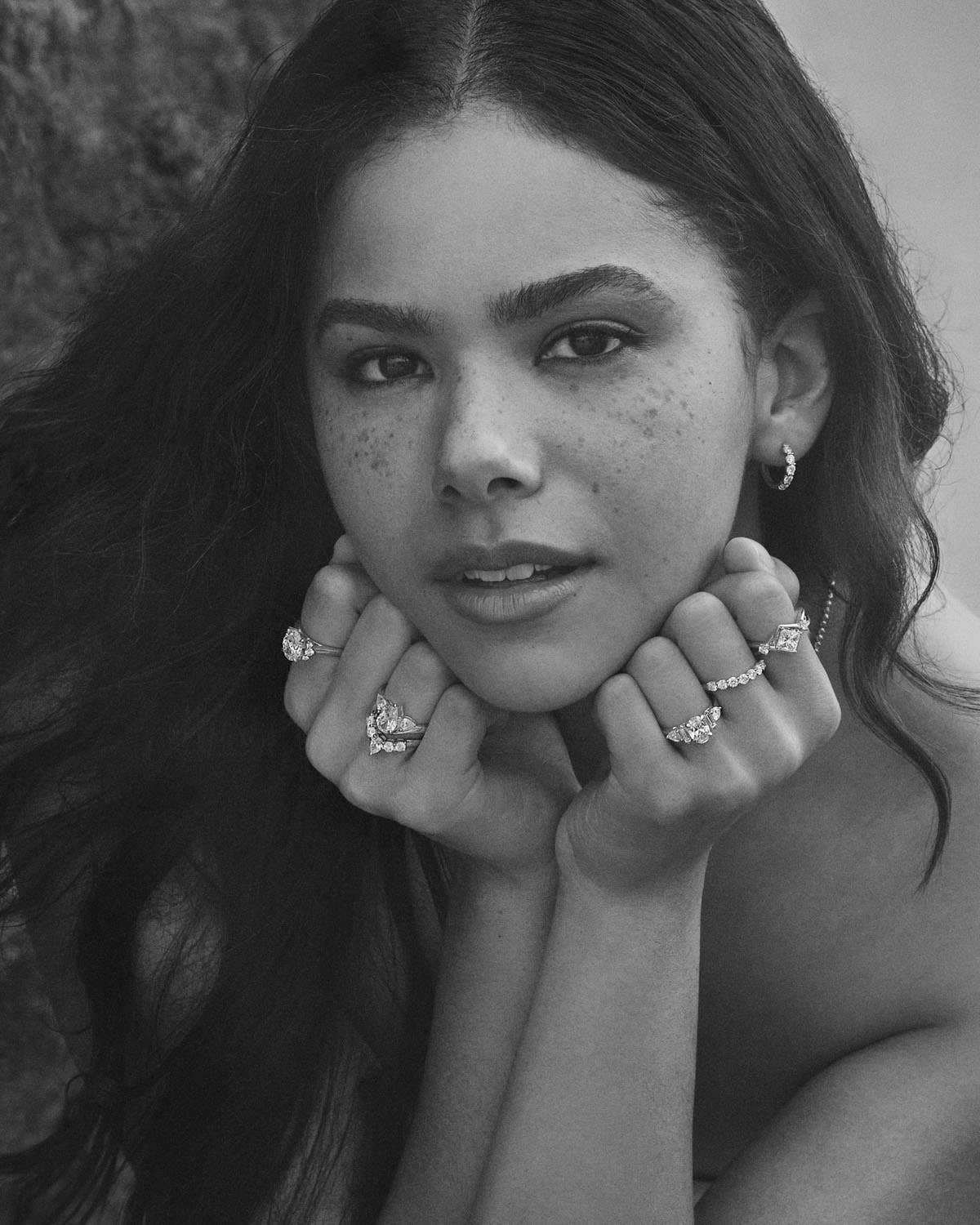
Antonia Gentry’s natural hair is a mix of 3B and 3C curls, celebrated for its authentic representation on Netflix’s Ginny & Georgia. She maintains her healthy texture through a "low-manipulation" philosophy, focusing on intense hydration, sulfate-free cleansers, and high-quality leave-in conditioners to preserve her natural pattern, volume, and bounce.
Antonia Gentry became a household name following the massive success of the series Ginny & Georgia. While her acting prowess captured audiences, her natural hair became a focal point of discussion, particularly for those in the biracial and curly hair communities. For years, television often featured "tamed" or chemically straightened versions of curly hair. Gentry, however, has consistently showcased her natural 3B/3C texture both on and off-screen. As we look at her influence in 2026, her journey remains a definitive case study in embracing texture and the technical requirements of maintaining high-porosity curly hair.
The Cultural Significance of Antonia Gentry’s Natural Hair
Before diving into the technical routine, it is essential to understand why Antonia Gentry’s hair resonates with so many. For a long time, the "mixed-race experience" was often homogenized in media. Gentry’s character, Ginny, navigates the complexities of her identity, and her hair is a central part of that narrative.
One of the most pivotal moments in the series—and in Gentry’s real-life advocacy—involved a scene where her character’s hair was straightened by her mother. This resonated deeply with viewers who grew up feeling that their natural texture was a "problem" to be solved. By wearing her hair in its natural state, Gentry provides a blueprint for confidence. Her hair isn't just a style; it's a statement on the beauty of natural curls and the importance of representation in Hollywood.
In 2026, the "Natural Hair Movement" has evolved from a trend into a standard of care. Gentry stands at the forefront of this shift, proving that natural curls are versatile, professional, and red-carpet ready.
Identifying Antonia Gentry’s Hair Type: 3B and 3C
To replicate or understand Gentry’s hair, one must first identify the technical specifications of her curl pattern. Hair typing, a system popularized by Andre Walker, categorizes hair based on the shape of the follicle and the curl diameter.
Type 3B Curls
Type 3B hair consists of well-defined, springy curls that have a circumference similar to a Sharpie marker or a finger. This hair type usually has a significant amount of volume and is prone to frizz if not properly hydrated. 3B curls have a "S" shape and are generally fine to medium in texture.
Type 3C Curls
Type 3C hair is often referred to as "curly-coily." These curls are tighter and more densely packed than 3B, with a circumference similar to a pencil or a straw. 3C hair experiences more shrinkage—the difference between the length of the hair when wet/stretched versus when dry—than Type 2 or 3A hair.
Antonia Gentry possesses a combination of these types. The hair at her crown and the nape of her neck often exhibits the tighter 3C pattern, while the face-framing layers display the slightly looser 3B ringlets. This multi-texture reality is common for many people with curly hair, requiring a nuanced approach to product application.
The Foundation: Antonia Gentry’s Wash Day Routine
For Gentry, the health of her hair starts with a rigorous but gentle wash day routine. Curly hair is inherently drier than straight hair because the natural oils (sebum) produced by the scalp have a harder time traveling down the coiled hair shaft.
Step 1: Pre-Pooing and Detangling
Gentry has emphasized the importance of detangling while the hair is saturated with moisture. "Pre-pooing" involves applying an oil or a light conditioner before the actual shampoo process. This creates a "slip" that allows knots to slide apart without snapping the hair fiber. Gentry typically detangles from the ends up to the roots using a wide-tooth comb or her fingers to minimize breakage.
Step 2: Sulfate-Free Cleansing
Traditional shampoos contain sodium lauryl sulfate, a harsh detergent that strips curls of their essential moisture. Gentry opts for sulfate-free cleansers or "co-washes" (cleansing conditioners). These products remove buildup from styling products without dehydrating the hair cuticle.
Step 3: Deep Conditioning
Deep conditioning is non-negotiable for 3B/3C hair. Gentry often leaves a deep treatment or hair mask on for 20 to 30 minutes. This allows the ingredients—typically proteins, humectants, and emollients—to penetrate the hair shaft and repair any damage from environmental stressors or heat styling used on set.
Styling Techniques for 3B/3C Volume and Definition
Once the hair is clean and conditioned, the styling phase determines how the curls will hold throughout the week. Gentry’s look is characterized by "clumped" curls—where individual strands join together to form thick, defined ringlets.
The LOC/LCO Method
Gentry’s routine often mirrors the LOC (Liquid/Leave-in, Oil, Cream) or LCO method.
- Liquid/Leave-in: A water-based leave-in conditioner provides the initial hit of hydration.
- Cream: A curl-defining cream is applied to provide hold and structure to the curl pattern.
- Oil: A light oil (like jojoba or almond oil) is used to "seal" the moisture in, preventing it from evaporating into the air.
The "Raking" and "Scrunching" Process
To ensure even distribution, Gentry rakes products through her hair in sections. After the product is applied, she "scrunches" the hair upward toward the scalp. This action encourages the natural curl to form and helps maintain the springy "S" or "Z" shape of her 3B/3C texture.
Drying: Air-Drying vs. Diffusing
While air-drying is the gentlest method, Gentry often uses a diffuser for red-carpet events or long filming days. A diffuser is an attachment for a hair dryer that disperses the airflow so it doesn't disturb the curl pattern. It provides more volume at the roots and reduces drying time, which is crucial for high-density hair.
Essential Products and Ingredients in Gentry’s Arsenal
While specific brand preferences can evolve, Gentry has been linked to several high-performance brands that cater to curly textures. In her Vogue Beauty Secrets feature and subsequent interviews, she highlighted products that focus on "clean" ingredients and high moisture.
| Product Category | Purpose | Key Ingredients to Look For |
|---|---|---|
| Leave-in Conditioner | Daily hydration and detangling | Marshmallow root, Aloe Vera, Glycerin |
| Curl Cream | Defining the curl shape and reducing frizz | Shea butter, Coconut oil, Agave nectar |
| Edge Control | Smoothing the hairline for sleek styles | Castor oil, Beeswax, Vitamin E |
| Clarifying Shampoo | Removing product buildup (used monthly) | Apple Cider Vinegar, Tea Tree Oil |
| Hair Oil | Sealing the cuticle and adding shine | Argan oil, Jojoba oil, Rosehip oil |
Gentry has frequently mentioned Miss Jessie's Pillow Soft Curls and Pattern Beauty (the line created by Tracee Ellis Ross) as staples in her routine. These brands are specifically formulated for the unique needs of curls and coils, avoiding the "crunchy" feel that older-generation gels often produced.
Protecting the Curls: Nighttime Care and Maintenance
The biggest enemy of curly hair is friction. Sleeping on a cotton pillowcase can lead to "bedhead" frizz and breakage, as the cotton absorbs moisture and the fibers snag the hair.
To maintain her curls between wash days, Antonia Gentry utilizes the "Pineapple" method. This involves gathering the hair loosely at the very top of the head with a silk or satin scrunchie. By doing this, only the underside of the hair touches the pillow, preserving the definition of the top layers.
Additionally, using a silk or satin pillowcase is a standard part of her maintenance. These smooth surfaces allow the curls to glide over the fabric, keeping the cuticle flat and the curls intact. In 2026, many experts also recommend "refreshing" curls in the morning with a simple mist of water mixed with a small amount of leave-in conditioner to reactivate the products applied on wash day.
Technical Analysis: Managing High vs. Low Porosity
Understanding Antonia Gentry's hair also requires a look at porosity—the hair's ability to absorb and retain moisture.
- High Porosity: The hair cuticles are raised or damaged, meaning moisture enters easily but leaves just as fast. This hair type needs heavy creams and oils to "plug" the holes in the cuticle.
- Low Porosity: The cuticles are tightly packed, making it hard for moisture to get in. This hair type benefits from heat (like a warm towel) during conditioning to help open the cuticle.
Gentry’s hair appears to be medium-to-high porosity, which is common for curly textures that have undergone any form of environmental or styling stress. Her focus on "sealing" products is a direct response to this technical need, ensuring that the hydration provided during the wash phase stays within the hair fiber.
Common Pitfalls for 3B/3C Hair and How to Avoid Them
Even with the best products, certain habits can sabotage the health of natural hair. Antonia Gentry's routine avoids these common mistakes:
- Over-Washing: Washing curly hair every day strips it of necessary oils. Gentry typically washes her hair once or twice a week, depending on her schedule.
- Dry Brushing: Brushing curly hair while it is dry is a recipe for frizz and breakage. Gentry only brushes or combs her hair when it is wet and coated in conditioner.
- Excessive Heat: While she uses a diffuser, she limits the use of flat irons. Excessive heat can permanently alter the protein structure of the hair, leading to "heat damage" where the curl pattern no longer bounces back.
- Using the Wrong Towel: Standard terry cloth towels have loops that can snag curls and create frizz. Gentry and other curly-hair advocates recommend using a microfiber towel or an old cotton T-shirt to "plop" the hair and absorb excess water gently.
The Role of Scalp Health
In 2026, the industry has shifted its focus from the hair fiber to the scalp. Gentry has often noted that "healthy hair starts at the root." A clean, balanced scalp environment is necessary for optimal hair growth. She incorporates scalp massages to stimulate blood flow and uses clarifying treatments occasionally to ensure that hair follicles are not clogged by the heavy creams and oils required for 3B/3C styling.
The use of rosemary oil or specialized scalp serums has become a mainstay for actors like Gentry who frequently have their hair manipulated for different roles. These treatments help maintain the integrity of the hair bulb and prevent thinning caused by tension from braids or tight updos.
Frequently Asked Questions
What is Antonia Gentry's exact hair type?
Antonia Gentry has a mix of 3B and 3C curls. This means her hair consists of well-defined ringlets roughly the size of a marker (3B) and tighter, more corkscrew-like curls the size of a pencil (3C). This combination gives her hair significant volume and texture.
Does Antonia Gentry use heat on her hair?
While Gentry prefers natural styling, she does use heat in the form of a diffuser to add volume and speed up the drying process. For her role in Ginny & Georgia, she has occasionally had her hair straightened or manipulated with heat, but she emphasizes deep conditioning treatments afterward to restore the natural curl pattern.
How does she prevent frizz on set?
Gentry relies on "sealing" products like oils and high-quality curl creams that create a barrier against humidity. She also uses the "plopping" technique with a microfiber towel to ensure the hair cuticle remains flat during the initial drying phase.
What are her favorite hair products?
She has publicly mentioned Miss Jessie's Pillow Soft Curls, Pattern Beauty products, and various sulfate-free shampoos. She prioritizes products that provide "slip" for easy detangling and intense moisture for her high-porosity curls.
How often does she wash her natural hair?
Like many people with 3B/3C hair, Gentry does not wash her hair daily. She typically follows a weekly or bi-weekly wash schedule to prevent the hair from becoming overly dry, using co-washes or refreshing mists in between.
Summary of Recommendations
If you are looking to emulate Antonia Gentry's natural hair success, follow these technical steps:
- Identify your pattern: Determine if you have 3B, 3C, or a mix. This dictates the weight of the products you should use.
- Moisture is king: Never skip leave-in conditioner. If your hair feels dry by mid-afternoon, your "sealing" step (oil) may be missing.
- Be gentle: Detangle only when wet. Use your fingers or a wide-tooth comb to prevent mechanical damage.
- Protect at night: Invest in a silk bonnet or pillowcase. This is the simplest way to extend the life of your curls.
- Patience with the process: Natural hair is a journey of trial and error. What works for Gentry may need slight adjustment for your specific porosity and density.
Antonia Gentry's natural hair journey is more than just a beauty routine; it is a masterclass in texture management and a beacon for authentic self-expression. By understanding the science of her 3B/3C curls and the meticulous care required to maintain them, anyone with textured hair can achieve healthier, more vibrant results.