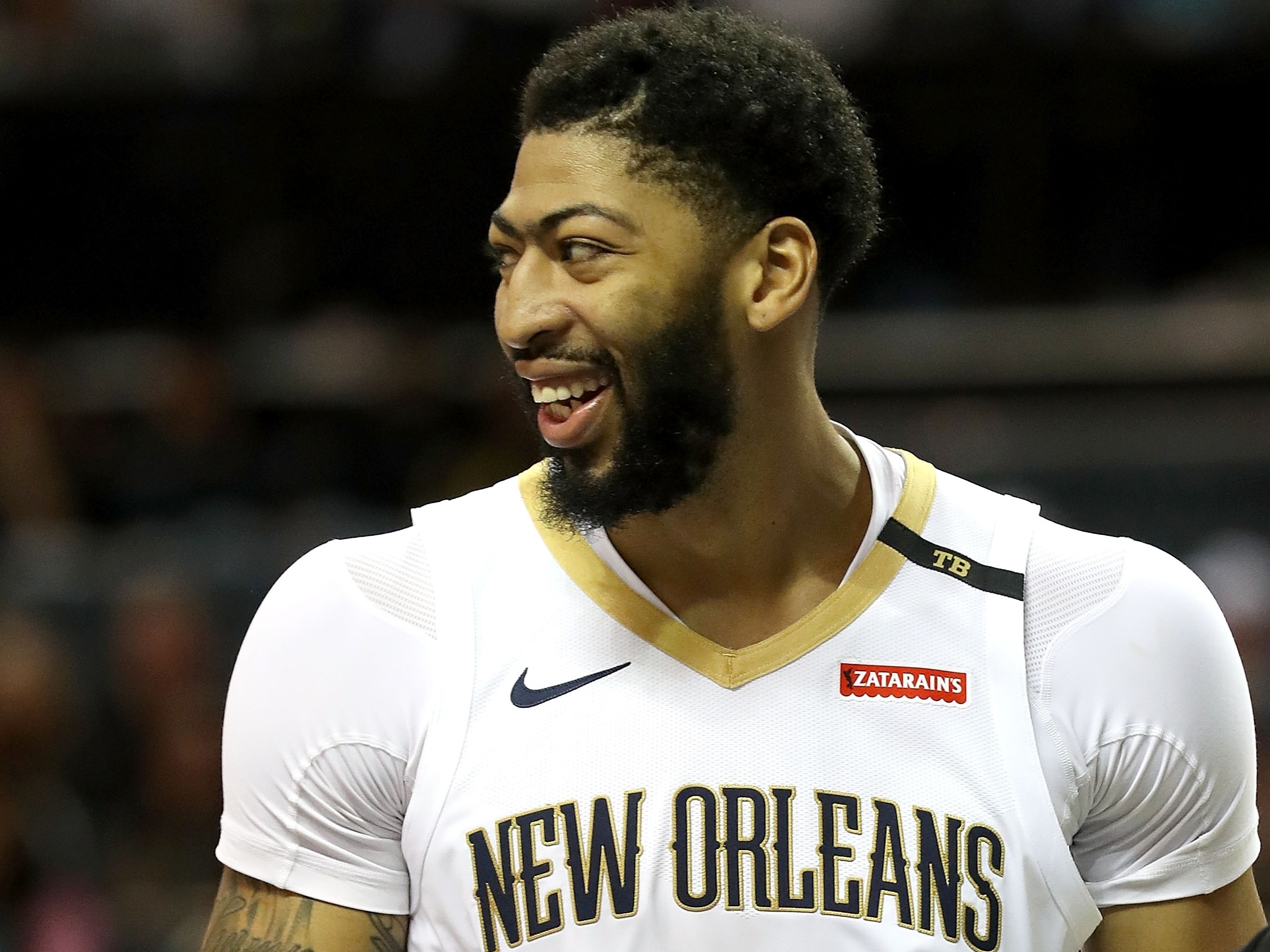
Anthony Davis is officially measured at 6 feet 10 inches (2.08 meters) tall. This measurement reflects the NBA’s standardized "barefoot" reporting rules implemented in 2019. Despite being previously listed at 6'11", Davis’s height, combined with his 7'6" wingspan, remains a cornerstone of his elite defensive and offensive versatility.
The story of Anthony Davis’s height is more than just a static number on a roster; it is a narrative of one of the most remarkable biological transformations in modern sports history. For a player who entered high school as a diminutive guard and exited as a towering force of nature, his physical dimensions have defined his career path and his unique "Unicorn" playing style. Understanding his height requires looking at the official measurement standards of the NBA, his legendary growth spurt, and the biomechanical advantages his frame provides on the court in 2026.
The Official NBA Measurement Standards
For decades, NBA heights were notoriously unreliable. Players frequently added an inch or two to their profiles to appear more intimidating, or in some cases, subtracted height to avoid being pigeonholed into the "center" position. Prior to the 2019-2020 season, Anthony Davis was commonly listed at 6'11". This was a measurement typically taken while the player was wearing basketball shoes, which can add significant height depending on the sole thickness.
In late 2019, the NBA issued a formal memo requiring teams to certify the exact height and age of every player. These measurements had to be conducted by team physicians without shoes. Under these strict guidelines, Anthony Davis was officially re-recorded at 6'10". While some fans viewed this as "shrinking," it actually clarified his physical profile. In the context of the modern NBA, a 6'10" frame is the "goldilocks" zone for big men—tall enough to protect the rim but mobile enough to guard the perimeter.
Why 6'10" is the "Modern Big" Sweet Spot
In the era of position-less basketball, being exactly 6'10" offers a unique advantage. In 2026, the NBA has shifted further away from traditional 7-footers who are restricted to the paint. Davis’s height allows him to:
- Maintain a lower center of gravity than 7'2" counterparts, aiding in lateral quickness.
- Match up physically with "true" centers during defensive switches.
- Maintain the coordination required for fluid perimeter shooting and ball-handling.
The Legendary High School Growth Spurt
To understand Anthony Davis’s height, one must look back at his time at Perspectives Charter School in Chicago. Davis began his high school career as a 6'0" guard. At that time, he was a prospect who relied on mid-range jumpers and ball-handling skills. He was largely unrecruited by major programs because he lacked the size of a typical elite prospect.
Between the end of his sophomore year and the beginning of his senior year, Davis underwent a staggering 10-inch growth spurt. He jumped from 6'0" to 6'7", and eventually reached 6'10" by the time he arrived at the University of Kentucky.
What makes this growth spurt unique in sports medicine is that Davis retained the neuromuscular connections of a guard. Often, when a teenager grows that rapidly, they suffer from "clumsiness" or a loss of coordination as their brain struggles to map the new limb lengths. Davis, however, kept his "guard skills"—the ability to crossover, pass, and shoot—inside a frame that was now capable of dominating the interior. This rare combination is what led to him being the #1 overall pick in the 2012 NBA Draft.
The Importance of Wingspan vs. Height
While 6'10" is Davis's height, his "functional height" is much greater due to his wingspan and standing reach. In basketball, how high you can reach is often more important than the top of your head.
Anthony Davis possesses a massive 7'6" wingspan. To put this in perspective, his wingspan is a full 8 inches longer than his height. This disparity is what allows him to block shots that seem out of reach and recover defensively even when he is beaten by a step.
| Physical Metric | Measurement (Imperial) | Measurement (Metric) |
|---|---|---|
| Official Height (Barefoot) | 6'10" | 2.08 m |
| Wingspan | 7'6" | 2.29 m |
| Standing Reach | 9'0" | 2.74 m |
| Hand Length | 9.0 inches | 22.8 cm |
| Weight (2026 Average) | 253 lbs | 115 kg |
Verticality and Defensive Gravity
Davis’s 9'0" standing reach means that with a modest vertical leap, he is comfortably above the 10-foot rim. This "defensive gravity" forces opponents to alter their shot trajectories even if Davis doesn't officially record a block. In the 2026 NBA landscape, where spacing and three-point shooting are paramount, a player with Davis's reach can "shrink" the court, making passing lanes appear tighter than they actually are.
How His Height Influences His Playing Position
Throughout his career, there has been a persistent debate regarding whether Davis is a Power Forward (the 4) or a Center (the 5). His height of 6'10" makes him a perfect candidate for both, but he has historically preferred the Power Forward spot to avoid the physical toll of battling 280-pound centers.
However, as the NBA has evolved into 2026, the distinction between these positions has blurred. Because of his height and mobility, Davis is often utilized as a "Small Ball 5." At 6'10", he is taller than most small-ball centers (who often range from 6'7" to 6'9") but faster than traditional giants. This height advantage allows the Los Angeles Lakers to maintain an elite defense without sacrificing offensive spacing.
Physical Challenges of a 6'10" Frame
Maintaining a professional athletic career at 6'10" and 250+ pounds presents significant biomechanical challenges. The human frame, when subjected to the explosive jumping and landing required in the NBA, faces immense stress on the lower extremities.
Davis has dealt with various injuries over his career, many of which are characteristic of players with his height and long levers.
- Kinetic Chain Stress: Long legs create more torque on the knees and ankles.
- Center of Gravity: At 6'10", keeping a low defensive stance requires immense core and glute strength to prevent lower back strain.
- Weight Management: Davis has carefully curated his weight to stay around 253 pounds. Adding too much muscle could stress his joints, while being too light would make him vulnerable in the post.
In 2026, the focus for Davis has been on "functional durability"—using his height effectively while minimizing the high-impact landings that led to previous "day-to-day" injury concerns.
Comparison: Anthony Davis vs. Other NBA Giants
To truly grasp the significance of Davis’s 6'10" frame, it is helpful to compare him to other elite players in the league as of 2026.
- Victor Wembanyama: Standing at roughly 7'4", Wembanyama makes almost everyone look small. However, Davis’s lower center of gravity and superior bulk (253 lbs vs. Wembanyama’s lighter frame) allow him to hold his ground more effectively in post-up situations.
- Giannis Antetokounmpo: Giannis is often listed at 6'11". The one-inch difference is negligible, but Giannis plays with a more downhill, power-oriented style, whereas Davis uses his height for precision shooting and high-point rim protection.
- Nikola Jokic: Also listed around 6'11", Jokic uses his height for vision and passing over defenses. Davis uses his 6'10" frame more for verticality—playing above the rim on both ends of the floor.
Frequently Asked Questions
Is Anthony Davis actually 7 feet tall?
No, Anthony Davis is not 7 feet tall. While he may appear 7 feet tall in shoes or when standing next to smaller guards, his official barefoot measurement is 6'10". The misconception often stems from his incredibly long arms (7'6" wingspan), which give him the reach of a much taller player.
How much did Anthony Davis grow in high school?
Anthony Davis experienced one of the most famous growth spurts in basketball history. He grew approximately 10 inches between his sophomore and senior years of high school. He went from a 6'0" guard to a 6'10" power forward, which allowed him to keep his ball-handling and shooting skills while gaining the size of a dominant big man.
Has Anthony Davis's height changed since he was drafted?
When Davis was drafted out of Kentucky in 2012, he was listed at 6'10". Over the years, some broadcasts listed him at 6'11". However, after the NBA's 2019 rule change requiring precise, barefoot measurements, he was officially locked in at 6'10". Biologically, it is unlikely he grew after age 19, but the reporting methods changed.
Does Anthony Davis wear lifts in his shoes?
No, NBA players do not wear "lifts," but modern basketball sneakers, particularly those with max-volume air units or thick foam midsoles (like the Nike LeBron or GT Jump series), can add 1 to 1.5 inches to a player's height. This is why a 6'10" player often looks 7'0" on the court.
How does his height compare to LeBron James?
LeBron James is officially listed at 6'9". This makes Anthony Davis only one inch taller than LeBron. However, because Davis has a much longer wingspan and a higher standing reach, he occupies much more "vertical space" on the court than LeBron does.
Practical Takeaways for Fans and Analysts
When evaluating Anthony Davis in 2026, it is essential to look beyond the "6'10"" label. His height is a baseline, but his wingspan (7'6") and mobility are the true multipliers of his talent.
If you are an analyst or a fan watching his game, notice how he uses his height not just to tower over people, but to provide "help defense" from the weak side. His 6'10" frame allows him to cover the distance between the three-point line and the rim in just two strides. For those interested in the technical side of the game, his height is the foundation of his "Unicorn" status—a player who can guard all five positions while remaining a focal point of the offense.