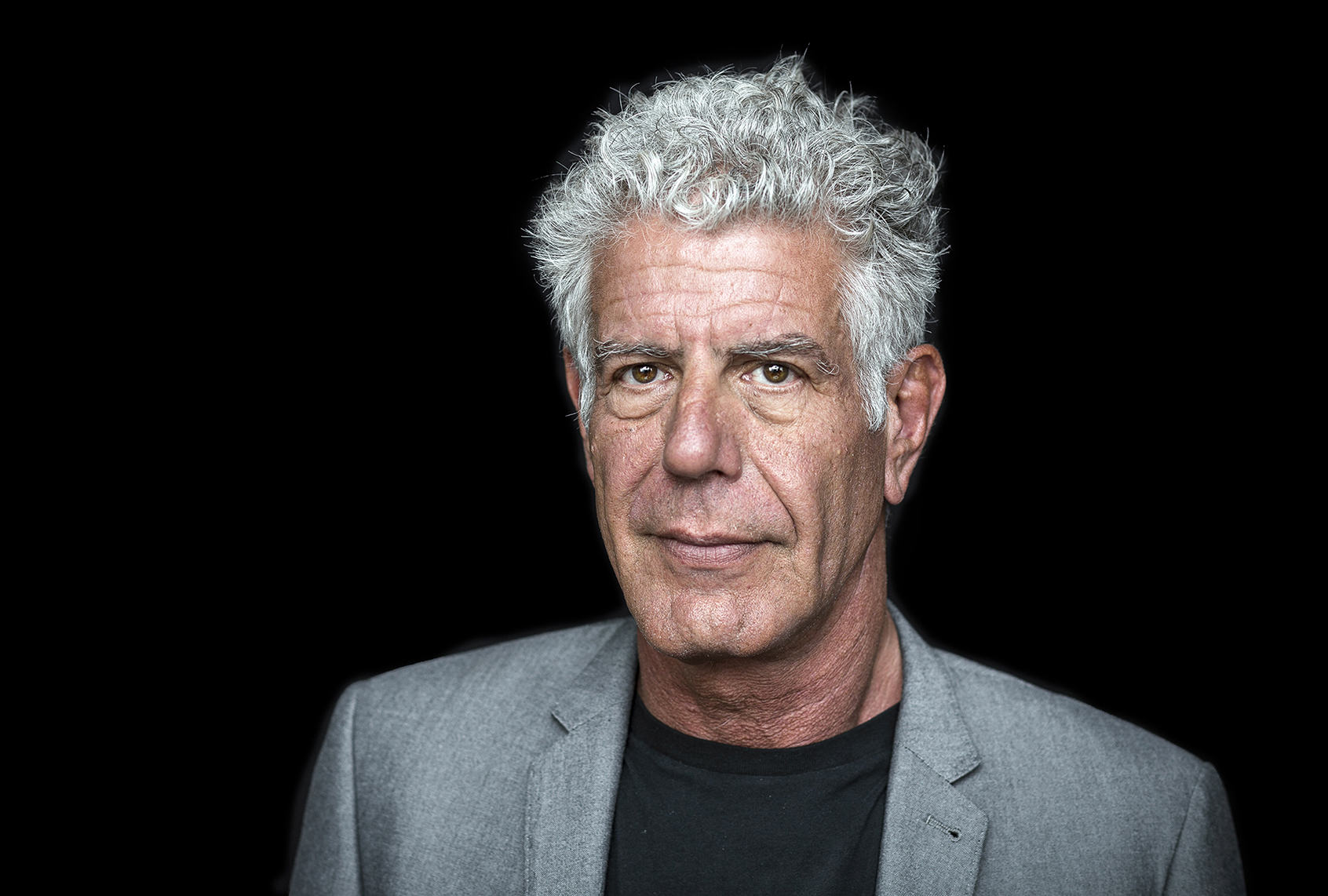
Anthony Bourdain’s journey as a young chef began with a transformative trip to France, followed by a rebellious stint at Vassar and formal training at the Culinary Institute of America. His early career was defined by the gritty, high-pressure kitchens of Provincetown and New York City during the 1970s and 80s.
Long before he was a global cultural icon, a prolific author, or a seasoned traveler, Anthony Bourdain was a young man struggling to find his place in the world. To understand the "young chef" Anthony Bourdain is to understand a period of American culinary history that was largely invisible to the public—a world of sweltering heat, pirate-like camaraderie, and the grueling reality of the "line." In 2026, as we look back at his legacy, the narrative of his early years remains the most vital chapter in understanding how a disgruntled dishwasher from New Jersey became the voice of a generation.
The Catalyst: A Summer in France and the First Oyster
The origin story of Anthony Bourdain as a culinary entity begins not in a kitchen, but on a boat. During a childhood family vacation to France—specifically the Gironde region—a young Bourdain experienced a moment of profound sensory awakening. While his younger brother Christopher recoiled in disgust, Anthony accepted a raw oyster offered by a fisherman.
That single oyster represented more than just a taste of the sea; it was a rebellion against the safe, sterilized expectations of his suburban upbringing. For Bourdain, the act of eating something "strange" was an act of power. It established a lifelong pursuit of authenticity and a disdain for the "fussy" or "pretentious" in favor of the visceral and the real. This early exposure to French food culture, mediated by his father’s love for classical music and cinema and his mother’s sharp intellectualism, provided the intellectual scaffolding for what would later become his professional philosophy.
The Vassar Detour and the Culinary Institute of America
Bourdain’s path to the professional kitchen was not a straight line. Like many young people of his era, he followed the traditional academic route initially, enrolling at Vassar College in the mid-1970s. However, the structured, elite environment of liberal arts academia clashed with his burgeoning punk-rock sensibility. He spent more time watching movies and experimenting with substances than attending lectures.
After two years, Bourdain dropped out of Vassar, a decision that led him to the dish pit of a restaurant in Provincetown, Massachusetts. It was here that he fell in love with the "pirate" lifestyle of the kitchen—the hierarchy, the noise, and the immediate gratification of a completed service. Realizing that he needed formal skills to survive in this world, he applied to the Culinary Institute of America (CIA), then located in Hyde Park, New York.
Bourdain graduated from the CIA in 1978. His time there was transformative but also served as a reality check. He learned the classical French techniques—consommé, galantine, mother sauces—that would form the bedrock of his career. Yet, he often reflected that the CIA taught him how to cook, but the line taught him how to survive.
The "Pirate Ship" of Provincetown
If the CIA provided the technical foundation, the summers in Provincetown provided the soul. As a young chef in the late 1970s, Bourdain worked at places like The Lobster Pot. Provincetown at that time was a wild, lawless frontier for young cooks. It was an era of excessive partying, intense physical labor, and a unique social structure where the dishwasher could be as respected as the chef if they had the "sand" to stay through a brutal shift.
In his early twenties, Bourdain was deeply influenced by the charismatic, often dangerous figures he met in these kitchens. He saw the kitchen as a meritocracy where your pedigree mattered less than your ability to hold your station under pressure. This period solidified his identity not as an "artist," but as a tradesman. He took immense pride in the repetitive, high-speed tasks of the line, such as shucking hundreds of oysters or perfectly searing scallops during a rush.
The New York City Grind: The 1980s Kitchen Scene
Upon returning to New York City in the early 1980s, the young Bourdain entered a culinary landscape that was vastly different from the celebrity-chef culture of 2026. Kitchens were hidden, subterranean spaces, and chefs were generally regarded as "help" rather than "stars."
Bourdain cycled through a variety of roles in Manhattan, including stints at the Rainbow Room and other high-volume establishments. This era was characterized by:
- The Rise of the "Big Kitchen": Learning to manage massive brigades and high-volume banquet service.
- The Drug Culture: Bourdain was candid about his struggles with heroin and cocaine during this period, describing a New York kitchen scene that was often fueled by substances to keep up with the 80-hour work weeks.
- The Transition to Management: Moving from the line to the role of Sous Chef and eventually Executive Chef, where he had to learn the "un-glamorous" side of the business—food costs, labor percentages, and the constant battle against aging equipment.
Key Milestones of Anthony Bourdain’s Early Career
| Period | Location / Institution | Key Role | Significance |
|---|---|---|---|
| 1973–1975 | Vassar College | Student | Realized he was unsuited for traditional academia. |
| 1975–1977 | Provincetown, MA | Dishwasher/Line Cook | First exposure to professional kitchen culture. |
| 1978 | Culinary Institute of America | Student | Received formal training in classical French cuisine. |
| 1980s | Various NYC Restaurants | Line Cook / Sous Chef | Developed "battle-hardened" skills in Manhattan. |
| 1990s | Sullivan's / Brasserie Les Halles | Executive Chef | Reached the peak of his professional culinary career. |
The Reality of the Young Chef’s Skillset
It is important to note, and Bourdain himself often insisted, that he was not a "great" chef in the sense of being a visionary like Eric Ripert or Thomas Keller. As a young chef, he was a "journeyman." His strength lay in his reliability, his knowledge of the classics, and his ability to command a kitchen through sheer force of will.
He excelled in the "bistro" style—honest, hearty food that required precise execution rather than avant-garde innovation. This grounded approach is what eventually made his writing so relatable. He wasn't writing from a pedestal; he was writing from the trenches. His early years were spent mastering the mundane: the perfect steak frites, the consistency of a Hollandaise, and the art of "mise en place."
The Darkness and the Discipline
The life of a young chef in the 70s and 80s was one of extreme highs and lows. Bourdain often spoke of the "shame" of his years of addiction, but he also credited the kitchen with saving his life. The discipline required to show up for a shift, even when at his lowest, provided a structural framework that eventually allowed him to pivot into his writing career.
For the young Bourdain, the kitchen was a sanctuary for the "misfit toys." It was a place where people who didn't fit into polite society could find a family and a purpose. This sense of belonging is a recurring theme in his early reflections, and it is what he sought to convey to the world when he eventually put pen to paper.
Transitioning from the Line to the Page
By the time the 1990s arrived, Bourdain was no longer a "young" chef in years, but he was still very much a "working" chef. His appointment as Executive Chef at Brasserie Les Halles in Park Avenue South was the culmination of two decades of hard labor. It was here that the voice of the "young chef" finally found its outlet.
His early career was his research. Every burnt finger, every failed restaurant venture, and every colorful character he met provided the "meat" for the essays that would become Kitchen Confidential. When the book was published in 2000, it succeeded because it was rooted in the unvarnished truth of those formative decades.
Common Questions About Anthony Bourdain’s Early Life
What was Anthony Bourdain’s first actual job in a kitchen?
His first job was as a dishwasher and prep cook at a seafood restaurant in Provincetown, Massachusetts, during a summer break from Vassar. He often cited this experience as the moment he decided to pursue cooking professionally because he admired the "pirate-like" confidence of the line cooks.
Did Anthony Bourdain go to culinary school?
Yes, he attended the Culinary Institute of America (CIA) at its Hyde Park campus. He graduated in 1978. While he was critical of some aspects of formal education, he remained a supporter of the CIA throughout his life and frequently hired fellow graduates.
Which NYC restaurants did he work at before Les Halles?
Before his long tenure at Les Halles, Bourdain worked at various establishments including the Rainbow Room, Workum's, and Sullivan's. Many of these restaurants are now closed, but they provided the backdrop for the stories he told in his early writing.
Was Bourdain considered a high-end "fine dining" chef?
Generally, no. Bourdain classified himself as a "bistro chef." He specialized in traditional French brasserie fare. He had immense respect for the "high-end" masters, but he preferred the atmosphere and the food of neighborhood bistros where the focus was on volume and classic flavor profiles.
How did his youth in New Jersey influence his career?
Growing up in Leonia, New Jersey, in an intellectual household gave Bourdain a "cultural outsider" perspective. He was well-read and exposed to high art, which made his immersion into the "low-brow" world of professional kitchens a choice rather than a necessity. This duality allowed him to eventually explain the kitchen world to the general public with unique eloquence.
Conclusion and Next Actions
The story of Anthony Bourdain as a young chef is a reminder that mastery is often born from struggle and repetition. He was not an overnight success; he was a man who spent twenty years in the heat of the kitchen before the world knew his name.
If you are a young chef or a culinary enthusiast today, the lesson of Bourdain’s early years is clear: embrace the fundamentals. Focus on the "mise en place" of your life—the preparation and the discipline—before seeking the spotlight.
Next Actions for Aspiring Chefs:
- Study Classical Technique: Even in 2026, the French fundamentals Bourdain learned at the CIA remain the universal language of the kitchen.
- Seek Diverse Kitchen Environments: Move beyond your comfort zone. Work in high-volume environments to build your "speed" and "sand."
- Read His Early Work: Re-read Kitchen Confidential and A Cook's Tour not just as entertainment, but as a manual on the sociology of the kitchen.
- Prioritize Mental Health: Learn from Bourdain’s transparency regarding the "darker" side of the industry. The 2026 culinary world offers far more resources for sobriety and mental health support than existed in the 1970s.