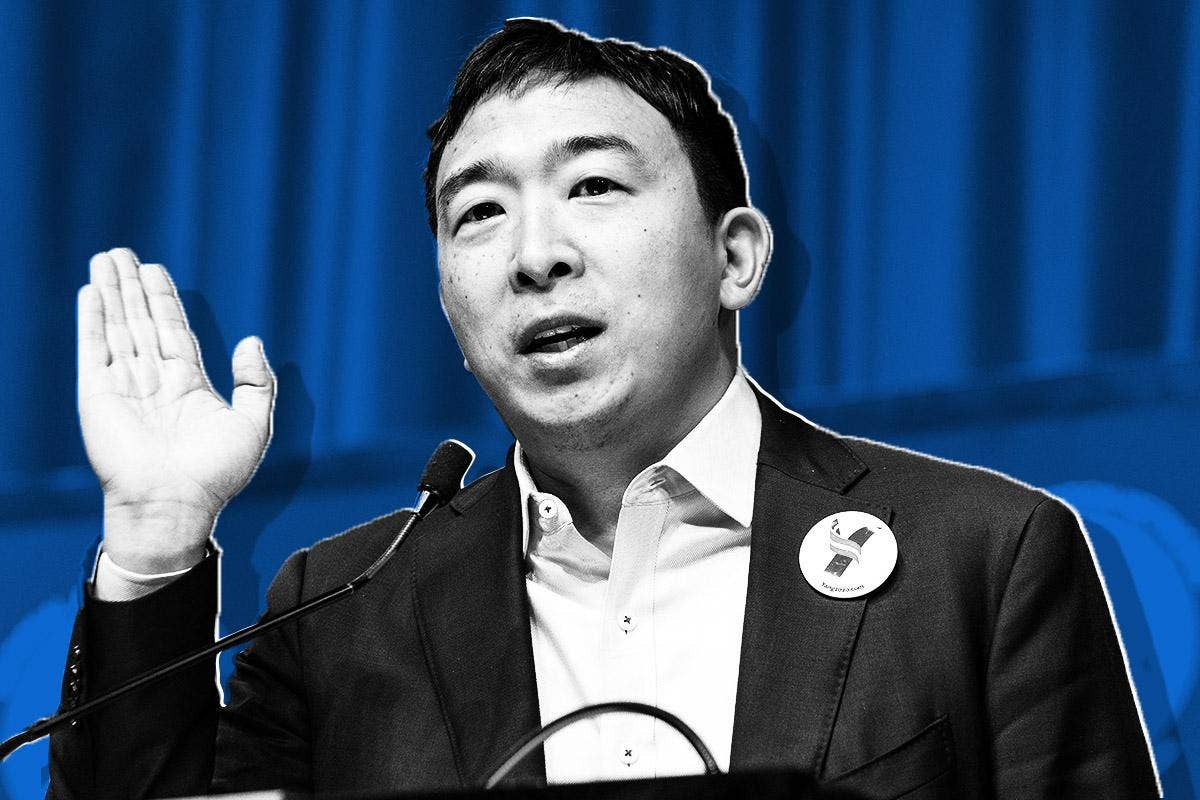
During his 2020 presidential campaign, Andrew Yang’s net worth was estimated to be between $1 million and $2.4 million. Unlike the multi-millionaire career politicians or billionaire outsiders in the race, Yang’s wealth was primarily built through a successful business exit in the education sector, non-profit leadership, and subsequent literary royalties and speaking fees.
Understanding the financial profile of a public figure like Andrew Yang requires more than just a single number. As we look back from the vantage point of 2026, his financial journey reflects a transition from a private entrepreneur to a non-profit leader, and eventually, a political disruptor. This comprehensive analysis breaks down the sources of his wealth, the official disclosures filed during his presidential and mayoral bids, and how his financial standing compared to his peers.
The Foundation of Wealth: Manhattan GMAT and Early Ventures
The cornerstone of Andrew Yang’s personal wealth was his tenure at Manhattan GMAT. After a brief and unfulfilling stint as a corporate lawyer at Davis Polk & Wardwell—a job he famously left after only five months—Yang joined a small test-preparation startup. He eventually became the CEO of Manhattan GMAT, steering the company through a period of significant growth.
In 2009, the company was acquired by Kaplan, Inc., a subsidiary of the Graham Holdings Company. While the exact terms of the acquisition were not made public, Yang’s share of the proceeds formed the bulk of his early net worth. Unlike "unicorn" tech founders who exit for hundreds of millions, Yang’s windfall was substantial but relatively modest by high-level political standards. Estimates suggest his earnings from this exit were in the low seven-figure range, providing him with the "financial runway" to pursue non-profit work without needing a traditional salary for several years.
Following the sale, Yang founded Venture for America (VFA) in 2011. VFA was a non-profit organization designed to recruit top college graduates to work at startups in economically struggling American cities like Detroit, Baltimore, and New Orleans. As the founder and head of a 501(c)(3), Yang’s income was a matter of public record. According to IRS Form 990 filings, his annual salary at VFA typically ranged between $214,000 and $285,000. While this is a high income compared to the average American household, it was significantly lower than what a professional with his credentials could have earned in the private equity or legal sectors.
Analyzing the 2020 Presidential Financial Disclosure
When Andrew Yang ran for the Democratic nomination in 2020, he was required to file a Public Financial Disclosure Report (OGE Form 278e) with the Office of Government Ethics. This document is the most reliable source for understanding his net worth at that specific moment in time.
The OGE filings do not provide exact dollar amounts for assets; instead, they use broad ranges (e.g., $100,001–$250,000). Based on these ranges, analysts pegged his net worth in the $1 million to $2.4 million bracket.
Key Assets Identified in the Disclosure:
- Residential Real Estate: Yang disclosed ownership of a family home in New Paltz, New York, valued between $250,001 and $500,000. He also held an interest in a rental property in New York City.
- Investments and Brokerage Accounts: A significant portion of his wealth was held in diversified mutual funds and ETFs. He famously advocated for "Human-Centered Capitalism," but his personal portfolio remained largely conservative, favoring standard market-tracking vehicles.
- Cash Holdings: The filings showed several bank accounts with balances totaling between $100,000 and $250,000, ensuring liquidity for his family during the campaign.
Income Sources Reported (2018-2019):
Before the campaign hit its stride, Yang’s income was a mix of residuals and active earnings. He reported earning approximately $150,000 in speaking fees from various organizations and universities. Additionally, his book, The War on Normal People, became a bestseller during the campaign, generating significant royalty income that was not fully realized until the following tax years.
The "Middle Class" Millionaire: How Yang Compared to the Field
In the context of the 2020 Democratic primary, Andrew Yang was often described as one of the "least wealthy" candidates, which is a testament to the staggering wealth often required for national politics. To provide perspective, the following table compares the estimated net worth of several key 2020 candidates at the time of their primary runs.
| Candidate | Estimated Net Worth (2020) | Primary Source of Wealth |
|---|---|---|
| Michael Bloomberg | $60+ Billion | Financial Media/Technology |
| Tom Steyer | $1.6 Billion | Hedge Funds |
| John Delaney | $230 Million | Healthcare Finance |
| Elizabeth Warren | $12 Million | Legal Consulting/Books |
| Joe Biden | $9 Million | Book Deals/Speaking Fees |
| Bernie Sanders | $2.5 Million | Book Royalties |
| Andrew Yang | $1 Million - $2.4 Million | Business Exit/Non-Profit Salary |
| Pete Buttigieg | $100,000 - $250,000 | Government Salary |
As shown, Yang’s wealth was comparable to Bernie Sanders—both men were millionaires, but neither belonged to the "ultra-wealthy" tier that characterized the top of the field. This financial standing bolstered Yang’s "outsider" image, allowing him to speak about economic precariousness with a degree of credibility that resonated with his "Yang Gang" base.
Post-Presidential Earnings and 2021 Mayoral Run
After dropping out of the presidential race in early 2020, Yang’s earning potential increased dramatically. The "Trump Bump" in media interest, combined with his high name recognition, led to a lucrative contract as a CNN Political Commentator.
When Yang entered the 2021 New York City Mayoral race, updated financial disclosures were required. These filings showed that his income in 2020 had risen significantly compared to his pre-presidential years. He reported earning over $1 million in 2020 alone, driven by:
- Media Contracts: His work with CNN and various podcasting platforms.
- Book Deals: Advances and royalties for his follow-up works, including Forward: Notes on the Future of Our Democracy.
- Speaking Engagements: High-demand appearances at tech conferences and academic institutions.
Despite this spike in annual income, his total net worth did not skyrocket immediately, as much of this income was offset by the high costs of living in New York City and the expenses associated with maintaining a public profile and a growing political movement.
Wealth Evolution Toward 2026: The Forward Party and Beyond
In the years following his mayoral run, Yang moved away from the Democratic Party to found the Forward Party. In the 2026 landscape, Yang’s financial situation is influenced more by his role as a political organizer and media figure than as a traditional businessman.
The Impact of the Forward Party
It is crucial to distinguish between Yang’s personal net worth and the finances of the Forward Party (a 527 political organization). While Yang serves as a primary face of the party, the millions of dollars raised by the organization are not his personal assets. Federal and state campaign finance laws strictly prohibit the personal use of political funds. However, his role as a leader in this space keeps his "market value" as a speaker and author high.
Literary and Media Ventures
By 2026, Yang has expanded his portfolio to include several successful books and a steady media presence. His podcast, "Yang Speaks," and its subsequent iterations have provided a consistent stream of advertising revenue. Furthermore, his investments in diversified index funds—consistent with his 2020 filings—have likely benefited from market growth over the intervening years.
Most analysts in 2026 estimate Andrew Yang’s net worth to be in the $3 million to $5 million range. While he remains a wealthy individual by the standards of the average American, he has not transitioned into the "plutocrat" category, maintaining a financial profile that is relatively modest for a figure with near-universal name recognition in American politics.
Transparency and the Ethics of Political Wealth
The scrutiny of Andrew Yang’s net worth highlights a broader conversation about transparency in US politics. Presidential candidates must disclose not only their assets but also their liabilities.
In his filings, Yang showed very little debt. He did not carry the massive commercial loans or complex offshore holdings that often complicate the disclosures of more established political figures. This relative simplicity made his financial narrative easy to verify. For voters, this transparency was a key part of his appeal; he was an entrepreneur who had "made it," but not to the extent that he was perceived as being out of touch with the economic realities of the "Normal People" he wrote about.
Frequently Asked Questions
Was Andrew Yang a billionaire when he ran for president?
No. Despite his background as a successful tech-adjacent entrepreneur, Andrew Yang was never a billionaire. His net worth during his 2020 campaign was between $1 million and $2.4 million. He was often the "poorest" person on the debate stage when standing next to figures like Michael Bloomberg or Tom Steyer.
How did Andrew Yang make his money?
The primary source of Yang's initial wealth was the sale of Manhattan GMAT to Kaplan in 2009. He later earned a steady upper-middle-class salary as the CEO of the non-profit Venture for America and significantly increased his income through book deals and media appearances after 2020.
Does Andrew Yang own a lot of real estate?
As of his last major public filings, Yang’s real estate holdings were modest for his income level. He owned a family home in New Paltz, NY, and had an interest in a rental property in New York City. He does not own a large portfolio of commercial or international properties.
How much does Andrew Yang make from the Forward Party?
As a leader of the Forward Party, Yang’s compensation is determined by the organization’s board and must be disclosed in political filings. Most of his current income (as of 2026) likely comes from private sources such as book royalties, speaking fees, and media appearances rather than the party's donor funds.
What is Andrew Yang's net worth in 2026?
While exact figures are private unless he files for another public office, estimates place his 2026 net worth between $3 million and $5 million. This growth reflects his continued success as an author and public speaker since his national profile rose in 2020.
Summary of Findings and Next Actions
Andrew Yang’s financial history serves as a case study for the "modern professional" path to political entry. He utilized a successful mid-sized business exit to fund a decade of non-profit work, which in turn provided the platform for a presidential run.
Key Takeaways:
- Source: Wealth originated from the education sector (Manhattan GMAT).
- Scale: Millionaire status, but not "ultra-wealthy" (Top 1–2% rather than Top 0.01%).
- Transparency: High, with clear OGE disclosures from 2020 and 2021.
- Trend: His net worth has likely increased since 2020 due to media and literary success but remains modest compared to many national political figures.
For those interested in the intersection of personal finance and politics, the next step is to monitor the FEC and OGE filings for the 2026 election cycle. These documents provide the most granular and legally-binding look at how public figures manage their wealth while seeking or holding power.