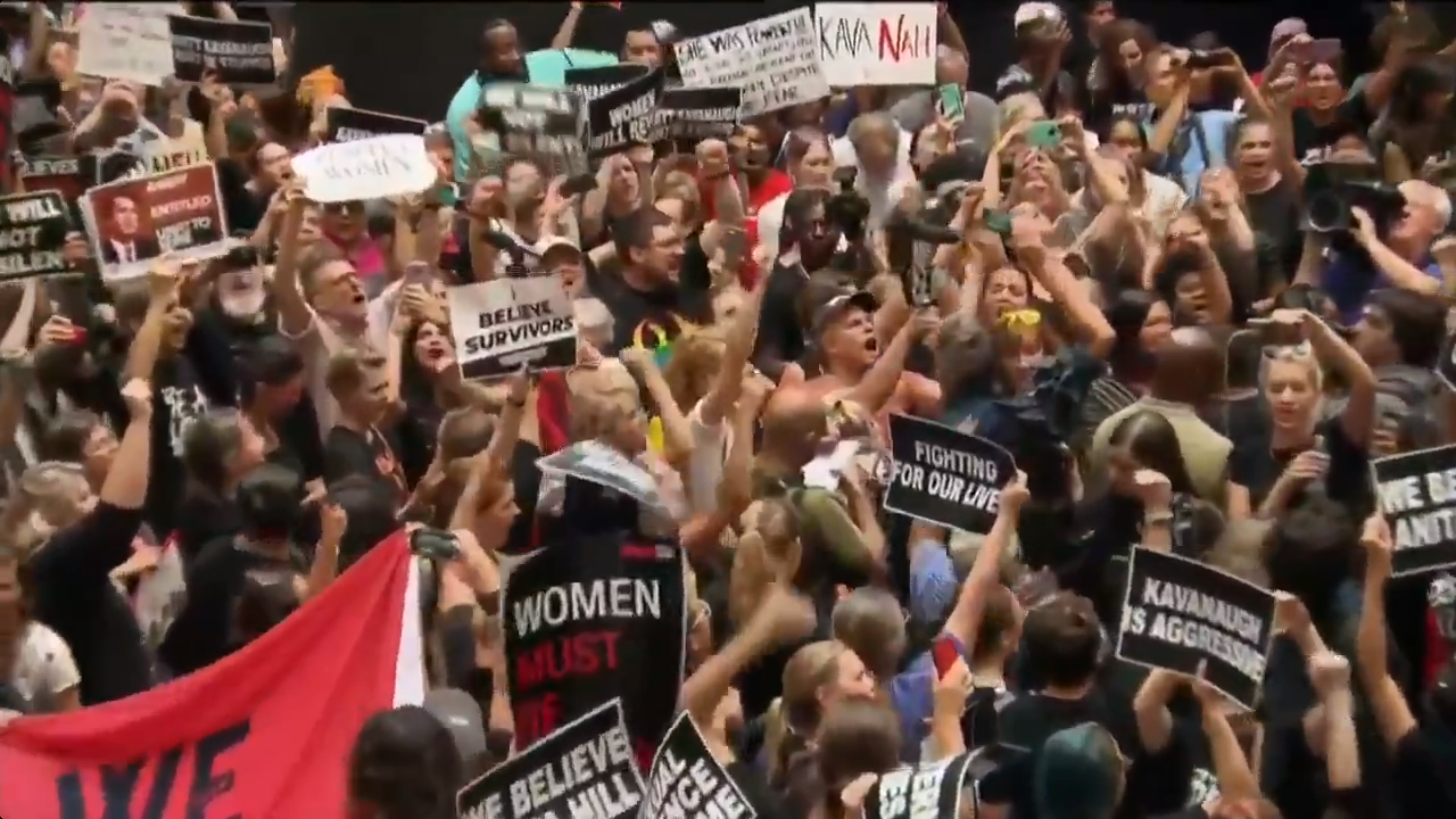
On October 4, 2018, comedian and actress Amy Schumer was arrested while participating in a protest against the Supreme Court nomination of Brett Kavanaugh. The demonstration, held in the Hart Senate Office Building in Washington, D.C., was part of a larger wave of public dissent during the contentious confirmation process. Schumer was among more than 300 individuals taken into custody by U.S. Capitol Police for "crowding, obstructing, or incommoding" within the senate office space.
The Political Climate of 2018
The arrest occurred during one of the most polarized periods in modern American political history. The nomination of Brett Kavanaugh to the Supreme Court by President Donald Trump had become a focal point of national debate. The proceedings shifted dramatically following allegations of sexual assault brought forward by Dr. Christine Blasey Ford. These accusations ignited intense public scrutiny, reviving discussions surrounding the #MeToo movement, judicial integrity, and the processes by which the U.S. Senate vets candidates for the highest court in the land.
Protest groups, including the Women’s March and the Center for Popular Democracy, organized demonstrations to pressure undecided senators—most notably Susan Collins and Jeff Flake—to vote against the confirmation. These activists aimed to flood the halls of the Capitol to ensure their presence was impossible to ignore. Schumer, a vocal advocate for various progressive causes, joined these demonstrators to signify her opposition to the nomination and to stand in solidarity with those who believed the sexual assault allegations deserved a more exhaustive investigation.
Mechanics of the Arrest
When protesters enter the Hart Senate Office Building or the Russell Senate Office Building to stage a "sit-in," they are engaging in a form of civil disobedience known as a "demonstration." The Capitol Police are tasked with balancing the constitutional right to assembly with the operational requirements of the Senate.
Under D.C. code and federal regulations regarding Capitol grounds, demonstrators are permitted to assemble in public spaces, but they may not obstruct passage, block office entrances, or disrupt legislative business. When protesters exceed these boundaries by refusing to clear the hallways, they are typically warned by law enforcement. If the individuals refuse to leave after multiple warnings, the police move to arrest them for "crowding, obstructing, or incommoding."
In the case of October 4, 2018, the process followed a standard procedural pattern for high-profile civil disobedience:
- Warnings: Capitol Police provided multiple verbal warnings to the assembled protesters, informing them they were in violation of building regulations.
- Identification: Officers identified individuals remaining in the prohibited areas.
- Processing: Those who remained were detained, handcuffed, and escorted to a temporary processing area.
- Citation: In most cases involving this specific charge, individuals are processed, issued a citation, and released on the same day. This is often referred to as a "cite and release" procedure rather than a full booking in a detention center.
Comparison of Civil Disobedience Tactics
The type of protest Schumer participated in is a well-documented tactical approach in Washington, D.C. To understand the significance of her involvement, it is useful to compare this event with other forms of political expression used in the capital.
| Protest Method | Legal Status | Typical Outcome |
|---|---|---|
| Permitted Rally | Protected Speech | Managed crowd control |
| Sidewalk Picketing | Protected Speech | Minimal police interaction |
| Office Sit-in | Civil Disobedience | Arrest for obstruction/incommoding |
| Blocking Traffic | Illegal | Arrest for disorderly conduct |
As shown in the table, the "sit-in" model is designed specifically to invite arrest. Participants are aware that they will be removed from the site, and the act of being arrested is intended to draw media attention and demonstrate the depth of commitment to their cause.
Schumer’s Public Rationale and Media Impact
Amy Schumer’s choice to engage in this form of protest was not a spur-of-the-moment decision but a deliberate alignment with the activist groups present that day. Her arrest received immediate national news coverage, which served the purpose of the protesters: keeping the Kavanaugh hearings at the center of the news cycle.
Celebrity involvement in political protests often serves as a "multiplier" for media coverage. While hundreds of ordinary citizens were arrested alongside Schumer, her celebrity status ensured that the event appeared in mainstream entertainment and political news outlets, effectively amplifying the message of the organizations she was supporting. She expressed her reasoning during the protests by highlighting the perceived urgency of the situation and the necessity of using her platform to raise awareness about the implications of the Supreme Court nomination.
The Legal Aftermath and Definitions
The specific charge—"crowding, obstructing, or incommoding"—is a common misdemeanor in the District of Columbia, frequently applied to non-violent protesters who occupy public buildings or block traffic. It is generally handled as a summary offense.
In the legal system, "incommoding" refers to the act of causing a public nuisance or interfering with the convenient use of a public space. Because the protests took place in a federal building, the enforcement was under the jurisdiction of the U.S. Capitol Police rather than the Metropolitan Police Department.
It is important to note that such an arrest does not necessarily result in a lasting criminal record that would preclude professional activity. For many public figures and activists, these citations are viewed as a badge of political participation. Following the events of October 4, 2018, most of those arrested—including Schumer—were released after paying a fine, effectively closing the matter without further litigation or long-term legal consequences.
Challenges and Controversies
The approach of using celebrities in protest settings is not without its critics. Some political commentators argue that such actions can distract from the grassroots efforts of non-famous individuals, potentially turning a serious political moment into a spectacle. Others contend that the "cite and release" system creates a two-tiered perception of justice, where wealthy individuals can participate in civil disobedience with the confidence that their legal exposure is minimal.
Conversely, supporters of this tactic argue that celebrities have a responsibility to use their visibility to advocate for social issues. By placing themselves in the same position as other protesters, they humanize the struggle and bring the issue into homes that might not otherwise follow the intricacies of Senate confirmation hearings.
Frequently Asked Questions
Was Amy Schumer actually jailed for her protest involvement?
No, she was not held in jail. Like most of the individuals arrested for "crowding, obstructing, or incommoding" in the Capitol, she was processed, cited, and released the same day. This is standard procedure for this type of non-violent civil disobedience.
Why was Amy Schumer protesting the Kavanaugh nomination specifically?
She was protesting in solidarity with Dr. Christine Blasey Ford and other victims of sexual assault. She felt that the Senate confirmation process was not taking the allegations of sexual misconduct seriously enough and that a more thorough investigation was required before a lifetime appointment to the Supreme Court was finalized.
Is "incommoding" a serious crime?
In the context of protest law, it is a low-level misdemeanor. It is used to clear public spaces that are being obstructed. While it results in an arrest, it is rarely associated with long-term jail time or significant criminal consequences for first-time offenders.
How many other people were arrested with her?
According to reports from the U.S. Capitol Police and major news outlets covering the day, more than 300 people were arrested in the Hart Senate Office Building during those demonstrations. Schumer was one of many protesters, though she was one of the few with significant media profile.
Did her arrest change the outcome of the confirmation?
The arrest did not halt the confirmation process. Brett Kavanaugh was confirmed as a Justice of the Supreme Court of the United States on October 6, 2018, by a 50–48 vote. The protests were intended to sway undecided senators, but they did not result in a reversal of the Senate's final vote.
Recommendations for Understanding Political Protests
If you are interested in the history of activism or the legal nuances of protesting in Washington, D.C., it is helpful to look at primary source documentation. The U.S. Capitol Police website provides guidelines regarding permitted and prohibited behaviors on Capitol grounds, which explain why these specific arrests occur. For those wishing to track how public opinion and protests influence legislation, analyzing the voting records of senators alongside the timeline of public demonstrations can provide a clearer picture of how lobbying and activism interact with the legislative process.
Understanding that civil disobedience is a calculated risk allows for a more nuanced perspective on events like the 2018 protests. When individuals like Amy Schumer decide to participate, they are acting within a long tradition of using their bodies to interrupt the status quo, knowing that the legal consequences—while formal—are part of the strategic attempt to influence public opinion and governmental action.